


A battle is forming over the future of so-called killer robots. Starting Nov 16 in Geneva, states will gather to decide whether they want to negotiate a new protocol on the use of “lethal autonomous weapons systems.” The Review Conference of the Convention on Conventional Weapons is held every five years, making it a rare chance to govern the rapidly advancing lethal tech that enables machines to target humans with little accountability, rights groups warn. But there’s disagreement on how to proceed. Some countries want an outright global ban; others are opposed, arguing that existing International Humanitarian Law is sufficient. Supporters of a ban say current IHL fails to hold humans accountable for harms caused by autonomous weapons. A majority of countries want to start negotiations on a binding treaty; the US and Russia have reportedly blocked proposals and watered down language. As the discussions move forward, advocates warn that AI-enhanced autonomous weapons are a reality, not sci-fi—as civilians from Gaza to Ukraine to Iran understand.
From The New Humanitarian, Nov. 13. Lightly edited, internal links added.
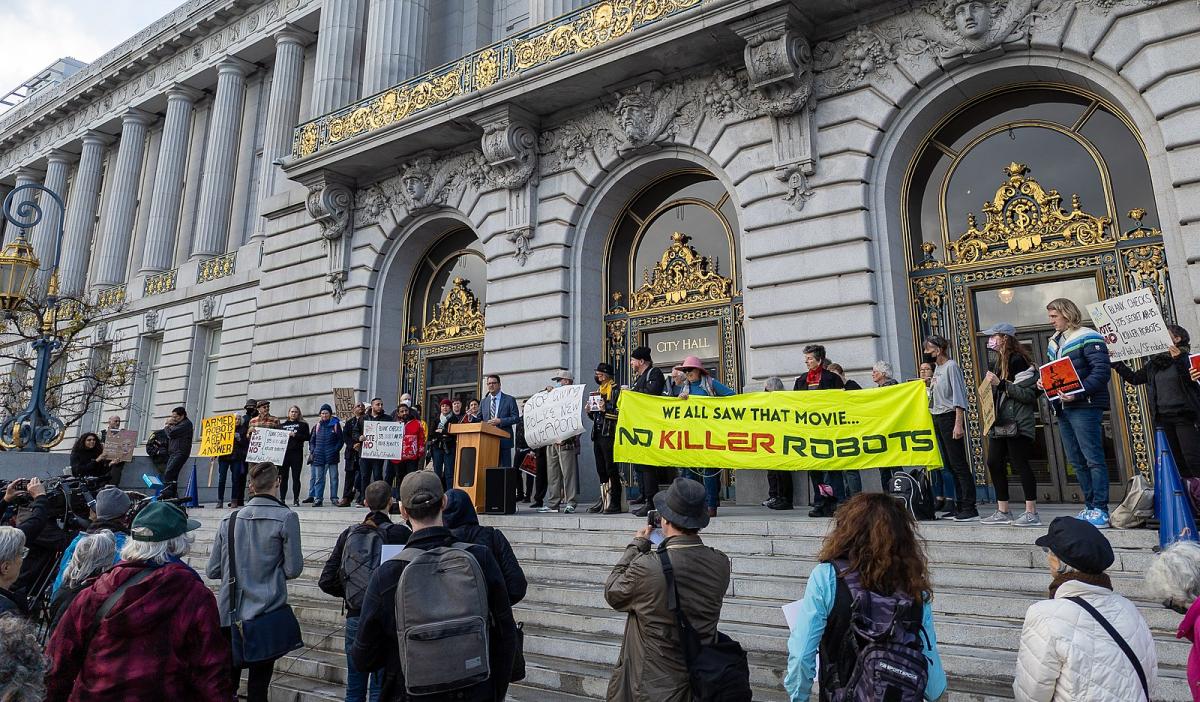
Image: Rally on the steps of San Francisco City Hall, protesting against a Board of Supervisors vote to authorize police use of deadly-force robots, Dec. 5, 2022. Credit: Pax Ahimsa Gethen via Wikimedia Commons


