


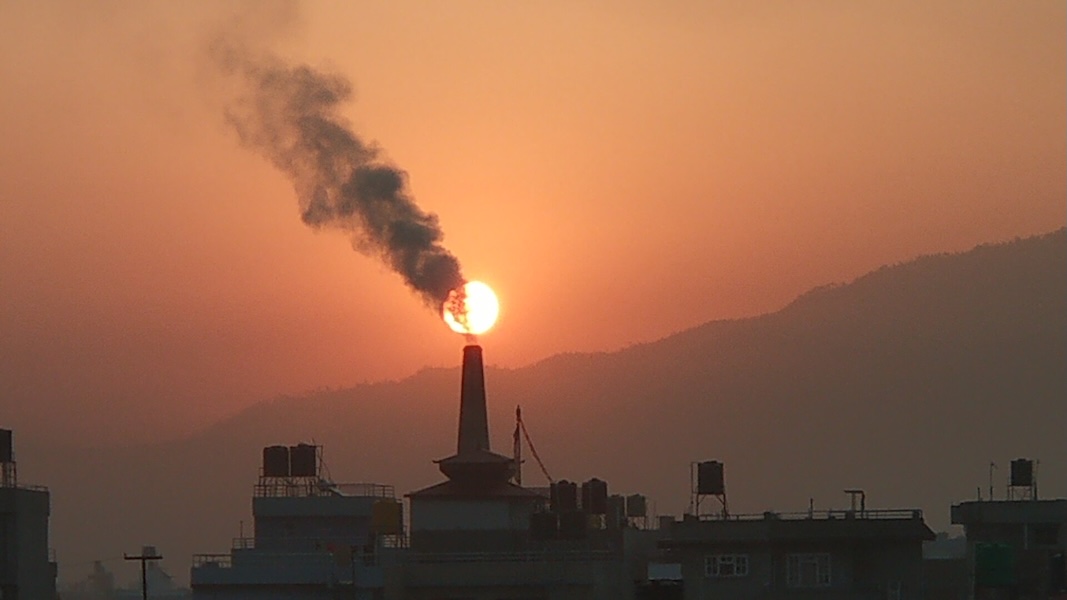
The UN World Meteorological Organization (WMO) warned Oct. 27 that atmospheric levels of carbon dioxide (CO2) and other greenhouse gases reached record highs in 2025—another portent of global warming, which increases the frequency of extreme weather events and associated risks to societies and economies.
WMO deputy secretary-general Ko Barrett stated: “The past 11 years have been the warmest on record and this trend is set to continue. CO2 has a very long lifetime and so will affect the global climate not just for years but for decades and even centuries.”
In its latest Greenhouse Gas Bulletin, the WMO noted that the average global concentration of CO2 reached nearly 427 parts per million (ppm), which reflects a steady increase compared to 2004, with growth rates that have tripled since the 1960s. Half of the annually emitted CO2 now remains in the atmosphere, while the rest is absorbed by the oceans and land ecosystems. The WMO pointed out that further increases in atmospheric CO2 concentrations are expected in 2026 due to continued fossil fuel burning and the onset of El Niño, which will impact land carbon sinks.
The WMO also reported a peak in methane and nitrous oxide levels in 2025, which are the second and third most important long-lived greenhouse gases related to human activities.
Additionally, the WMO highlighted that countries de-carbonizing their energy systems should pay more attention to hydrogen (H2) and sulphur hexafluoride (SF6), two potent trace gases that have strong effects on global warming. SF6, used in electricity distribution, has increased in the atmosphere in recent years, reaching a record high in 2025. This gas has the highest global warming potential, nearly 24,300 times that of CO2, in addition to an atmospheric lifetime of 1,000 years.
Although hydrogen is not a itself greenhouse gas, its leakage from production facilities, pipelines and storage tanks into the atmosphere impacts atmospheric chemistry and thereby indirectly exacerbates global warming—essentially, making methane and other greenhouse gases more potent. Therefore, the organization recommended that governments carefully monitor the composition of the atmosphere in order to detect, understand and prevent unintended consequences of atmospheric change.
Greenhouse gas emissions primarily result from human activities, especially the combustion of fossil fuels. These emissions blanket the Earth and trap solar heat, leading to planetary warming and altered global temperatures, which disrupt natural weather patterns and cause several environmental harms, including glacier melting, extreme heat events, wildfires, and rising sea levels.
In 2024, Denmark implemented an agreement to impose a tax on CO2 emissions from agricultural activities, in an effort to reduce such emissions. In March 2026, European countries agreed to reduce net greenhouse gas emissions by 90% by 2040. Despite the UN’s calls for member states to comply with their obligation to mitigate climate change, reports revealed that global temperatures reached 1.63 degrees Celsius in September, continuing a run of months well above the targeted 1.5 degrees Celsius of the Paris Agreement.
From JURIST, Oct. 28. Used with permission.
See our last reports on the WMO’s warnings of what has been termed (by others) “global weirding.”
See our last report on the UN climate process.
Photo: Janak Bhatta via Wikimedia Commons


