Syria
Khan Sheikhoun

OPCW condemns Assad regime over chemical attacks

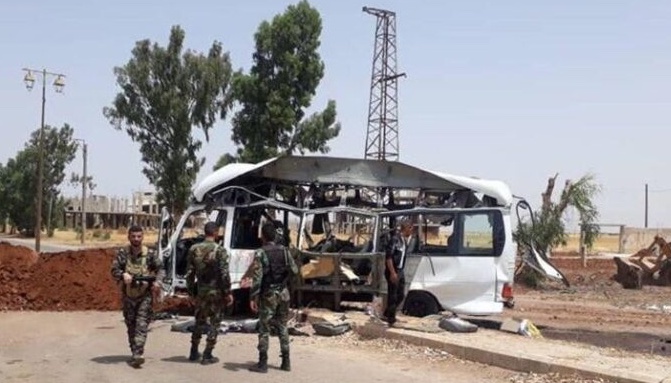
Member states of the Organization for Prohibition of Chemical Weapons (OPCW) voted 29-1 to condemn Syria’s Bahsar Assad regime over chemical attacks on civilians in opposition-held areas. Overriding a sustained propaganda campaign by Russia, the regime and their supporters, the member states endorsed the conclusions by the OPCW Investigation & Identification Team that regime forces used sarin and chlorine in attacks on al-Lataminah, Hama governorate, in March 2017. Russia and Iran, the primary backers of the Assad regime since the Syrian uprising began in 2011, voted no, joined by China. There were nine abstentions. (Photo from April 2017 Khan Sheikhoun attack via EA Worldview)

The Andes
huila

Colombia: campesinos massacred in Huila

A band of armed men in trucks and on motorcycles invaded two veredas (hamlets) in the rural zone of Algeciras municipality, in Colombia’s central-south department of Huila, terrorizing local residents. The armed men entered homes, menacing the families at gunpoint, before identifying one family they had apparently marked for death. Four family members were killed, and two more wounded, including an eight-year-old boy. The gunmen fled before they could be identified. However, both “dissident” elements of the FARC guerillas who remain in arms in defiance of the peace deal and right-wing paramilitary groups are active in the area. Ex-FARC combatants are being especially targetted by the paramilitaries. (Photo via El Tiempo)

Africa
Sudan

Sudan reforms harsh Islamist legal code

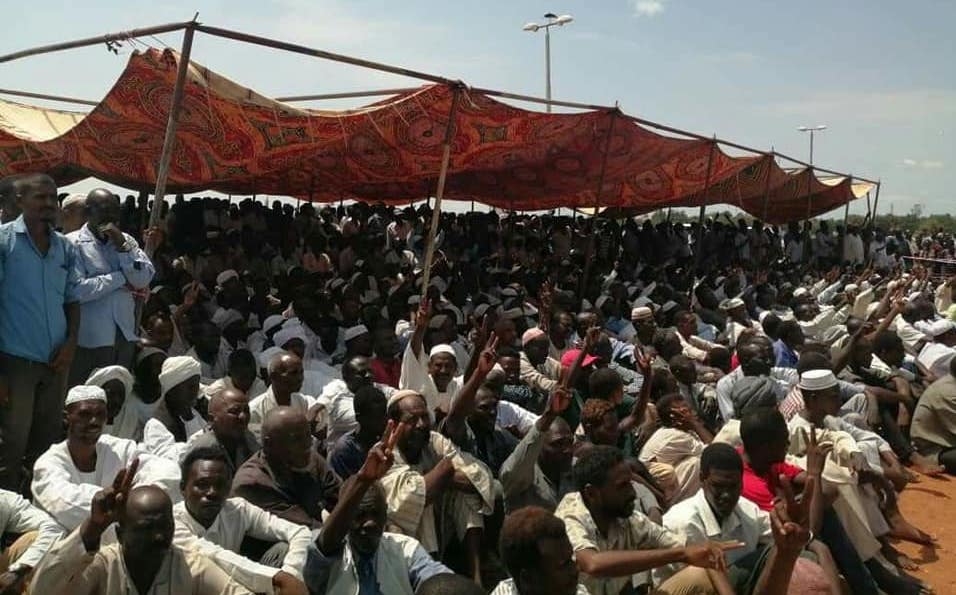
After more than 30 years of Islamist rule, Sudan’s interim Sovereignty Council has unveiled a sweeping reform of the sharia-based legal code. The revisions aim to bring Sudan’s laws in line with the Constitutional Declaration that established the country’s transitional government a year ago, and included guarantees for basic rights and freedoms. Most significantly, the amendments abolish the crime of “apostasy”—meaning conversion from Islam, which had carried the death penalty and was widely used to target political opposition. (Map: Perry-Castañeda Library Map Collection)

Inner Asia
Uzbek migrants

Migrants stranded on Russian-Kazakh border

Thousands of migrant workers from Uzbekistan have been stranded for weeks at the Russia-Kazakhstan border. Left without work in Russia amid the COVID-19 pandemic, they sought to make their way home by land through Kazakhstan—only to find the border closed by Kazakh authorities. The migrants have set up a makeshift camp in an open field, where they are struggling without adequate food, water or supplies in severe summer heat. (Photo: Meduza)

The Caucasus
tovuz

Armenia-Azerbaijan border as regional flashpoint

Several have been killed in ongoing clashes that broke out along the border of Armenia and Azerbaijan. An Azerbaijani general is among the dead in the heaviest fighting between the two nations in years. Villages in Azerbaijan’s northern Tovuz rayon (district) have come under artillery fire by Armenian forces, causing property damage. Officials in both countries blamed each other for starting the fighting. But some see an Armenian design to involve Russia in the conflict. This time the fighting is not in the contested enclave of Nagorno-Karabakh, where Armenia does not have internationally recognized sovereignty. An attack there would fall outside the purview of the Russian-led Collective Security Treaty Organization (CSTO), of which Armenia is a member. Under Article 4 of the CSTO Charter, an attack on a member state is considered an attack against all members. (Photo: Axar.az)

New York City
Fifth Estate

Fifth Estate Live with Bill Weinberg

Portland-based musician and vlogger David Rovics interviews CounterVortex editor Bill Weinberg for Fifth Estate Live. The two discuss Weinberg’s upcoming story for the anarchist journal Fifth Estate on the “two faces of fascism” the US confronts at this moment—a Trumpian dictatorship or a post-pandemic “new normality” of complete surveillance and social control. But the moment is also pregnant with possibility, witnessing the mainstreaming of anarchist ideas such as abolishing the police. Initiatives such as cannabis legalization as a first step toward this aim are gaining ground nationally. Looking back, they draw lessons for the current revolutionary moment from the Tompkins Square Park uprising on Manhattan’s Lower East Side in the 1980s, and the rebellion of the Zapatistas in Mexico in the 1990s—who continue to hold liberated territory in the southern state of Chiapas even today. Watch the video archive on YouTube or listen to the audio version on SoundCloud.

Africa
ISIS Nigeria

ISIS franchise claims attack on Nigerian military

The self-proclaimed Islamic State West Africa Province (ISWAP) issued a statement claiming its fighters killed 40 Nigerian soldiers in an ambush along the Damboa-Maiduguri highway in northern Borno state. The statement said ISWAP fighters captured five all-terrain vehicles, weapons and ammunition, and burned an armored vehicle during the attack. The Nigerian military confirmed the attack but said only two soldiers were killed. Boko Haram has now split into two factions. One, under longtime leader Abubakar Shekau, is notorious for suicide bombings and indiscriminate killings of civilians. Shekau pledged allegiance to ISIS leader Abu Bakr al-Baghdadi in 2015, but ISIS only recognizes the rival faction, which calls itself ISWAP. (Photo: Sahara Reporters)

Inner Asia
ET-Gulag-Archipelago

Uighurs charge China officials with ‘genocide’ at ICC

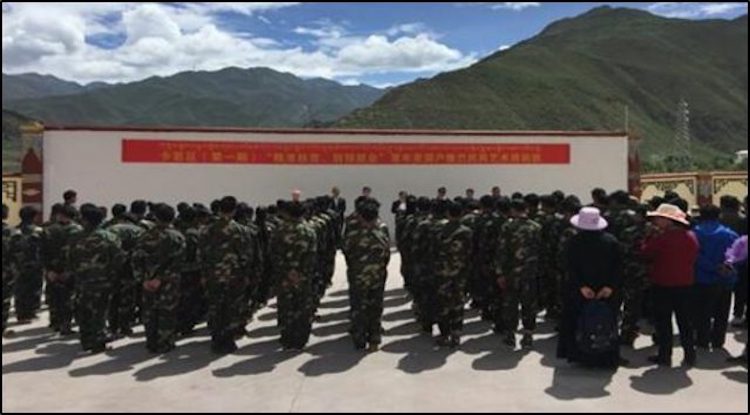
Lawyers submitted a complaint to the International Criminal Court (ICC), demanding that an investigation be opened into senior Chinese leaders for genocide and crimes against humanity, allegedly committed against the Uighurs and other Turkic peoples. The complaint was filed on behalf of the East Turkistan Government in Exile (ETGE) and the East Turkistan National Awakening Movement (ETNAM). China is not a signatory to the Rome Statute, but the lawyers argue that the ICC can exercise jurisdiction over these crimes because part of the criminal conduct occurred within the territory of two signatory states—Tajikistan and Cambodia. The complaint asserts that Uighur victims have been unlawfully deported to the People’s Republic of China from Tajikistan and Cambodia to face abuses including murder, unlawful imprisonment, torture, forced sterilization, and forced marriages. (Photo: ETNAM)

Syria
White Helmets

UN Rights Council sees Russian ‘war crimes’ in Syria

A UN Human Rights Council report concludes that air-strikes on civilian infrastructure by Syrian government and Russian forces in Idlib and Aleppo provinces amounted to war crimes. The report assessed incidents that occurred from November 1, 2019, to June 1, 2020. The Syrian government and Russian Aerospace Forces carried out both land and air attacks, which destroyed civilian infrastructure. The report documented 52 “emblematic attacks” that led to civilian casualties or damage to civilian infrastructure. These included 17 attacks on hospitals and medical facilities as well as 14 attacks on schools. (Photo via EA Worldview)

Africa
Misau

Nigeria: Fulani conflict upends traditional rule

The ongoing conflict between settled farmers and Fulani herdsmen in northern Nigeria again exploded into violence in Bauchi state. The clash at Zadawa village left nine dead and several injured on both sides. The village is part of the Misau Local Government Area, a traditional emirate recognized by the state and national authorities. In the aftermath of the communal violence, Bauchi Gov. Bala Mohammed officially suspended the powers of the emir of Misau, Alhaji Ahmed Suleiman, finding that he had taken actions that led to the escalation. At issue were lands owned by the emirate on the periphery of the village that had long been used for grazing by Fulani herders, but which were turned over to local farmers. Restoration of the emirate’s powers are pending, based on the findings of a commission called by the governor to investigate the matter. (Photo: Sahara Reporters)

The Andes
Colombia military

Colombia: court orders suspension of US military ops

In an unprecedented move, a Colombian judge gave President Ivan Duque 48 hours to suspend the participation of US troops in counternarcotics operations. The legal challenge was brought after 53 soldiers from the Pentagon’s Southern Command arrived as part of a “Security Force Assistance Brigade.” When opposition lawmakers protested that they had not been consulted, Defense Minister Carlos Holmes Trujillo told Congress he didn’t need their permission. Left-opposition Sen. Ivan Cepeda responded by taking the matter to the Cundinamarca Administrative Tribunal. The judge ruled that if Trujillo wants the US troops to continue their operations he must either receive permission from Congress or successfully appeal the ruling within 72 hours. (Photo via Colombia Reports)

The Amazon
TIPNIS

Bolivia: IACHR to hear TIPNIS case

The Inter-American Commission on Human Rights (IACHR) formally agreed to hear a complaint filed by 64 indigenous communities in Bolivia’s eastern rainforest, accusing the Bolivian state of violating their territorial rights under the administration of ousted president Evo Morales. The complaint charges that Bolivian authorities undertook to build a highway through the Isiboro-SĂ©cure National Park & Indigenous Territory (TIPNIS) without consulting or obtaining the consent of indigenous inhabitants. It also alleges that the government illegally used force to break up the cross-country “VIII Indigenous March” that was called to protest the road construction in 2011. (Photo via Bolivia Diary)