North Africa

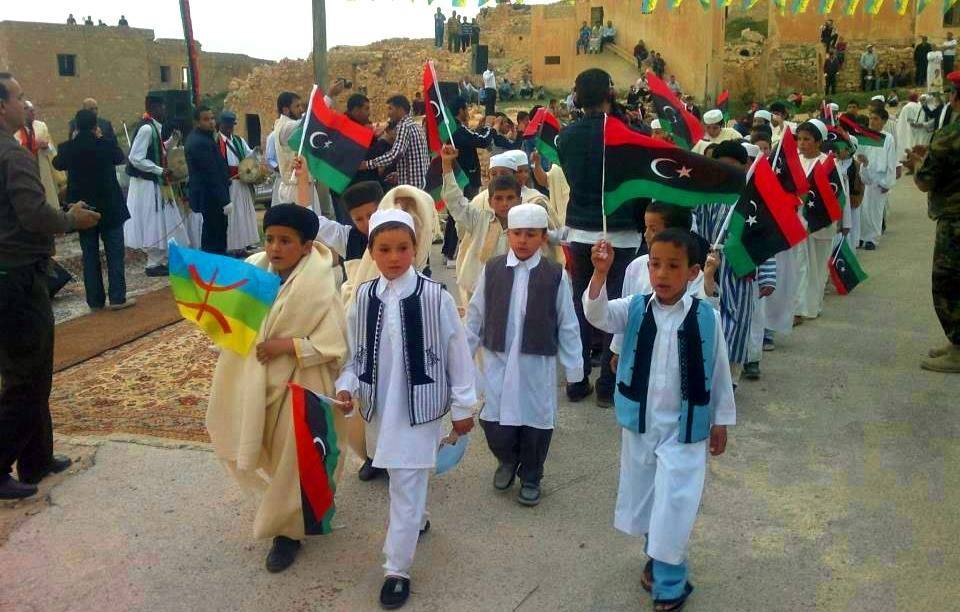
Algeria, Libya mark Berber new year —at last

In a victory for Berber activists, Algeria officially celebrated Yennayer, the new year holiday of the Amazigh people, for the first time. The move is part of a general effort by Algeria's government to permit greater expression of Amazigh (Berber) culture in order to head off a separatist movement. Neighboring Libya also saw its first official Yennayer celebrations, although not on a national scale. The locally ruling Amazigh Supreme Council declared the holiday within the Berber self-governing zone in the country's western mountains. But elsewhere in the country there are signs of backsliding toward the intolerant stance of the Qaddafi dictatorship, when any expression of Amazigh language or culture had been strictly banned. A Berber activist in Benghazi, Rabee al-Jayash, was detained by forces of the city's reigning warlord, Khalifa Haftar, for public speaking and writing in the Amazigh tongue. (Photo: Amazigh World News)

Planet Watch

Podcast: Anti-austerity and the utopian moment

Protests against austerity and the lords of capital are erupting simultaneously in Iran, Tunisia, Sudan, Morocco, China, Peru, Honduras, Argentina and Ecuador, recalling the international protest wave of 2011. Such moments open windows of utopian possibility, but those windows inevitably seem to close as protest movements are manipulated by Great Power intrigues or derailed into ethnic or sectarian scapegoating. What can we do to keep the revolutionary flame alive, build solidarity across borders, and resist the exploitation and diversion of protest movements? Bill Weinberg explores this question on Episode One of the long-awaited CounterVortex podcast. You can listen on SoundCloud.

Iran

Middle East socialists support Iran protests

The Alliance of Middle Eastern Socialists issued a statement in support the popular protests in Iran, and calling on progressives in the region and throughout the world to stand in solidarity with them as well. The statement expressed hope that the current protests will force the Iranian regime to withdraw its military and financial support for the murderous regime of Bashar al-Assad in Syria, and to end its reactionary interventions in the region. It also voiced hope that the efforts by some elements to inject anti-Arab chauvinism into the movement will be rejected, in order for the protesters to effectively reach out to grassroots struggles across the Middle East region. (Photo: Center for Human Rights in Iran)

North Africa

Anti-austerity protests rock Tunisia

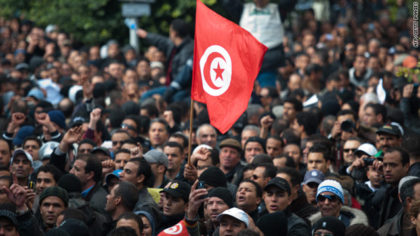
At least one is reported dead as angry protests have spread across Tunisia in response to an austerity package imposed by the government under pressure from the International Monetary Fund. Under the new budget, which took effect Jan. 1, fuel prices are hiked, and new taxes imposed on housing, cars, phone calls, Internet services, and several other items. Hamma Hammami, leader of the opposition Popular Front, pledged to keep up the pressure, telling reporters: "We will stay on the street and we will increase the pace of the protests until the unjust financial law is dropped." (Photo: North Africa Post)

Africa

Harsh repression as bread riots rock Sudan

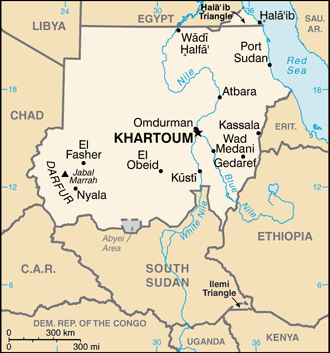
Sudanese authorities carried out mass arrests and confiscated newspapers as protests exploded over rising bread prices and severe economic austerity. One student was killed amid demonstrations in Geneina, capital of West Darfur state. Protests were also reported from the cities of Nyala, al-Damazin and the capital Khartoum. The unrest broke out as bakeries doubled the price of bread following a government decision to increase the price of flour nearly fourfold. The decision was part of a package of austerity measures issued under the country's 2018 budget, seeking to address the spiralling inflation rate.

Inner Asia

Tibetan language rights activist goes on trial

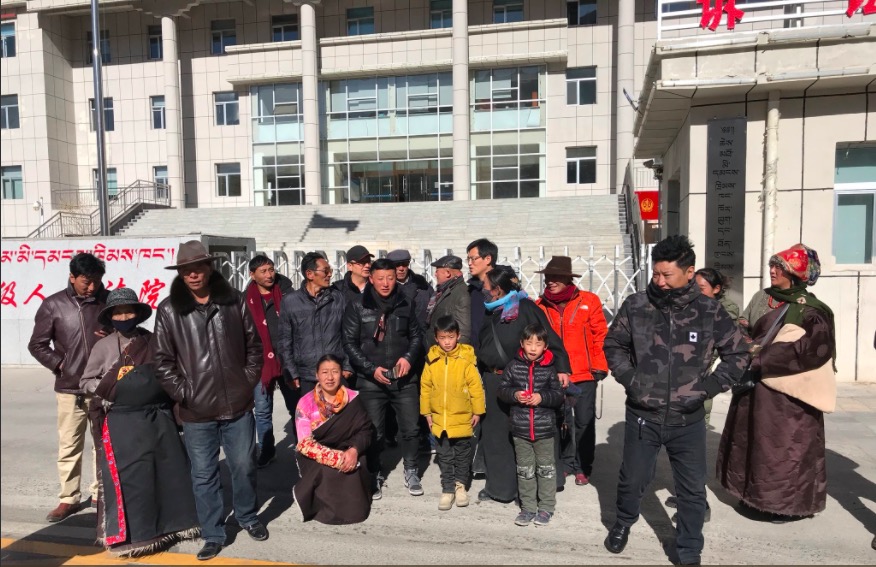
Relatives of Tashi Wangchuk waiting outside Yushu Intermediate People's Court in China's Qinghai Province. The trial of the educational rights activist ended with no verdict, and Tashi remains behind bars. He faces charges of "inciting separatism" for speaking to the New York Times about his work to advocate for Tibetan-language education, as guaranteed by China's constitution. Tashi told the Times that the lack of general instruction in the Tibetan language is "destroying our ethnicity's culture." The charge against him, dismissed as "ludicrously unjust" by Amnesty International, carries a 10-year sentence. (Photo: NYT via Phayul)

Please put our year-end fund drive over the top

OK, you know the deal, folks. If you want the latest news on revolution around the world from a radical perspective with 0% unvetted provocation or state propaganda, you know where to turn: CounterVortex. Thanks to donations last week from readers in Queens and Long Island, NY, our year-end fund drive has reached $220. Our summer fund drive topped $500. We need to match that again to meet our target of a yearly $1,000 (which at least puts us in the ballpark of recouping annual operating expenses). Please give what you can.

The Andes

Survivors of the ‘disappeared’ protest in Lima

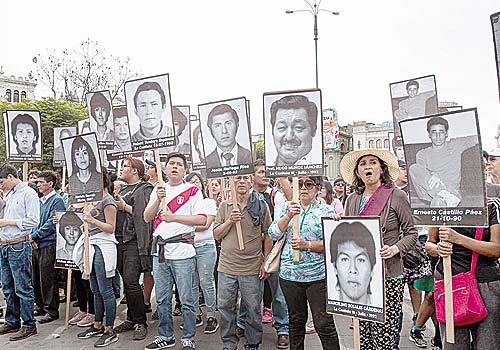
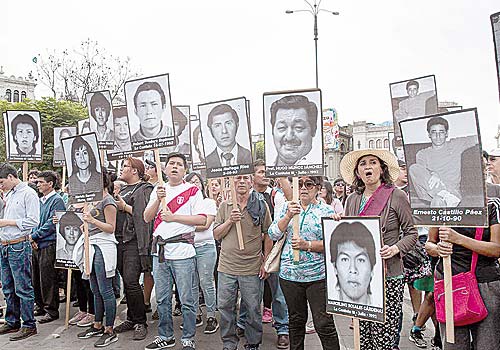
Thousands have taken to the streets of Lima every night since the Christmas Eve pardon of ex-dictator Alberto Fujimori, to be repeatedly dispersed by the riot police with tear-gas. Lead contingents in the marches have been relatives of those assassinated and "disappeared" under Fujimori's rule, especially victims of the Barrios Altos and La Cantuta massacres—carried out in 1991 and 1992, respectively, by regime-linked death squads against suspected sympathizers of the Shining Path. Marchers hold placards with the faces and names of "disappeared" students, workers and activists from the Fujimori era. (Photo: Diario Uno)

Iran

Iran: uprising against austerity —and clerical rule?

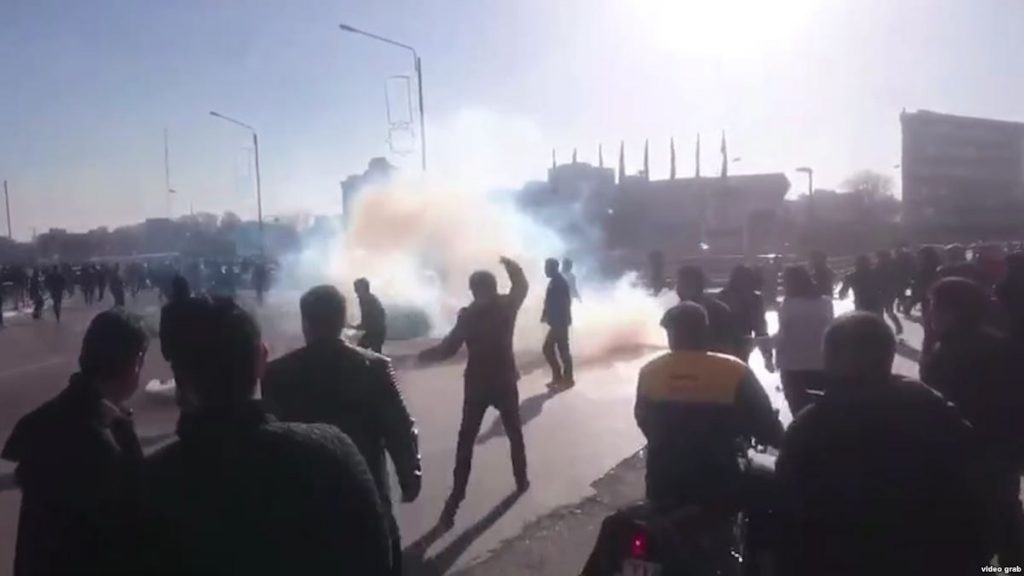
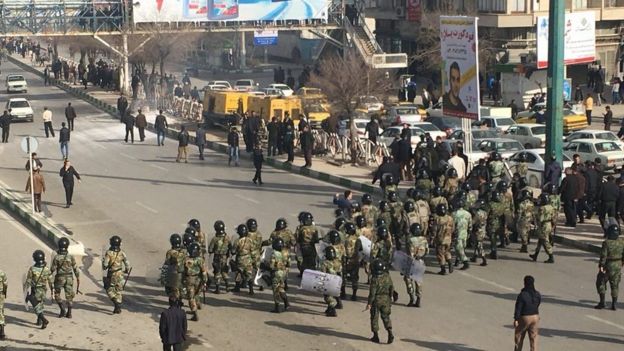
A wave of protests across Iranian cities began as a response to inflation and economic pain, but shows signs of escalating to a popular repudiation of clerical rule. Spontaneous protests first broke out in the northeast city of Mashhad, where security forces responded with tear-gas and water cannons. Since then, protests have been reported from Kermanshah and Hamadan in the west, Rasht and Sari in the north, Ahvaz in the southwest, and Qom and Isfahan in central Iran. Arrests are also reported from the capital, Tehran, where a group of demonstrators attempted to occupy a public square. Protests began with the slogan "Death to high prices!" But as repression mounted, demonstrators began chanting "Death to the dictator," in apparent reference to President Hassan Rouhani and the ruling mullahs. (Photo: Center for Human Rights in Iran)

North Africa

Morocco: mass protest against ‘mines of death’

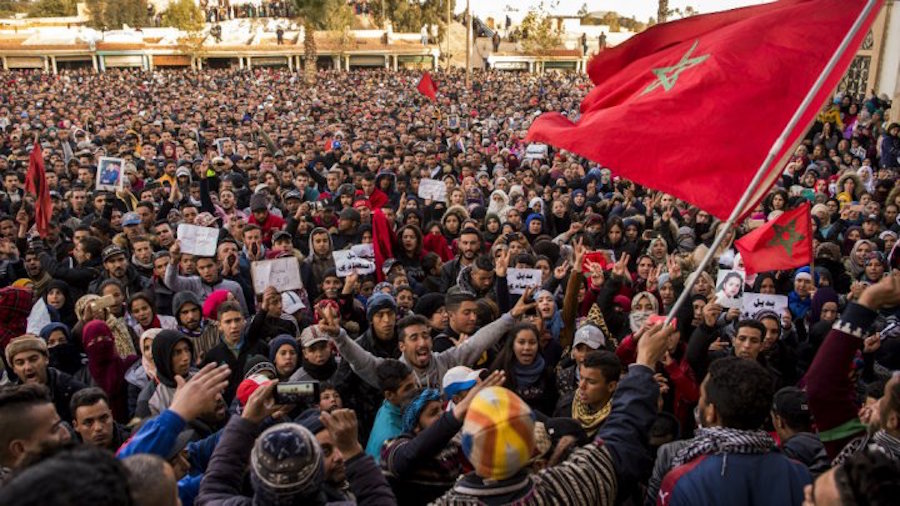
Thousands have repeatedly filled the streets of Jerada, in northeastern Morocco, as a mounting protest movement demanding jobs and social development for the marginalized region was further fueled by a mining disaster that left two young brothers dead. Mining was for decades Jerada's economic lifeline, employing more than 9,000. Since operations closed in the late 1990, locals have been struggling to survive—often by illegally taking coal from the abandoned pit, and selling it on the black market. Protesters accuse officials of turning the blind eye to the pirate mining despite the growing number of deaths in the improvised operations. They are demanding economic alternatives for the region, and government intervention to close "the mines of death." (Photo: @Riffijnsleed)

Southern Cone

Brazil’s top fugitive drug lord gets popped

Brazilian authorities announced the apprehension of Rogerio Avelino da Silva AKA “Rogerio 157″—the fugitive gang leader said be behind a wave of paramilitary-style violence that prompted the national government to flood  Rio de Janiero’s favelas with army troops earlier this year. Nearly 3,000 officers from the Federal Police as well as army troops took part in the “mega-operation” that led to his arrest. (Photo: O Globo)