Africa

Ethiopia in peace pact wth Oromo Liberation Front

Following peace talks hosted by Eritrea, the government of Ethiopia announced a peace deal with the Oromo Liberation Front rebels. The deal guarantees rebel leaders the right to participate in Ethiopia's political process in exchange for laying down arms. The OLF has long been backed by Eritrea, and the pact comes one month after a formal end was declared to the two-decade state of war between Ethiopia and Eritrea, with Ethiopia ceding its claim to the contested border town of Badme. This points to a softening of positions under Ethiopia's new prime minister, Abiy Ahmed. The Badme deal was also said to have been quietly brokered by the United Arab Emirates, which has emerged as politically isolated Eritrea's most significant foreign patron, part of an apparent design to encircle Yemen. (Photo: Yassin Juma

Inner Asia

Podcast: The Tibetan uprising 10 years later

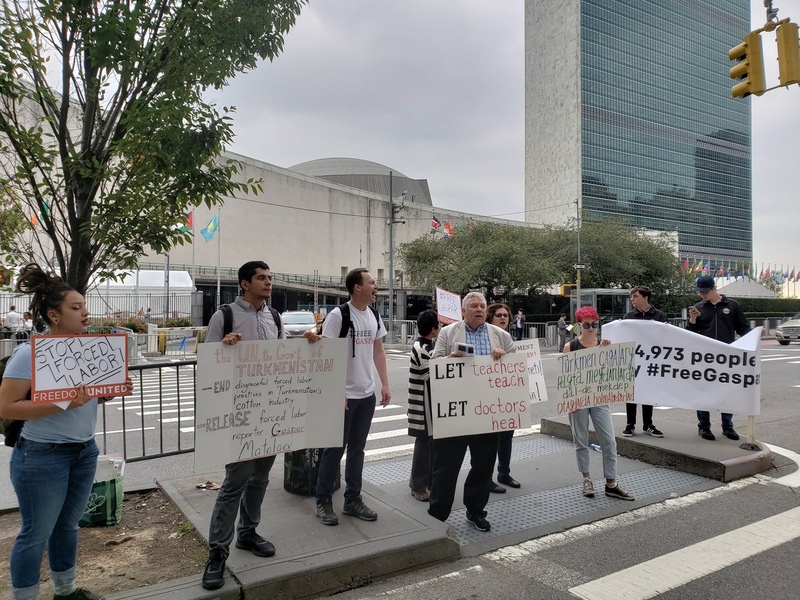
In Episode 15 of the CounterVortex podcast, Bill Weinberg reports on the 10-year commemoration of the 2008 Tibetan uprising held by Students for a Free Tibet in Astoria, Queens, New York City. A decade after the uprising was put down, struggles for land recovery and language preservation continue in Tibet, as well as among the Mongols, Uighurs and other indigenous peoples of the territory that constitutes the People's Republic of China. Weinberg provides an overview of these ongoing struggles, and draws parallels to related struggles in Peru, Ecuador, Colombia and elsewhere in the Americas—including the movement against the Dakota Access pipeline. These parallels point to the urgent need for grassroots-to-grassroots international solidarity across superpower infuence spheres. Listen on SoundCloud, and support our podcast via Patreon. (Photo: Uprising Archive)

North Africa

Berber language rights at issue in Libya, Morocco

The Libyan Amazigh Supreme Council, representing the country's Berber ethnic minority, has decided to boycott the referendum on the country's newly released draft constitution, in protest of the lack of provisions for their language and cultural rights. Berbers want their language to be official in the Libyan constitution, given equal status with Arabic in administration and education. Meanwhile in Morocco, Berber leaders are protesting a move by the city of Agadir to remove street names in the Berber language, Tamazight. The Agadir city council voted to change Tamazight street names to the names of Palestinian cities, ostensibly as a show of support for Palestinians. Abdullah Badou, head of Morocco's Amazigh Network, said: "We do not have a problem with Palestine. Certainly, we support the Palestinians, but we do not agree with those who ignore the nature of the area and the history of Morocco." (Photo of Agadir port via Morocco World News)

South Asia

China expands Indian Ocean military footprint

In addition to stationing troops on the disputed islands it claims in the South China Sea, Beijing is rapidly expanding its network of commercial ports across the Indian Ocean. This comes as China is sending warships into the Ocean with growing frequency, leading to fears that the commercial ports could presage military bases, The latest addition is the port of Hambantota in Sri Lanka, acquired in a debt swap deal—the Colombo government was forgiven $1 billion in debt to Beijing in exchange for the Hambantota facility. China has also gained access to facilities in Burma, Bangladesh, Pakistan, the Maldives, Seychelles and Oman as part of the maritime component of its Silk Road trade and infrastructure initiative. While the Silk Road is an ostensibly civilian project, China has also established its first foreign military base at Djibouti, leading Western wonks to warn that Beijing is seeking a "string of pearls" network of bases across the Indian Ocean.  (Map via CIMSEC)

Iraq

Yazidis reject hand-over of Sinjar to KRG control

The Provisional Government of Ezidikhan—the self-declared autonomous homeland of the Yazidi people in northern Iraq, centered around the town of Sinjar—issued a statement flatly rejecting a political deal cut between Baghdad and Kurdish authorities in Irbil to hand control over the enclave to the Kurdistan Regional Government. Said Ezidikhan Prime Minister Waheed Mandoo Hammo: "The Yezidi people reject the Iraq government’s attempt to install the Kurdish Regional Government as the military and political authority over the nation of Ezidikhan without our consent. The Ezidikhan Provisional Government is the sole, legitimate government representing the peoples of Ezidikhan. No decisions regarding the political, economic or strategic actions [of] the nation of Ezidikhan can legitimately be made without our free, prior and informed consent." (Map: Ezidikhan.net)

Syria

Druze women and children abducted by ISIS

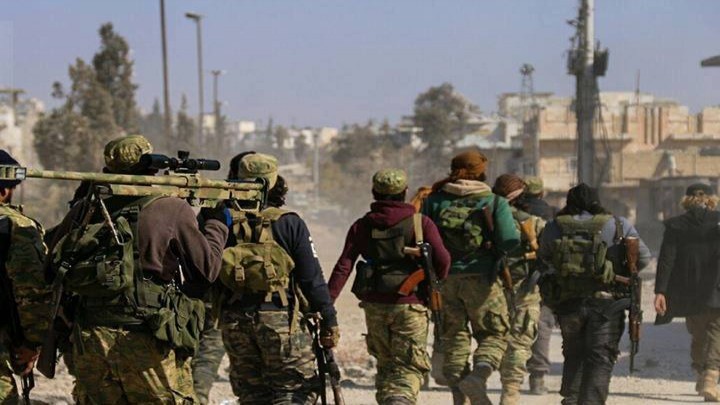
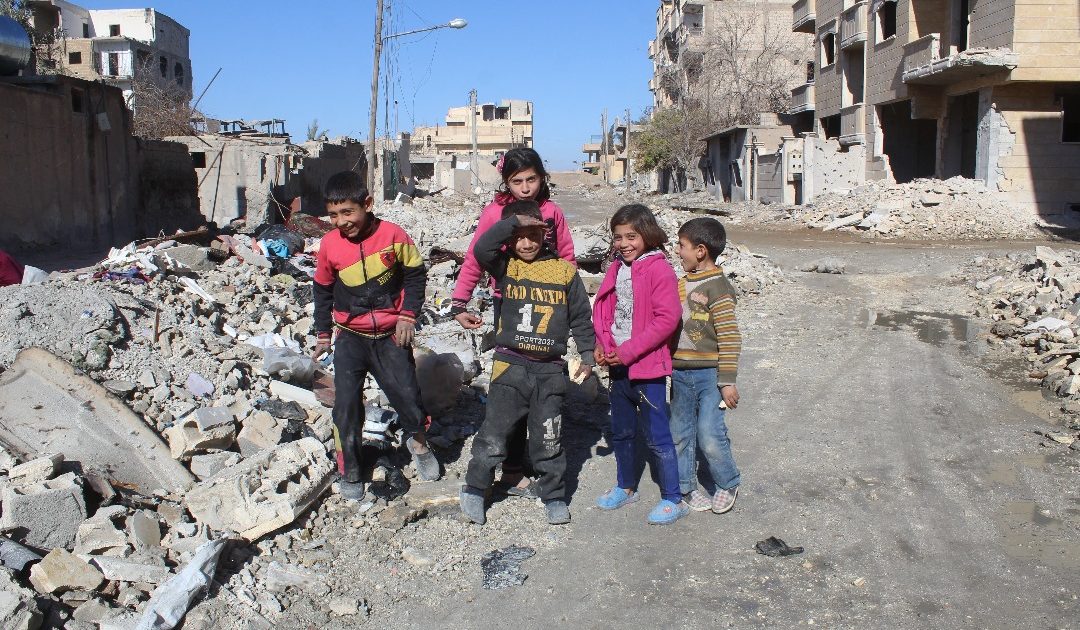
During the wave of coordinated ISIS attacks that left 250 dead in Syria’s regime-held southern governorate of Suweida, the militants also went door-to-door in Druze villages, abducting some 35 women and children. The militants are believed to have escaped with them into their remaining strongholds in Syria’s eastern desert. The attack wave followed visits by Russian military delegations to Suweida, during which Druze elders were urged to cooperate in disarming the populace. This was apparently aimed at suppressing the Rijal al-Karama (Men of Dignity), a Druze self-defense militia that had emerged over the past years of violence in Syria. The ISIS assault came immediately after regime weapons seizures in Druze villages, leading to theories of regime complicity in the attacks. (Photo via Syria Call)

Central America

UN protests Nicaragua ‘anti-terrorism’ law

The UN Office of the High Commissioner for Human Rights expressed concern for a law approved in Nicaragua, ostensibly aimed at money-laundering, arms-trafficking and terrorism. The statement warned that the definition of "terrorism" under the law is dangerously "vague," and that it could be used to suppress opposition. The law defines as "terrorism" any damage to public or private property, punishable by up to 20 years in prison. Additionally, anyone found guilty of directly or indirectly financing or aiding so-called "terrorist operations" can also face up to 20 years. The law was introduced in April, just as Nicaragua's political crisis was breaking out. The OHCHR noted that the law was passed by a National Assembly "almost completely controlled" by the ruling Sandinista party. (Poto via Noticiias ONU)

The Andes

Colombia: ‘systematic’ attacks on social leaders

Thousands of Colombians took to the streets July 6 to protest the mounting wave of assassinations of social leaders in the country. The protests and vigils were largely ignored by the country’s political leaders, who have come under international pressure for their failure to respond to the wholesale killing that has claimed the lives of 311 community leaders since 2016. Days after the mobilization, the Inter-American Commission of Human Rights issued yet another call for the Colombian government to take urgent measures to call a halt to the ongoing attacks. Opposition leaders charge that the assassinations are a "systematic" campaign, and that authorities must break up resurgent paramilitary networks rather than just arresting individual sicarios (assassins). (Photo via Contagio Radio)

Greater Middle East

US unfreezes military aid to Egypt

The Trump administration has decided to release $195 million in military aid to Egypt that had been frozen last year because of human rights concerns, the State Department announced July 25. The decision is intended to recognize "steps Egypt has taken over the last year in response to specific US concerns," the statement said. A high-level Egyptian military delegation had been in Washington for talks prior to the announcement. The funds, falling under Foreign Military Financing, are intended for Egypt to buy US-made military equipment. Human rights groups slammed the decision by Secretary of State Mike Pompeo, saying he had squandered valuable leverage over President Abdel Fattah el-Sisi at a time when his regime's rights record only seems to be worsening. (Photo: Egyptian Streets)