

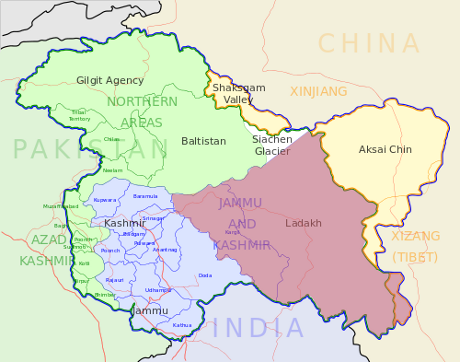
Amnesty International on Sept. 25 urged Indian authorities to promptly and independently investigate the use of live fire during protests in Leh, Union Territory of Ladakh, one day after at least four people were reported killed and more than 50 injured.
Aakar Patel, chair of the board of Amnesty International India, called for de-escalation and respect for the right to peaceful protest, stating: "Any use of firearms in the context of an assembly must be an absolute last resort… The indiscriminate use of firearms against protesters is always unlawful."
Local officials and witnesses said the clashes erupted as demonstrators pressed long-standing demands for statehood and constitutional protections for land and jobs. Police said they responded after parts of the crowd turned violent, with vehicles and a ruling Bharatiya Janata Party office set ablaze, and claimed officers fired in self-defense. Authorities imposed a curfew in parts of Leh and temporarily restricted mobile internet services.
The protests follow years of mobilization by Ladakhi groups seeking both statehood for the territory and inclusion under India's Sixth Schedule, which offers limited self-governance to tribal areas. Organizers say federal control since 2019 has sidelined local decision-making and left the region's fragile ecosystem and subsistence livelihoods exposed to outside pressures. Civic platforms, including the Leh Apex Body and the Kargil Democratic Alliance, have led marches, sit-ins and hunger strikes. Climate activist Sonam Wangchuk, a prominent face of the movement, ended a 14-day fast after the new violence and was later detained by police.
Ladakh was carved out as a Union Territory on Oct. 31, 2019, when the former state of Jammu & Kashmir was reorganized. While many in Leh initially welcomed separate administration, concerns have grown over land safeguards, demographic change, and limited local autonomy. The region's strategic location, bordering both China and Pakistan-controlled territory, along with accelerating glacial melt and extreme weather, have added urgency to calls for stronger local say over development and environmental policy.
Amnesty International said any inquiry should determine why less-lethal crowd-management options were not exhausted before live rounds were used, and whether the firing complied with necessity and proportionality standards.
Ladakh representatives and the central government are expected to meet for further talks in early October.
From JURIST, Sept. 27. Used with permission. Internal links added.
See our last report on the struggle in Ladakh
Map via Wikipedia

