Greater Middle East
syria

Air-strikes target Iraqi paramilitary force

Air-strikes on an Iraqi military base killed seven and wounded 13, ramping up diplomatic tension between Baghdad and Washington. The Popular Mobilization Forces (PMF)—a network of militias that are officially part of Iraq’s military structure but including groups with strong links to Iran—said the US was responsible for the first strike on Habbaniyah airbase in Anbar province. Iraq’s Defense Ministry said the second strike hit a medical clinic on the base, which is shared with PMF units. (Image: Pixabay)

Planet Watch
WFP

WFP: mass food insecurity if Middle East conflict continues

The World Food Programme (WFP) warned that the escalating hostilities in the Middle East could lead to record levels of food insecurity, and the largest disruption in the global economy and humanitarian efforts since the COVID-19 pandemic. Due to the heavy reliance of food and aid distribution on energy, the skyrocketing price of oil has placed heightened strain on already over-stretched aid supply lines. WFP chief operating officer Carl Skau said: “If this conflict continues, it will send shockwaves across the globe, and families who already cannot afford their next meal will be hit the hardest.” Skau urged the international community to mount an adequately funded humanitarian response. Sudan and Somalia were named as particularly vulnerable. (Photo: Alex Blokha via Wikimedia Commons)

Greater Middle East
Lebanon

UN sees potential Israeli ‘war crimes’ in Lebanon

The UN Human Rights Office stated that Israeli strikes on homes and civilian infrastructure in Lebanon may constitute war crimes. The statement came as Israel intensifies its military campaign on the territory of its northern neighbor amid the broader conflict spreading across the Middle East. Thameen Al-Kheetan, spokesperson for the UN High Commissioner for Human Rights, said that Israeli strikes in Lebanon have killed hundreds, including children, and destroyed homes and healthcare facilities, while Hezbollah rockets have injured civilians in Israel. Mass displacement has forced families into overcrowded areas, with access to healthcare, food and education severely disrupted. (Image via Flickr)

Greater Middle East
Istanbul

‘Politicized’ trial begins for Istanbul mayor

Istanbul mayor and Turkish opposition leader Ekrem İmamoÄźlu went on trial, accused of establishing an “İmamoÄźlu Criminal Organization for Profit” that operated parallel to and was concealed by his official duties. Critics of the trial say that President Recep Tayyip ErdoÄźan is politically influencing the proceedings as part of a broader judicial campaign intended to impede the ability of İmamoÄźlu’s Republican People’s Party (CHP) to function as an effective opposition party, and to prevent İmamoÄźlu and other CHP officials from exercising their rights to political participation. The case is part of a mass trial involving more than 400 co-defendants, most of whom worked for the Istanbul Metropolitan Municipality, which İmamoÄźlu has headed since 2019. (Photo: Hunanuk via Wikimedia Commons)

Greater Middle East
Minab

UN demands civilian protection amid Middle East escalation

The United Nations urgently called for civilian protection amid growing violence and instability in the Middle East—and particularly in regard to the ongoing US and Israeli military operations against Iran. The UN urged a thorough investigation into a deadly strike on a girls’ school in Iran, and requested the disclosure of all relevant information. The attack in the southern coastal city of Minab reportedly killed 168 people. According to Iran’s Ministry of Education, the overwhelming majority of the slain were schoolgirls aged seven to 12. The strike came on the first day of coordinated US and Israeli airstrikes officially targeting Iranian infrastructure and military facilities. (Photo: Mehr via Wikimedia Commons)

Greater Middle East
Turkey

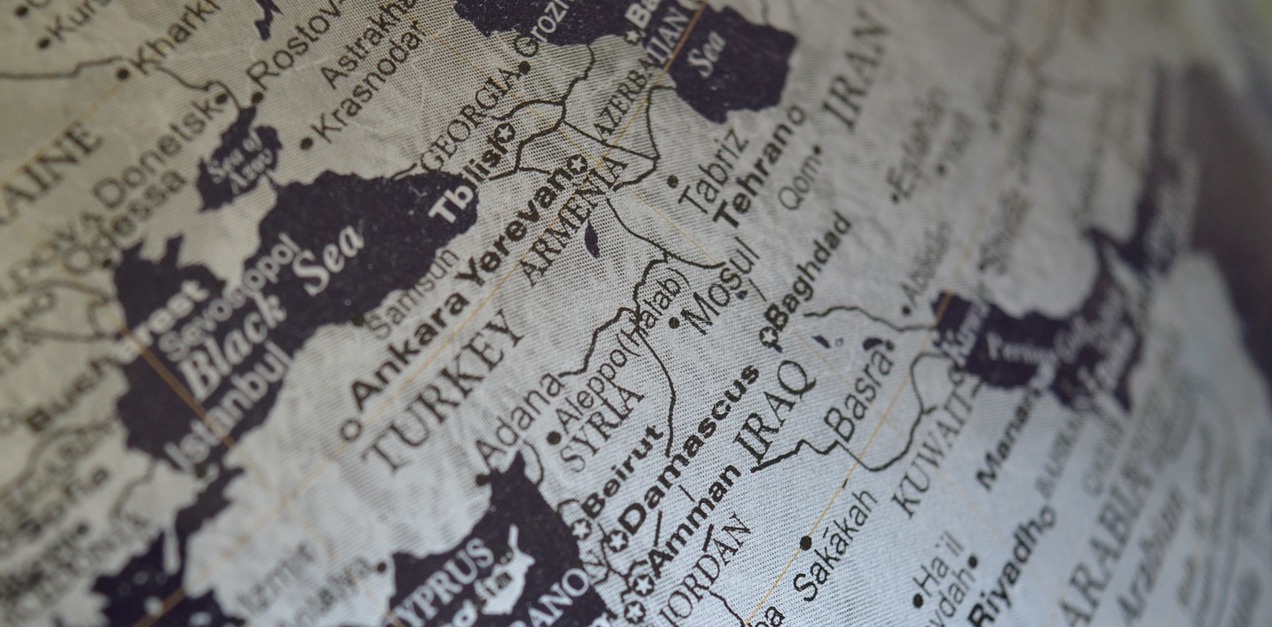
Turkey detains ISIS suspects in nationwide raids

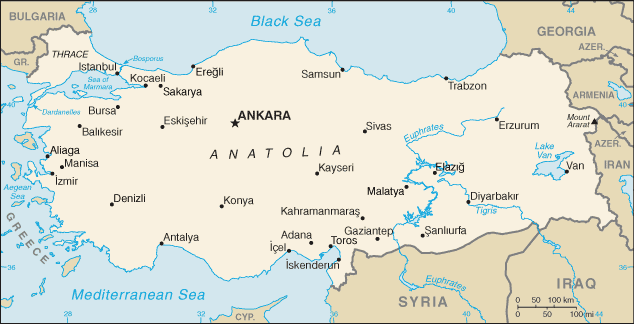
Turkish police detained 357 people in large-scale, coordinated operations targeting the Islamic State group one day after a deadly clash between police and ISIS militants in Yalova, a small city south of Istanbul on the Sea of Marmara, amid heightened security ahead of New Year’s celebrations. Three police officers and six presumed ISIS militants, all Turkish nationals, were killed in the shoot-out in Yalova, sparked by a raid on suspected safe-house. The subsequent nationwide raids were carried out simultaneously by provincial police units, working with the national counterterrorism and intelligence departments. The raids took place in major cities including Istanbul and Ankara, as well as in Yalova and several border and interior provinces. (Map: CIA)

Greater Middle East
Yemen

Yemen: UAE-backed southern separatist forces advance

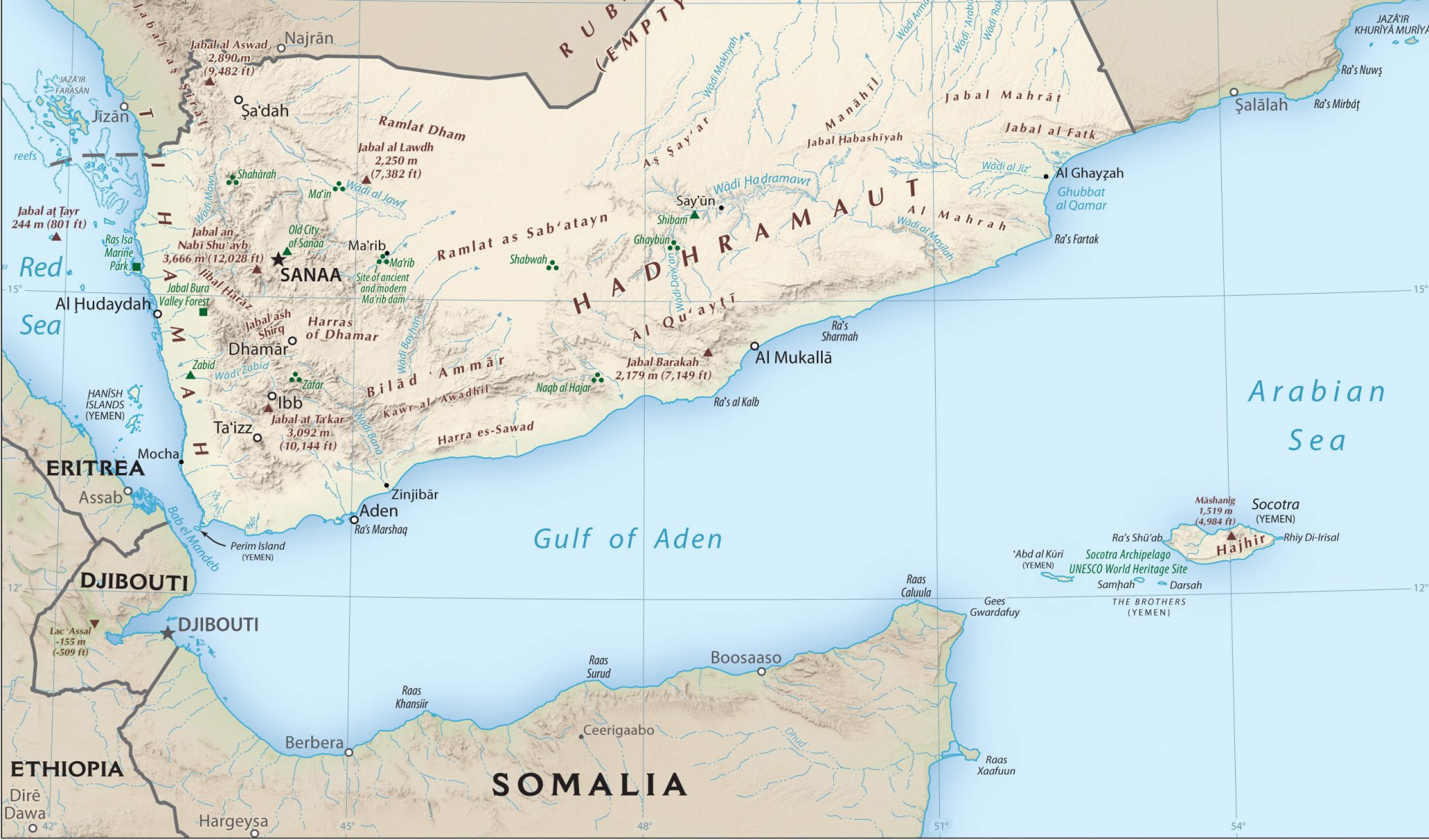
Yemen’s separatist Southern Transitional Council, which is said to be backed by the United Arab Emirates, has been rapidly advancing through large parts of the country’s south and east, in Hadramawt, al-Mahra and Shabwa provinces. They are taking over control from groups backed by Saudi Arabia, including the Hadramawt Tribal Alliance. While all forces involved are supposed to be on the same side in a broader anti-Houthi alliance, the move is yet another reminder that Yemen’s war is not over, and that it involves a variety of actors and local grievances. (Map of Yemen before 1990 unification via Wikipedia)

Greater Middle East
Yemen

Yemen: Houthi authorities round up opposition

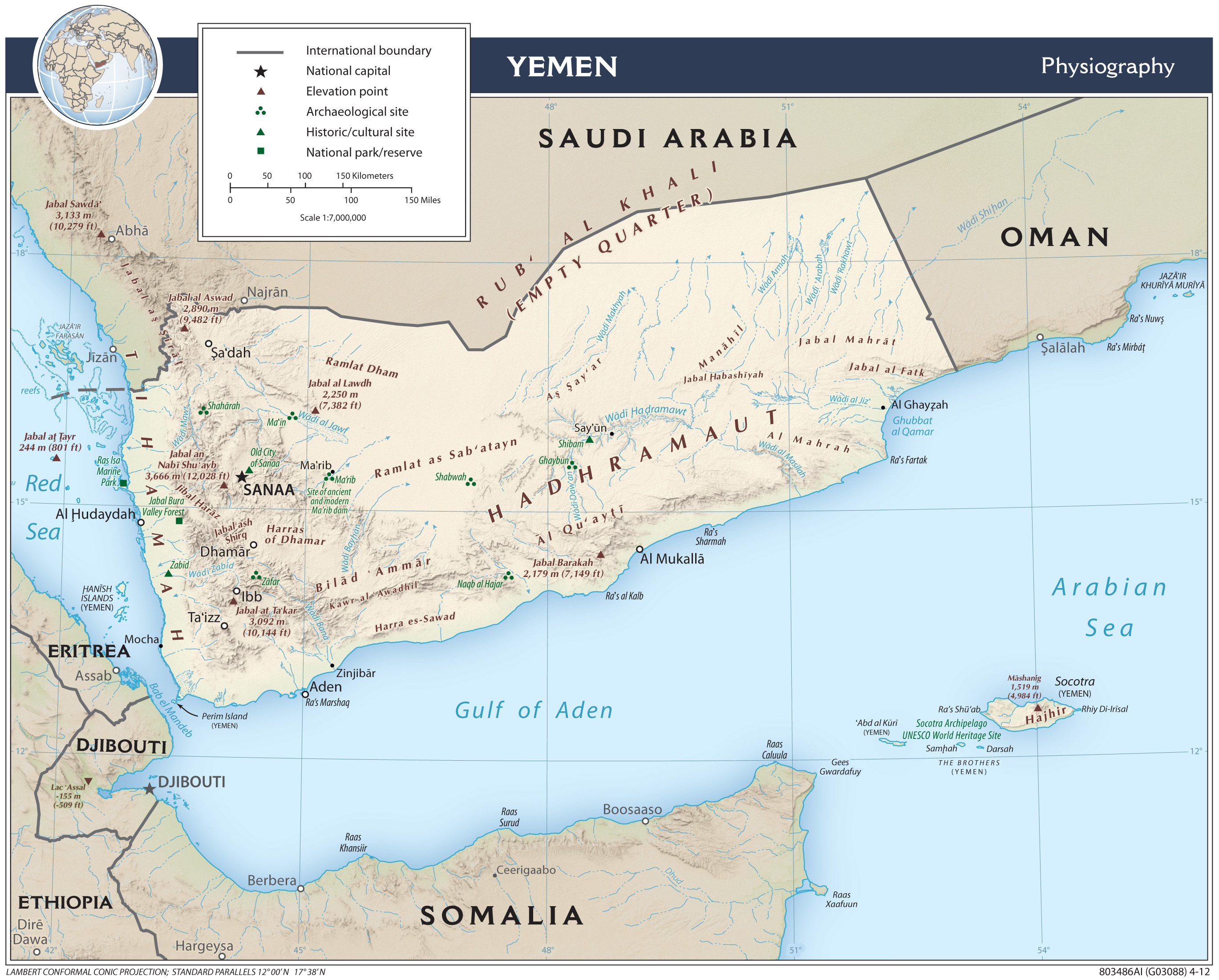
Houthi authorities in Yemen have detained dozens of political opponents since July, Human Rights Watch (HRW) reported. The rights group said that at least 70 people associated with the opposition party Yemeni Congregation for Reform, or Islah, were detained in Dhamar governorate. HRW noted that 21 of these individuals have been subject to an “unfair trial” on “dubious accusations of espionage,” with 17 sentenced to death by firing squad, and two sentenced to 10 years imprisonment. HRW emphasized that it is illegal under Yemeni law to make arrests without a warrant, and that detention without a legal basis or prompt charges and criminal proceedings violates both domestic and international law. (Map via PCL)

Greater Middle East
MBS

Trump dismisses Saudi human rights concerns

President Donald Trump praised Saudi Crown Prince Mohammed bin Salman as “incredible in terms of human rights” during an Oval Office meeting, preemptively deflecting questions about the kingdom’s extensive record of abuses as the crown prince pledged $1 trillion in US investments. The comments came despite weeks of pressure from human rights advocates urging Trump to confront the crown prince over Saudi Arabia’s recent grave abuses, an incomplete list of which is said to include record numbers of executions, torture of dissidents, systematic repression of women, and the killing of hundreds of Ethiopian migrants at the Yemen border. Human Rights Watch pointed out that Trump’s meeting with bin Salman came just five months after Saudi authorities executed journalist Turki al-Jasser, who had been arrested for social media posts critical of the regime in 2018 and charged with “high treason.” Executions in Saudi Arabia are carried out by beheading with a sword. (Photo of Mohammed bin Salman’s 2017 White House visit via Wikimedia Commons)

Greater Middle East
Gaza Strip

Gaza and Lebanon: the ceasefires that aren’t

The word “ceasefire” seems like a misnomer for the situation in the Gaza Strip since Israel and Hamas agreed to a deal that was supposed to end two years of war a month ago. The Israeli military is still deployed in over 50% of the territory and continues to shell and fire on Palestinians, killing more than 240 and injuring over 600 since Oct. 11. Aid is also still entering the enclave at a trickle—far from the levels needed to address a hunger crisis caused by months of Israeli-enforced deprivation. A UN resolution creating an international stabilization force for Gaza—a key part of the 20-point US peace plan—may face delays over disagreements about its mandate and the timetable for Israel’s withdrawal from the territory. Observers point out that the situation is beginning to resemble south Lebanon, where Israel has continued to occupy land and carry out attacks despite a ceasefire agreement that went into effect at the end of November last year. In recent weeks, Israel has carried out near-daily attacks in south Lebanon. (Photo: WAFA via WikimediaCommons)

Greater Middle East
Freedom Flotilla

Israeli strikes target Hamas in Qatar —and Greta Thunberg in Tunis?

Unprecedented Israeli air-strikes on buildings in Qatar’s capital Doha apparently targeted senior members of Hamas’ external leadership—precisely those involved in ceasefire negotiations. The Israel Defense Forces confirmed the operation, with Prime Minister Benjamin Netanyahu saying that the attack was “a wholly independent Israeli operation.” He added: “Israel initiated it, Israel conducted it, and Israel takes full responsibility.” However, the White House quickly confirmed that it was informed of the operation beforehand. On the same day as the Qatar strikes, organizers of a flotilla carrying aid for Gaza said their lead ship was hit by a drone while anchored at the port of Sidi Bou Said, Tunisia. A video posted by the Global Sumud Flotilla appears to show a lit projectile falling from the sky onto the vessel before flames erupt on the front deck. The ship sustained some damage, according to later footage posted on social media. One day later, a second vessel in the flotilla was evidently struck, causing similar damage. The Global Sumud Flotilla’s most prominent member is Greta Thunberg, internationally known for her climate activism and now a leading figure in the Freedom Flotilla Coalition. (Photo: FreeGaza via Wikimedia Commons)

Greater Middle East
Lebanon

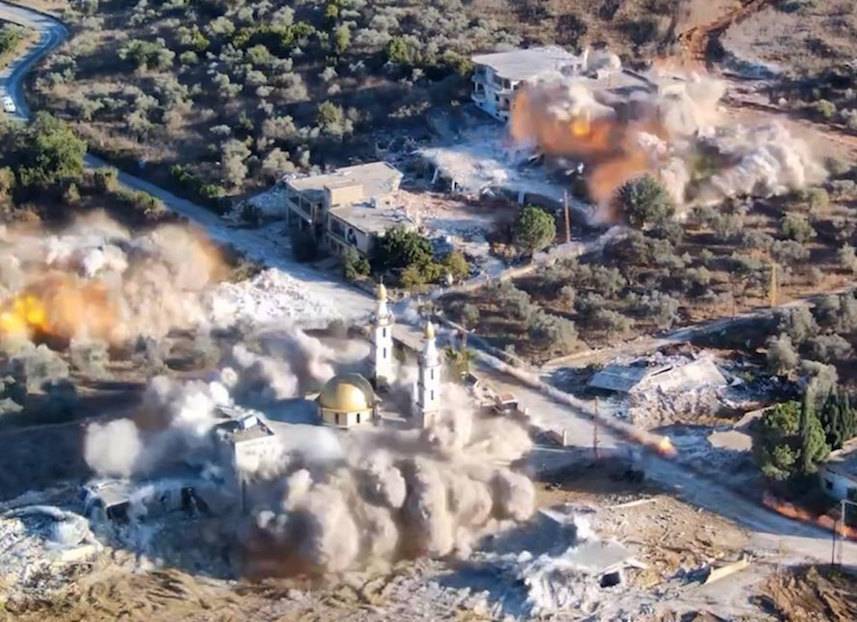
Amnesty sees potential Israeli war crimes in Lebanon

The Israeli military’s extensive destruction of civilian property and agricultural land across southern Lebanon must be investigated as war crimes, Amnesty International said in a new research briefing. The report, entitled “Nowhere to Return: Israel’s Extensive Destruction of Southern Lebanon,” documents the demolition of more than 10,000 civilian structures between October 2024 and January 2025. Amnesty concluded that the destruction, often carried out with manually laid explosives and bulldozers while Israeli forces were in control of the areas, occurred outside active combat and without the “imperative military necessity” required under international humanitarian law. (Photo via Amnesty International)