South Asia
Gandhi

Podcast: against Narendra Modi’s Gandhi-exploitation

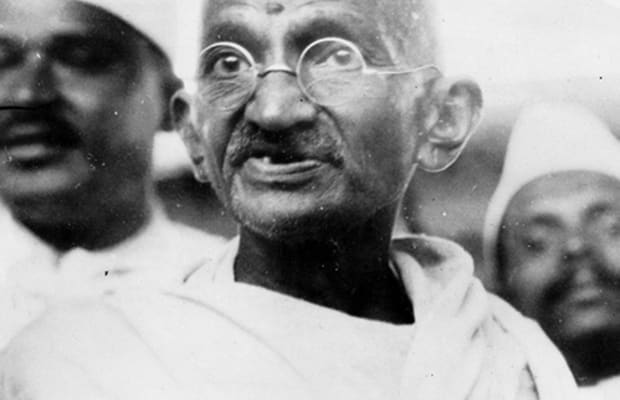
Amid moves toward mass detention of Muslims in Kashmir and Assam, a growing atmosphere of terror, and persecution of government critcs, India’s arch-reactionary Prime Minister Narendra Modi cynically places an op-ed in the New York Times extolling Mohandas Gandhi on his 150th birthday. In Episode 40 of the CounterVortex podcast, Bill Weinberg calls this out as Orwellian propaganda, and documents the historical reality: Modi is not the inheritor of the tradition of Gandhi, but that of his assassin. Those who assert that Modi’s Bharatiya Janata Party has fascist roots are factually correct. Progressives in recent years have been rethinking the sanctification of Gandhi, and that is one thing. But Modi should not be allowed to get away with wrapping himself in the legacy of a man who was the antithesis of everything he represents. And US political figures like Tulsi Gabbard who pretend to be progressives while embracing the fascistic Modi must be exposed and repudiated. Listen on SoundCloud, and support our podcast via Patreon.. (Photo via Biography.com)

East Asia
Su Beng

Taiwan independence activist Su Beng dead at 100

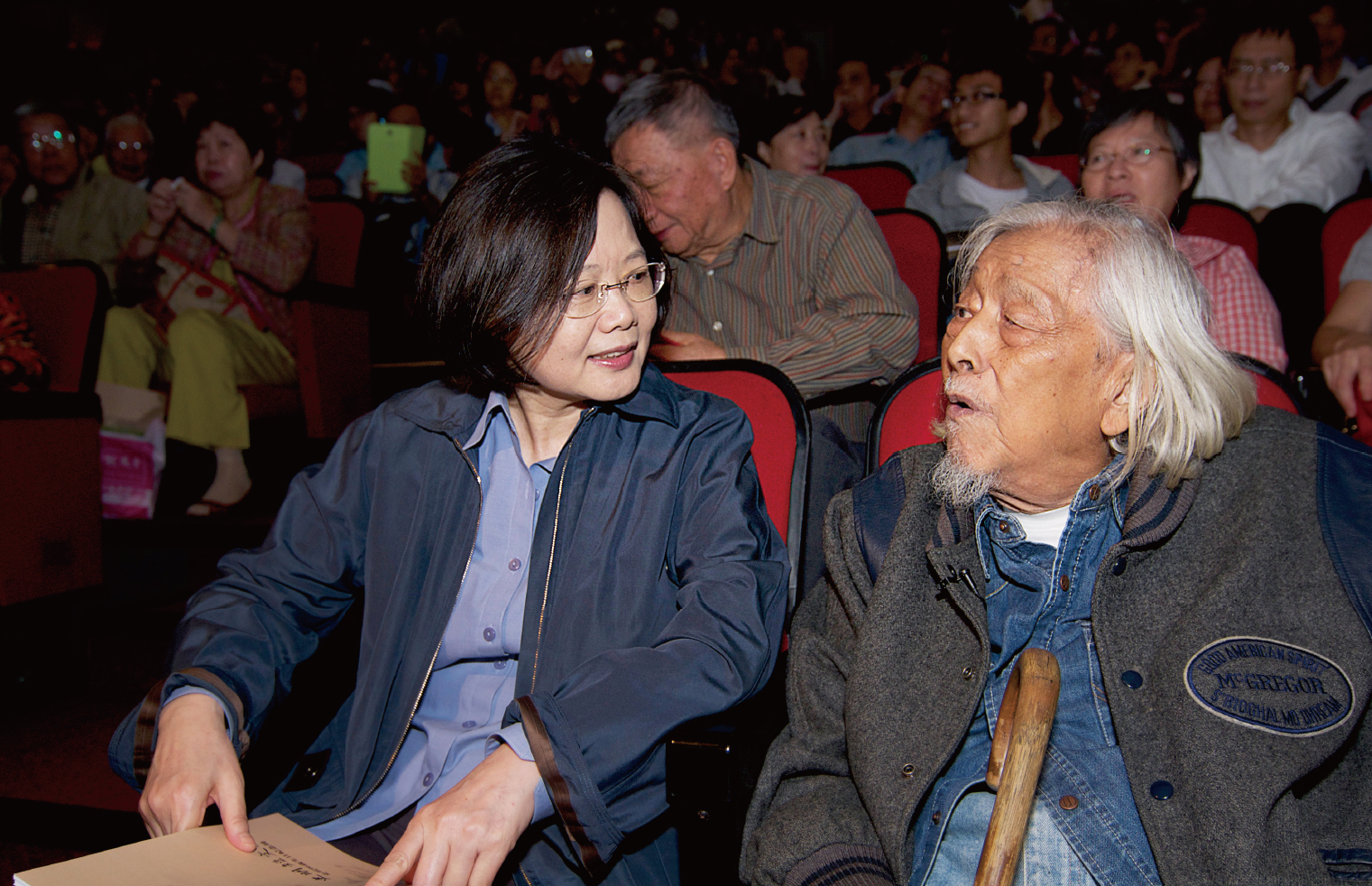
Lifelong Taiwanese independence activist Su Beng died in Taipei, just a few weeks away from his 101st birthday. A resistance fighter against the Japanese during World War II, he subsequently became an underground militant who plotted against the dictatorship of Chiang Kai-shek. After being forced into exile in Tokyo, he wrote his history of Taiwan, an openly partisan work with an anti-imperialist perspective, and became a vocal advocate for democracy in his island home, and its formal independence from China. He returned to Taiwan with the democratic transition of the 1990s, where he continued to agitate for independence, eventually becoming a respected advisor to current President Tsai Ing-wen. (Photo of Su Beng with Tsai Ing-wen via SupChina)

East Asia
East Turkistan

Podcast: the politics of separatism in China

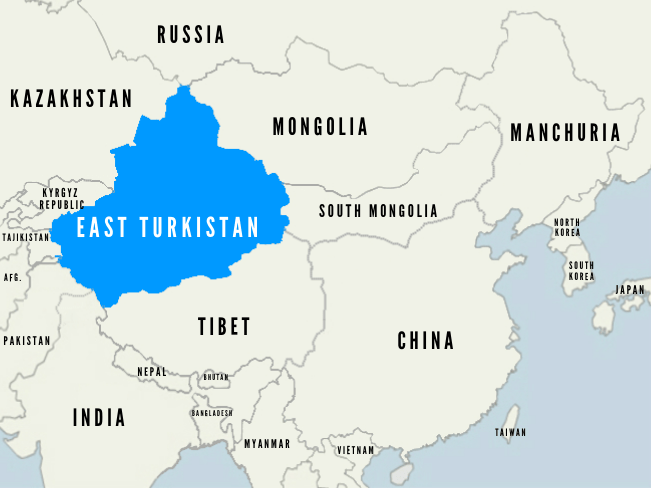
In Episode 39 of the CounterVortex podcast, Bill Weinberg explores the politics of the Hong Kong protests—and especially how they have been playing out in New York’s Chinatown. It is natural that the Hong Kong protesters have made common cause with the Tibetans, Uighurs and Mongols also struggling for their rights and dignity against China’s ruling party-state. But some supporters of these movements have come to embrace a separatist position, actually seeking independent states in Hong Kong, Tibet, East Turkistan and South Mongolia. Will self-determination for these regions and peoples be possible without active solidarity with the struggles for democracy and political empowerment by the Han Chinese majority of the People’s Republic? Listen on SoundCloud, and support our podcast via Patreon. (Map: East Turkistan National Awakening Movement)

Syria
CNT

Podcast: Spain 1939 = Syria 2019?

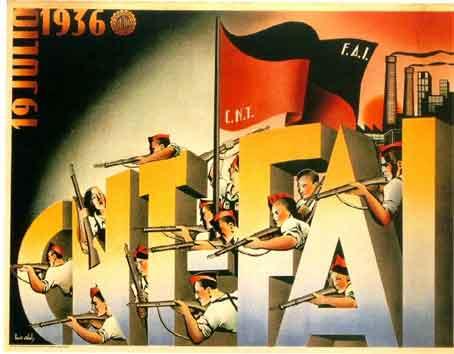
In Episode 37 of the CounterVortex podcast, Bill Weinberg explores the politics of the Spanish Civil War—how leftists around the world mobilized to support the anti-fascist struggle, despite contradictions and complexities within the anti-fascist ranks; how this heroic resistance was betrayed by the world; and how this betrayal presaged a greater and far more destructive war. Today in Syria, a similar struggle is being waged against a fascistic regime—similarly heroic, despite inevitable contradictions and complexities within the anti-fascist ranks. Yet this time, leftists around the world are deeply complicit in the world’s betrayal of the Syrian resistance. Weinberg asks: Why is that? Listen on SoundCloud, and support our podcast via Patreon. (Image via LibCom.org)

Inner Asia
East Turkistan

China’s rulers fear balkanization —with reason?

Chinese state media are promoting an official “white paper” entitled “Historical Matters Concerning Xinjiang,” denying the national aspirations and very identity of the Uighur people of China’s far western Xinjiang region. These are portrayed as inventions of Western-supported “separatists.” Yet some leaders of the Uighur exile diaspora have indeed launched an “East Turkistan” independence movement, and are seeking allies among Tibetans, Mongols, Manchus and Hong Kongers. China’s rulers may be creating exactly what they fear with their intransigent denialism on identity and ultra-draconian measures in Xinjiang, Tibet, Inner Mongolia and Hong Kong. (Map: East Turkistan National Awakening Movement)

Watching the Shadows


Amy Goodman plugs neo-Nazi symp as ‘expert’

In an egregious and all too revealing faux pas, Amy Goodman appears to have put a mouthpiece of the German far right on Democracy Now as a “former UN expert” to discuss Venezuela. This is one Alfred de Zayas, who is given Goodman’s typical sycophantic treatment—all softballs, no adversarial questions. We are treated to the accurate enough if not at all surprising line about how the US is attempting a coup with the complicity of the corporate media. Far more interesting than what he says is de Zayas himself. Not noted by Goodman is that he is on the board of the Desiderius-Erasmus-Stiftung, a Berlin-based foundation established last year as the intellectual and policy arm of Alternative für Deutschland, the far-right party that has tapped anti-immigrant sentiment to win an alarming 94 seats in Germany’s Bundestag. He has won a neo-Nazi following with his unseemly theories of Aliied “genocide” against Germans in World War II. (Image via Democracy Now)

North America

Japanese-Peruvian veteran of US concentration camps dies waiting for justice

Isamu (Art) Shibayama, a rights advocate for Latin Americans of Japanese descent who were detained in prison camps in the United States during World War II, died July 31 at his home in San Jose, Calif. Born in Lima, Peru, in 1930, Shibayama was 13 when his family was detained and forcibly shipped to the United States. They were among some 2,000 Japanese-Peruvians who were rounded up and turned over to the US military for detention after the Pearl Harbor attack. Upon their arrival in New Orleans, the family was transported to the “internment camp” for Japanese-Americans at Crystal City, Texas. The family would remain in detention until 1946. Shibayama eventually won US citizenship, but was denied restitution for his wartime detention on the basis that he had not at the time been a US citizen or legal resident. He was still seeking justice from the Inter-American Commission on Human Rights at the time of his death. (Photo via the New York Times)

Europe

Russian repression mounts against Crimean Tatars

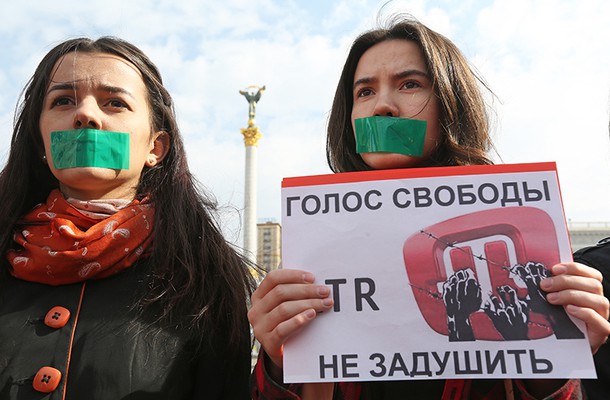
Four years after Russia's annexation of Crimea, repression is mounting against the peninsula's Tatar people—whose autonomous powers, officially recognized under Ukrainian rule, have been unilaterally revoked. The group Human Rights in Ukraine is demanding that Russian authorities provide details on the death at the hands of Russian agents of Vedzhie Kashka, an 83-year-old veteran of the Crimean Tatar national movement. Last November, a team of Russian National Guard troops  and FSB secret police carried out raids in which five Tatar leaders were detained while their homes were searched. Kashka was among those targeted, and died during the operation. An initial report said Kashka had died of natural causes, but an investigation carried out after her family had contracted a lawyer revealed that she had suffered several broken ribs. Kashka was a survivor of Stalin's 1944 deportation of the Crimean Tatars to Uzbekistan. She had been agitating for greater political rights for the Tatar people since they were allowed to return to Crimea in 1954. (Photo: Crimean News Agency)

The Caucasus

Protest, polarization in ex-Soviet Georgia

A massive protest encampment erected in front of Tbilisi’s parliament building demanding the resignation of Georgia’s government prompted President Georgi Margvelashvili to meet with demonstration leaders and remove his chief prosecutor. The latest round of mass protests began over accusations of a government cover-up in the slaying of two youths. But pressure was building for weeks. The first protests broke out in mid-May to demand drug legalization after a series of police raids on nightclubs. Gay rights advocates took to the streets to mark Inter­na­tion­al Day Against Homo­pho­bia—to be confronted by gangs of neo-Nazis, who tried to intimidate them into dispersing, giving Hitler salutes and chanting “death to the enemy!” The protest wave indicates a new generation tired of rule by ex-Soviet elites coming of age—but starkly divided between more liberal and harshly reactionary currents. (Photo: OC Media)

East Asia
South China Sea

Brink looms closer in East Asia maritime theaters

Japan has activated its first amphibious marine unit since World War II, which conducted practice drills to defend the disputed Senkaku Islands from an anticipated Chinese military seizure. Meanwhile, the USS Theodore Roosevelt aircraft carrier, with a group of Philippine generals onboard, entered disputed waters in the South China Sea, where China is building military defenses on islands claimed by the Philippines and Vietnam. Another carrier, the USS Carl Vinson, patrolled the contested waters last month, taking part in anti-submarine drills with Japanese forces and visiting Vietnam with its 5,000-strong crew—the largest such US military presence there since the Vietnam War ended in 1975. (Map via IDSA)

East Asia

Hokkaido: flashpoint for world war?

Japan's northernmost main island of Hokkaido seems, unfortunately, poised to jump into the headlines as East Asia's next flashpoint for Great Power confrontation. When North Korea fired a missile over the island last month, it was during unprecedented joint US-Japan military exercises on Hokkaido. Now Russia is conducting its own exercises in the Kuril Islands immediately to the north—including territory that Japan has claimed since the end of World War II.

Oceania

Korea nuclear crisis spurs Guam independence bid

Amid all the hype over North Korea’s threats to fire a nuclear missile at Guam, just a few media accounts have made note of how Guamians themselves are reacting. Guam is usually seen in the US only as a strategic Pentagon outpost. But with a referendum on independence in the offing, growing sentiment on the island holds that the only thing Guamians are getting out of their current US territorial status is being made a nuclear target.