North Africa
sfax

Tunisia: mass expulsion of Black African migrants

Hundreds of Black African migrants were rounded up from the Tunisian port city of Sfax, expelled across the country’s border with Libya and left stranded in the desert, sparking street protests by the large community of migrants waiting in the city. According to reports, some managed to escape back to the Tunisian side after being confronted by Libyan militiamen, but the fate of all those expelled has still not been accounted for.  The expulsions came after mobs attacked Black Africans in Sfax following the funeral of a Tunisian man who was stabbed to death in an altercation with migrants. Tensions have been rising for months in Tunisia, which has seen a sharp increase in people attempting to cross the Mediterranean from its shores this year. (Map: Google)

Europe
Nahel

France: far-right parties invoke ‘civil war’

French police have arrested more than 3,000 protesters in unrest that has spread since the fatal police shooting of 17-year-old delivery worker Nahel Merzouk, the son of North African immigrants, during a traffic stop in the Paris suburb of Nanterre. The Ministry of the Interior has mobilized some 45,000 police troops and gendarmes, as fierce clashes with police have spread across the country. The French far right is meanwhile baiting President Emmanuel Macron for what they portray as a weak response to the uprising. Marine Le Pen issued an inflammatory video statement warning of “anarchy” and calling for a state of emergency to be declared. Marion Maréchal, Le Pen’s niece and a former National Front parliamentarian, has called for armed vigilantism and repeatedly invoked “civil war.” (Photo via Crimethinc)

Syria
syrian refugees

Lebanon: halt ‘refoulement’ of Syrian refugees

The Syrian Network for Human Rights (SNHR) joined with 20 other human rights organizations to issue a joint statement protesting Lebanon’s summary deportation of Syrian refugees. The rights organizations say the deportations violate the international law principle of non-refoulement, which protects individuals from being returned to a country where they may face torture, cruel or degrading treatment, or other irreparable harm. “The Lebanese Armed Forces have recently summarily deported hundreds of Syrians back to Syria, where they are at risk of persecution or torture,” the statement charges. “The deportations come amid an alarming surge in anti-refugee rhetoric in Lebanon and coercive measures intended to pressure refugees to return.” (Photo: EU Civil Protection & Humanitarian Aid via Flickr)

Greater Middle East
Border wall

Turkish border guards torture, kill Syrians: report

Turkish border guards are indiscriminately shooting at Syrian civilians on the border with Syria, as well as using excessive force and even torture against asylum-seekers and migrants trying to cross into Turkey, Human Rights Watch charges. A new report cites hundreds of deaths along the border in recent years, with several killings and abuses this year. Since the beginning of 2023, the Syrian Observatory for Human Rights has recorded 11 deaths and 20 injuries along the frontier caused by Turkish border guards. Human Rights Watch independently documented and verified two such incidents. (Photo: Wikimedia Commons)

Africa
Mayotte

French court stops expulsion of migrants on Mayotte

A court in the French overseas department of Mayotte ordered the government to stop its expulsion of migrants in the island territory. In Operation Wuambushu, which means “Take Back” from the local Maore language, the government sought to dismantle a “slum” known as Talus 2 in the town of Koungou, removing a population of undocumented migrants and demolishing shelters. Talus 2 has seen repeated angry protests over the clearance plan. Mayotte is a transit point for migrants traveling from Comoros, a nearby archipelago off Southeast Africa. (Map via Wikimedia Commons)

Planet Watch
paramilitaries

Podcast: against global paramilitarism

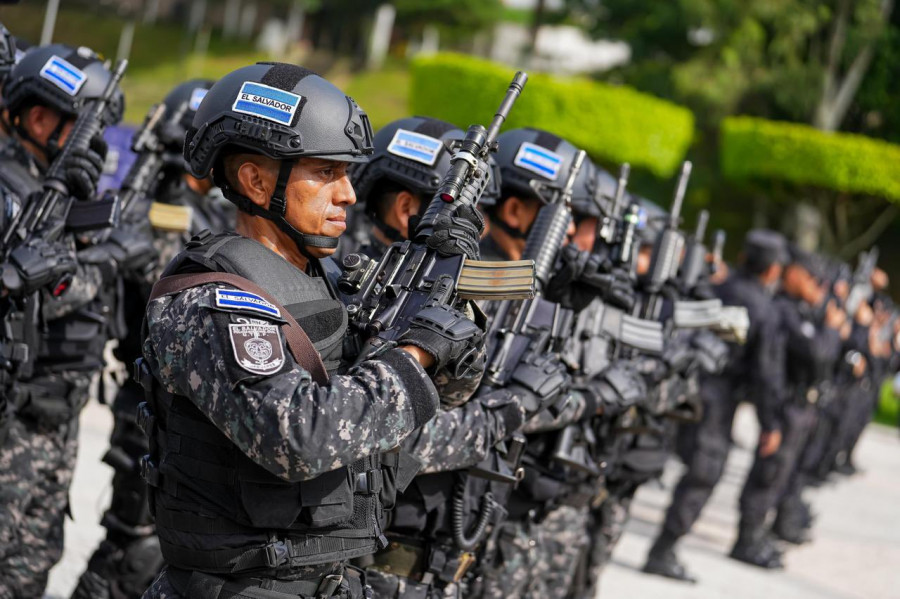
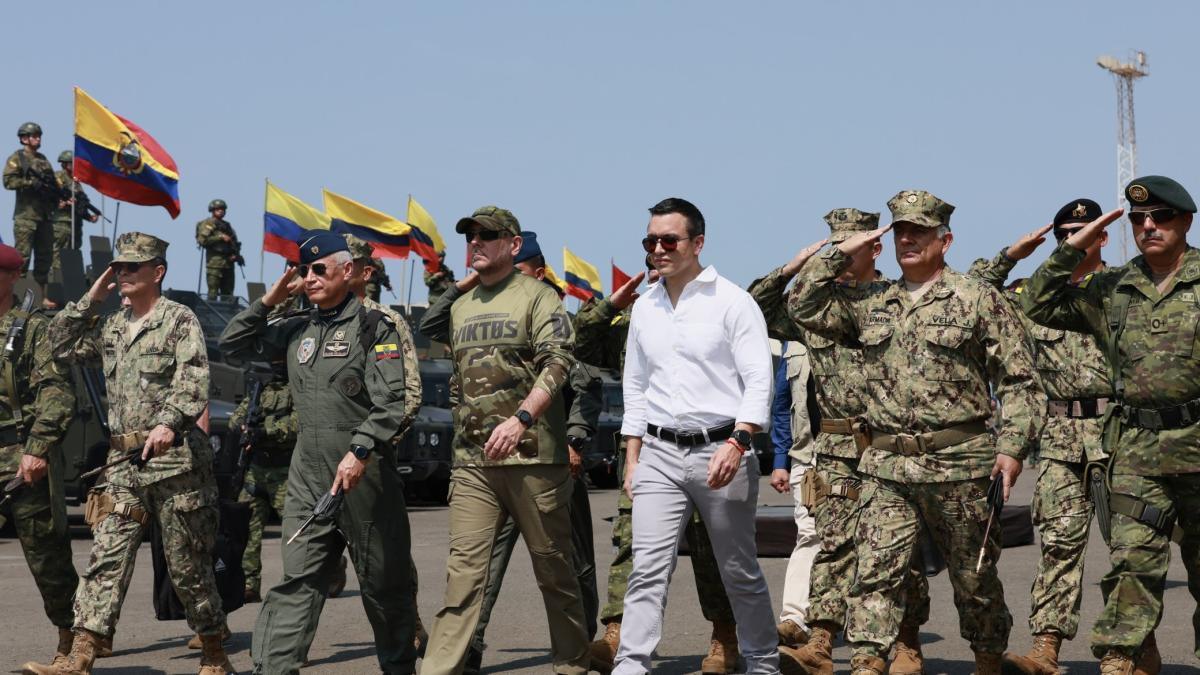
In Episode 168 of the CounterVortex podcast, Bill Weinberg examines the suddenly booming global phenomenon of paramilitarism—the official armed forces of a given state or its repressive apparatus seeking an extension in the private sector, citizen militias, or irregular forces. This is a method generally resorted to when state power is in crisis, and contributes to a general militarization of society. Examples from Russia, West Africa, Sudan, Burma, Ecuador, Israel and finally Texas point to a dangerous and ultimately fascistic new model of both imperialism and internal policing and repression. Listen on SoundCloud or via Patreon. (Photo: Contagio Radio)

North Africa
Libya

Libya: ‘crimes against humanity’ —and European complicity

The UN Independent Fact-Finding Mission on Libya released a report finding grounds to believe Libyan authorities and armed groups have been responsible for “a wide array” of war crimes and crimes against humanity in recent years. The report further charged that European Union states have been complicit in crimes against humanity by Libyan forces targeting migrants trying to reach Europe. Legally barred from deporting migrants to Libya, EU governments instead give funding and technical aid to the Libyan Coast Guard, which has been accused of widespread “arbitrary detention, murder, torture, rape, enslavement and enforced disappearance” against migrants since 2016. (Map: Perry-Castañeda Library)

Mexico
maiz

Podcast: Mexico and the struggle for the genetic commons

In Episode 166 of the CounterVortex podcast, Bill Weinberg discusses how a little-noted US-Mexico dispute on trade and agricultural policy has serious implications for the survival of the human race. Washington is preparing to file a complaint under terms of the US-Mexico-Canada Agreement over Mexico’s decree banning imports of GMO corn, slated to take effect in January 2024. Concerns about the (unproven) health effects of consuming GMO foods miss the real critique—which is ecological, social and political. GMO seeds are explicitly designed as part of an “input package” intended to get farmers hooked on pesticides and petrochemical fertilizers, and protect the “intellectual property” of private corporations. Agribusiness, which can afford the “input package,” comes to dominate the market. Eased by so-called “free trade” policies, agbiz forces the peasantry off the market and ultimately off the land—a process well advanced in Mexico since NAFTA took effect in 1994, and which is related to the explosion of the narco economy and mass migration. The pending decree holds the promise of regenerating sustainable agriculture based on native seed stock. It is also a critical test case, as countries such as Kenya have recently repealed similar policies in light of the global food crisis. Listen on SoundCloud or via Patreon. (Image: Sin Maíz No Hay País)

North Africa
Tunis

Tunisia: protest xenophobic attacks on Black Africans

Amnesty International called on Tunisia to put an immediate end to racist and xenophobic attacks targeting Black African migrants. The wave of violence began in early February and was exacerbated by a racially-charged speech by President Kais Saied at a National Security Council meeting. President Saied’s statements sparked street protests in Tunis, in defiance of an official ban on demonstrations. Activists also opposed a widening crackdown on dissent since Saied seized near-total powers in July 2021. The Tunisian National Salvation Front has vowed continued weekly protests. (Photo: Chahd Lina Belhadj/Meshkal)

North America

Biden admin to expand Title 42 expulsions

President Joe Biden announced that the US is to extend a parole program previously offered only to migrants from Venezuela to those from Cuba, Nicaragua and Haiti, allowing them to apply for residency—but reiterated that his administration will continue to enforce Title 42, in compliance with a recent order from the Supreme Court. In fact, under his new policy, Title 42 expulsions are to increase, with Mexico agreeing to accept expelled Cubans, Nicaraguans and Haitians. A provision of the Public Health Service Act allowing for summary expulsion of migrants at the southern border, Title 42 is in effect pursuant to a Centers for Disease Control order of March 2020 as a COVID-19 emergency measure. The policy shifts as litigation over Title 42 has been batted back and forth in the US courts has led to confusion in cities on both sides of the border. Squalid encampments have sprung up in Matamoros, Reynosa and other Mexican border towns as migrants await entry to the US. (Photo via FWS)

North Africa
Libya

Libya: ‘rampant crimes’ by Hafar-aligned militia

Amnesty International accused armed group Tariq Ben Zeyad (TBZ) of committing “rampant” war crimes and human rights abuses to enforce the rule of the so-called Libyan Arab Armed Forces (LAAF) and its leader Khalifa Haftar. The report details incidences of forced disappearances, unlawful killings, torture, and mistreatment of detained migrants and refugees. The LAAF, previously known as the Libyan National Army, controls the eastern portion of Libya and several cities, including Benghazi, Derna, Sirte, Tobruk, and areas outside Tripoli. The TBZ is headed by Haftar’s son Saddam, and Amnesty states that it exists primarily to enforce his rule through a campaign of terror.  A UN report earlier this year charged that Haftar’s forces are being backed by a contingent of mercenaries from Russia’s Wagner Group. (Map: Perry-Castañeda Library)

North America
Tohono O'odham

GOP lawmaker threatens new Indian war

In a little-noted interview on the right-wing online video show “In The Trenches with Teddy Daniels,” Arizona Republican Rep. Paul Gosar suggested that his party’s gubernatorial candidate, Kari Lake, could order the state’s National Guard to surround and blockade the Tohono O’odham Nation, a Native American reservation that borders Mexico, ensuring that “no one passes.” Gosar also offered the notion that Lake could go to the US Supreme Court to seek state authority over the reservation. The Tohono O’odham tribal government cooperates with the Border Patrol, but has long opposed plans for a border wall that would cut through their traditional territory. (Map via Google)