Watching the Shadows
cellular

Podcast: resist cellular hegemony!

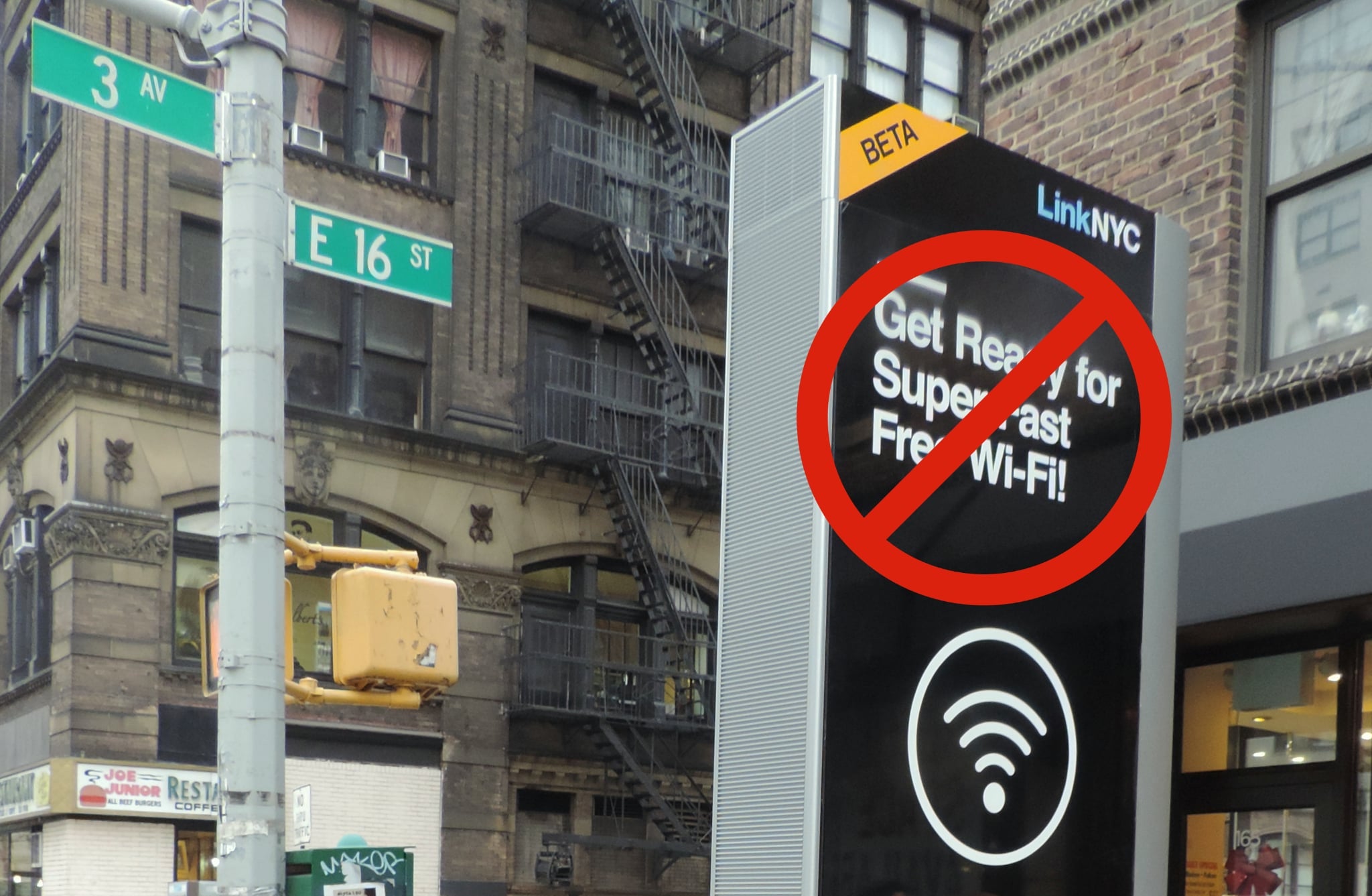
As the architecture of total surveillance falls inexorably into place, cellular technology comes to colonize more and more of daily human existence. Accepted in the banal interest of “convenience,” this trajectory ultimately ends in not only the extinction of human freedom, but the abolition of humanity itself—an idea openly embraced by the fascist tech bros as “transhumanism,” and warned of by CS Lewis in his eerily prescient 1943 work The Abolition of Man. In Episode 317 of the CounterVortex podcast, Bill Weinberg urges a revolution of everyday life, in which we start saying no to the relentless encroachment of cellular and digital technology. (Image: Wikipedia, modified by CounterVortex)
Central America
Costa Rica

Costa Rica emulates Salvador police state model

The right-wing populist Laura Fernández will be Costa Rica’s next president, securing nearly 50% of the vote in last week’s election. She is the first candidate in more than a decade to clear the threshold needed to win outright in the first round. She did so by promising to respond forcefully to the country’s exaggerated yet real insecurity crisis linked to the drug trade—the overwhelming concern for most voters. On the campaign trail, Fernández drew openly from the playbook of Salvadoran President Nayib Bukele, whose brutal anti-gang crackdown has inspired conservatives across the region. She called for a “state of exception” to combat crime, promised to complete the construction of a massive Bukele-inspired prison, and spoke with Bukele before any other foreign leader after her win. (Image: Grunge Love)

Iran
ICE

Iran & Minneapolis: fearful symmetry

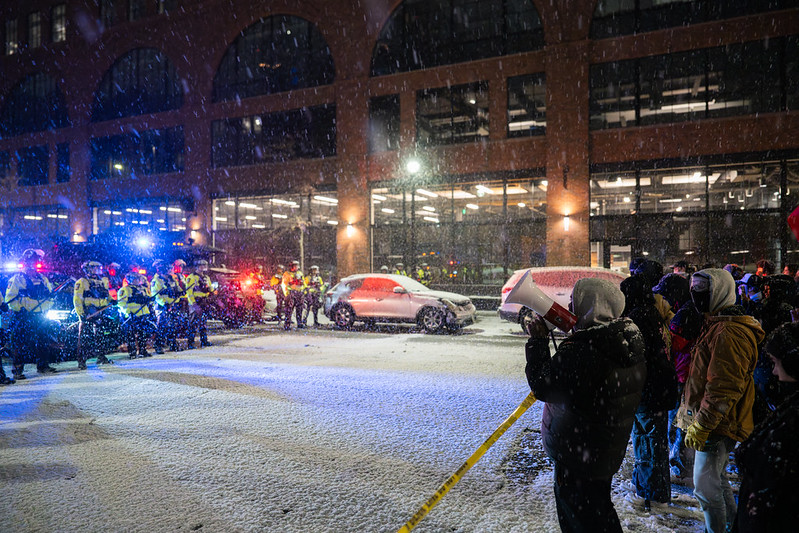
As ICE agents open fire on protesters in Minneapolis, Portland and Los Angeles, Trump frames his military threats against Iran in terms of human rights and democracy—an atypical nod back to the neocons. Following mass deadly repression, the protests in Iran appear to have abated—for now. In Minnesota, both Trump and protesters are turning up the heat. Trump’s blatant hypocrisy highlights the imperative of international solidarity. The challenge for stateside protesters is to repudiate the calumny that the Iran protests are CIA or Mossad astroturf, and recognize them as a genuine self-organized popular uprising. The challenge for Iranian protesters is to repudiate Trump’s bid to exploit them for his imperial ends, as well to reject the ambitions of the reactionary “crown prince” Reza Pahlavi to install himself as leader. In Episode 313 of the CounterVortex podcast, Bill Weinberg urges that explicit mutual support between the anti-authoritarian struggles in the US and Iran is what can move the historical process forward at this grim hour. (Photo: Chad Davis)

Iran
Tehran

Protest wave spreads across Iran

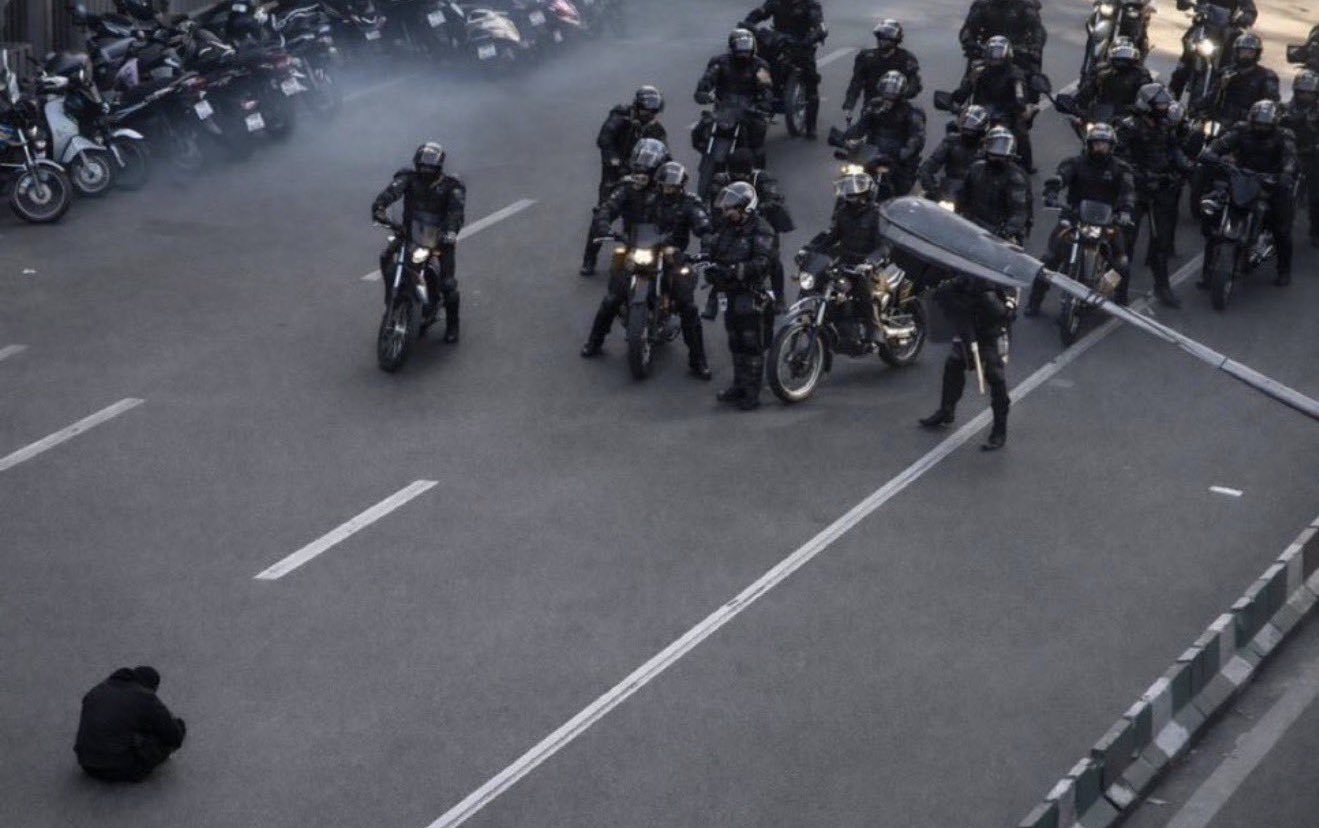
On the third day of protests by Tehran bazaar merchants in response to the dire economic situation in Iran, the strike started to spread across the country. Shopkeepers in Isfahan, Ahvaz, Shiraz, Kermanshah and Najafabad closed their stalls and held protest gatherings, where they were joined by students who walked off university campuses. Security forces responded with multiple arrests and the use of live fire and tear-gas, with one student reported severely injured in Tehran. Protest slogans escalated beyond economic grievances, openly targeting clerical rule and Supreme Leader Ayatollah Ali Khamenei. A photo of a lone protester blocking a column of police motorcycles on a Tehran freeway has gone viral, drawing comparisons to the iconic “tank man” photo from Tiananmen Square in June 1989. (Photo via Twitter)

New York City
Mamdani

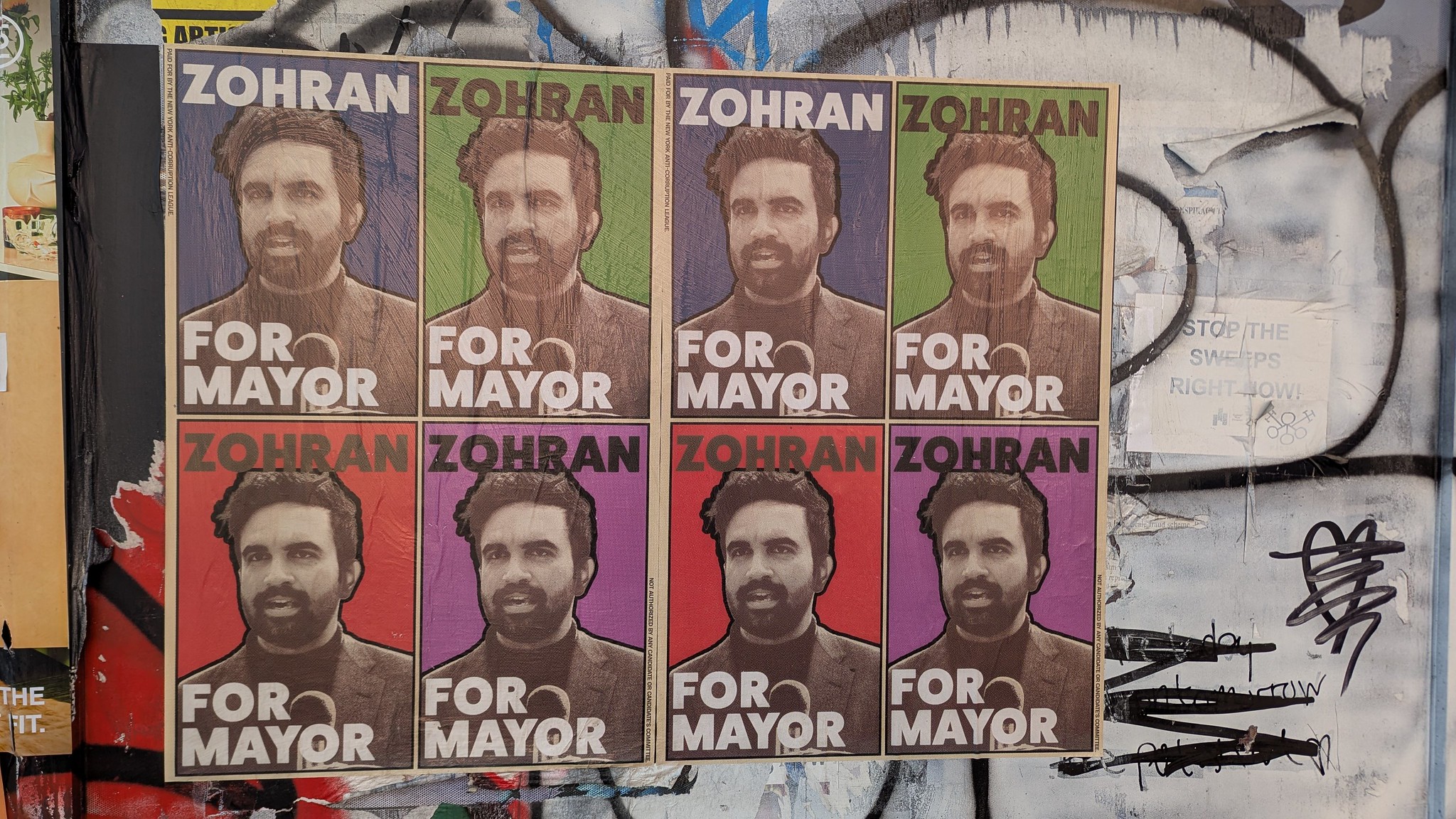
NYC: did socialism really beat fascism?

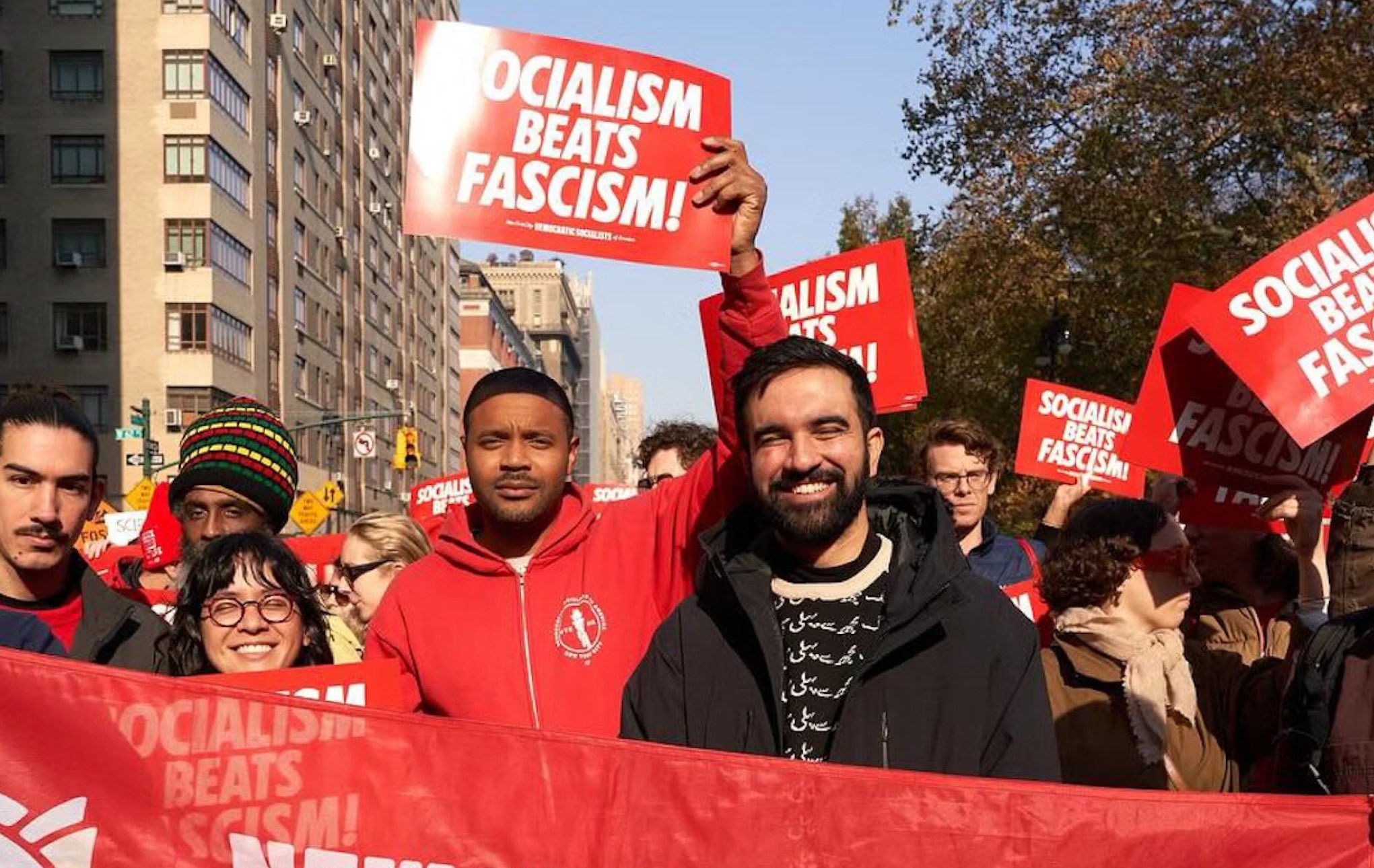
Zohran Mamdani‘s Oval Office lovefest with Donald Trump was a dangerous legitimization of fascism, and has won New York no respite—as the city was targeted for ICE raids mere days later. These were happily met with a strong street response by progressive New Yorkers, and Zohran has reiterated his stance of non-cooperation with the federal police state. Meanwhile, the massacre of Jews one week ago in Sydney increases the pressure on Mamdani to walk the fine line between remaining true to his anti-Zionist principles on one hand, and acquiescing in anti-Semitism on the other. And his support for bulldozing the Elizabeth Street Garden (even after a deal to save it has been accepted by the incumbent administration), while failing to protest displacement of tenants from public housing projects slated for privatization, points to an accommodation with the pro-“development” consensus of the city’s permanent government. On the final countdown to Mamdani’s inauguration, the contradictions he faces are sharpening. In Episode 309 of the CounterVortex podcast, Bill Weinberg breaks it down. (Photo: DSA)

New York City
NYC

Podcast: NYC turns up the volume! II

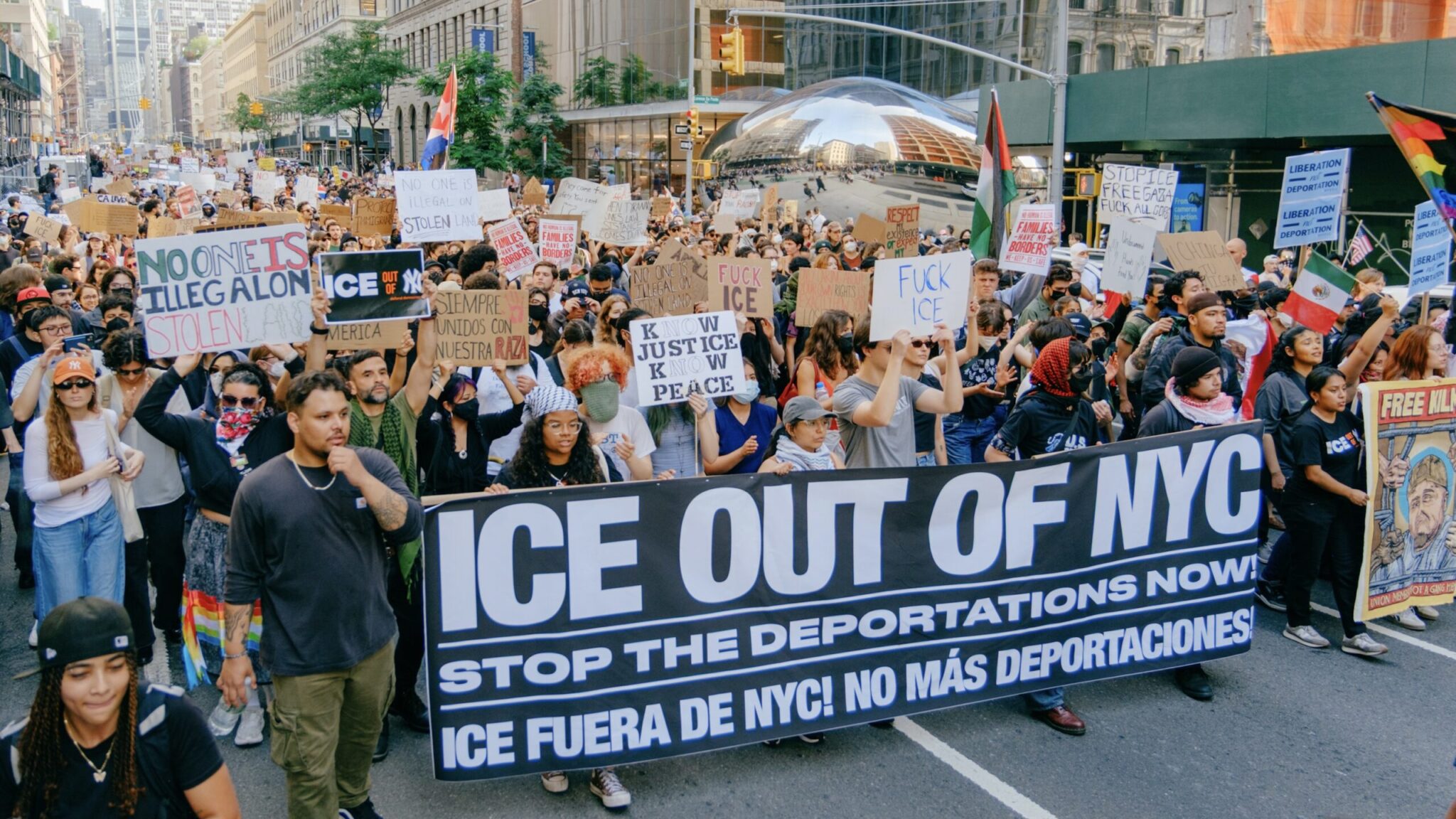
Zohran Mamdani hasn’t even taken office, and already there has been a physical skirmish between ICE agents and NYPD cops in Washington Heights. This portends a full-on confrontation between federal and municipal power in the months to come—with the potential (yes, really) for civil war. In Episode 303 of the CounterVortex podcast, Bill Weinberg argues that despite the danger, Mamdani’s election heightens the contradictions in American society in a salubrious way, and may even open revolutionary possibilities. However, his pledge to destroy Lower Manhattan’s Elizabeth Street Garden points to the contradictions in Mamdani’s own politics that activists will have to press him on. Listen on SoundCloud or via Patreon. (Photo: Wyatt Souers/Peoples Dispatch)

Africa
Cameroon

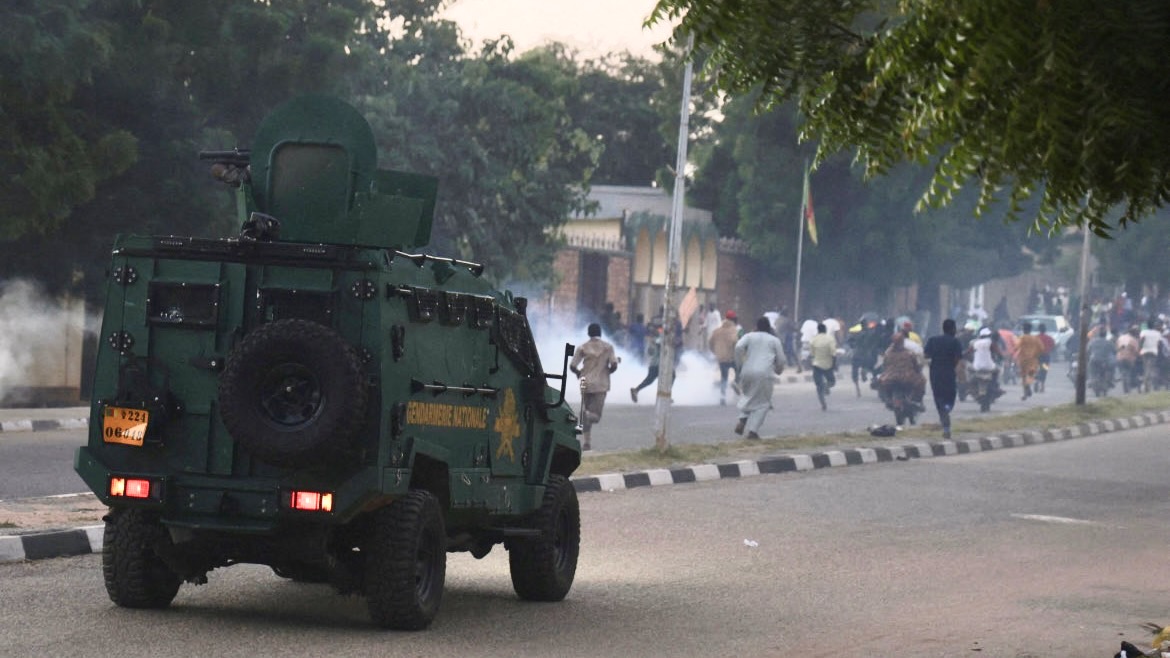
Post-electoral violence sweeps Cameroon

The Office of the UN High Commissioner for Human Rights expressed concern over the protests and repression that have swept Cameroon following contested presidential election results. Demonstrators immediately defied a ban on public gatherings to support the opposition after the election, but the situation escalated after the Constitutional Council announced five days later that long-ruling President Paul Biya had won. The opposition rejected the results and proclaimed their candidate, Issa Tchirola Bakary, as the legitimate winner, urging citizens to demonstrate peacefully. Thousands took to the streets demanding recognition of an opposition victory, to be met with repression; clashes between protesters and security forces led to fatalities and numerous arrests. The protests have shaken the capital, Yaoundé; the economic capital, Douala; and the northern towns of Garoua and Maroua. Local jails are filled with opposition supporters who accuse Biya of rigging the polls. Biya is now to assume his eighth term in office as the world’s oldest president at age 92, having ruled Cameroon for 43 years. (Photo: Twitter via Peoples Dispatch)

New York City
Zohran

Podcast: fascism, socialism and the NYC mayoral race

In Episode 301 of the CounterVortex podcast, Bill Weinberg offers his anarchist annotation of the New York City mayoral candidates’ debate. He makes the case that the promise of “socialism” represented by Zohran Mamdani is (alas) not as real as the threat of fascism represented by Curtis Sliwa—or acquiescence to fascism represented Andrew Cuomo. Both Cuomo and Sliwa invoked the too real possibility of Trump attempting to abrogate New York’s municipal powers if Mamdani becomes mayor. However, this contingency could heighten the contradictions in a politically salubrious way—prompting the needed rupture between progressive-run localities and the illegitimate Trump regime. (Photo: Jim Naureckas/Flickr)

Central America
PNC Guatemala

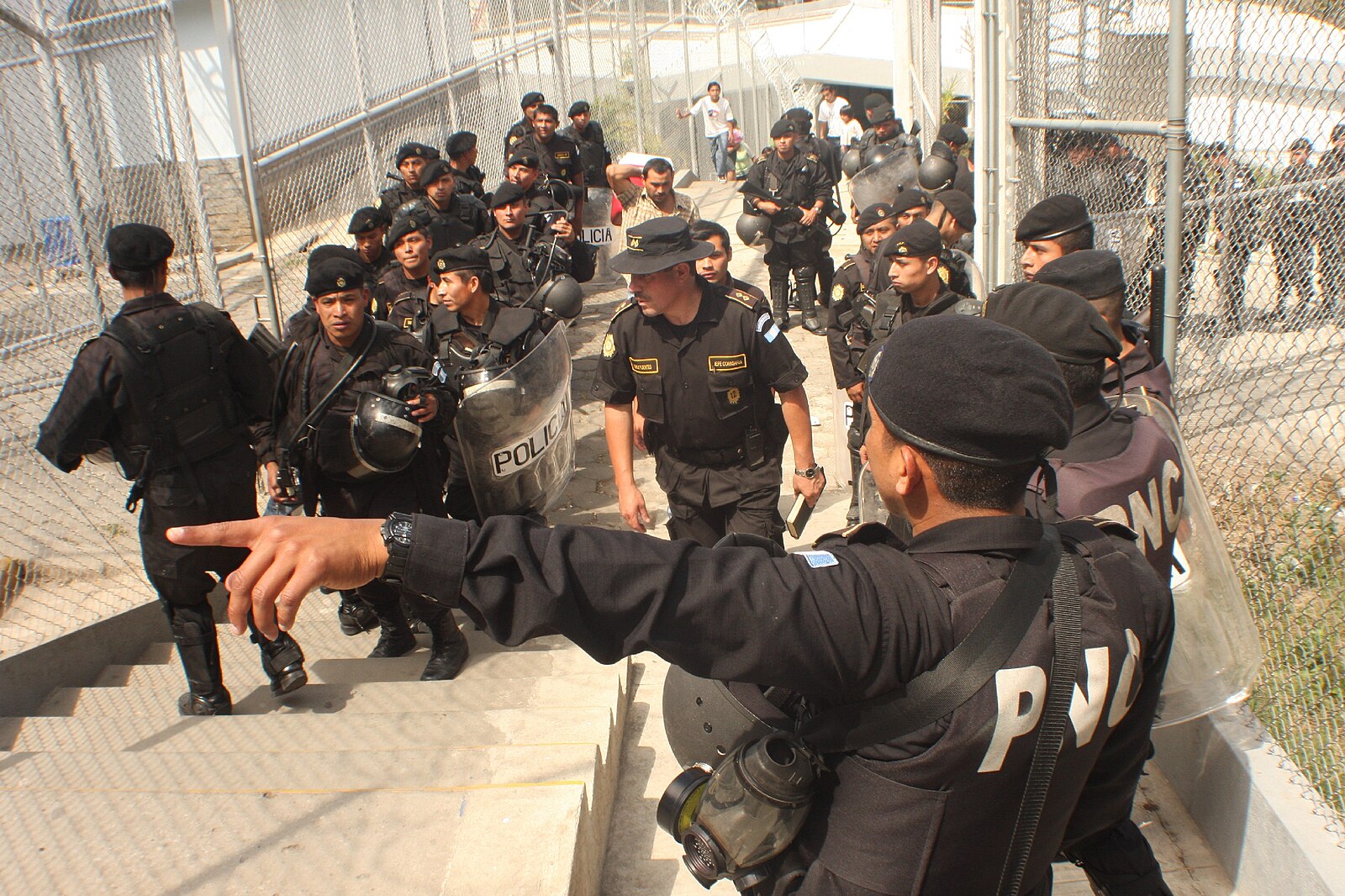
Anti-mara militarization in Guatemala

Guatemala’s Congress passed a law designating the Barrio 18 and MS-13 gangs as “terrorist organizations.” The move came days after 20 Barrio 18 convicts broke out of the maximum-security Fraijanes II prison outside the capital. The new “Ley Anti-pandillas” provides for heavier sentences for gang members convicted of crimes such as extortion or recruitment of minors, and calls for the construction of more-maximum security prisons. (Photo: Danilojramirez via Wikimedia Commons)

Europe
Russian tank

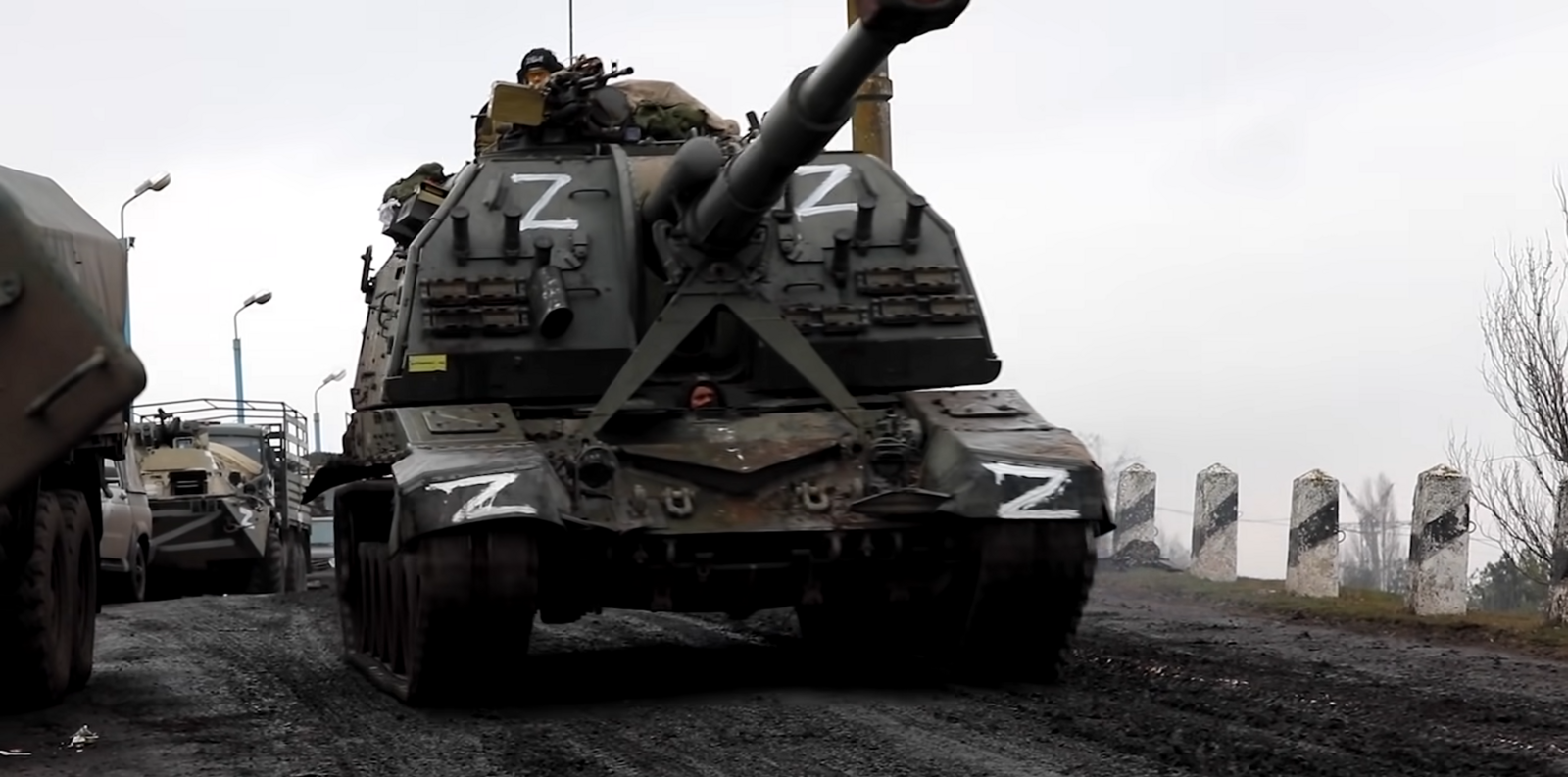
Russia calls up more reserves as Ukraine war stalls

Russian authorities are preparing to call up thousands of reservists for active military service—while insisting they will not be sent to Ukraine to fight. The Main Mobilization Directorate of the General Staff announced orders that men who have been drafted and served in the military will be subject to mandatory “mobilization” for the purpose of “safeguarding strategically important facilities.” With the lines in Ukraine largely frozen in a war of attrition, the move would free up President Vladimir Putin to expand the Russian force for the “special military operation,” which is numbered at some 700,000 troops—mostly reservists who have signed contracts with the Defense Ministry. General conscripts are not sent to Ukraine, and the last call-up of reserves for the war, in September 2022, sparked a flight of young men from Russia to neighboring countries, and even scattered protests. The denial that the new mobilization is for the Ukraine war seems aimed at appeasing popular discontent, even while freeing up other soldiers to expand the invasion force. (Photo: Wikimedia Commons)

Europe
Swan Lake

‘Swan Lake’ anti-Putin protest in St Petersburg

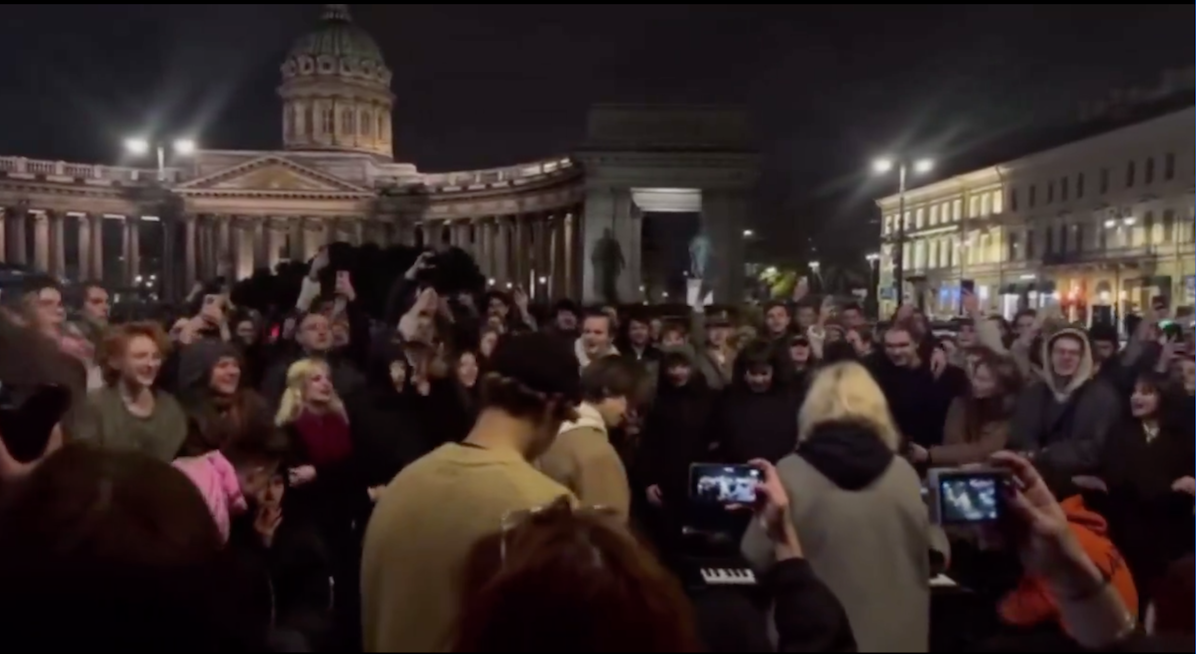
Hundreds of young Russians gathered in a square in the center of St. Petersburg to defy censorship by performing a banned song that calls (in barely veiled terms) for the overthrow of Vladimir Putin. The crowd converged on the city’s iconic Palace Square to sing “Swan Lake Cooperative” by exiled rapper Noize MC, which was outlawed in May when judicial authorities labeled it “extremist.” The song title refers to the practice in Soviet times of suspending all regular TV and radio broadcasts to play Tchaikovsky’s ballet “Swan Lake” continuously whenever the old leader died or was deposed and the transition to a new one was underway. The lyrics go: “The old man still clings to his throne… When the czar dies, we’ll dance again, ‘Swan Lake’ on every screen… I want to watch the ballet… Let the old man shake in fear…” (Photo: Kanal13)

The Andes
Lima

Peru: new government prepares security crackdown

Peru’s Congress voted unanimously to remove President Dina Boluarte from office for “moral incapacity,” replacing her with congressional leader José Jerí. Once in office, Jerí quickly appointed as head of the Interior Ministry the former commander of the Peruvian National Police (PNP), Vicente Tiburcio Orbezo. Tiburcio has had a long career fighting organized crime and armed insurgents, having been part of the team within the PNP’s Special Intelligence Group (GEIN) that carried out the arrest of Shining Path leader Abimael Guzmán in 1992. He subsequently served in campaigns against both the Shining Path and Túpac Amaru Revolutionary Movement (MRTA). He was chosen by Jerí with a mission of addressing the crisis of “citizen security” in Peru. (Photo: Wikipedia)