Africa
Somali militants in Kenya incursion
At least 10 Shabaab rebel fighters were killed in heavy clashes with Kenyan security forces after the Somali rebels crossed the border and attacked a military patrol.
At least 10 Shabaab rebel fighters were killed in heavy clashes with Kenyan security forces after the Somali rebels crossed the border and attacked a military patrol.
Egyptian politicians threatened military action as Ethiopia began diverting waters of the Blue Nile for a mammoth new hydro-electric project, abrogating a colonial-era pact.
South Sudan says Khartoum is fomenting rebellion in Jonglei state in a bid to block the South’s plans to build an oil pipeline through Ethiopia to a port in Djibouti.
Twelve Shabab militants charged with the murder of a prominent Islamic scholar were sentenced to death by a court in Somalia’s autonomous enclave of Puntland.
The International Maritime Bureau hailed progress against Somali pirates, but urged the world’s navies to keep up the pressure—and warned of growing piracy off West Africa.
Some 200 disaffected soldiers with two tanks surrounded Eritrea’s Ministry of Information, forcing the broadcast of a statement calling for the release of political prisoners.
A Somali-American accused of planning a Christmas bomb attack in Oregon appears to be the latest victim of an FBI-generated bogus "terrorism" plot.
A string of bombings rocked Somalia’s port of Kismayo—five days after the city was taken from al-Shabaab rebels by a Kenyan-led force following a lengthy siege.
Ethiopia's Meles Zenawi died without having to answer for his war crimes—he remained in the good graces of the West to the end, getting a free ride from the world media.
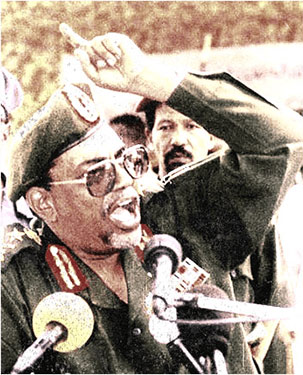 Seeking to legitimize his regime now that he's reconquered most of Syria (with massive Russian military help), Bashar Assad has just welcomed the first Arab League leader to Damascus since the war began in 2011—none other than President Omar Bashir of Sudan, who is wanted by the International Criminal Court for crimes against humanity and genocide in Darfur. The Assad regime's official news agency SANA said the two dictators discussed the "situations and crises faced by many Arab countries," stressing the need to build "new principles for inter-Arab relations based on the respect of the sovereignty of countries and non-interference in internal affairs." The Assad regime is itself now credibly accused of genocide, with a mass extermination of detainees amply documented, not to mention serial use of chemical weapons and massive bombardment of civilian populations. Assad and his generals may yet face war crimes charges before the ICC. (Photos: Pinterest, BashirWatch)

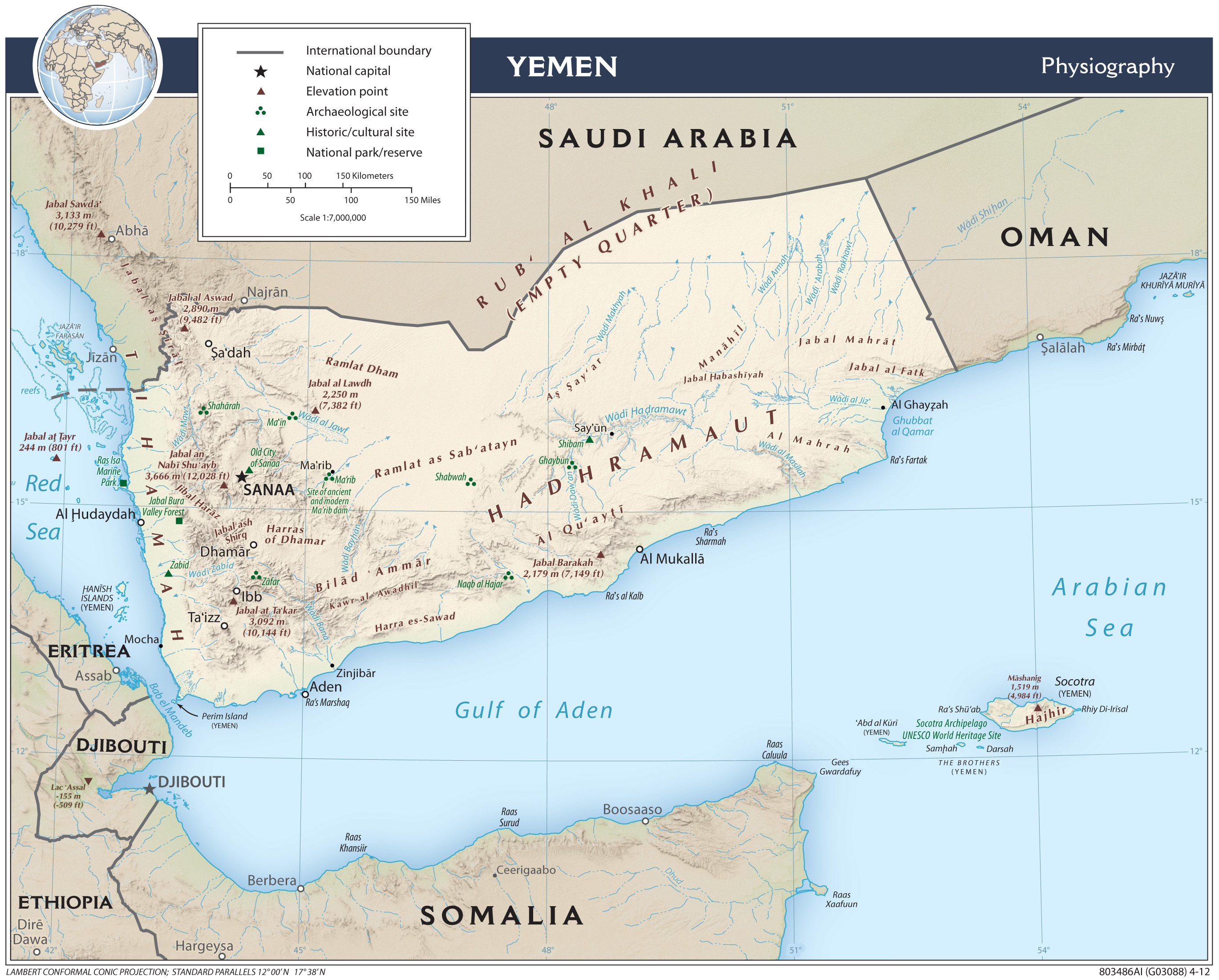
Following peace talks hosted by Eritrea, the government of Ethiopia announced a peace deal with the Oromo Liberation Front rebels. The deal guarantees rebel leaders the right to participate in Ethiopia's political process in exchange for laying down arms. The OLF has long been backed by Eritrea, and the pact comes one month after a formal end was declared to the two-decade state of war between Ethiopia and Eritrea, with Ethiopia ceding its claim to the contested border town of Badme. This points to a softening of positions under Ethiopia's new prime minister, Abiy Ahmed. The Badme deal was also said to have been quietly brokered by the United Arab Emirates, which has emerged as politically isolated Eritrea's most significant foreign patron, part of an apparent design to encircle Yemen. (Photo: Yassin Juma)

A crisis over the Yemeni island of Socotra was resolved as the United Arab Emirates agreed to withdraw and turn control over to Saudi forces, which will in turn restore full Yemeni rule. The island is a UNESCO World Heritage Site for its unique flora and fauna, hailed as the "Galapagos of the Indian Ocean." Emirati forces seized Socotra at the start of the month, and raised their flag over the airport and other strategic points—sparking angry protests from residents. Socotra's governor condemned the move as an "occupation" and "a flagrant violation of Yemeni sovereignty." Even after the de-escalation, suspicions remain. Yemen's ambassador to UNESCO, Ahmad al-Sayyad, accused Saudi Arabia and the UAE of "a hidden inclination to divide Yemen." (Map via University of Texas)