Syria

Syria: gas attacks, air-strikes and hypocrisy —again

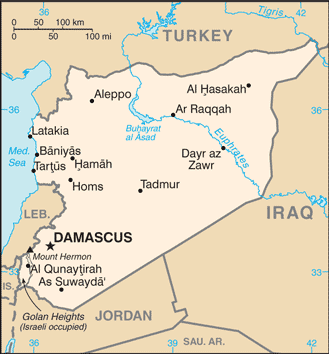
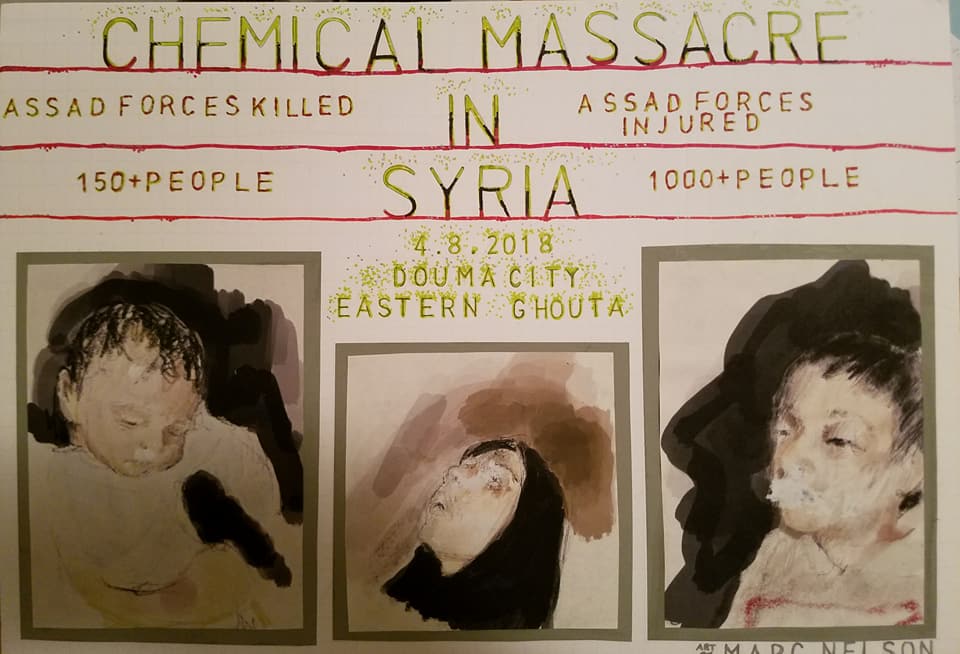
Just over a year after Trump’s air-strikes on an Assad regime airbase in response to a chemical attack, we witness a repeat of this episode—although this time the air-strikes were on wider targets, and carried out in conjunction with British and French forces. In response to last week’s chemical attack on Douma in Syria’s besieged Eastern Ghouta enclave, missiles and warplanes from the USS Donald Cook in the eastern Mediterranean carried out the first Western strikes on targets around the Damascus area. The targets were chemical warfare and military facilities, with no deaths or civilian casualties yet reported. “Anti-war” hypocrites who were silent during Trump’s massive bombardment of civilians in Raqqa and Mosul, silent during the Assad-Purtin destruction of Aleppo, and silent (at best) over the Douma chemical attack, are now protesting air-strikes on Assad’s machinery of death. Such “anti-war” depravity is part of the problem. (Image: Syria Solidarity NYC)
Syria

UN ‘alarmed’ by chemwar claim; Russia denies it

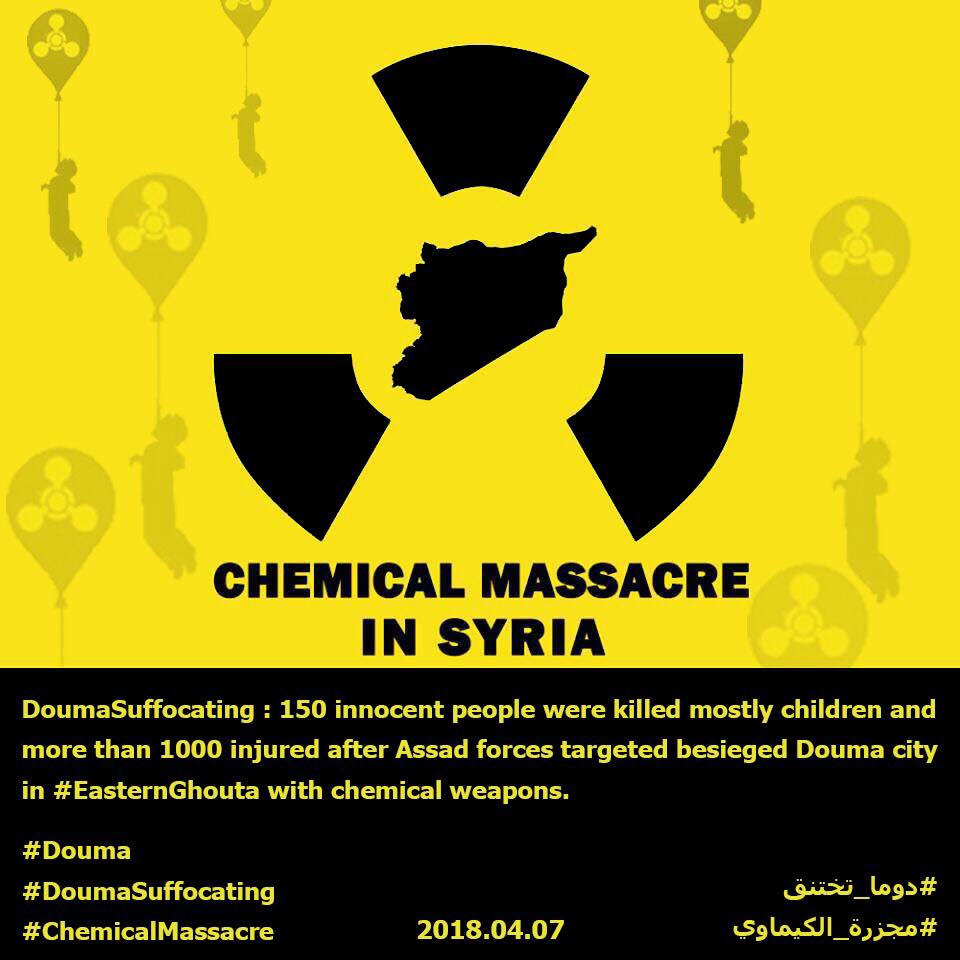
UN Secretary-General António Guterres issued a statement saying he is “deeply concerned” about ongoing air-strikes on Douma in Syria’s besieged Eastern Ghouta enclave, noting the “killing of civilians” and “destruction of civilian infrastructure,” including hospitals and health facilities. The statement said he is “particularly alarmed by allegations that chemical weapons have been used against civilian populations in Douma.”  Russian Foreign Minister Sergei Lavrov responded that no evidence has been found of a chemical weapons attack in Douma. But the Syrian-American Medical Society, which has aid workers on the ground, said more than 500 people were brought to medical centers in Douma with symptoms “indicative of exposure to a chemical agent,” including breathing difficulties, bluish skin, mouth foaming, corneal burns and “emission of chlorine-like odor.” (Image: Syria Solidarity Campaign)

Syria

Syria: new chemical attack in Eastern Ghouta

Estimates of the dead vary from 70 to 150 after the latest and worst chemical attack on the besieged enclave of Eastern Ghouta, in the Damascus suburbs. The number is likely to rise, as rescue workers are still reporting new casualties at the town of Douma, the last in the enclave that remains in rebel hands. The apparent strike by a “barrel bomb” filled with either sarin or chlorine gas targeted a building where displaced families were sheltering from the ongoing Assad regime and Russian air-raids. The victims are overwhelmingly civilians, and many are said to be children. Trump has pledged a US military response to the attack. (Image: Syria Solidarity Campaign)

The Andes

Peru: mass protest against political class

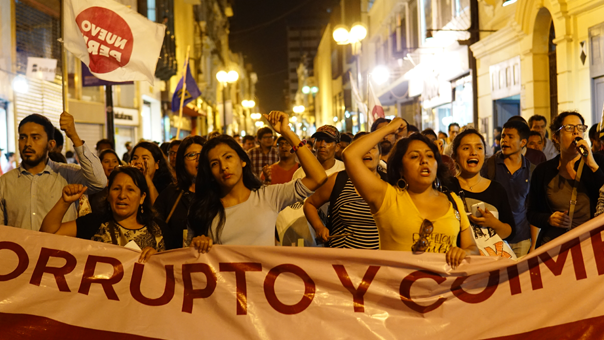
Thousands of protesters took to the streets of Lima after Peru's scandal-embattled president Pedro Pablo Kuczynski announced his resignation. Clashes were reported in the city's downtown Plaza San Martín, with tear-gas used and several injured. The resignation came after months of political machinations in Peru's congress had put off Kuczynski's ouster, and the ire of the demonstrators was directed not just at the disgraced "PPK," but Peru's entire political class. The left opposition and trade unions are calling for a constituent assembly to "refound the country and devolve power to the people." The popular slogan heard again and again at the marches is  "¡Que se vayan todos!"  (Throw them all out!) (Photo: Nuevo Perú)

The Andes

US approves new Colombia aid —amid para terror

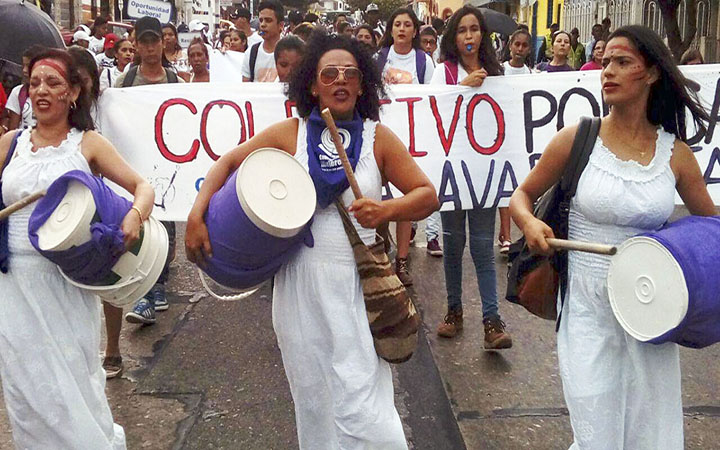
The US Congress approved a $390 million aid package for Colombia, despite efforts by President Trump to have it slashed. The package includes large sums slated for human rights training and aid to the displaced, with some advocates hailing it as a boost to Colombia's peace process. But despite moves toward peace, paramilitary terror against peasant and indigenous communities continues across the country. Bogotá's central Plaza Bolívar has seen an ongoing protest vigil against the wave of assassinations, demanding that measures against the paramilitary networks be included as part of the peace process. The International Court of Justice has meanwhile opened an investigation into several Colombian military officers and generals over thousands of extrajudicial executions. (Photo: ELN Voces)

Syria

As circles close on Ghouta and Afrin, where’s the solidarity?

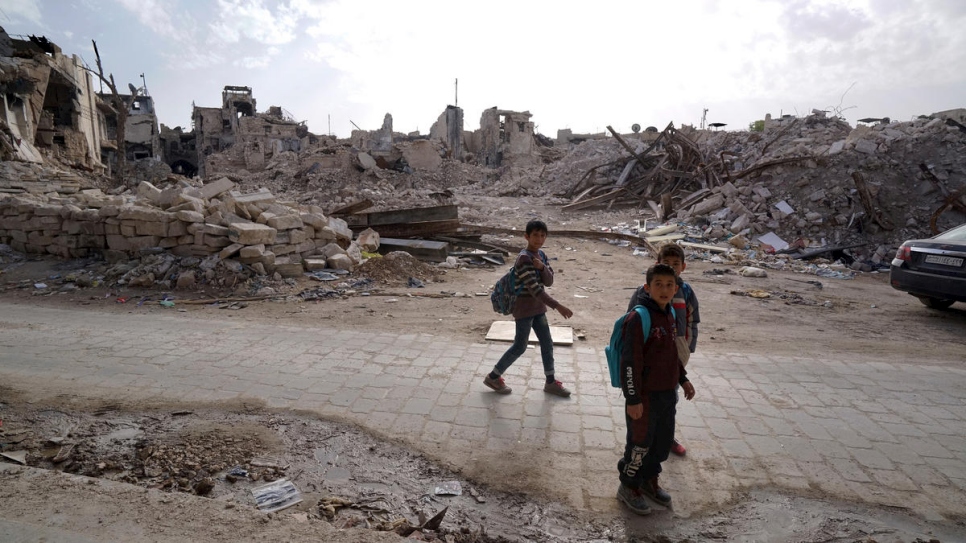
The Turkish assault on Afrin has forced the enclave’s Kurdish defenders into an alliance with the same Assad regime that is committing war crimes in Eastern Ghouta. This tragically poses an obstacle to any solidarity between the respective defenders of the besieged enclaves. But we in the West are faced with no such grim choices, and should be capable of a consistent position. Yet Noam Chomsky, who signed a statement in support of Afrin, has shamefully abetted Putin’s propaganda portraying the repeated chemical attacks on Ghouta as “fake news.” (Photo of Aleppo ruins from UNHCR)

Southeast Asia

Razed Rohingya villages turned into military bases

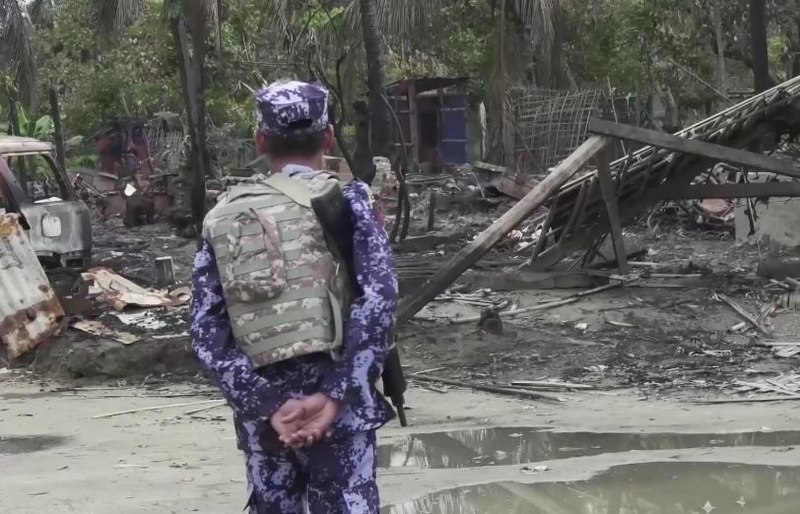
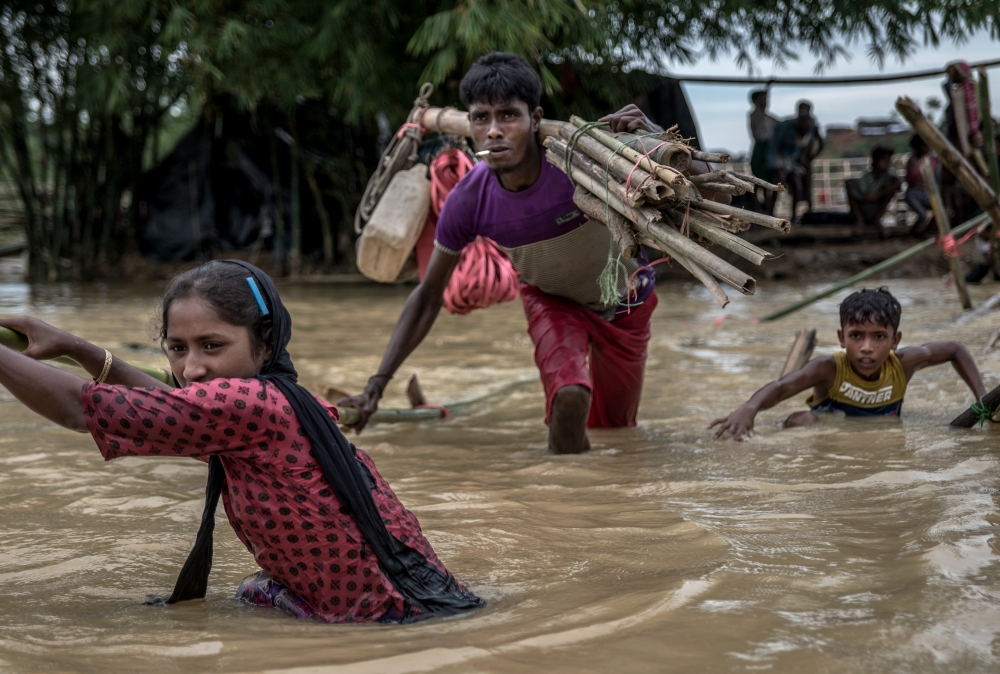
Burma's Rakhine state is being militarized at an alarming pace, as authorities build security force bases on lands where Rohingya villages were burned to the ground just months ago, Amnesty International charges in a new report. The chief UN official investigating human rights in Burma, Yanghee Lee, called for an immediate investigation into "clearance operations" in Rakhine state, stating she is increasingly convinced that actions by the Burmese security forces amount to genocide. (Photo: VOA via Wikimedia Commons)

The Andes

Colombia: rural violence persists despite ‘peace’

Colombia's peace process continues to advance, with institutional mechanisms for a post-war order falling into place. But violence in the countryside across Colombia remains at an alarming level, as social leaders are targeted for assassination by paramilitary factions. The ELN guerilla organization—which, unlike the FARC, remains in arms—released a statement noting that January had seen an assassination every day across the country, and charged that rightist paramilitary networks are carrying out a "systematic genocide."

Syria

Syria: new chemical attack in Eastern Ghouta

A child died and at least 13 other people suffered breathing difficulties after an apparent chemical attack on the besieged Syrian rebel enclave of Eastern Ghouta. Russia’s President Vladimir Putin the following day ordered a five-hour “humanitarian pause” in the bombardment of Eastern Ghouta to allow civilians to evacuate. This falls far short of the 30-day ceasefire being demanded by the United Nations.

Iraq

Armenia recognizes Yazidi genocide

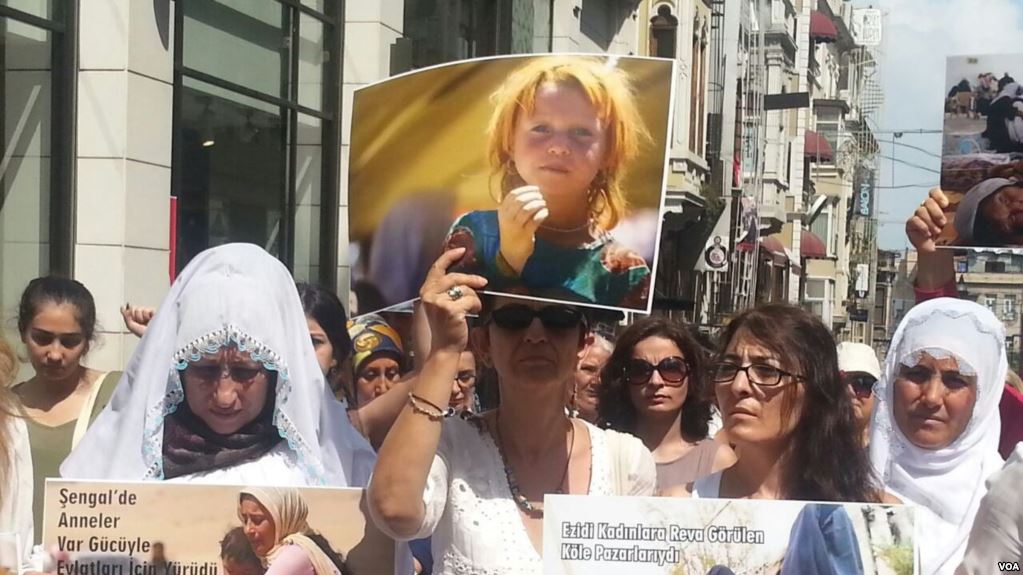
Waheed Mandoo Hammo, prime minister of Ezidikhan, the self-declared autonomous homeland of the Yazidi people in northern Iraq, issued a statement expressing his nation's appreciation and gratitude in a letter to Armenia's Prime Minister Karen Karapetyan after the Armenian National Assembly approved a resolution recognizing the Yazidi Genocide of 2014. Armenia is the first UN member state to formally recognize as genocide the mass killings and enslavement of Yazidis by "Islamic State" forces after their seizure of the Sinjar area in August 2014. Hammo's statement recalled the sheltering of Armenian refugees by the Yazidis during the Armenian Genocide of 1915 to 1917. (Photo: Istanbul march commemorating second anniversary of Yazidi Genocide, August 2016, via VOA)

Southeast Asia

Aung San Suu Kyi to face genocide charges?

UN Human Rights Commissioner Zeid Ra'ad al-Hussein raised the possibility that Burma's de facto leader Aung San Suu Kyi could face international genocide charges over the military campaign targeting the Rohingya Muslim people. "For obvious reasons, if you're planning to commit genocide you don't commit it to paper and you don't provide instructions," he told BBC News. "The thresholds for proof are high. But it wouldn't surprise me in the future if a court were to make such a finding on the basis of what we see." (Photo: IRIN)

Africa

Zimbabwe: new leader implicated in massacres

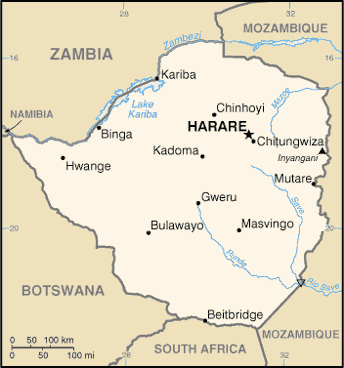
The swearing in of Zimbabwe's new President Emmerson Dambudzo Mnangagwa is being hailed as opening a new era for the country that had been ruled by Robert Mugabe from independence in 1980 until his dramatic downfall this week. But  some are demanding accountability over Mnangagwa's role in ethnic massacres against the country's Ndebele minority people in the 1980s.