Europe
Duma

Russia: bill to remove liability for war crimes

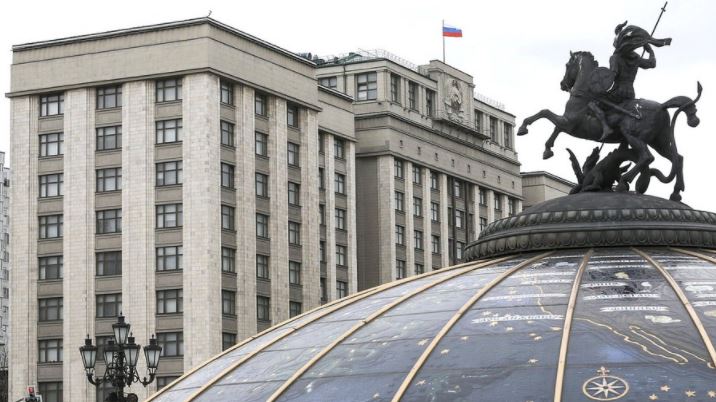
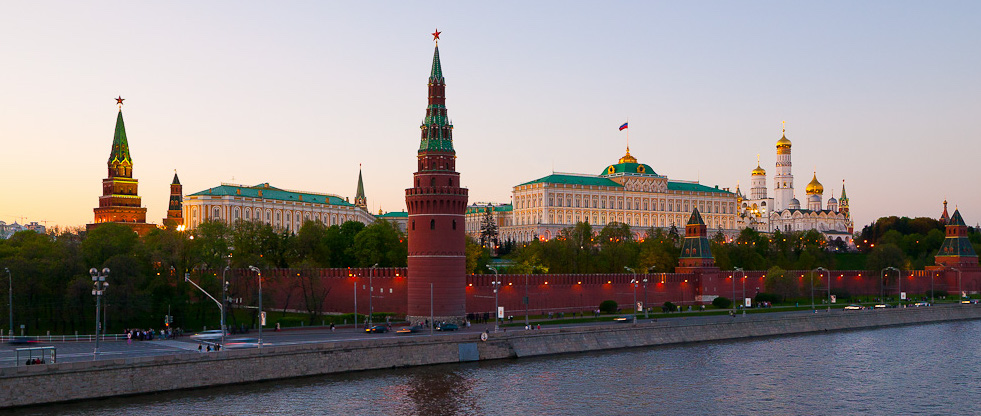
The Russian State Duma passed the first reading a bill concerning the use of Russian criminal law in territories of Ukraine that Russia now occupies. The bill includes a provision stipulating that a deed considered criminal under either Russian or Ukrainian law is not to be qualified as a crime if it “aimed to protect interests of the Russian Federation.” Saying that passage of the bill would constitute “impunity made law,” Amnesty International warned: “Russian servicepeople should remember that even if this unprecedented bill is eventually passed, it will not override international law and will not protect war criminals from eventually facing trials abroad under universal jurisdiction.” (Photo: State Duma via Xinhua)

Africa
kordofan

Sudan: regime spurring Kordofan violence?

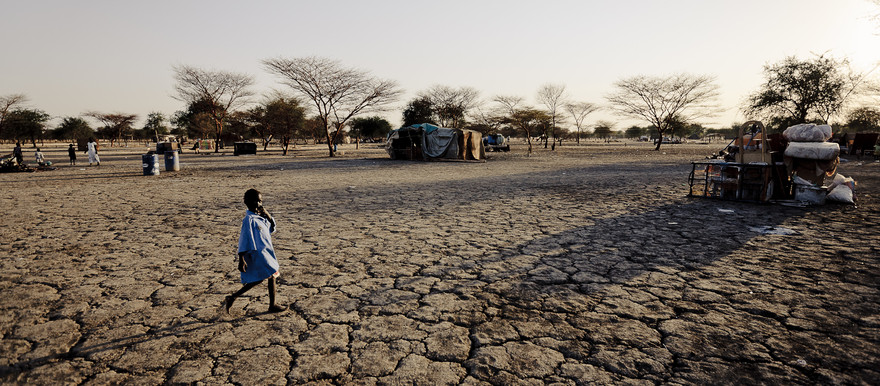
At least 30 people were killed and dozens injured in armed clashes between members of the Hamar and Misseriya pastoralist groups in Sudan’s West Kordofan state. ​​​​A Hamar militia that had been organized to protect against cattle rustlers was apparently ambushed by Misseriya gunmen in the locality of Abu Zabad, setting off the violence. Hamar leaders charge that state authorities and the paramilitary Rapid Support Forces (RSF) are protecting Misseriya bands that raid their lands with impunity. In Khartoum, the pro-democracy Resistance Committee is meanwhile calling for continued protests despite the new pact for a transition to civilian rule, saying that any deal must include provisions for transitional justice and reform of the security forces. (Photo: Tim Freccia/Enough Project via Dabanga)

Africa

Massacre claim overshadows DRC peace talks

A third round of peace talks between the Democratic Republic of Congo and rebel movements opened in Kenya. More than 50 armed and civil society groups are present at the dialogue. Rwanda, accused of backing the M23 rebels, has also been invited to this round—but not the M23 themselves. And the talks are overshadowed by accusations of a massacre of 50 civilians by the M23 in the town of Kishishe, Noth Kivu province. In a statement, the M23 rejected the claims and accused the DRC government of preparing a “genocide” against Congolese Tutsi. The M23 meanwhile continue their advance on the provincial capital of Goma. (Map: CIA)

Europe
kherson

Podcast: against pseudo-left disinformation on Ukraine II

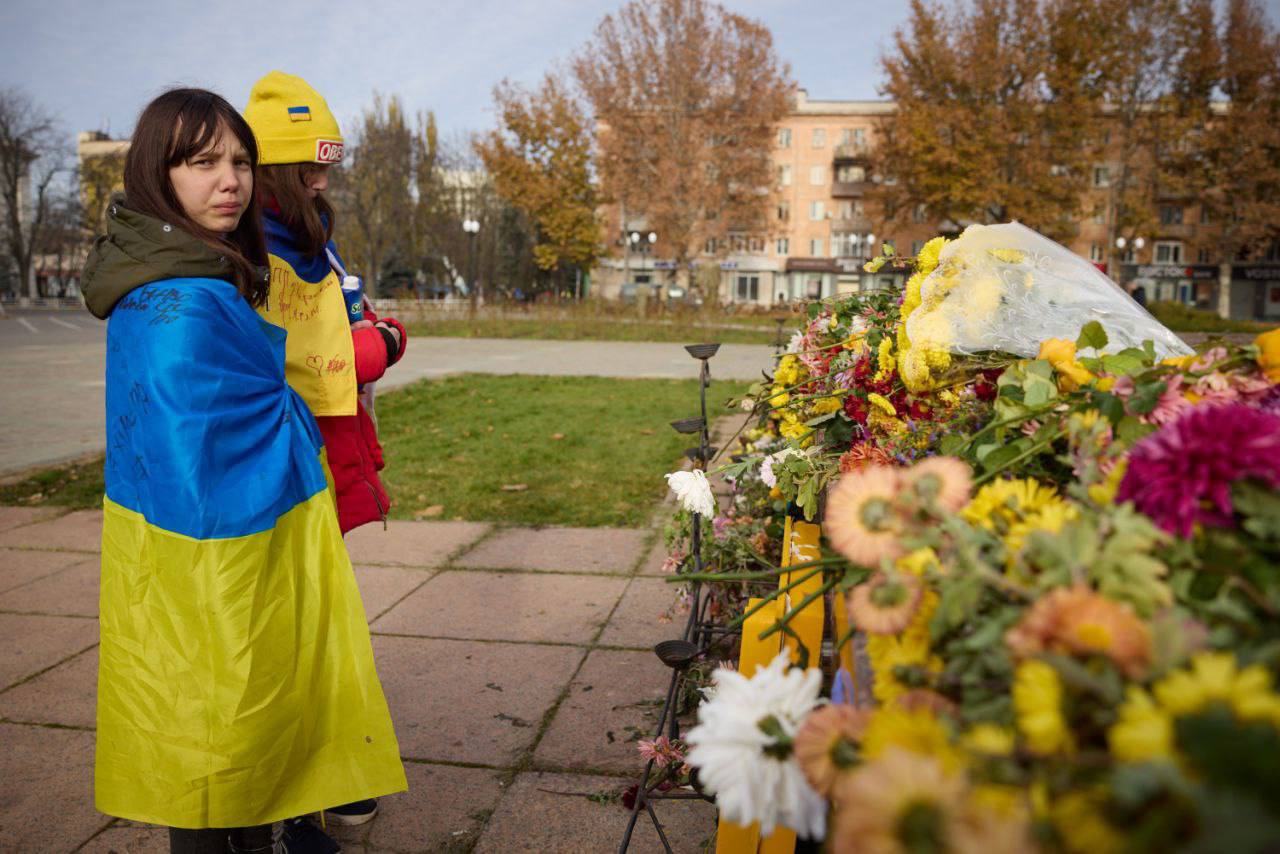
In Episode 150 of the CounterVortex podcast, Bill Weinberg calls out the panelists at The People’s Forum event on “The Real Path to Peace in Ukraine“—including the inevitable Noam Chomsky and Medea Benjamin—for actually spreading Russian war propaganda, in Orwellian manner. As Ukraine advances on the ground, liberating the city of Kherson (which Moscow had declared “annexed”), Russia retaliates with massive missile strikes targeting civilian infrastructure such as heating plants as the bitter Ukrainian winter approaches—clearly war crimes, aimed at breaking the will of the populace. But rather than protesting the Russian bombardment, these pseudo-anti-war voices join with the Trumpian right in calling for an end to military aid to Ukraine. And rather than Russian mass atrocities and illegal annexation of Ukrainian territory, they point to imaginary pressure on Kyiv from the US not to negotiate as the obstacle to peace. This war propaganda is all the more sickening for being disguised as peace propaganda. Listen on SoundCloud or via Patreon. (Photo via Razom for Ukraine)

Inner Asia
Xinjiang

Podcast: state capitalism and the Uyghur genocide

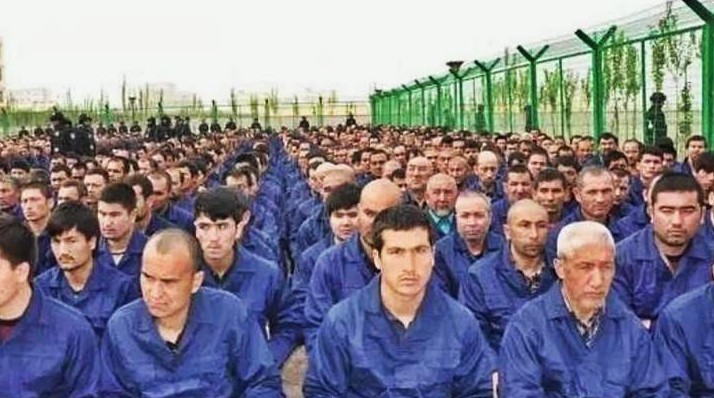
In Episode 149 of the CounterVortex podcast, Bill Weinberg notes that the UN Human Rights Office determination that China may be guilty of “crimes against humanity” in its mass detention of Uyghurs in Xinjiang province is dismissed by the tankie-left ANSWER Coalition as “propagandistic.” Meanwhile, it falls to Radio Free Asia, media arm of the US State Department, to aggressively cover the very real conditions of forced labor faced by the Uyghurs and other Turkic peoples of Xinjiang—and how Western corporations benefit from it. While the Western pseudo-left betrays the Uyghurs, US imperialism exploits their suffering for propaganda against a rising China in the Great Game for the Asia-Pacific region. Figures such as Australia’s Kevin Rudd incorrectly portray a “Return of Red China,” blaming the PRC’s increasingly totalitarian direction on a supposed neo-Marxism. Fortunately, the new anthology Xinjiang Year Zero offers a corrective perspective, placing the industrial-detention complex and techno-security state in the context of global capitalism and settler colonialism. Listen on SoundCloud or via Patreon. (Photo: Xinjiang Judicial Administration via The Diplomat)

Southern Cone
Lula

Tough congress for Brazil’s new indigenous caucus

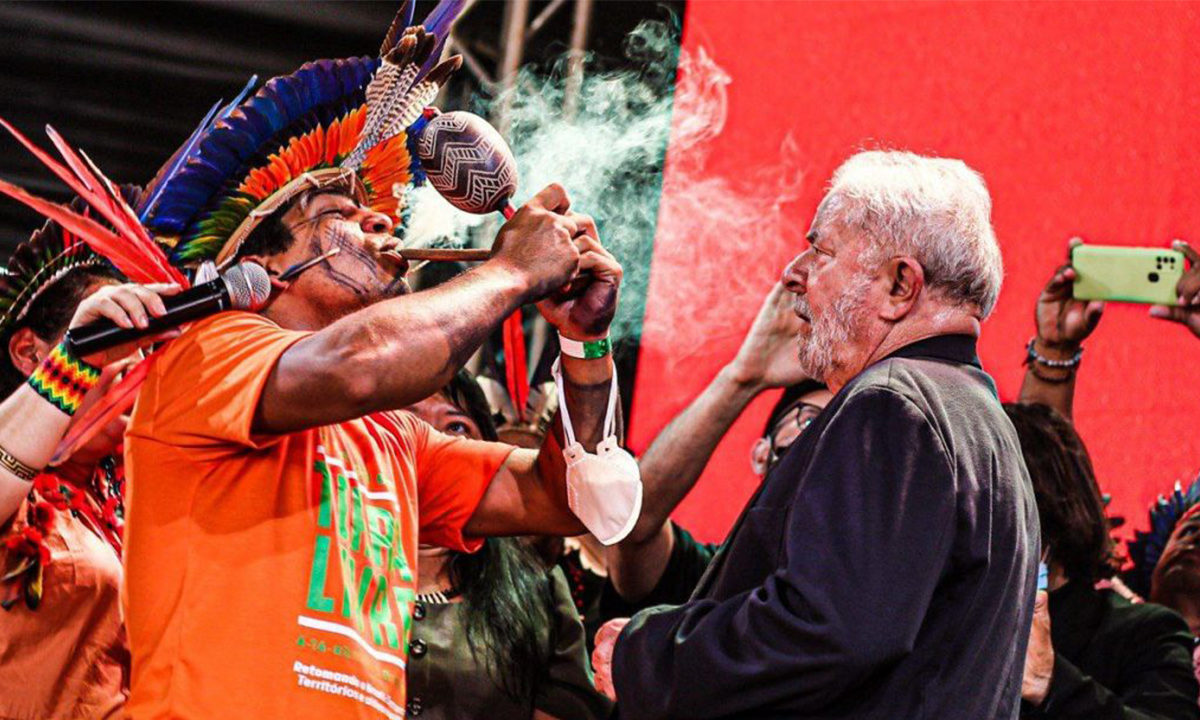
In Brazil’s general elections, five self-identified indigenous candidates won seats as federal deputies and two as senators—the highest number in the country’s history. The most celebrated victory was that of Sônia Guajajara, a leader of her own Guajajara people in Maranhão state who has emerged as a voice for indigenous peoples on the national stage, and now takes a seat as deputy. But this new “Bancada do Cocar” (Feathered Headdress Caucus) will face tough odds in a generally more conservative National Congress. More seats were won by supporters of the reactionary outgoing president Jair Bolsonaro, and especially the Bancada Rural (Rural Caucus, dominated by the agribusiness lobby), in both the lower and upper houses. (Photo of indigenous leaders with president-elect Lula da Silva via Mongabay)

Europe
Kremlin

Russia: from ‘denazification’ to ‘desatanization’

Since launching its invasion of Ukraine in February, the Kremlin has been using the rhetoric of “denazification” to justify its war of aggression. It now appears to be updating its nomenclature. Aleksey Pavlov, assistant secretary of the Security Council of the Russian Federation, told state news agency RIA Novosti that Ukraine has become a “totalitarian hypersect” where citizens have abandoned Orthodox Christian values. He added that the “desatanization” of Ukraine should be a goal of the “special military operation.” Jews in Ukraine and Russia alike are aghast that Pavlov named the Chabad-Lubavitch Hasidic group as one of the “hundreds of sects” that need to be purged from Ukraine, calling it a “supremacist cult.” (Photo: Wikipedia)

Planet Watch
Chad

Podcast: climate change and the global struggle II

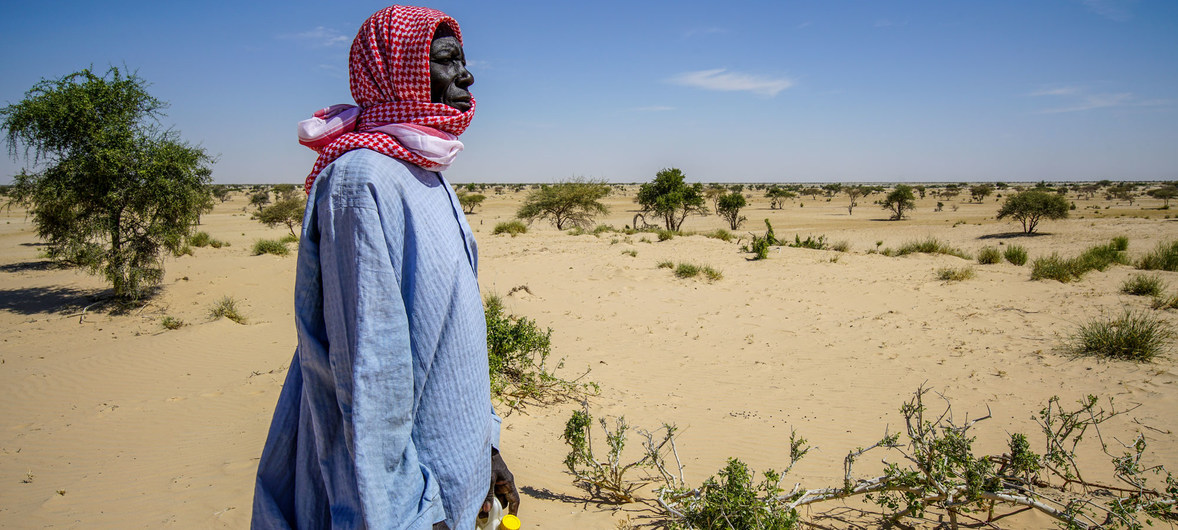
In Episode 147 of the CounterVortex podcast, Bill Weinberg notes the recent statement from the UN Environment Program that “only a root-and-branch transformation of our economies and societies can save us from accelerating climate disaster.” Studies from similarly prestigious global bodies have raised the prospect of imminent human extinction. An International Energy Agency report released last year warned that new fossil fuel exploration needed to halt by 2022 in order to keep warming within the limits set by the 2015 Paris Agreement. Adoption of new technologies and emissions standards does mean that CO2 emissions from energy generation (at least) are likely to peak by 2025. But the IEA finds that this would still lead to global temperatures rising by 2.5 C above pre-industrial levels by century’s end—exceeding the Paris Agreement limits, with catastrophic climate impacts. And the catastrophic impacts, already felt in places like Chad and Cameroon, win but scarce media coverage. Climate-related conflict has already escalated to genocide in Darfur. Climate protests in Europe—at oil terminals and car shows (as well as, less appropriately, museums)—do win some attention. But the ongoing resistance to oil mega-projects in places like Uganda and Tanzania are comparatively invisible to the outside world. The dire warnings from the UN and IEA raise the imperative for a globalized resistance with an explicitly anti-capitalist politics. Listen on SoundCloud or via Patreon. (Photo of Tantaverom region of Chad via UNDP)

Europe
Izyum

Ukraine: over 18,000 war crimes documented

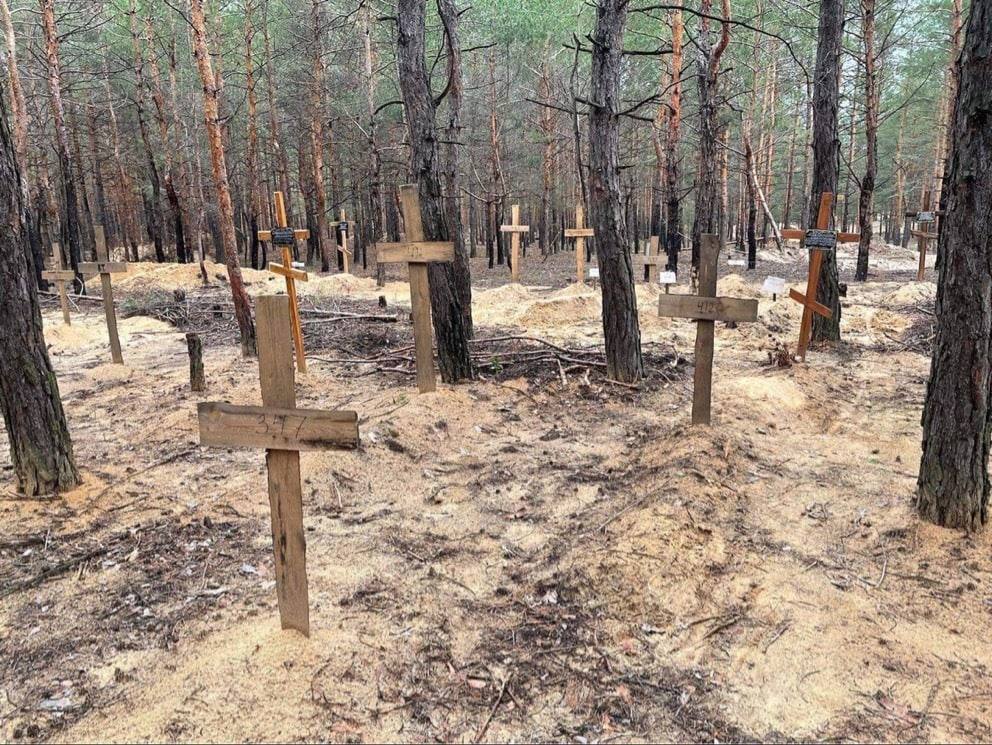
Ukraine’s Center for Civil Liberties, which was awarded the Nobel Peace Prize with other rights defenders from the region earlier this month, reports that it has documented 18,000 war crimes committed on Ukrainian territory since the conflict began there in 2014—with the number skyrocketing since the Russian invasion of this year. Instances of torture and rape by Russian occupation forces are particularly emphasized. The Center is stepping up its investigative work in response to a fast-growing caseload. Ukraine’s law enforcement system is already overloaded with war crimes cases, and the International Criminal Court is focusing on only a few cases. The Center’s leader Oleksandra Matviychuk is calling for creation of a special tribunal to try Vladimir Putin and Russian war criminals. (Photo via Twitter)

Europe
mariupol ruins

Podcast: Grozny, Aleppo, Mariupol

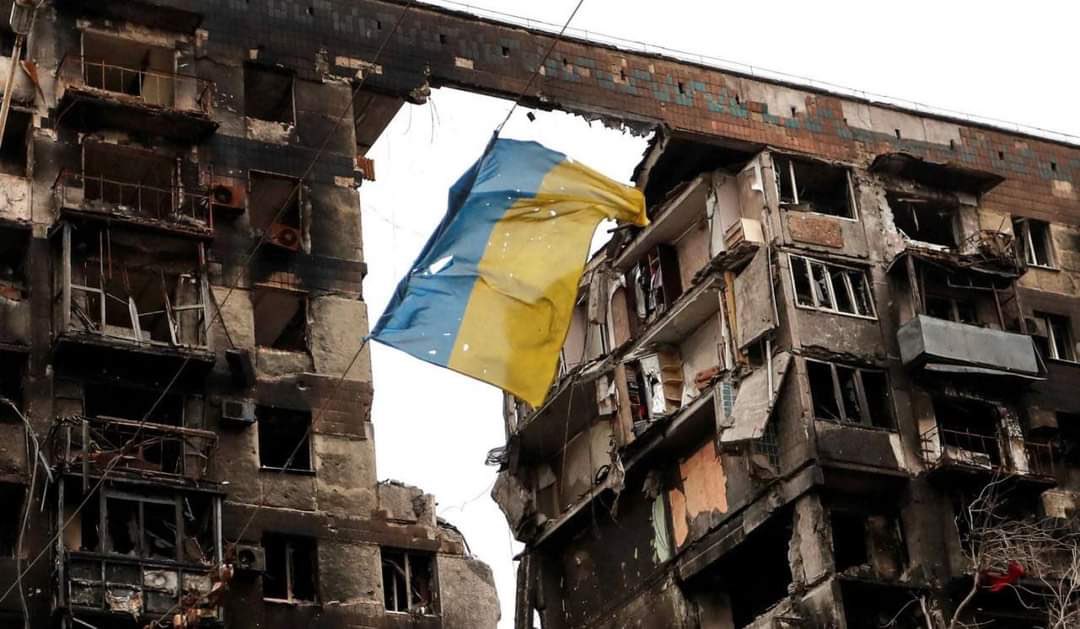
In Episode 144 of the CounterVortex podcast, Bill Weinberg notes Putin’s annexation of Ukraine’s Donbas region not only came on exactly the same day as the 1938 Munich Agreement, which approved Hitler’s annexation of Czechoslovakia’s Sudetenland—it was also the same day that Putin launched two of his previous criminal military adventures. On Sept. 30, 1999, Russian tanks rolled into Chechnya, marking the start of the Second Chechen War, with massive aerial bombardment of the region’s capital city of Groazny. On Sept. 30, 2015, Russian began air-strikes in Syria, marking the start of a massive military intervention on behalf of the Bashar Assad dictatorship, in which the city of Aleppo would be virtually destroyed by bombardment. And in Putin’s new war of aggression in Ukraine, the Azov seaport of Mariupol has been similarly nearly obliterated. A review of this history reveals Vladimir Putin as a serial city-destroyer, who must be deposed and put on trial for his crimes against humanity. Listen on SoundCloud or via Patreon. (Photo via Twitter)

Europe
Smyrna

Erdogan invokes burning of Smyrna

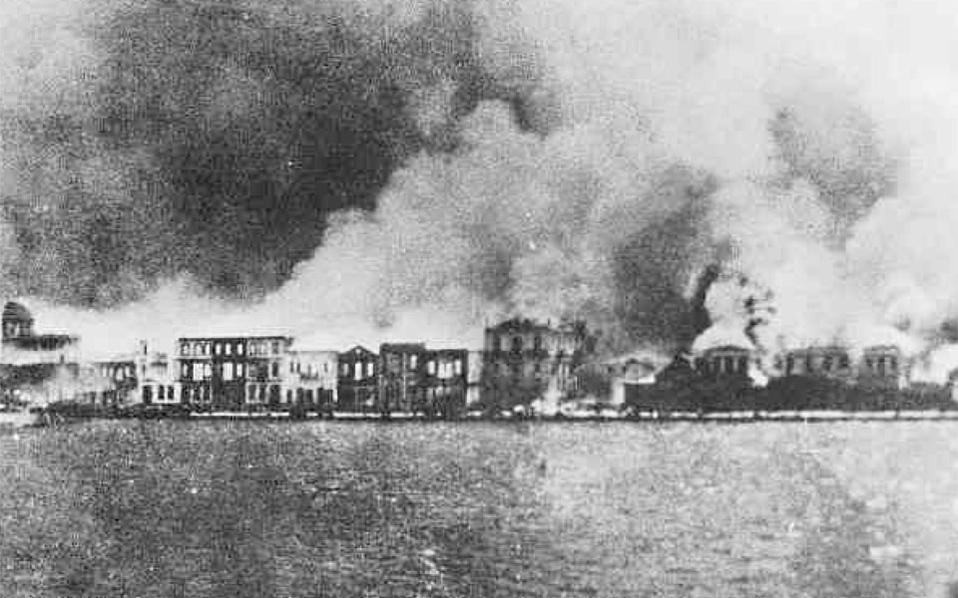
Amid rising tensions between NATO allies Turkey and Greece, Turkish President Recep Tayyip Erdogan explicitly invoked the burning of Smyrna at the end of the Greco-Turkish War. “We have only one word to tell Greece: Do not forget Izmir,” Erdogan warned, using the Turkish name for the coastal city that was the scene of atrocities targeting the substantial Greek populace after it was taken by Turkish forces in September 1922. “We may come suddenly one night,” Erdogan added. The current dispute stems from a treaty signed the year after the attack on Smyrna/Izmir, which gave offshore islands to Greece on condition that they remain unarmed. Ankara charges that Greece is militarizing the islands, in violation of the 1923 Treaty of Lausanne. (Photo via HALC)

Europe
Crimea

Crackdown on civil society widens in Crimea

Drone strikes and unexplained explosions on the Russian-annexed Criman Peninsula have prompted the Moscow-controlled administration to urge citizens to hunt for possible saboteurs. This comes amid widening repression on civil society, especially targeting the Tatar people. A local court jailed four people involved in a Tatar wedding in Bakhchysarai for performing a Ukrainian patriotic song. Officers of the FSB security agency raided the home of Vilen Temeryanov, an independent journalist working with the rights group Crimean Solidarity, in the village of Vilne. Temeryanov was detained on charges of collaborating with a “terrorist organization.” In New York, the Committee to Protect Journalists said: “Authorities must drop all charges against Temeryanov, release him immediately, and stop cracking down on Crimean Tatar journalists.” (Map via Wikimedia Commons)