Planet Watch
climate

2023 hottest year on record —by ‘alarming’ margin

The year 2023 is officially the warmest on record—overtaking 2016, the previous warmest year, by an alarming margin. According to new data from the European Union’s Copernicus Climate Change Service, Earth was 1.48 degrees Celsius hotter last year compared with pre-industrial levels—dangerously close to the 1.5-degree threshold set by the Paris climate deal. 2023 also marked the first year in which each day was over one degree warmer than the pre-industrial average. Temperatures over 2023 likely exceeded those of any year over the past 100,000 years. This was partially due to the year’s El Niño climate phenomenon, but those impacts only began in June—and every subsequent month last year was the warmest on record for that particular month. September represented the largest climatological departure since record-keeping began over 170 years ago. (Image: blende12/Pixabay)

The Amazon
Secoya

Ecuador: court orders return of Siekopai homeland

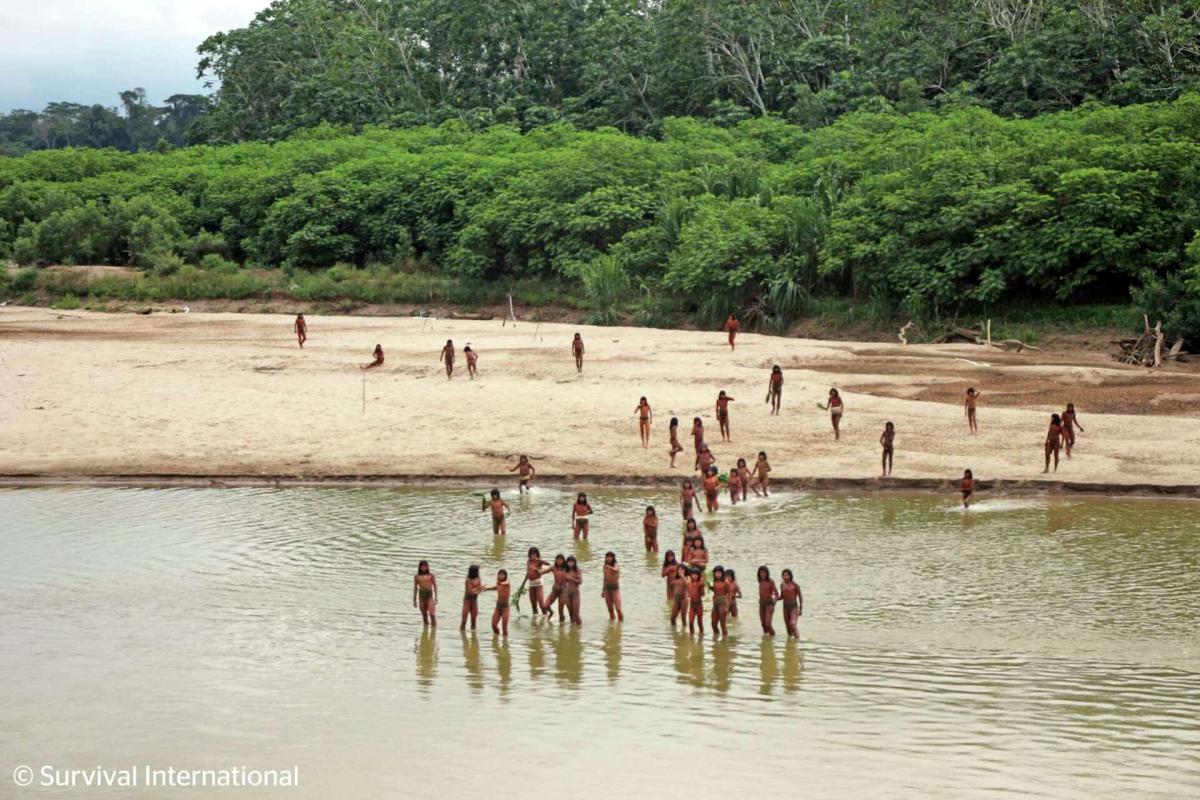
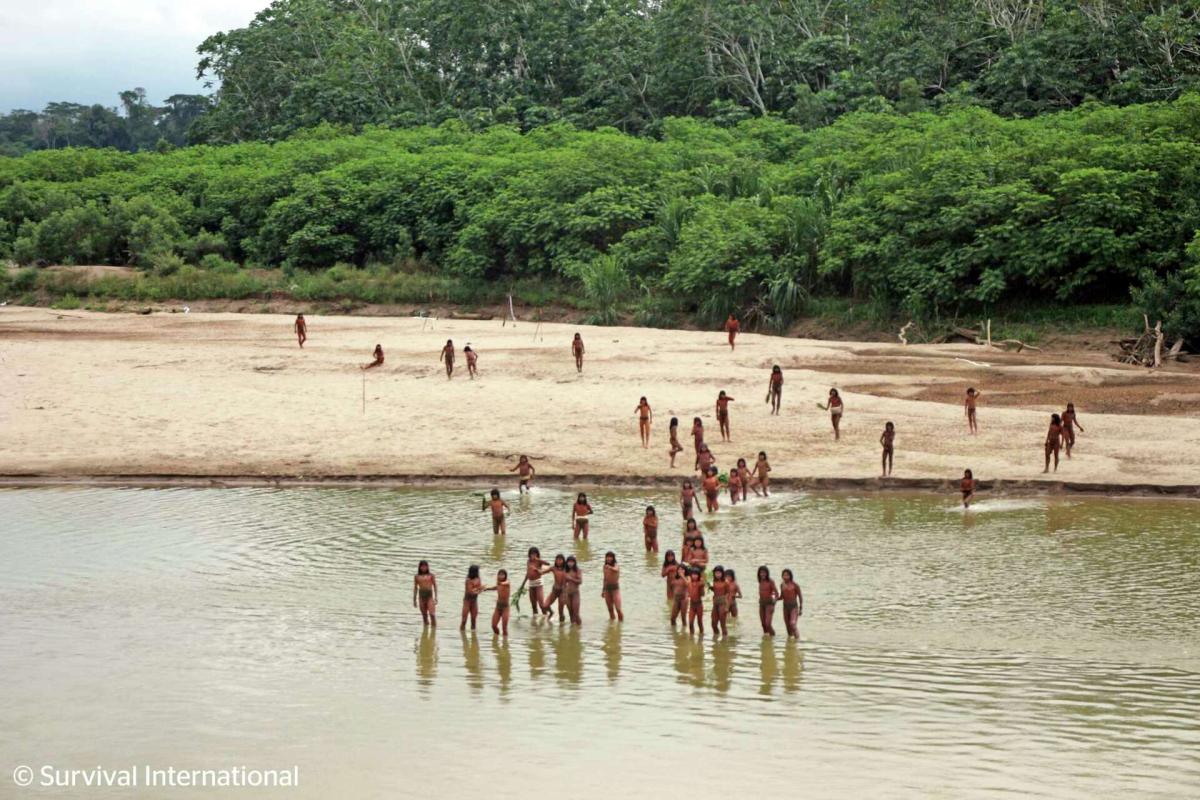
In what is being hailed as an historic decision, an appeals court in Ecuador ordered the return of a 42,360-hectare expanse of the Amazon rainforest to the Siekopai indigenous people, generations after they were driven from the territory by the military. The Provincial Court of Sucumbios ruled that the Siekopai retain indigenous title to their ancestral homeland, known as Pë’këya, which lies along the border with Peru in remote country. The lands were seized by Ecuador’s army during the war with Peru in 1941, and remained a military-controlled zone until being incorporated into Cuyabeno Wildlife Reserve in 1979. Ecuador’s Ministry of Environment has been given 45 days to deliver a property title to the Siekopai Nation, and make public apologies for the usurpation of their homeland. (Photo: Amazon Frontlines)

The Amazon
yanomami

Lula accuses Bolsonaro of ‘genocide’ of Yanomami

Brazil’s government declared a public health emergency for the Yanomami indigenous people, now plagued by rising death rates from curable diseases and malnutrition. President Luiz Inácio “Lula” da Silva flew to the remote Yanomami territory in Roraima state after horrifying photographs emerged of emaciated Yanomami children and adults. After his visit, Lula tweeted: “More than a humanitarian crisis, what I saw in Roraima was genocide: a premeditated crime against the Yanomami, committed by a government insensitive to suffering.” This was a reference to the previous far-right government of Jair Bolsonaro, under whose presidency gold miners and illegal loggers flooded into Yanomami territory, bringing disease and destroying the forest that the people depends on for sustenance. Interior Minister Flávio Dino said he will order an investigation into “strong indications” the Yanomami had suffered crimes including genocide–meaning the deliberate attempt to partially or completely destroy an ethnic, national, racial or religious group. (Photo: Mongabay)

North America

Biden admin to expand Title 42 expulsions

President Joe Biden announced that the US is to extend a parole program previously offered only to migrants from Venezuela to those from Cuba, Nicaragua and Haiti, allowing them to apply for residency—but reiterated that his administration will continue to enforce Title 42, in compliance with a recent order from the Supreme Court. In fact, under his new policy, Title 42 expulsions are to increase, with Mexico agreeing to accept expelled Cubans, Nicaraguans and Haitians. A provision of the Public Health Service Act allowing for summary expulsion of migrants at the southern border, Title 42 is in effect pursuant to a Centers for Disease Control order of March 2020 as a COVID-19 emergency measure. The policy shifts as litigation over Title 42 has been batted back and forth in the US courts has led to confusion in cities on both sides of the border. Squalid encampments have sprung up in Matamoros, Reynosa and other Mexican border towns as migrants await entry to the US. (Photo via FWS)

Africa
Rift Valley

African dissent from biodiversity protocol

The UN Biodiversity Conference, or COP15, concluded in Montreal with what is being hailed as a landmark agreement to address the current unprecedented loss of species, now termed the planet’s sixth mass extinction. The centerpiece of the Kunming-Montreal Global Biodiversity Framework, conceived as a match to the Paris Agreement on climate change, is the so-called “30×30” pledge—with countries committing to protect 30% of their territory for habitat preservation by 2030. The deal earmarks $30 billion per year to flow from wealthy countries to poor ones to assist in conservation programs. But the financial commitments are not binding, and were assailed by countries in the developing world as inadequate. After an all-night session, the gavel was brought down on the deal minutes after the delegation from the Democratic Republic of Congo pressed outstanding criticisms. This was decried by the DRC, Uganda and other African delegations. A representative from Cameroon protested: “What we saw was a force of hand.” (Photo of Kenya’s Great Rift Valley via Pixabay)

Europe
Reichsbürger

Reichsbürger plot: Russian ‘hybrid aggression’?

The Brussels-based pro-EU think-tank International Foundation for Better Governance (IFBG) is calling the apparent thwarted ultra-right plot to overthrow the German government by the so-called “Reichsbürger” movement “a classic example of the hybrid aggression of the Russian Federation.” The statement notes that chancellor Olaf Scholz, apparently one of those marked for “physical elimination” in the Reichsbürger plot, is a key supporter of Ukraine among Western leaders, and was chiefly responsible for the recent German donation of Gepard mobile anti-aircraft systems to the Kyiv government. IFBG concludes: “The circumstances demand that Russia must be completely isolated, receive the maximum possible sanctions and be recognised as a terrorist state by the parliaments of Western countries.” (Photo of 2013 Reichsbürger rally in Berlin via WikimediaCommons. Banner reads: “The German people, freed from Napoleon in 1813, freed from EU-fascism in 2013”)

East Asia
Nanjing

China: nationwide protests challenge dictatorship

Following weeks of sporadic protests against the recurrent draconian COVID-19 lockdowns in China, spontaneous demonstrations broke out in cities across the country. Street demos were reported from Shanghai, Nanjing, Guangdong, Chengdu and Wuhan as well as Beijing. In addition to slogans against the lockdowns and for freedom of speech and assembly, such verboten chants were heard as “Xi Jinping, step down” and “Communist party, step down.” The spark was an apartment block fire in Urumqi, capital of western Xinjiang region, that killed at least 10 who were under lockdown orders and unable to flee. Hong Kong-based Borderless Movement left-dissident website has issued a list of “Demands from Chinese and Hong Kong Socialists” in response to the outburst, calling for an end to lockdowns and forced testing, provision of multiple vaccines, and the right to citizen and worker self-organization. The statement calls for “marginalized groups in the mainland and abroad, including Hongkongers, Taiwanese, Uyghurs and Tibetans to continue building a long-term strategic program for democratic struggle in China.” (Photo of student protest in Nanjing via Twitter)

South Asia
Sindh

Pakistan floods highlight climate injustice

As world leaders meet at the COP27 in Egypt to try to reinvigorate stalled global climate talks, survivors of Pakistan’s heaviest flooding in living memory are facing a health crisis, with stagnating floodwaters fuelling a rise in malaria, dengue, and diarrhoea. The unprecedented scale of the disaster—up to $40 billion in economic damage, 1,700 killed since mid-June, eight million displaced, and almost half the country’s farmland submerged—has given impetus to calls for COP27 to take up the question of climate reparations. (Photo: Verena Hölzl/TNH)

East Asia
Bridge Man

Xi Jinping consolidates self-coup —amid repression

After years of centralizing power in his own person, China’s president and party secretary Xi Jinping secured a third leadership term at the 20th National Congress of the Chinese Communist Party. The new seven-member Politburo Standing Committee is stacked with loyalists, abandoning the practice of balancing rival tendencies within the body. This cements Xi’s place as China’s “paramount leader” in the autocratic tradition of Mao Zedong. On the eve of the Congress, a lone protester draped a banner from a Beijing overpass calling for strikes to bring down “dictator” Xi. He was immediately arrested, but his brief action quickly became a sensation on Chinese social media—before all such content was censored by authorities. Some who expressed support online for “Bridge Man” have been harassed by the police. The lead-up to the National Congress saw another wave of arrests and “pretrial detention” of dissidents and human rights defenders. (Photo via China Change)

Iran
hijab protest

Iran: high-tech crackdown on hijab resistance

An Iranian government entity enforcing Islamic rules says the Intelligence Ministry has arrested 300 anti-hijab activist “ringleaders” working “for the enemy.” A spokesman of the Enjoining Good & Forbidding Evil Headquarters said that the activists were arrested in accordance with the new Hijab & Chastity Regulations, which officially extend the mandatory hijab to social media posts. This is to be monitored by the government’s facial recognition software that was used during the pandemic to track if people were wearing face masks. (Image: Iran International)

East Asia
Zhengzhou

China: can authorities contain unrest after Henan protests?

China’s banking regulator announced that it has opened an investigation into officials at its bureau in Henan province, which this month saw protests by depositors unable to withdraw funds. The China Banking & Insurance Regulatory Commission said a local inspector is suspected of “serious disciplinary violations” concerning fraud and embezzlement at five rural lenders. Several members of a “criminal gang” accused of taking control of the banks have been arrested. The situation turned violent after some 1,000 depositors protested in Zhengzhou, demanding access to their savings in frozen accounts. The protesters were assaulted by a group of unidentified men in matching white outfits, as police held back and did not intervene. Video of the incident went viral on social media. In addition to the banking imbroglio, China’s central government faces a growing mortgage payment boycott across the country—and it is all happening in a politically sensitive year. President Xi Jinping is widely expected to secure a third leadership term at the upcoming 20th National Congress of the Communist Party of China. (Photo via Twitter)

Europe
Budapest

Hungary dictatorship consolidates; Putin pleased

Hungarian Prime Minister Viktor Órban declared a state of emergency, citing threats originating from the war in Ukraine. The declaration, allowing him to rule by decree, came days after his Fidesz party used its supermajority to pass a constitutional amendment allowing the government to impose a state of emergency in the event of war in a neighboring country. Órban declared a similar emergency in response to the COVID-19 pandemic in 2020, and those assumed special powers, having been extended by the National Assembly multiple times, were set to expire just days before the new declaration. The declaration also came days after Tucker Carlson and friends from the American far right attended the Conservative Political Action Conference in Budapest. It also comes as Hungarian officials are blocking a European Union plan for an embargo of Russian oil, and calling for removal of the question from the agenda of an imminent EU summit. (Photo: Pixabay)