Greater Middle East
Lujain al-Hathloul

Saudi detention state under scrutiny

Saudi Arabia has denied prominent detainees contact with their family members and lawyers for months, Human Rights Watch said in a letter requesting access to the country and private prison visits with detainees. The situation raises serious concerns for the detainees’ safety and well-being, the rights group said. Saudi authorities have banned in-person visits with prisoners across the country since March to limit the spread of COVID-19. But Saudi activists and other sources say that authorities have also unduly denied numerous imprisoned dissidents and other detainees regular communication with the outside world. Prominent women’s rights activist Loujain al-Hathloul had been on hunger strike for six days before Saudi authorities finally allowed her parents to visit on Aug. 31, according to family members. Al-Hathloul had spent almost three months before that under incommunicado detention. (Image: social media post with the word “traitor” stamped on the faces of activists detained in 2018, including Loujain al-Hathloul, top center. Via Middle East Eye.)

North Africa
tripoli

Libya: Tripoli protests met with repression

At least six protesters were abducted and several others wounded when armed men fired into the crowd to disperse a demonstration in the Libyan capital. The gunmen, who used truck-mounted heavy machine-guns as well as small arms, apparently belonged to a militia under the informal command of the Interior Ministry. In the aftermath, Prime Minister Fayez al-Sarraj of the Tripoli-based Government of National Accord suspended Interior Minister Fathi Bashaga while an investigation is underway. Protests have continued to fill Tripoli’s Martyrs Square, and have spread to other cities controlled by the GNA, including Misrata and al-Zawyia. Demonstrators are denouncing official corruption and calling for the provision of essential services such as electricity. They are also demanding an end to impunity for lawless militias and a transition to full democracy. (Photo: Libya Observer)

Greater Middle East
al-bokari

Saudi Arabia imprisons Yemeni dissident blogger

A court in Saudi Arabia sentenced a Yemeni blogger to 10 months in prison, a fine of 10,000 riyals ($2,600) and deportation for a social media post supporting equal rights for people in same-sex relationships. Mohamad al-Bokari was arrested in Riyadh in April, after posting a video on social media, which authorities said contained “sexual references” and “violated public order and morals.” This was apparently a reference to the line: “Everyone has rights and should be able to practice them freely, including gay people.” Sources told Human Rights Watch that al-Bokari was subjected to a forced anal exam, an internationally discreditedpractice used to seek “proof” of homosexual conduct. HRW says the practice has no scientific basis, violates medical ethics, and constitutes cruel, degrading, and inhuman treatment that may rise to the level of torture. Al-Bokari was charged with “violating public morality” and “imitating women.” (Image: Amnesty International)

Africa
Sudan rebels

Troops to Darfur as war re-escalates

The Sudanese government is sending more forces to the restive Darfur region, following a new escalation in violence there. Prime Minister Abdalla Hamdok said the troops are to protect people during the farming season. Dozens have been killed and several villages destroyed in Darfur over the past weeks, even as the UN Security Council discusses an “exit strategy” for the peacekeeping force. Ironically, efforts to instate the peace implementation process in Darfur may have contributed to the new surge in violence. With government encouragement, those displaced by the conflict finally started returning home in time for this year’s planting season. But this has led to new disputes between returnees and people who took over their lands in the intervening years. (Photo: Libya Observer)

Africa
Sudan

Sudan reforms harsh Islamist legal code

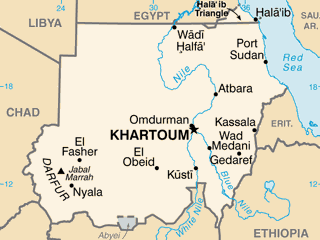
After more than 30 years of Islamist rule, Sudan’s interim Sovereignty Council has unveiled a sweeping reform of the sharia-based legal code. The revisions aim to bring Sudan’s laws in line with the Constitutional Declaration that established the country’s transitional government a year ago, and included guarantees for basic rights and freedoms. Most significantly, the amendments abolish the crime of “apostasy”—meaning conversion from Islam, which had carried the death penalty and was widely used to target political opposition. (Map: Perry-Castañeda Library Map Collection)

Syria
Atmeh

Syria: protests against ex-Nusra rule in Idlib

Protesters gathered in the town of Atmeh in Syria’s opposition-held Idlib province to demand the release of a locally based British aid worker arrested by Hay’at Tahrir al-Sham (HTS), the Islamist militia formerly known as the Nusra Front that now controls much of the province. Tauqir Sharif, a British Muslim, was working with a grassroots aid and media group called Live Updates from Syria. He was detained by HTS in a raid on his home. Footage of the protest showed many women and children among dozens chanting and holding banners calling for Sharif to be freed. The crowd finally gathered outside the closed gates of a compound guarded by masked militiamen. Demonstrators also protested the closure of education and social services by HTS, chanting “We want schools to open.” (Photo via Middle East Eye)

Greater Middle East
hegazi

Egyptian LGBT activist a suicide in exile

Three years after her arrest and torture by security forces in her native country, Egyptian LGBT activist Sarah Hegazi killed herself in exile in Canada, prompting an outpouring of sympathy and anger on social media. Hegazi, 30, an openly gay woman and rights advocate, was among a group of activists arrested in September 2017 after raising a rainbow flag at a Cairo concert of the Lebanese indie band Mashrou Leila, which includes gay members. Hegazi was charged with joining an illegal group promoting “deviant thought.” She fled to Canada after being released on bail in January 2018. The incident was followed by a harsh crackdown on Egypt’s LGBT community. (Photo via Middle East Eye)

Syria
suwayda

Anti-Assad protests re-emerge in Syria

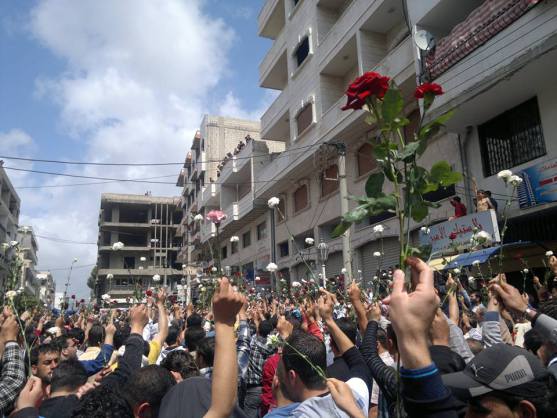
Amid spiraling inflation and fast-rising prices for food and other basic goods, protests are again emerging in regime-controlled areas of Syria—some reviving slogans of the 2011 revolution. One angry protest was held in the western city of Suweida. Crowds moved through the city’s central streets, eventually gathering in front of the governorate building, where they chanted, “The people want to topple the regime!” “Revolution, freedom, social justice!” and “Down with Bashar al-Assad!” The protest was particularly significant, as the Druze-majority province of Suweida has remained loyal to Damascus throughout the nine years of the Syrian uprising. (Photo: Suwayda-24 via Syria Call)

Africa
Nuba

Clashes threaten Sudan democratic transition

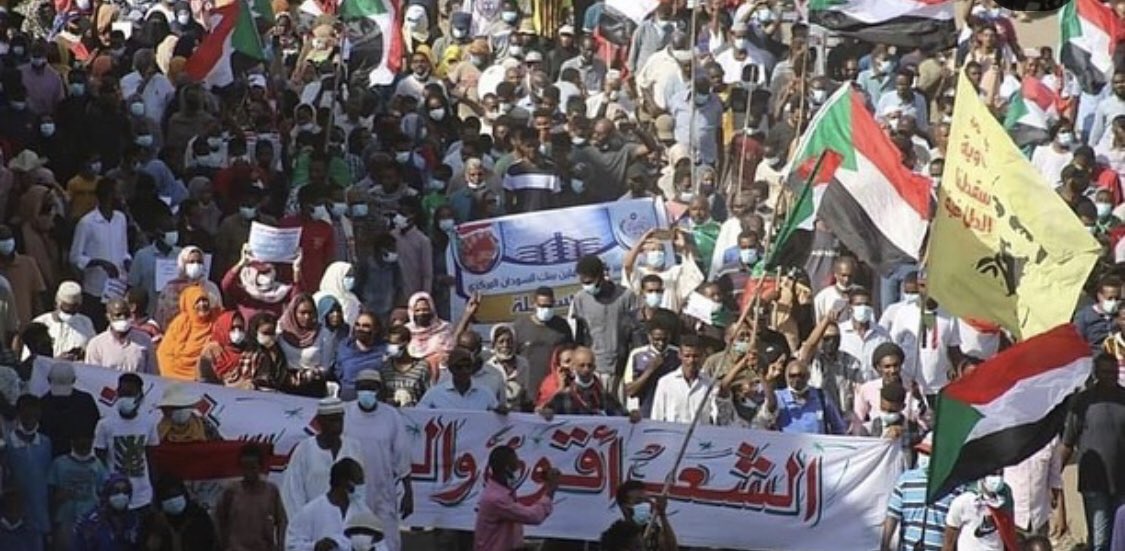
Recent inter-communal fighting in Darfur and Kassala State threatens Sudan’s fragile democratic transition, United Nations officials warn. The government has dispatched the army and paramilitary Rapid Support Forces (RSF) to South Darfur and Kassala states, with orders to act decisively “to secure the country, lives and property.” But the UN Panel of Experts on Sudan expressed grave concern about RSF fighters collaborating with perpetrators of the violence. Sudanese civil society groups are calling for RSF commanders responsible for human rights violations to be held legally accountable. (Photo: Nuba Reports)

Africa
Sudan

SCOTUS: Sudan liable for terrorism damages

The US Supreme Court ruled in Opati v. Republic of Sudan that the Foreign Sovereign Immunities Act permits a punitive damages award against Sudan for the role it played in the 1998 bombings at the US embassies in Kenya and Tanzania. Plaintiffs in the case argued that Sudan had harbored al-Qaeda leaders who plotted the attacks, including Osama bin Laden. Officials in Khartoum have been seeking a settlement with the victims outside the court. Sudan is in a precarious economic situation following the ouster of long-ruling strongman Omer Hassan al-Bashir, now exacerbated by the COVID-19 pandemic. The Trump administration made it clear that Sudan must settle all terrorism-related claims to get off the US list of “state sponsors of terrorism”—a precondition for Washington’s support for debt relief for the African country. (Map: Perry-Castañeda Library Map Collection)

Planet Watch
iraq.pipeline

Yes, ‘peak oil’—but demand, not supply

After oil prices went negative for the first time ever last month, they are now starting to rise again as lockdowns imposed by the COVID-19 pandemic are gradually lifted. US crude is now back to nearly $30 a barrel. But this is less than half what the price was a year ago, and a third what it was a dozen years ago. Iraq, OPEC’s second-largest producer, is at the forefront of the cartel’s effort to squeeze supply to consumer nations, as part of its recent deal to curb output. Baghdad just announced a 30% cut of exports to Asia. But it remains to be seen if such measures will jack up prices and ease the economic pain that has led to a remobilization of anti-regime protests, despite pandemic fears. (Photo via Iraqi News Agency)

Planet Watch
peru exodus

Poor persecuted in COVID-19 police state

In countries across the world, the impoverished are in a grimly paradoxical position: disproportionately impacted both by COVID-19 and by the police-state measures imposed in response to the pandemic—and consequent economic pain. In Lebanon, which had been in the midst of a national uprising before the lockdown, protests have been re-ignited—and with far greater anger. In Venezuela and Argentina, harshly overcrowded prisons have exploded into uprisings over emergency restrictions that leave inmates incommunicado. As in India, stranded migrant laborers line the highways in Peru, defying lockdown orders that have left them destitute, far from home and without employment. UN Human Rights Commissioner Michelle Bachelet warns that “the public health emergency risks becoming a human rights disaster, with negative effects that will long outlast the pandemic itself.” (Photo: Rebelión)