Syria

Assad to The Hague —hope at last?

Even amid growing media portrayals that Bashar Assad has won the war in Syria, the first real hope has emerged that the dictator will face war crimes charges before the International Criminal Court. A group of Syrian refugees who fled to Jordan after surviving torture and massacres submitted dossiers of evidence to the ICC in an attempt to prosecute Assad. Although Syria is not a signatory to the Rome Statute, which establishes the court’s jurisdiction, lawyers in London are citing recent precedent set by the ICC in extending jurisdiction for the crime of forcible population transfers across international borders. (Photo of Aleppo following regime bombardment: 7ee6an)

Europe

Amnesty: EU complicit in violence against refugees

European governments are complicit in the systematic, unlawful and frequently violent "pushback" and collective expulsion of thousands of asylum seekers to squalid and unsafe refugee camps in Bosnia and Herzegovina, Amnesty International charges in a new report. By prioritizing border control over compliance with international law, European governments are not merely turning a blind eye to vicious assaults by the Croatian police, but actually funding such activities. In so doing, they are fueling a growing humanitarian crisis on the edge of the European Union. (Photo Border Violence Monitoring)
Africa

Hundreds dead in new DRC ethnic conflict

A new UN report details violent ethnic attacks in December, leading to hundreds of deaths in the Democratic Republic of the Congo. A UN special investigative mission sent to the Yumbi territory, in the country's west, confirmed at least 535 deaths, including women and children—but found that the death toll may be even higher, as it was reported that bodies were thrown in the Congo River. The report also said some 19,000 people were displaced, many across the border into the neighboring Republic of Congo. (Photo: UNHCR via Africa Times)

North Africa

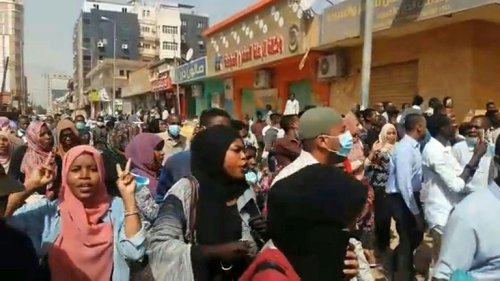
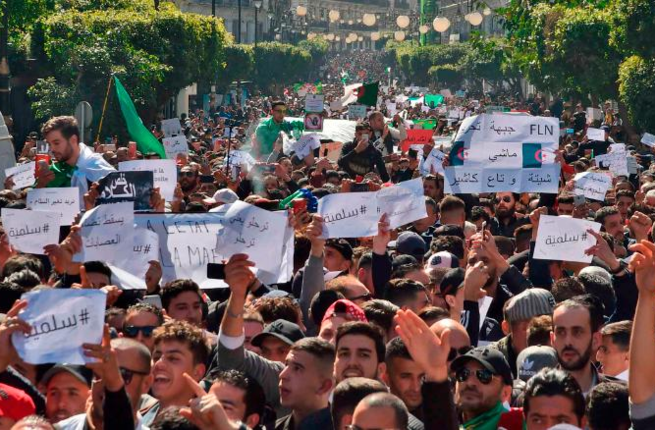
Algerian protesters claim partial victory

Following weeks of mass protests across Algeria, long-ruling President Abdelaziz Bouteflika announced that he will not run for a fifth term—but also said elections that were set for April will be postponed, with no new date set for the polls. There has also been a government shake-up, with the prime minister stepping down. But protesters vow to keep the pressure, demanding that Bouteflika cede power immediately, and, increasingly, that his entire government resign. The protests are on a scale unprecedented since the 1990s when a military coup aborted a democratic process, precipitating a civil war. Algeria's army chief invoked this period in a stern warning to the protesters. "There are some parties who want Algeria to return to the era of extreme pain," Lt. Gen. Gaed Salah said. (Photo via Albawaba)

Greater Middle East

Brussels court: PKK activity not ‘terrorism’

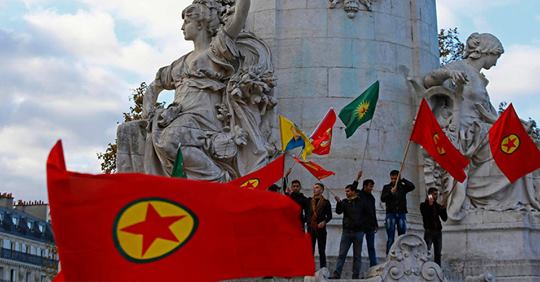
After nine years of proceedings, a court in Belgium acquitted multiple defendants accused of activities involving the Kurdistan Workers’ Party (PKK). Belgian judicial authorities had requested that 36 individuals and companies be tried by a criminal court on charges of taking part in "terrorist activity." The Belgian Chamber of Indictment, however, blocked proceedings against all defendants, ruling that the PKK insurgency is an "internal armed conflict" within Turkey and, as such, neither the party nor its armed wing, the People's Defense Forces (HPG), may be considered a terrorist organization under Belgian law. The Turkish Foreign Ministry condemned the decision. (Photo: ANF)

Oceania

Solomon Islands: ‘irreversible’ oil spill disaster

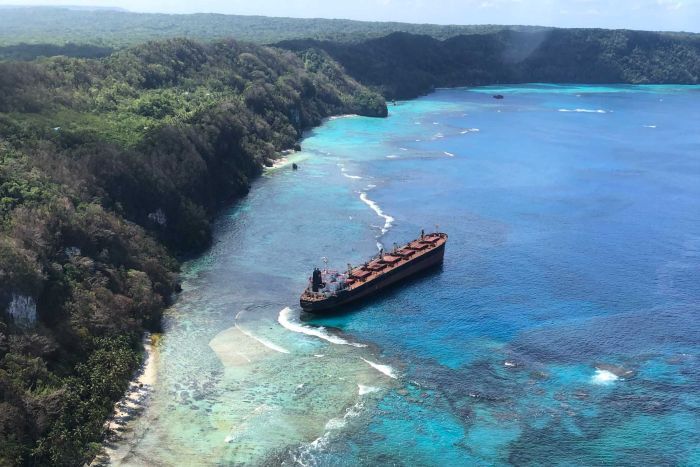
The Solomon Islands' Prime Minister Rick Hou is threatening to "blacklist" the companies involved in a 100-ton oil-spill near a UNESCO World Heritage Site. "The impact on the marine life and the coral is already massive with much of it irreversible," he said. The bulk carrier MV Solomon Trader ran aground a month ago off Rennell Island, while loading bauxite ore in a cyclone. Because of the storm, it took salvage crews several days before they could reach the stricken craft. Compounding the damage, Indonesian-owned Bintan Mining, which chartered the vessel, continued to operate as the oil flowed into the sea, with other ships maneuvering around the wreckage, churning up the oil. Rennell Island, known locally as Mugaba, is home to some 1,840 people, who overwhelmingly rely on fishing for their livelihood. The World Heritage Site covers the world's largest coral atoll. (Photo via Radio Australia)

The Amazon

Peru: ‘Operation Mercury’ militarizes Amazon

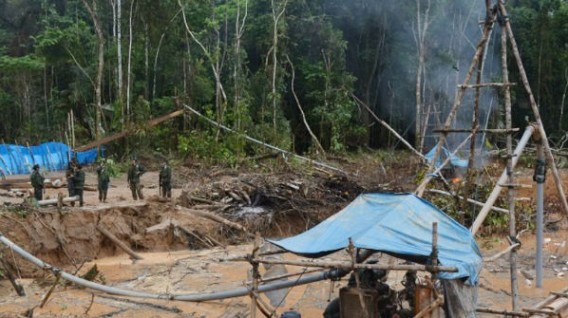
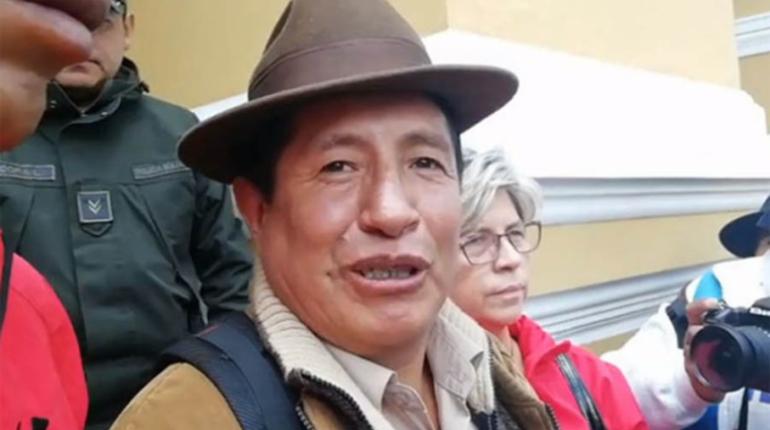
Peru's central government is pouring troops into the rainforest region of Madre de Dios in an all-out effort against thousands of illegal gold-miners operating in remote areas. Under "Operation Mercury"—named for the mercury poisoning caused to local waters by the mining—three High Mobility Temporary Mixed Bases, manned by military and National Police personnel, are to be established within the buffer zone of Tambopata National Reserve. Cabinet officials were flown into the remote area to inaugurate the first base, dubbed "Alpha." Peru is the top gold producer in Latin America and the sixth worldwide, but experts estimate that up to 25% of annual gold production in the country comes from illegal mining. The Andean Amazon Monitoring Project estimates that gold mining has deforested more than 18,000 hectares of Madre de Dios in recent years. (Photo: Andina via Gestión)

WEATHER WAR

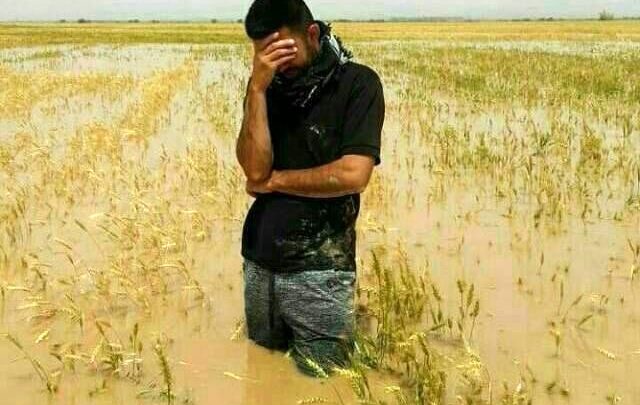
How Iran’s Regime Uses Floods and Drought as Tools of Ethnic Cleansing


by Rahim Hamid, Dur Untash Studies Centre

In most countries prone to regular severe weather events such as heavy flooding, governments take precautionary measures in vulnerable regions to at least minimize the probable damage and protect citizens’ lives and property.

Unfortunately, however, some governments not only exploit such disasters but deliberately manufacture and intensify them as a strategic weapon against parts of the population that threaten the leaders’ economic exploitation of their resources. These governments spare no effort to engineer or exacerbate the effects of such disasters, effectively weaponizing climate change against the people.

Iran’s theocratic regime is one such government, pursuing policies that effectively amount to ethnocide against the Ahwazi Arab population. Ahwazis have the misfortune to live in an oil-rich region, from which Iran extracts 95% of the oil and gas resources that it lays claim to. This massive oil wealth, which was the primary reason for Iran’s forcible annexation of Ahwaz in the early 20th century, has been a far greater curse than a blessing to the Ahwazi people, most of whom now subsist in nearly medieval conditions of poverty. The international community, meanwhile, seems indifferent to their plight

Continue ReadingWEATHER WAR 
Iran

Iran: lawyer convicted for representing protesters

The Center for Human Rights in Iran announced that rights lawyer Nasrin Sotoudeh had been convicted in absentia by Judge Mohammad Moghiseh of Iran's Revolutionary Court, described as a "hardline" jurist. She refused to appear in court because she was denied the right to choose her own lawyer. Sotoudeh was charged with crimes including "collusion against national security," "propaganda against the state," "encouraging corruption and prostitution," "appearing before the judiciary without Islamic hijab," "disturbing public peace and order," and "publishing falsehoods with the intent to disturb public opinion." Prosecution cited her membership in the Center for Human Rights, the Legam group against capital punishment, and the anti-militarist National Peace Council. (Photo: Center for Human Rights in Iran)

Iraq

Iraq prosecuting children suspected of ISIS ties

Iraqi and Kurdistan Regional Government authorities have charged hundreds of children with terrorism for alleged Islamic State affiliation based on dubious accusations and forced confessions obtained through torture, Human Rights Watch charges. The 53-page report claims that Iraqi and KRG authorities often arrest children with “any perceived” connection to ISIS, use torture to coerce confessions and prosecute them in “hasty and unfair trials.” International law observes children recruited by armed groups as victims who should be rehabilitated and reintegrated into society. (Photo: WikiMedia via Jurist)

East Asia

Japan to proceed with relocation of US base

Japan's Prime Minister Shinzo Abe said the relocation of the US airbase at Futenma to Henoko, elsewhere on the island of Okinawa, would continue despite a referendum vote opposing the move. Okinawa prefecture held a referendum vote on whether the US military base should relocate from Ginowan municipality to Henoko. After the final count, approximately 70% of voters opposed the move. The relocation has been 20 years in preparation, and has continued to face opposition over claims of noise from military activity, harm to the surrounding coral reefs, and outrage over a 1995 incident of rape of a 12-year-old Okinawan girl by US servicemen. Okinawa Gov. Denny Tamaki plans to make a visit to Tokyo to reaffirm the island's position. (Photo via Alwaght)

Afghanistan

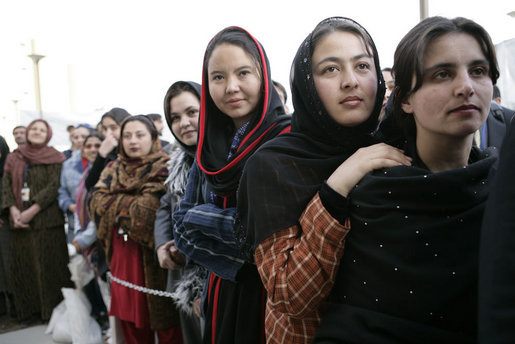
Afghan women advocates wary of ‘peace’ talks

Direct talks between US officials and the Taliban are advancing in Qatar, aimed at ending the decades-long conflict in Afghanistan. But advocates for Afghan women view the talks with increasing skepticism, voicing their concern that hard-won rights could be bargained away. Afghan Women's Network is calling upon the Taliban to take trust-building measures such as the re-opening of girls' schools in areas they control, So far, the group sees few signs of improvement. Forced displacement, indiscriminate violence on civilians, stoning of women and men, closing of schools and the erasure of women from public life are common in Taliban-controlled areas, according to the AWN. (Photo: Wikimedia Commons)