


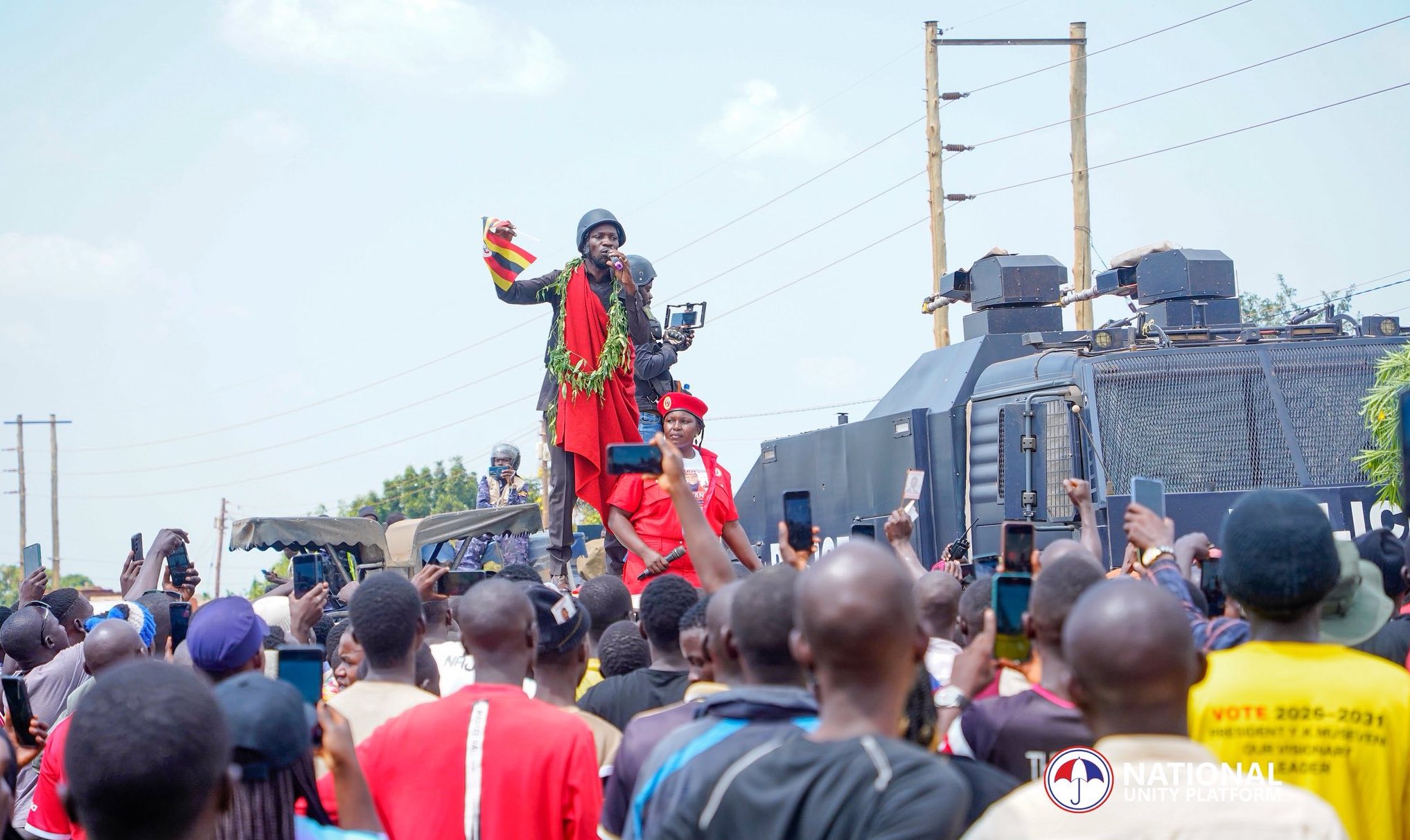
Amnesty International reported Jan. 5 that Ugandan security forces have unlawfully targeted opposition rallies with excessive force and arbitrary arrests, with some detainees subject to torture and other mistreatment.
Documented incidents include the use of tear-gas, pepper spray and beatings against peaceful crowds in the localities of Kawempe and Iganga in November. An eyewitness in Kawempe described the use of dogs to “intimidate the crowd,” rifles used as blunt-force weapons, and beatings with batons and wires. An attendee in Iganga said the officers blocked an exit to the area with their truck before opening fire on the crowd, resulting in at least one death and numerous injuries.
Other measures discussed include road closures to divert protest marches, and the arrests of over 400 people for attending the rallies or supporting political opposition.
Tigere Chagutah, Amnesty International’s regional director for East Africa, stressed the implications of the security officers’ behavior, stating:
The authorities have launched a brutal campaign of repression against the opposition and its supporters, making it extremely difficult for them to exercise their rights to freedom of association and peaceful assembly. The Ugandan authorities must uphold their human rights obligations and allow the opposition to hold its campaign rallies without undue restrictions and without subjecting their leaders and supporters to arrests, torture, or other ill-treatment.
Police are required by international law to initially employ non-violent means for crowd control. When force is required, it must be proportional to the seriousness of the offense and seek to minimize potential injury.
Following the incidents, Ugandan authorities claimed that police responded after protesters had stoned officers and vandalized their vehicles. However, eyewitnesses reported that crowds were peaceful and “only carried the Ugandan national flag.”
Protests have mounted nationwide in the lead-up to the Jan. 15 election, in which President Yoweri Museveni of the long-entrenched National Resistance Movement seeks an to extendhis 40-year rule. He faces a challenge in leading opposition candidate Robert Kyagulanyi Ssentamu, popularly known as Bobi Wine, of the National Unity Party.
Wine has repeatedly spoken out against the repression faced by his supporters, and explicitly likened his campaign to a military struggle, saying: “Our campaign is not the ordinary campaign. We are almost at war. You can see the soldiers and vehicles deployed. These people even knock and kill our supporters.”
Amnesty International called for “impartial and thorough investigations” into the incidents, with fair trials and no recourse to the death penalty. UN Human Rights Chief Volker Türk similarly urged Ugandan authorities to investigate and end the repression in a December press release.
Museveni declared himself president in 1986 after he led a rebellion to topple Gen. Tito Okello’s military regime, and has held power since. Similar crackdowns have taken place during past elections, including an internet shutdown amid protests in 2021.
From JURIST, Jan. 5. Used with permission. Internal links added.
Several other African countries are facing mass protests and crises of state legitimacy at this moment.
Photo: Bobi Wine campaigning in helmet and flack jacket alongside police armored vehicle. Credit: National Unity Party


Uganda police deny arresting opposition candidate
Uganda police on Jan. 18 denied reports that the country’s main opposition presidential candidate, Bobi Wine, had been arrested following the Jan. 15 election, in which President Yoweri Museveni, who has ruled Uganda since 1986, won a seventh term.
Opposition officials from the National Unity Platform (NUP) said security forces, including a helicopter, were deployed near Wine’s residence, and claimed the police presence suggests an arrest was in preparation. In a subsequent update shared online, opposition figures said the candidate had relocated for security reasons. Police denied that any detention took place.
The NUP rejected the election outcome, claiming irregularities during the election process. They argued that the heavy deployment of security forces, arrests of party supporters, delays, restrictions on internet access during and after polling, failure of some biometric machines, and the last-minute shift from electronic to manual data collection all indicate foul play. Authorities have denied the allegations and maintained that the vote was lawful.
The developments have prompted several responses from international and regional organizations. The European Parliament has debated sanctions under its human rights framework over reported abuses, potentially affecting Uganda’s biggest development partner, while the UN Human Rights Office condemned internet blackouts and the undermining of transparency in the electoral process. (Jurist)