


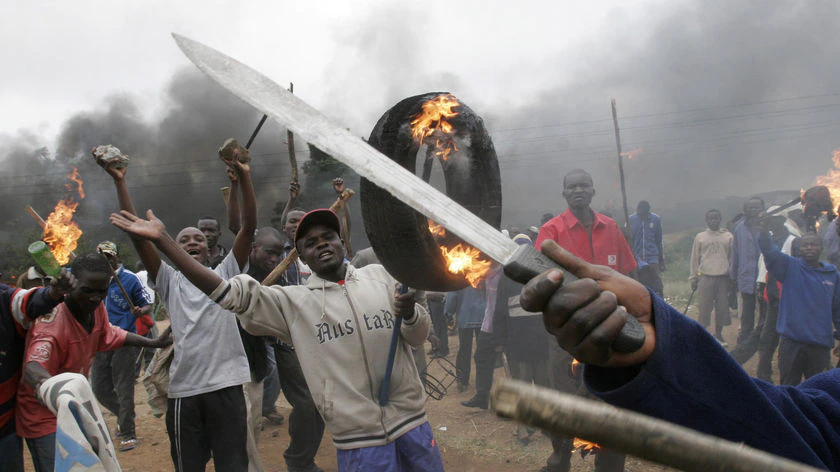
The violence and looting that left at least 117 people dead in South Africa may have diminished after thousands of troops were deployed onto the streets of the main hotspot provinces. But the unrest was the worst seen since the end of apartheid, and has disrupted a stuttering vaccination program amid a Delta-driven COVID-19 third wave that is straining health services. Protests erupted after the July 7 imprisonment of former president Jacob Zuma, who had refused to appear before a corruption inquiry into the “state capture” allegations that blighted his rule. However, the unrest reflects broader frustrations, as pandemic restrictions result in job losses and deepen poverty in one of the world’s most unequal countries. As one bystander in Johannesburg told a television crew: “The matter is not about Zuma. People are hungry.”
From The New Humanitarian, July 16
Photo: MwanzoTV


‘Afrophobia’ protests unsettle South Africa
The feared mass violence in the end didn’t happen. But June 30, the deadline set by a xenophobic movement for “foreigners” (read Black non-South Africans) to leave was still a bad day for the country—and the continent. Tens of thousands of people had fled their homes for refuge in temporary camps, transit sites and consulate grounds ahead of the “March and March” protests—a campaign ostensibly aimed at undocumented migrants, but a dragnet in which anyone Black (and especially blue collar) could be trapped and harmed. The protesters say they will continue their abahambe (“they must go”) agitation until all are deported. Bouts of deadly “Afrophobia” are not new, despite the economic benefits migrants bring. But this seems more significant: potentially the work of acolytes of a bitter former president Jacob Zuma; the emergence of a new mafia-like “power elite” as the ruling ANC crumbles; or simply the inevitable expression in a moribund economy of angry new populist coalitions. (TNH)