
On Dec. 30, the third day of protests by Tehran bazaar merchants in response to the dire economic situation in Iran, the strike started to spread across the country. Shopkeepers in Isfahan, Ahvaz, Shiraz, Kermanshah and Najafabad closed their stalls and held protest gatherings, where they were joined by students who walked off university campuses. Security forces responded with multiple arrests and the use of live fire and tear-gas in several locations. One student is reported to have been severely injured in Tehran. Protest slogans escalated beyond economic grievances, openly targeting clerical rule and Supreme Leader Ayatollah Ali Khamenei. (Iran Focus, Iran International)
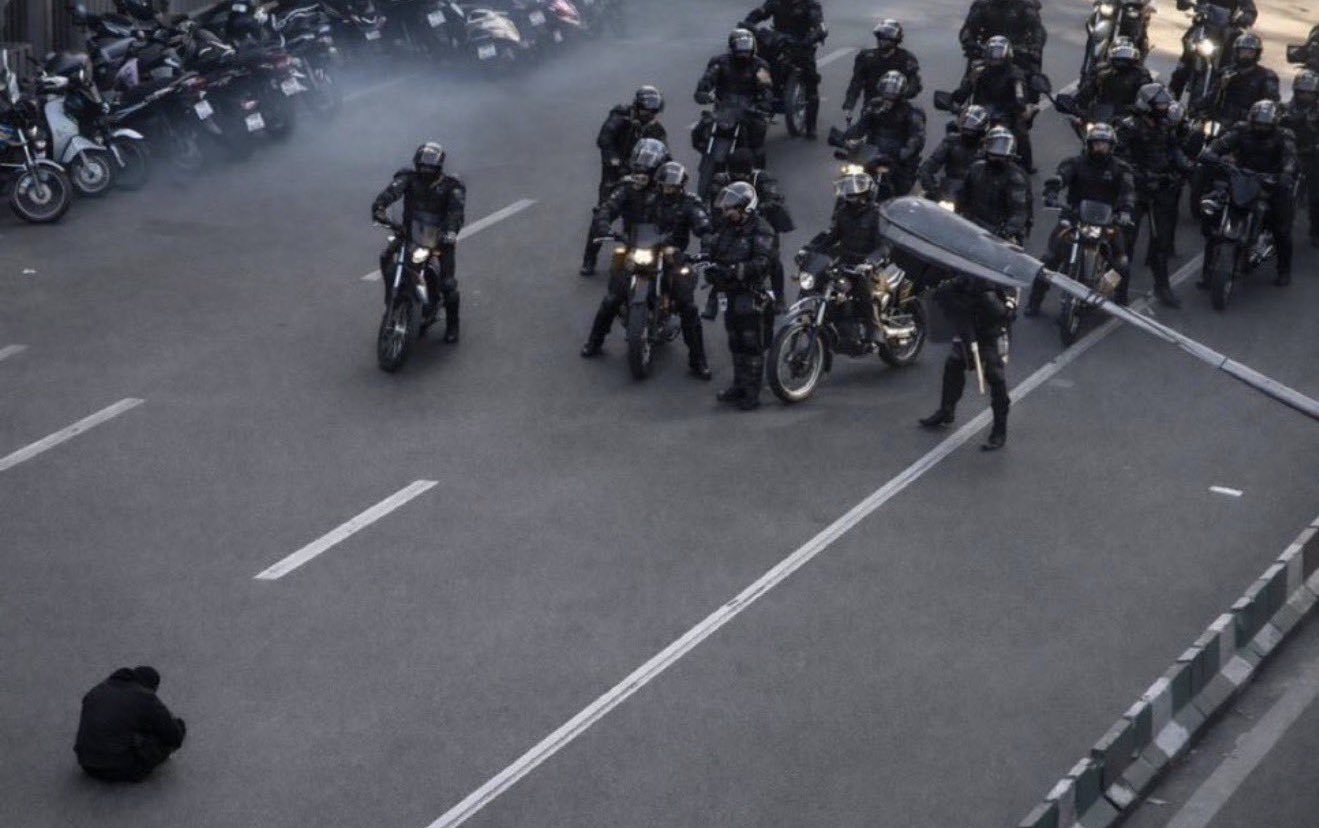
A photo of a lone protester blocking a column of police motorcycles on a Tehran freeway has gone viral, drawing comparisons to the iconic “tank man” photo from Tiananmen Square in June 1989.
In a possible bid to deflect popular anger onto external enemies, President Masoud Pezeshkian stated Dec. 27 that Iran is engaged in a “full-fledged war” with the US, Israel and Europe, describing the pressures on Iran as “far more complex and difficult” than the 1980-1988 Iran-Iraq war. The remark appeared in an interview published on the official website of the Supreme Leader. (Jurist)
Since the 2022 protests in Iran, there have been worldwide protests fueled by spikes in the price of food and fuel.
Photo via Twitter


Iran protests spread despite ‘brutal’ crackdown
Human Rights Watch (HRW) reported Jan. 6 that Iranian authorities have intensified a “brutal” crackdown on nationwide protests, urging a halt the unlawful use of force and the release those arbitrarily detained.
According to HRW, the government has used lethal force to suppress the unrest, deploying military-grade weapons as well as metal pellets fired from shotguns, tear gas and batons against largely unarmed protesters. The rights group documented instances of violent repression that extended beyond the streets, including security force raids on Imam Khomeini Hospital in Ilam on Jan. 4 and 5, aimed at arresting injured protesters and confiscating the bodies of those killed.
On Jan. 3, Supreme Leader Ali Khamenei ruled out dialogue, stating that there was no value in engaging with “rioters,” and that they must be forcefully put down.
Protests first erupted on Dec. 28 in Tehran’s Grand Bazaar and quickly spread to at least 27 provinces nationwide. Economic instability and ongoing government corruption triggered the movements. The collapsing currency has worsened Iran’s economic crisis, driving up prices for everyday goods, including groceries.
Iranian rights groups further documented widespread abuses against detainees, including torture and enforced disappearance, as mass arrests continue across the country. Authorities have detained over a thousand people, including minors as young as 14. Public anger has fueled demonstrations outside police stations, where crowds have gathered to demand the release of protesters held in detention.
According to Iran Human Rights, the security forces have killed at least 27 protesters and bystanders, including children, and injured hundreds more. (Jurist)