


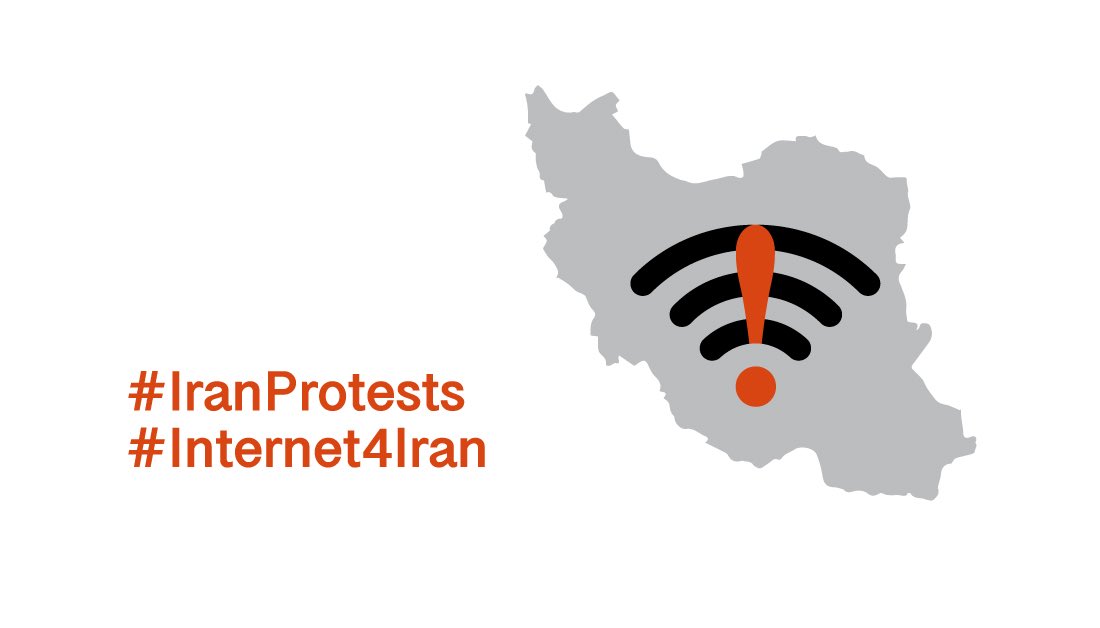
As of Jan. 12, Iranian citizens have remained without internet or telecommunications access for 96 hours, according to online monitoring group NetBlocks.
Amid the collapse of Iran’s currency, protests erupted in Tehran late last month and quickly spread across the country. Dozens of protesters and bystanders have been killed, according to human rights groups monitoring the situation.
Rebecca White, a researcher at Amnesty International’s Security Lab, stated that Iran is intentionally masking grave human rights violations and international crimes. She said that the government has previously weaponized internet shutdowns. During the November 2019 protests, security forces killed hundreds of protestors and bystanders under a near-total blackout. This pattern was repeated in the 2022 “Woman Life Freedom” uprising.
White called on the Iranian government to restore full internet access immediately. “The right to protest extends to digital spaces. Blanket or total internet cuts are inherently disproportionate under international human rights law, and must never be imposed, even in cases of emergency. Iranian authorities must immediately restore full internet access.”
As the protests enter their second week, Human Rights Watch (HRW) reports that the government is using lethal force to crush the unrest. Security forces are deploying military-grade weapons against largely unarmed citizens. The group Iran Human Rights reported Jan. 6 that the security forces had killed at least 27 protesters and bystanders, including children, and injured hundreds more. Under the cloak of internet darkness, there is reason to believe that the toll is now far higher, with reports emerging of hospitals overwhelmed with casualties. Some estimates have placed the death toll at nearly 600.
The Iranian government has only intensified its rhetoric. Chief Justice Gholam-Hossein Mohseni-Ejei promised no leniency for protesters, whom he characterized as “enemies of the Islamic Republic of Iran.”
From JURIST, Jan. 12. Used with permission. Internal links added.
Image: Hajar Morad via Twitter


Iran protests smothered amid uncertainty around US response
Deadly repression by the Iranian government has quashed nearly three weeks of massive protests in Iran, but it is still unclear whether the US will follow through on threats to attack the country. Rights groups claim that more than 2,500 protesters have been killed—a toll that is impossible to confirm because of an internet blackout. Though the vast majority of those deaths are reportedly protesters, Iranian state media said at least 109 members of the security forces had been killed in a two-week span. More than 18,000 people have reportedly been detained by security forces.
US President Donald Trump says Washington received assurances that the Islamic Republic won’t move ahead with allegedly planned executions of arrested protesters. However, Trump has not entirely ruled out the possibility of US military action. For its part, the Islamic Republic continues to insist that “terrorists” and groups loyal to their “enemies”, namely in Tel Aviv and Washington, are stirring up the protesters. (TNH)
Iran regime releases official death toll
The Iranian government has released its first official death toll from recent protests in the country, saying 3,117 people were killed. International rights groups have given far higher tolls, but the ongoing communications blackout means any figures are impossible to verify. President Trump has renewed his threats against the Islamic Republic, warning that a US “armada” is en route to the region and that he is monitoring the Iranian leadership’s response to the protests “very closely.” (TNH)
Disappearances, arbitrary arrests in Iran protest crackdown
A Human Rights Watch (HRW) report Feb. 24 revealed alarming human rights abuses in Iran, including claims of mass arbitrary arrests and detentions since December, including of children, as well as torture and forced disappearances of protesters involved in the January demonstrations.
HRW found that Iranian authorities are carrying out violent arrests, and often sentencing detainees to death after summary trials. “Authorities have repeatedly vowed ‘speedy trials’ and a ‘harsh response’ without ‘any leniency.” Detainees have reportedly been denied legal counsel or contact with their families. (Jurist)