


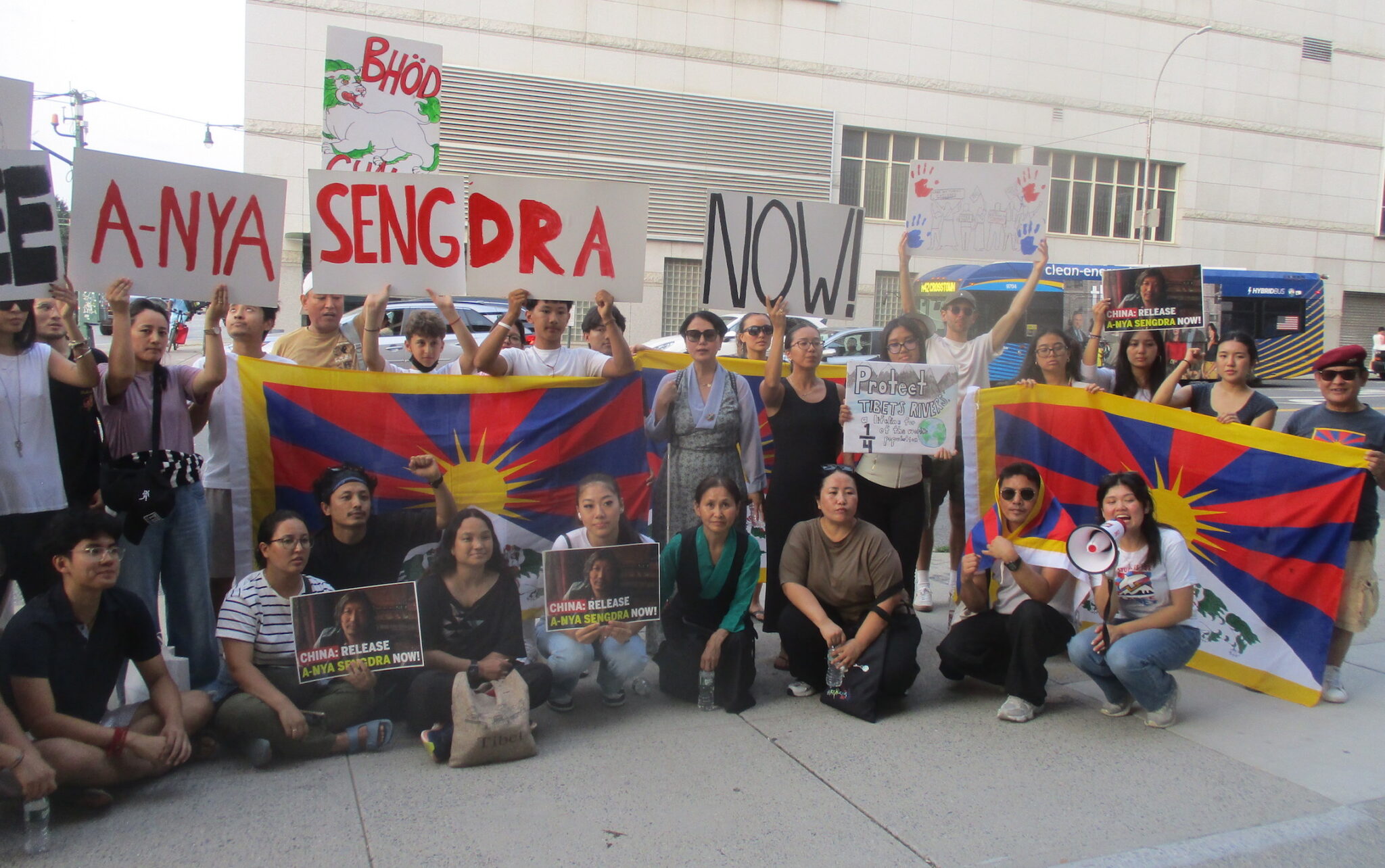
The New York chapter of Students for a Free Tibet held a rally outside the Chinese consulate in Manhattan Sept. 4 to demand freedom for A-Nya Sengdra, an imprisoned Tibetan nomad leader and ecologist. Sengdra, who had long campaigned against corruption, illegal mining and wildlife poaching, was arrested in September 2018 by the Gade County Public Security Bureau in Golog Tibetan Autonomous Prefecture of Qinghai province (part of the Tibetan region of Amdo), and charged with the usual offenses of “gathering people to disturb public order” and “picking quarrels and provoking trouble.” Convictions follow as a matter of course in such cases, and Sengdra spent the next seven years in near-total isolation, suffering severe deterioration of his health. He had initially been scheduled for release the day before the rally, but weeks earlier authorities brought new charges against him while he was still imprisoned, extending his sentence through February 2026.
Sengdra has appealed three times for a retrial without success to the Supreme People’s Court in Xi’an, and after the last such filing his lawyer was warned not to return under threat of being disbarred. (SFT, Phayul, Tibet Watch, CounterVortex on the scene in Manhattan)
Golog Tibetan Autonomous Prefecture is named for the Golok nomadic people of Amdo region, who have faced forced labor and resettlement, which their leaders charge is aimed at cultural extermination.
Photo: CounterVortex


Tibetan villagers face repression after protesting illegal mine
The Central Tibetan Administration in India reports that many Tibetans were detained in Kashi (Ch: Gayi) township, Sershul (Shiqu) County in Sichuan province, following their protest in early November against gold-mining operations at their traditional grazing site known as Serkhok (Gold Valley).
According to delayed information from the region received by the Dharamsala-based Tibetan Policy Institute, around 80 of the Tibetan protestors were detained, with many suffering torture during interrogation. Some have yet to be released. When contacted by international media for their reaction, Chinese authorities did not comment but also did not deny any such a protest having taken place. Following the protests, authorities also initiated a communication blackout in the region, known as Kham Zachukha or Dzachukha. (Tibetan Review, Save Tibet, Tribune India)