


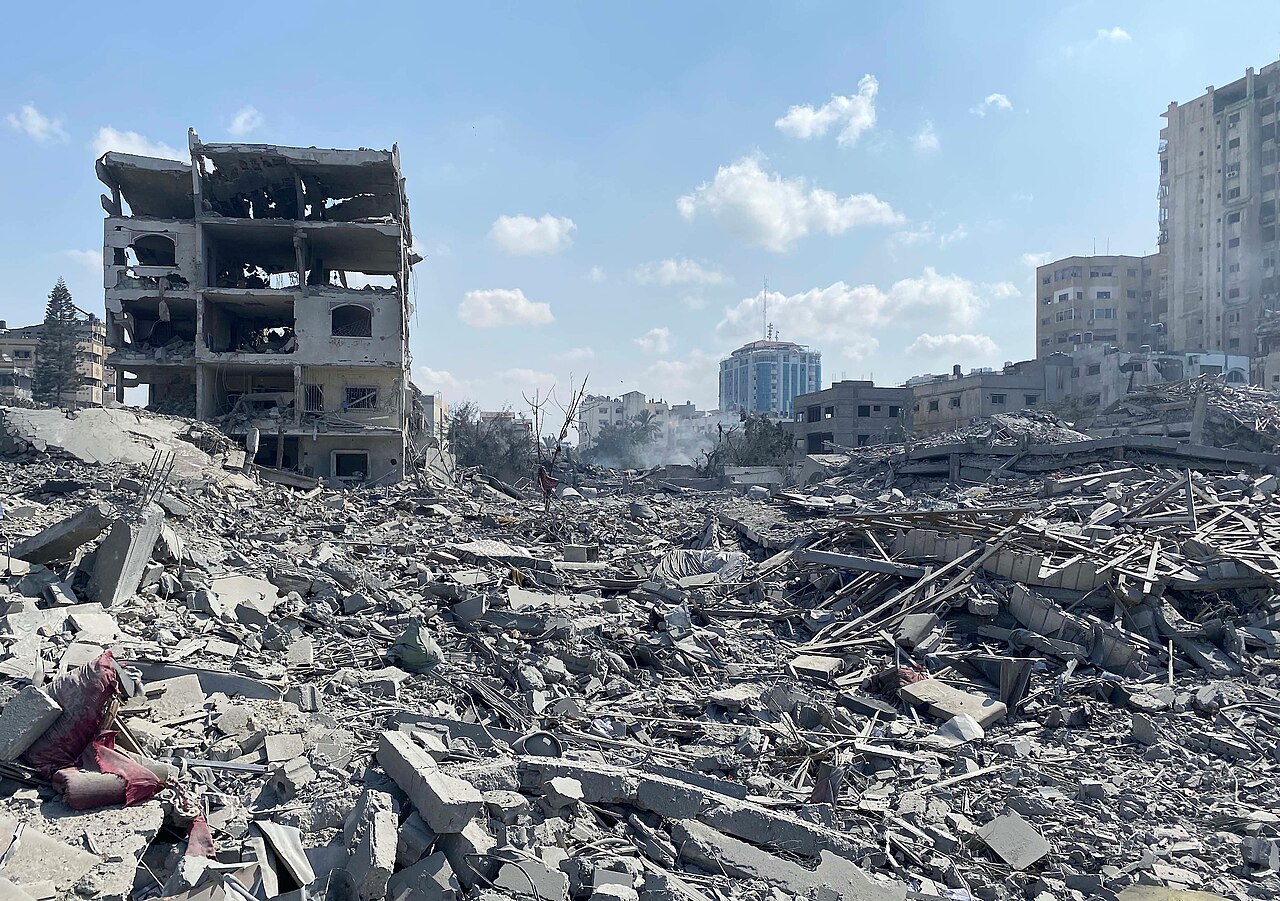
EU foreign ministers must use their upcoming meeting with Nikolai Mladenov, director-general of the Board of Peace (BoP) and “High Representative” for Gaza, to ensure that Palestinians’ rights are among the board’s highest priorities, Amnesty International urged in a statement Feb. 23.
“The ‘Board of Peace’ is a dangerous assault on international law, a mechanism designed to bypass the UN, weaken international justice institutions, and entrench the power dynamics that have long enabled Israel’s unlawful occupation, apartheid, and ongoing genocide in Gaza,” said Erika Guevara-Rosas, senior director for research and advocacy at Amnesty International.
Guevara-Rosas added: “Any EU engagement that does not place Palestinians’ rights at its core risks complicity in violations, which are [more] likely to occur if this fundamentally flawed mechanism is not urgently made rights-compliant and aligned with international law.”
Guevara-Rosas further urged: “The EU and its member states must be absolutely clear: this body is no substitute for the UN, the international human rights framework, or the global justice system painstakingly built over decades to uphold universal values, cooperation, and equality.”
On Jan, 22, US President Donald Trump ratified the Charter of the Board of Peace, establishing the board as an official international organization. Trump serves as the chairman, with no mechanism for succession. Last November, the UN Security Council endorsed the BoP in Resolution 2803, as an international entity to maintain peace and security in Gaza, develop its infrastructure, disarm militants, and establish a viable Palestinian Authority.
Notably, the BoP Charter does not actually include any mention of Gaza, and Israeli news reports indicate that the US envisions the BoP resolving other global conflicts. Ali Khan, emeritus professor at the Washburn University School of Law, argues that “the BoP’s expanded scope in the Charter conflicts with Resolution 2803 and diverts attention from the work needed in Gaza to Trump’s self-authorizing roving agenda to settle wars.”
From JURIST, Feb. 23. Used with permission. Internal links added.
Photo: WAFA via WikimediaCommons


Aid groups face expulsion from Gaza, West Bank
Dozens of humanitarian aid groups, including Doctors Without Borders and Oxfam, face expulsion from Gaza and the West Bank as soon as this weekend, unless they hand over detailed personal information about their staff to Israeli authorities. (PRI)
Reprieve for aid groups in Gaza and West Bank
Israel’s High Court has temporarily halted a ban on international aid groups from working in the occupied Palestinian territories unless they meet strict new rules. The injunction came ahead of an Israeli deadline for 37 well-known organizations to stop work, something the groups warn will remove a lifeline for vulnerable people and cause “irreparable harm.” (BBC News)
Gaza braces for renewed siege
Israel’s widening war with Iran is deepening Gaza’s humanitarian crisis, as new security measures effectively seal the territory off from the outside world. Israel, on Feb. 28, closed all crossings into Gaza—including the Rafah border with Egypt—while also tightening movement restrictions and carrying out raids across the occupied West Bank. Israeli forces killed two Palestinian men in one March 2 raid.
The restrictions came as Israeli and US attacks on Iran triggered an eruption of air and missile strikes across the region. Despite the reopening of the Rafah crossing on March 3, aid groups have warned that the remaining closures are swiftly draining supplies. Food stocks could run out within days, and panic buying and price spikes are spreading. The measures have revived memories of last year’s famine, which caused hundreds of hunger-related deaths. (TNH)