Africa

Ethiopia: massacre sparks Oromo resistance

Oromo activists in Ethiopia launched a "fuel blockade," occupying roadways to halt shipment of oil through the country. The action was called following a massacre at the village of Moyale, near the Kenyan border. Troops gunned down nine unarmed residents, apparently mistaking them for militants of the Oromo Liberation Front (OLF). Nearly 5,000 have fled across the border to Kenya—some having directly run from gunfire. Ethiopia last year imposed a state of emergency in response to mounting Oromo protests. Roadblocks are reported from several points around the country, so far without violence. (Photo via UNPO)

Southeast Asia

Razed Rohingya villages turned into military bases

Burma's Rakhine state is being militarized at an alarming pace, as authorities build security force bases on lands where Rohingya villages were burned to the ground just months ago, Amnesty International charges in a new report. The chief UN official investigating human rights in Burma, Yanghee Lee, called for an immediate investigation into "clearance operations" in Rakhine state, stating she is increasingly convinced that actions by the Burmese security forces amount to genocide. (Photo: VOA via Wikimedia Commons)

The Andes

Colombia: will ‘peace’ escalate resource wars?

Colombian authorities are clearly hoping that a return to stability following the peace pact with the FARC rebels will mean more international investment, and especially for the resource sector. But hydro-electric, fracking and mineral projects across the country are already meeting with peasant resistance—prompting state security forces to respond with repression.

The Andes

Colombia: rural violence persists despite ‘peace’

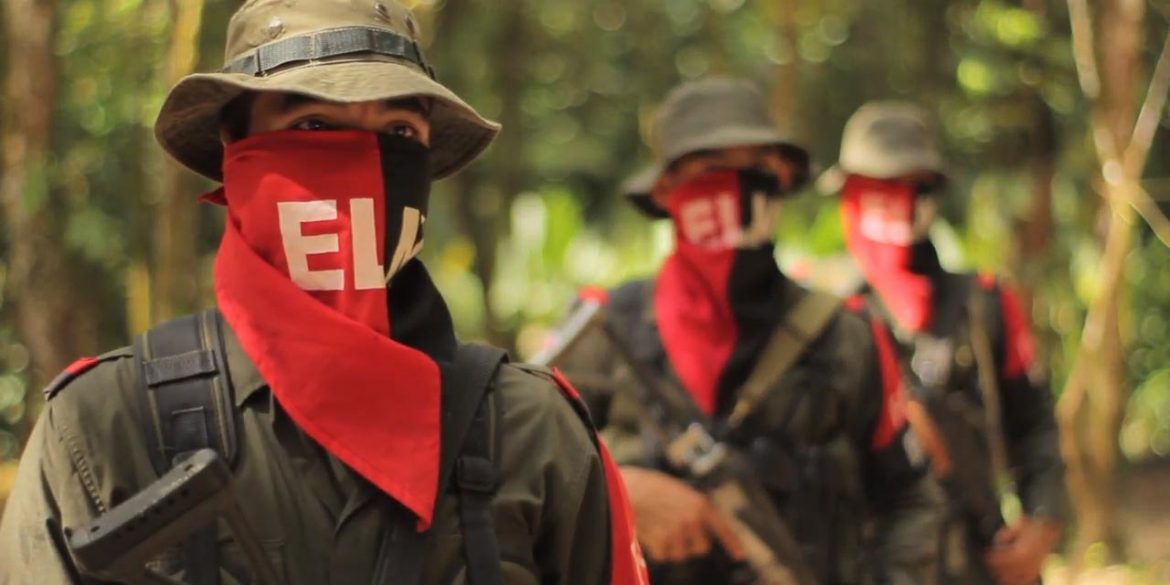
Colombia's peace process continues to advance, with institutional mechanisms for a post-war order falling into place. But violence in the countryside across Colombia remains at an alarming level, as social leaders are targeted for assassination by paramilitary factions. The ELN guerilla organization—which, unlike the FARC, remains in arms—released a statement noting that January had seen an assassination every day across the country, and charged that rightist paramilitary networks are carrying out a "systematic genocide."

Southern Cone

Chileans protest signing of rebooted TPP

Chilean activists protested in Santiago against the signing of the new Trans-Pacific Partnership agreement, now rebranded as the Comprehensive and Progressive Agreement for Trans-Pacific Partnership (CPTPP), or TPP-11. Protesters outside La Moneda Palace, headquarters of the Chilean government, held banners reading "No to modern slavery, no to the TPP-11" and "The TPP and TPP-11 are the same!" Lucía Sepúlveda, leader of the organization Chile Mejor Sin TPP, said the agreement would "deliver full guarantees to foreign investors" at the expense of "rights and national interests." (Photo: Chile Mejor Sin TPP)

Syria

Syria: impunity in ongoing Ghouta war crimes

Medical facilities supported by Doctors Without Borders (MSF) in besieged Eastern Ghouta report receiving 1,000 dead and upwards of 4,800 wounded over the past two weeks. Up to 20 of MSF’s facilities in the enclave have been hit by bombing or shelling. The regime is accused of using chemical and phosphorus weapons in its offensive. France has threatened “intervention measures” if claims of gas attacks are proved true. But Russia has repeatedly used its Security Council veto to block any investigation into Syrian chemical attacks.

North America
CounterVortex

Podcast: Politics of the Second Amendment

In Episode Four of the CounterVortex podcast, Bill Weinberg makes the case that the Second Amendment is a non-grammatical muddle of obfuscation—because the issue was just as contentious in 1789 as it is today, and the Framers fudged it. That’s why both the “gun control” and “gun rights” advocates can claim they have the correct interpretation—as they each advocate solutions that, in their own way, escalate the police state. In the wake of the latest school massacre, youth activists are pressing the issue, and this is long overdue. But the discussion that needs to be had would explore the social and cultural roots of this peculiarly American pathology. Listen on SoundCloud, and support us via Patreon.

The Andes

FARC renegades in slaying of indigenous activist

Four armed men attacked the cabildo (town hall) in the indigenous reserve of Pioyá in Colombia's Cauca department, killing Eider Campo Hurtado, a young activist with local media collective Pelsxhab Stéreo. Pioyá's Indigenous Guard mobilized in response to the attack, and apprehended four men said to be members of a renegade FARC faction that has refused to lay down arms and abide by the peace accords. The four are being held by Pioyá indigenous authorities; it is unclear if they will be turned over to state security forces.

North Africa

Environmental protester shuts Libyan oil-field

The company operating Libya's biggest oilfield, Sharara, announced that it had been shut down after a citizen closed the pipeline that pumps the field's oil. The field is run by a joint venture between Libya's National Oil Corporation and several multinationals. The individual claimed the pipeline caused environmental damage to his lands, and had also closed the pipeline last year to press his demands for a clean-up. With this latest closure, Libya's oil output dropped to a six-month low of 750,000 barrels per day. National Oil Corporation chairman Mustafa Sanallah described those who shut down oil-fields as "terrorists." (Photo: Libya Observer)

Syria

Syria: new chemical attack in Eastern Ghouta

A child died and at least 13 other people suffered breathing difficulties after an apparent chemical attack on the besieged Syrian rebel enclave of Eastern Ghouta.Ā Russia’s President Vladimir Putin the following day ordered a five-hour “humanitarian pause” in the bombardment of Eastern Ghouta to allow civilians to evacuate. This falls far short of the 30-day ceasefire being demanded by the United Nations.

Planet Watch
countervortex

CounterVortex meta-podcast: Against exterminism

In Episode Three of the CounterVortex podcast, Bill Weinberg expounds on the concept of the countervortex. Making note of theĀ Bulletin of the Atomic Scientists‘ decision to advanceĀ the minute hand of its Doomsday Clock to two minutes of midnight, he discusses the current global dilemma in light of EP Thompson‘s 1980 essay Notes on Exterminism, the Last Stage of Civilization, and Rosa Luxemburg‘s positing of humanity’s imminent future as either “socialism or barbarism.” What are the prospects for resisting the global vortex of ecological collapse, totalitarianism and permanent war in the age of Trump and Putin? This is a question that goes beyond the personalities involved, and involves a profound critique of the underlying political economy that elevates such pathological personalities to the highest levels of power. Ā You can listen on SoundCloud, and support our ongoing podcast via Patreon.