U.S. LEFT MUST NOT FORGET AFGHAN WOMEN

The US government’s announcement that it has opened negotiations with the Taliban to help bring the war in Afghanistan to an end should be a source of concern for women’s rights advocates everywhere. While it’s still not easy to be a woman in Afghanistan, women have made progress in the areas of education, employment and representation in government since the Talban were overthrown by the US-led invasion of 2003. Pro-war and anti-war voices in the US alike have instrumentalized the suffering of Afghan women to advance their political aims. In a special for CounterVortex, journalist Andy Heintz provides an overview of Afghanistan’s courageous women’s rights advocates, and calls for heeding their voices—which hold a spectrum of opinion on the US military presence in the country.

Continue ReadingU.S. LEFT MUST NOT FORGET AFGHAN WOMEN 

ANTI-TERROR LAW COULD TARGET AID GROUPS

A new US anti-terror law that has forced the majority of American-funded aid operations in the Occupied Palestinian Territories to grind to a halt may have even wider humanitarian consequences, leaving nonprofits around the world more vulnerable to litigation. While the 700-word bill appears to have been targeted at the Palestinian Authority, which governs the West Bank, experts say the Anti-Terrorism Clarification Act, or ATCA, is poorly crafted and could result in some non-governmental organisations and businesses being reluctant to take US funding or be associated with US-financed programs. Samuel Oakford explores for IRIN.

Continue ReadingANTI-TERROR LAW COULD TARGET AID GROUPS 

WEATHER WAR

How Iran’s Regime Uses Floods and Drought as Tools of Ethnic Cleansing


by Rahim Hamid, Dur Untash Studies Centre

In most countries prone to regular severe weather events such as heavy flooding, governments take precautionary measures in vulnerable regions to at least minimize the probable damage and protect citizens’ lives and property.

Unfortunately, however, some governments not only exploit such disasters but deliberately manufacture and intensify them as a strategic weapon against parts of the population that threaten the leaders’ economic exploitation of their resources. These governments spare no effort to engineer or exacerbate the effects of such disasters, effectively weaponizing climate change against the people.

Iran’s theocratic regime is one such government, pursuing policies that effectively amount to ethnocide against the Ahwazi Arab population. Ahwazis have the misfortune to live in an oil-rich region, from which Iran extracts 95% of the oil and gas resources that it lays claim to. This massive oil wealth, which was the primary reason for Iran’s forcible annexation of Ahwaz in the early 20th century, has been a far greater curse than a blessing to the Ahwazi people, most of whom now subsist in nearly medieval conditions of poverty. The international community, meanwhile, seems indifferent to their plight

Continue ReadingWEATHER WAR 

TOGO PROTESTS CHALLENGE DICTATORSHIP


by Regina Asinde, Waging Nonviolence

Hundreds of thousands took to the streets of cities across the West African country of Togo on Dec. 8, as part of a recently revived wave of nationwide protests demanding political reforms. At the center of their demands is the reinstatement of the 1992 constitution, which included a two-term limit on the presidency before being stripped away by former president Eyadéma Gnassingbé, father of current president Faure Gnassingbé.

Mass protests first erupted in August 2017, forcing the government into internationally-moderated negotiations, which—in an attempt to resolve the decades-long political crisis—led to the reinstatement of the two-term limit. However, outrage was soon reignited when it was discovered that past presidential terms would not apply, thereby allowing Faure Gnassingbé—already in his third term—to run for president in 2020 as if it were his first time. Negotiations broke down soon after that, leading to the revival of protests in November.

“Nobody is willing to take that in Togo,” said Togolese Civil League executive director Farida Nabourema. “After 51 years of the Gnassingbé, asking us to give them an additional 10 years, starting 2020, is basically asking us to commit suicide. It’s something we cannot let happen, and it’s the reason we are back on the streets.”

After first allowing protests in pre-approved zones, the government outright banned large demonstrations before the Dec. 8 mobilization. When upwards of 500,000 people turned out in Lomé, the capital city, the regime deployed heavy military force, wounding dozens of civilians and killing at least three—including an 11-year-old boy.

Continue ReadingTOGO PROTESTS CHALLENGE DICTATORSHIP 

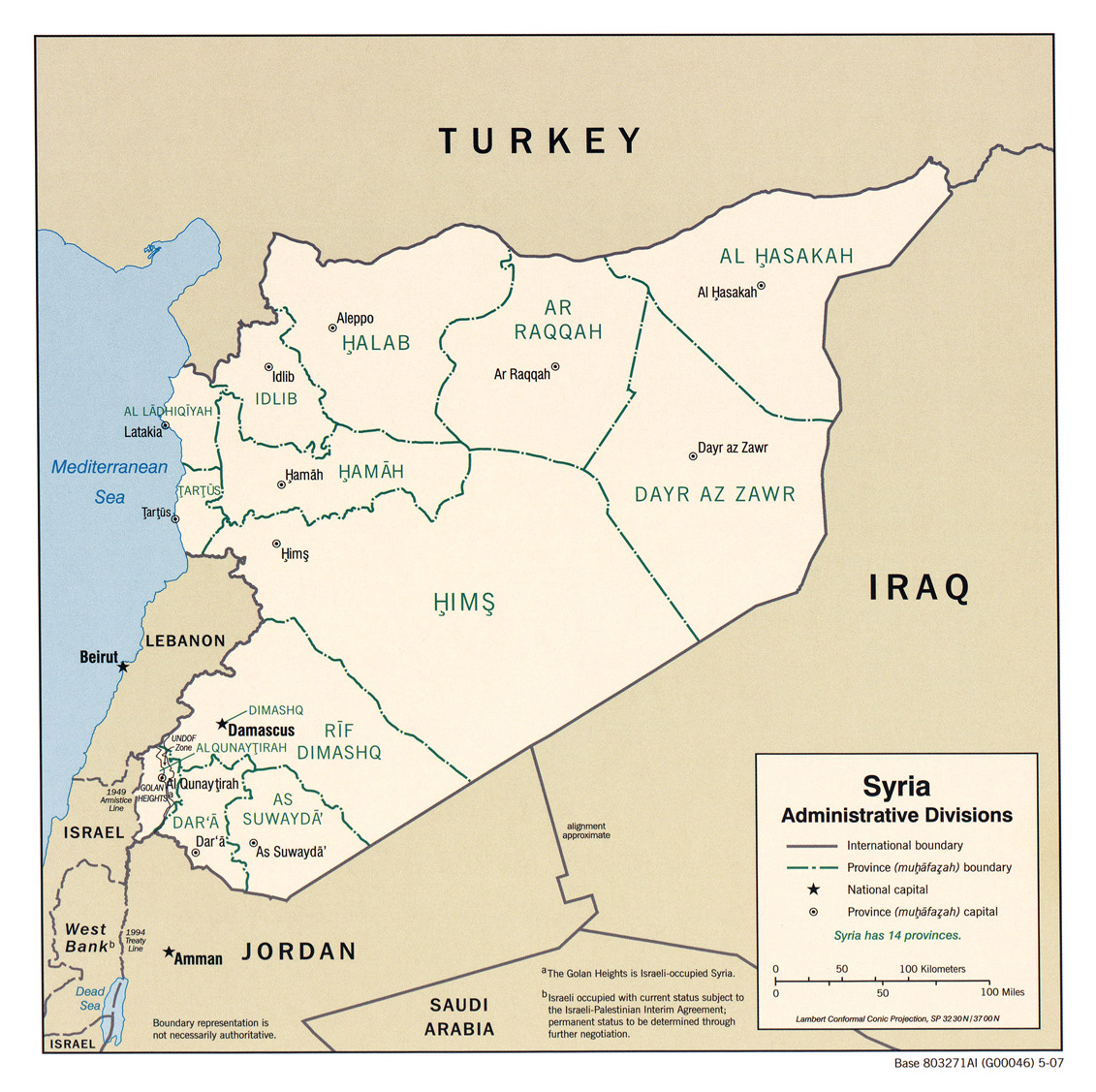
IT’S NOT ABOUT ‘REGIME CHANGE’

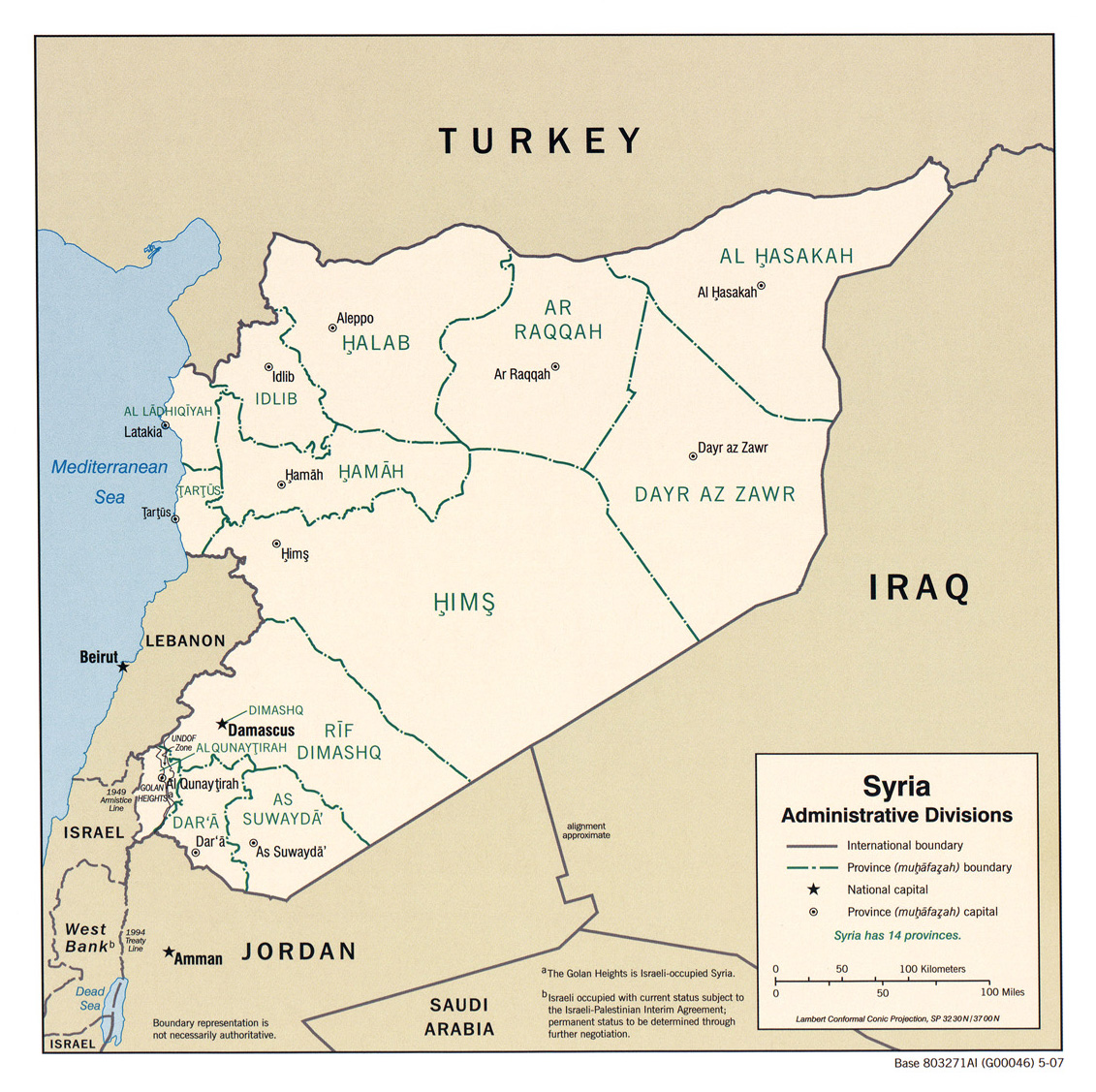
A Brief Account of US Intervention in Syria

by Ani White, Fightback

Noam Chomsky’s recent criticism of US withdrawal from Kurdish-held territory in Syria poses a strange contradiction: Why have so many on the left accused Syrian Arab rebels of being US proxies, while either supporting or remaining silent on the far more consistent US support of the Kurdish-led Syrian Defense Forces (SDF) against ISIS?

Given the widespread misinformation about Syria, a basic rundown of the facts about US involvement is necessary. What follows is a very brief outline of well-established facts about the war.

The dominant narrative on the left holds that US involvement in Syria is an attempt at “regime change.” As highlighted by Michael Karadjis’ Syrian Revolution Commentary and Analysis, this is in contradiction with the statements of US officials:

Continue ReadingIT’S NOT ABOUT ‘REGIME CHANGE’ 

THE GUATEMALA GENOCIDE CASE

Justice Delayed, Justice Denied?


by Aisling Walsh, openDemocracy

On September 26, at about 7 PM, in a courtroom filled to bursting point, the High Risk Court B declared, for the second time in five years, that genocide was committed in Guatemala.

Following more than two years of witness testimonies, forensic evidence and expert reports, the court declared that they had sufficient evidence to prove that the Guatemalan army committed genocide and crimes against humanity against the Mayan Ixil people between 1982 and 1983, one of the most violent eras of the 36-year internal armed conflict in Guatemala.

A dehumanized army
In their declaration, lasting up to two hours, the panel of three judges elaborated in detail the “abhorrent” acts that convinced them that the Guatemalan army was indeed responsible for committing genocide and crimes against humanity.

They could verify that there were at least 60 massacres carried out in the Ixil region of Quiche department, and that a total of 50 villages were affected by the Guatemalan army’s counterinsurgency operations. This policy resulted in acts of extreme and dehumanized violence against a civilian population that had been singled out for their struggle to defend their rights. They were accused of being communists and guerrillas and collectively declared an “internal enemy” of the State.

Continue ReadingTHE GUATEMALA GENOCIDE CASE 

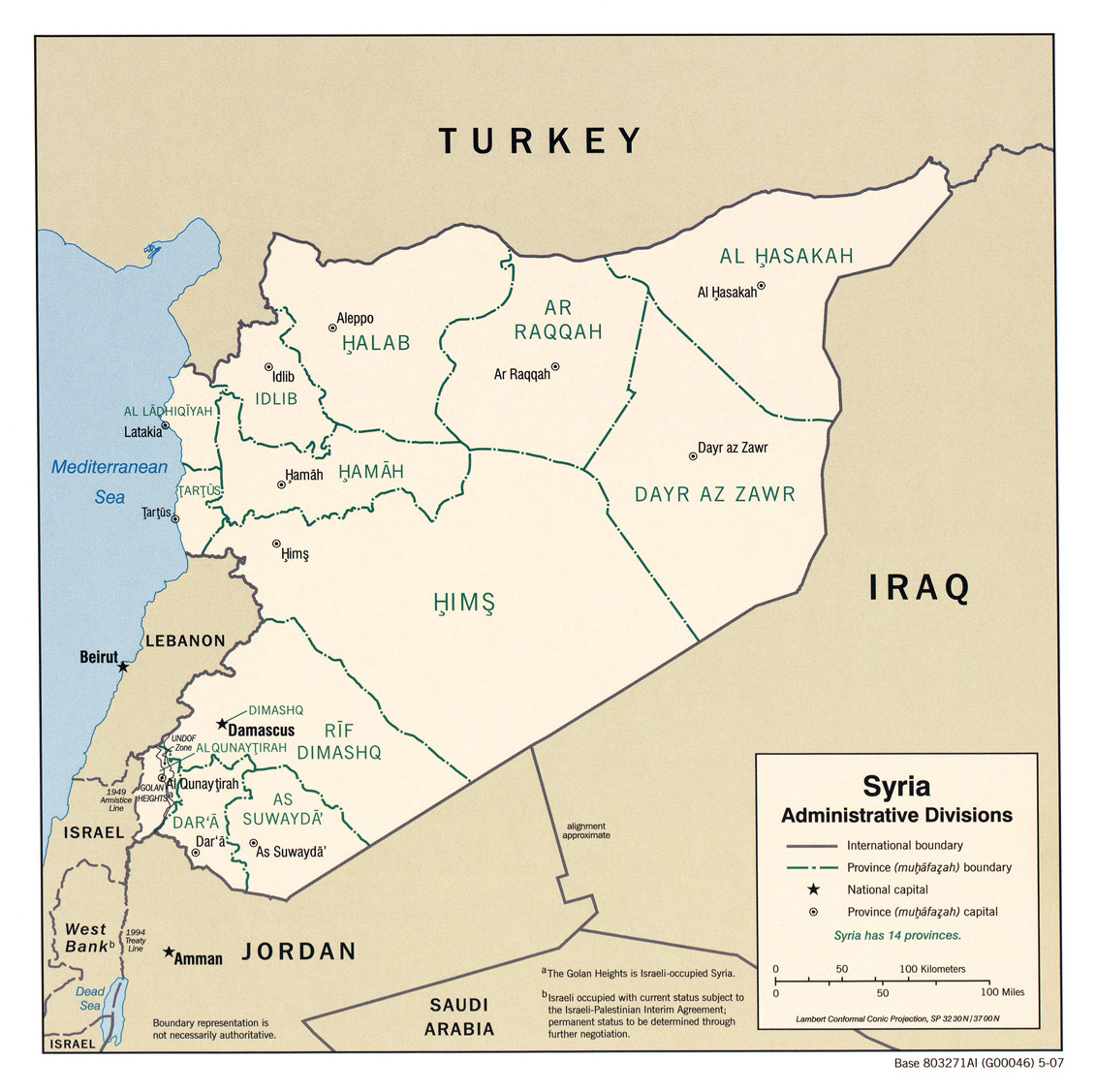
NO! IDLIB IS NOT A ‘TERRORIST ENCLAVE’


by Sina Zekavat, Mangal Media

As Turkey and Russia step towards implementing a 15-20 kilometer “demilitarization zone” between Idlib and the surrounding regime-held areas of northern Syria, mainstream media and the forces of status quo are bent on portraying Idlib as a “terrorist enclave”—hile people inside Idlib are determined to break this false and dangerous image.

Days after the renewed aerial bombardment of Idlib by Russia and the Assad regime, the Democratic congresswoman Tulsi Gabbard called Idlib an “Al Qaeda stronghold” in a recorded video message published on her Twitter account. In the same tweet, she called Idlib an “Al-Qaeda controlled city.” A week later, during a speech addressing members of the US Congress, she claimed that there are “20,000-40,000 al-Qaeda and other jihadists” in Idlib, a number that vastly exceeds those reported by the UN and even pro-regime propaganda platforms.

David Duke, the former leader of the Ku Klux Klan (and a vocal supporter of both Trump and Gabbard) has also been tweeting in support of Russian and Assad regime bombardment of Idlib. He claimed this was in order to “protect the real children of Idlib,” presumably implying that those children who are targeted by the Assad-Putin aerial bombings are fake “crisis actors” and deserving of death, for the crime of misinforming the American public.

Vijay Prashad, a prominent academic in leftist circles, has joined the chorus by using dangerous and stereotypical portrayals of Idlib. In his latest article, Prashad writes that it’s “intolerable to the government in Damascus to allow an enclave of al-Qaeda rebels inside the country—which is why the main battle is to be there, in Idlib.” He calls the military campaign against Idlib by Assad and his allies “ugly” but “inevitable.” Further normalizing this horrific scenario, Prashad ends his piece by advising everyone in Idlib to “cut a deal now before the terrible slaughter starts. This bombing is not the first salvo in the final battle but the last attempt at a negotiation.”

Continue ReadingNO! IDLIB IS NOT A ‘TERRORIST ENCLAVE’ 

FIRST NATIONS RESIST B.C. PIPELINE PLANS

by Nick Engelfried, Waging Nonviolence

For thousands of years, Whey-Ah-Whichen has been a site of importance to the Tsleil-Waututh people. This hospitable flat peninsula in the Pacific Northwest was home to one of their major villages, standing in the shadow of surrounding hills and mountains covered in towering Douglas fir and other ancient trees. Today, Whey-Ah-Whichen is the site of Cates Park, so-named by the descendants of English colonists in what is now British Columbia. It overlooks Burrard Inlet, a finger-like extension of the Salish Sea separating the cities of Vancouver and North Vancouver. The Tsleil-Waututh still live nearby, many of them on a reserve just down the highway.

On July 14, Tsleil-Waututh community leaders brought together several hundred people for a rally on the site of the former village. Many carried signs with messages including “Water is Life,” “Stop Kinder Morgan Pipeline,” and “Protect the Water, Land, Climate.” They came to participate in a fight against one of the largest proposed fossil fuel infrastructure projects in Canada, an expansion of the Trans Mountain pipeline that would transport tar sands oil from Alberta to a Kinder Morgan-owned storage facility directly across the inlet from Whey-Ah-Whichen. There, oil from the pipeline would be loaded into tankers for transport to the United States or across the Pacific.

The rally was only the latest manifestation of the indigenous-led resistance to the Trans Mountain project, which has grown in size and boldness this year. As more and more people arrived at the park, some prepared to take to the water in kayaks, canoes and other small vessels. Hundreds of others massed near the shoreline, watching as the boats headed across the inlet and gathered in front of the razor-wire fence erected by Kinder Morgan to keep people away from its facility. From one of the canoes, Tsleil-Waututh elder Amy George led a water ceremony expressing participants’ intent to care for and protect the inlet.

Continue ReadingFIRST NATIONS RESIST B.C. PIPELINE PLANS 

TURKISH KURDISTAN: ERASURE OF A CULTURE


by Diego Cupolo, IRIN

In July 2015 a new phase of the decades-old conflict between the Turkish government and Kurdistan Workers Party (PKK) militants erupted after a two-and-a-half year peace process failed: the largely rural guerrilla war entered majority-Kurdish towns and cities in the southeast as government forces went house-to-house to root out PKK-linked fighters.

Fighting was most intense in the central neighborhoods of Sur district, a UNESCO World Heritage site in the provincial capital of Diyabakir, where ancient fortified walls surround historic mosques, churches, and synagogues. The ten months of conflict, including a three-month siege that damaged or destroyed the majority of buildings, has left many of those displaced by the violence feeling as if they must now fight for their homes and for their community and culture to live on.

On the hunt for votes ahead of his June re-election, Turkish President Recep Tayyip Erdogan visited Sur in March, promising to renovate the district as part of a 2.3-billion Turkish lira ($500 million) plan to revitalise the southeast. He spoke of creating a vibrant economy and a new tourism boom.

But most of Sur’s original residents – the majority Kurds, 24,000 of whom are still displaced by the fighting, which lasted until March 2016 – won’t be able to afford the new buildings going up where their homes once stood.

Continue ReadingTURKISH KURDISTAN: ERASURE OF A CULTURE 

Passamaquoddy language and culture survive

At Campobello Island, Franklin D. Roosevelt's summer home in New Brunswick, now jointly administered as an international park by the US and Canada, a display about the local Passamaquoddy Indians is in three languages: English, French and transliterated Passamaquoddy. Passamaquoddy chief Tomah Jospeh was a childhood friend of FDR. Photo in bottom left of display shows adult FDR shaking hands with Joseph's sucessor, Chief William Neptune, pictured wearing a Plains Indian war bonnet (a bit of a culturally inappropriate cliché for the camera). Photo by CounterVortex.

Back to story.

Continue ReadingPassamaquoddy language and culture survive 

MASS PROTESTS SWEEP VIETNAM

by Vu Quoc Ngu, Waging Nonviolence

“An Arab spring has started to emerge in Vietnam,” said Pham Chi Dung, a former member of the ruling Communist Party, following the largest and most widespread protests in years.

Over the weekend of June 9-10, tens of thousands of Vietnamese took to the streets across the country to protest two bills on cyber security and the creation of new special economic zones, or SEZs. The protest began with the participation of around 50,000 workers from the Pouchen footwear factory in Tan Tao industrial zone in Ho Chi Minh City, the biggest economic hub in the Southeast Asian nation.

Thousands of people gathered in Hanoi, Ho Chi Minh City, Danang, Nha Trang and other cities, chanting and carrying banners that read “Say no to bill on SEZs,” “No land lease to China even for one day,” and “Cyber security law means silencing people.”

Continue ReadingMASS PROTESTS SWEEP VIETNAM 

OUTCAST LAWYERS IN CHINA

Disbarment, Suspension and Harassment

by Patrick Poon, Jurist

When Sui Muqing became a lawyer in 1993, he couldn’t imagine that 25 years later he would become a “post-lawyer” (lüshihou), a self-deprecating term often used by lawyers in China who have been stripped of their license to practice.

The authorities accused Sui Muqing of confronting a trial judge and separately of taking a picture of his client, dissident writer Chen Yunfei, when visiting him in detention. This was enough for the Guangdong Provincial Department of Justice to formally revoke his license, after a heavily guarded hearing in early February this year.

However, it is more likely the authorities’ motivation was to neuter a vocal and effective human rights lawyer. A thorn in the side of the government, Sui Muqing defended many activists and victims of human rights abuses, including representing high-profile human rights defenders like Guangdong activists Guo Feixiong and Wang Qingying and Falun Gong practitioners. Together with other lawyers, he had written statements on the difficulties for lawyers in sensitive cases, ranging from not being allowed to meet clients to challenges in defending their clients in court.

Sui Muqing’s experience exemplifies how much pressure a lawyer in China faces now if he or she takes up human rights cases considered sensitive by the authorities. Since the crackdown against more than 200 human rights lawyers and activists which began in July 2015, that sparked international condemnation, the authorities have increasingly deployed bureaucracy to stifle these determined voices.

Continue ReadingOUTCAST LAWYERS IN CHINA