


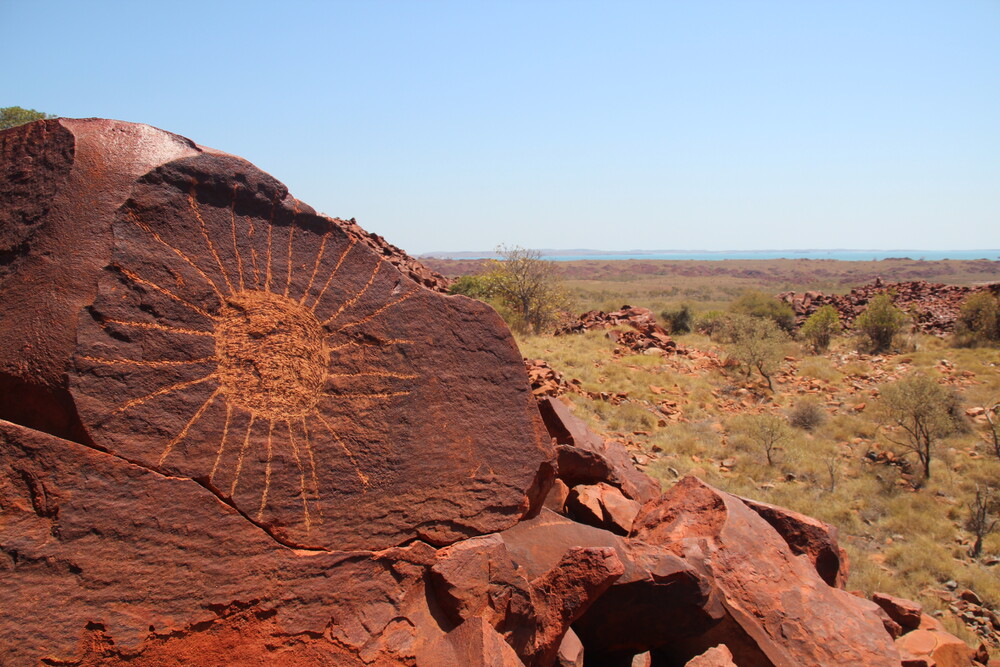
The Federal Court of Australia has admitted a UN special rapporteur on human rights and the environment as an intervenor in a judicial review concerning a liquefied natural gas (LNG) operation site, according to a May 29 press release. The admission marks the first time a national court has allowed a UN environmental expert to advise on international environmental law.
The Special Rapporteur on the human right to a clean, healthy and sustainable environment, Astrid Puentes Riaño, confirmed that she will testify before the Australian court as amicus curiae, an intervenor with a strong interest in the matter. Puentes Riaño will advise the court on the applicable international law on assessing climate impact before authorizing development projects.
Puentes Riaño is to intervene in light of last year’s International Court of Justice (ICJ) decision, in which the ICJ found that assessing the risk of significant harm, and exercising due diligence to avoid activities that cause significant damage to another state’s environment, constitute a customary legal obligation on states. Australia voted in the UN General Assembly to support a resolution endorsing the ICJ’s opinion on May 21.
“Advising States to help advance decisions based on international law and participating in priority legal cases aligns precisely with my mandate, as it was established by the Human Rights Council,” Puentes Riaño said in a statement.
The Australian Conservation Foundation initiated the judicial review in October. It asserts that the country’s Environmental Minister Murray Watt unlawfully approved extension of the North West Shelf (NWS) project’s operating life. The advocacy group argues that Watt wrongfully neglected the climate impact on the Dampier Archipelago, and approved the project without ascertaining the scale of the pollution.
In a parallel proceeding, Friends of Australian Rock Art asserted that Watt’s approval failed to consider the ongoing and irreversible damage to the Murujuga Cultural Landscape.
When approving the project’s extension for another 45 years in September 2025, Watt stated that he had imposed 48 strict conditions to mitigate the impact on the Murujuga rock art. One of the conditions requires that the operation site reduce 60% of its current gas emissions by 2030.
The NWS project is one of the largest LNG operation sites in the country, contributing $1.3 million USD to the Australian economy in 2024. According to a report prepared by the Australian Conservation Foundation that year, the operation site’s lifetime emissions would be 13 times more than the country’s annual emissions from all sources.
From JURIST, May 31. Used with permission.
Photo: UNESCO

