

The United Nations on Dec.1 urged all countries to respect international norms safeguarding civil aviation, following US President Donald Trump’s announcement of his intention to “completely shut down” Venezuelan airspace.
Speaking at a press briefing, the Secretary-General’s spokesperson Stéphane Dujarric asserted that the UN’s position remains “consistent” in calling for “full respect of states’ obligations under international law” amid mounting tensions between the US and Venezuela. He added that the Secretary-General is also “gravely concerned” about the airstrikes on Venezuelan civilian vessels at sea, which the US alleges were involved in drug trafficking.
He also noted reports of UN High Commissioner for Human Rights Volker Türk asserting that the strikes violate international human rights law, and called for transparent investigations into the attack. Türk described the strikes as “extrajudicial killings,” emphasizing that “the intentional use of lethal force is only permissible as a last resort against individuals who pose an imminent threat to life.”
UN human rights experts and a former prosecutor for the International Criminal Court, Luis Moreno Ocampo, have additionally claimed that the US airstrikes on boats suspected of smuggling drugs constitute war crimes under international law.
Since September, the US military has killed at least 83 people in strikes against 22 boats suspected of smuggling drugs. Last week, Trump also said that the US will “very soon” take action against Venezuelan drug traffickers on land. Trump also declared that the US is engaged in an “armed conflict” with drug cartels, suggesting further escalation. Experts, however, have argued that the intention to distribute drugs does not qualify as an armed attack under international humanitarian law.
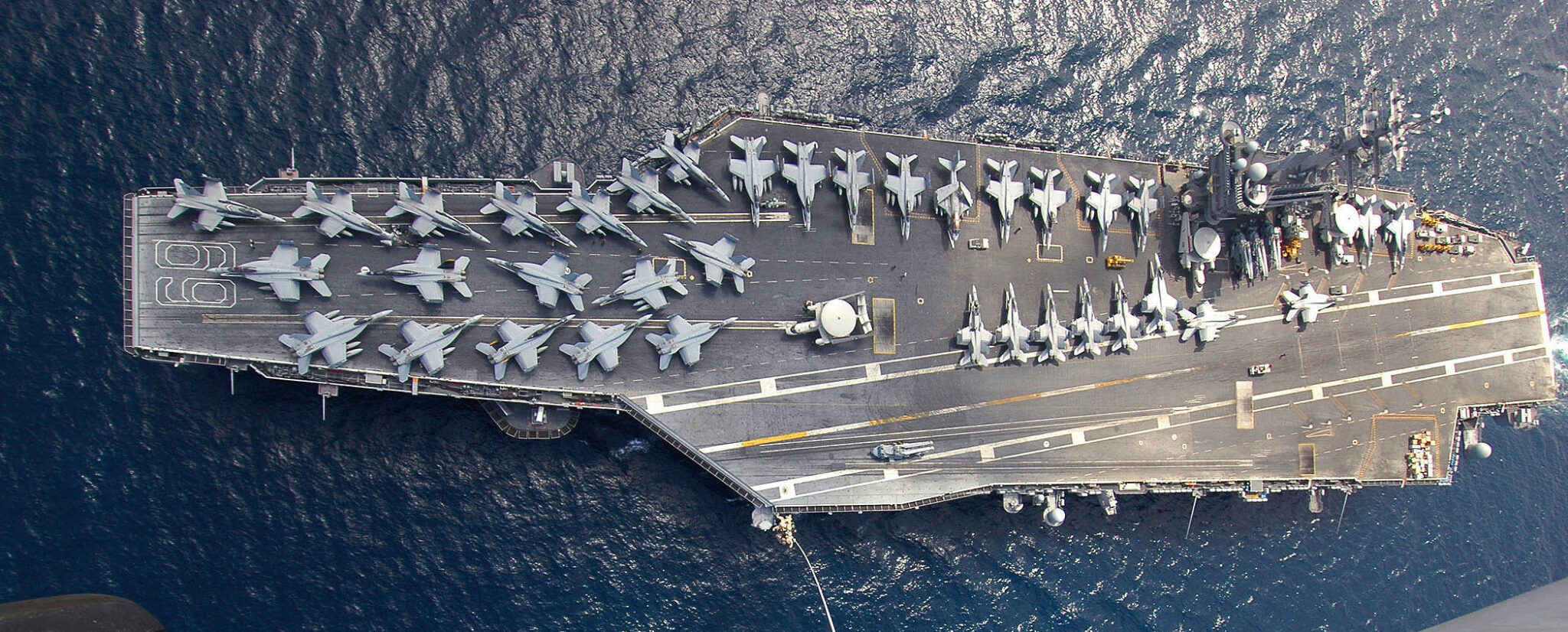
The strikes come as the US has expanded its military operations in the Caribbean, deploying warships, submarines, drones and an aircraft carrier, constituting the largest US military build-up in the Caribbean since its 1989 invasion of Panama. Meanwhile, the Trump administration has increased pressure on Venezuelan President Nicolás Maduro, accusing him of running the “Cartel of the Suns” drug-trafficking organization, and placing a $50 million bounty on him.
The Venezuelan president has responded to the US strikes by demanding “unconditional respect” for the country’s sovereignty as a fundamental principle. He also strongly rejected Trump’s move to close the country’s airspace, claiming that it threatens Venezuela’s aeronautical security and sovereignty.
Article 1 of the Convention on International Civil Aviation, to which both the US and Venezuela are parties, recognizes each state’s “complete and exclusive sovereignty over the airspace above its territory.”
From JURIST, Dec. 2. Used with permission. Internal links added,
Photo: US Navy via Wikimedia Commons


US regime change push: mixed feelings in Venezuela
President Trump’s administration is ramping up efforts to drive Venezuelan leader Nicolás Maduro from power. Having spent months bolstering its military presence in the Caribbean, the US has now officially designated the Cártel de los Soles—which it claims is led by Maduro—as a “foreign terrorist organization.” Internationally, fears of a direct confrontation are growing: A new phase of US military operations targeting Venezuela is reportedly in the making, while the US Federal Aviation Administration (FAA) warned of a “potentially hazardous situation” when flying over Venezuela, prompting airlines to halt flights.
Meanwhile, Venezuelan opposition leader and Nobel Peace Prize winner María Corina Machado continues to push for regime change, using what some see as an overblown narrative to justify US military intervention. And while the idea of ousting Maduro may still bring hope to some Venezuelans struggling through a decade of humanitarian crisis and rising authoritarianism, others have mixed feelings. Facing increased repression, the population is now even more isolated and the new cartel designation could reduce oil receipts and worsen the already dire economy. If the US does invade, Venezuela could fall into chaos or civil war, and some experts are warning that America could become mired in another protracted war, like in Iraq. (TNH)
From Caracas to Oslo via Curaçao and Maine…
Venezuelan opposition leader and Nobel Peace Prize winner María Corina Machado finally made it to Oslo on Dec. 10. She may not have made it in time for the awards ceremony itself, but the nature of her three-day odyssey to Norway could yet mark a milestone in her efforts—and those of the United States—to drive authoritarian leader Nicolás Maduro from power.
Machado effectively anointed Edmundo González Urrutia as the opposition presidential candidate for the July 2024 election, which independent observers say González won in a landslide. Fearing for her life and liberty, Machado went into hiding shortly after the election. Leaving her country entailed significant risks, which she managed to circumvent with the help of the US and rogue members of the Venezuelan military. Wearing a wig as part of her disguise, she reportedly had to navigate 10 checkpoints on the 10-hour road trip from her hideout near Caracas to a fishing village, where she took a small boat to the Caribbean island of Curaçao—a route thousands of migrants fleeing Venezuela have also taken. She then flew on to Oslo via Maine.
Machado has been criticized for her apparent alliance with the Trump administration and for not condemning the US military build-up in the Caribbean. Some question whether she deserved to receive the Nobel Peace Prize at all. But as the possibility of US-led regime change in Venezuela looms large (bringing back for many in Latin America worrying memories of CIA-sponsored interventions during the Cold War), the emotional impact of Machado’s first public appearance since January—coupled with stirring narratives around her great escape—may yet lend momentum to her cause. (TNH)