Watching the Shadows
anti-AI

AI: the case for abolition II

The popular case against the data centers now proliferating vertiginously across the United States emphasizes the ecological imperative. As water resources shrink, forcing emergency restrictions on use across the western states, voracious water consumption by the industry is just one of the ways its advance portends imminent human extinction. Meanwhile, the industry slaps back in the courts against communities that would stand up against this advance. But Artificial Intelligence itself poses an existential threat, apart from the direct impacts of the computing power. Even respected voices in the industry warn of a high probability that AI will turn upon and destroy its creators. The bots themselves seem to be warning us of this through ominous messaging. Seeming instances of AI going unilateral have prompted a bipartisan AI Kill Switch bill in Congress. Finally, there is the systematic cultural destruction being wrought by AI—literally shredding humankind’s legacy of literacy, to impose a reign of sheer error and idiocy. In Episode 339 of the CounterVortex podcast, Bill Weinberg continues to make the case for an abolitionist position on Artificial Intelligence. (Photo: Rachel Bujalski/Stop the AI Race)


Watching the Shadows
Beijing

AI chatbots shill for repressive regimes

New research from Meta’s Oversight Board found commercial large language models (LLMs) from Anthropic, DeepSeek, Google, Meta, OpenAI and xAI are far less likely to criticize repressive leaders and governments. The research calls it “free speech infringements by proxy.” Apps and material produced by these generative AI tools could actively reproduce restrictions, including on political criticism. It’s unclear why these AI models are doing this—underscoring the need for companies to be transparent and build “human rights due diligence” into the process, before it’s too late. China, Thailand, Cambodia and Saudi Arabia topped the list of countries with the highest refusal rates when LLMs were prompted to create materials criticizing governments. (Photo: chinaworker.info)

Watching the Shadows
Stop the AI Race

AI: geopolitics or abolition?

Nationwide protests against data centers and even demands to stop the AI race constitute a significant glimmer of hope as Artificial Intelligence colonizes every sphere of human existence with terrifying rapidity. The movement, however, faces potential pitfalls that could be fatal. The emergence of stochastic attacks on the AI bosses represents counter-productiveadventurism seemingly informed by an ugly primitivism. An equal but opposite threat is exploitation of the movement by elements that really have no critique of the technology at all, but only seek to see it advance under Chinese rather than American techno-oligarchs—specifically the cultish and reactionary “Party for Socialism & Liberation” (sic). PSL is indeed an instrument through which the rulers of China (and Russia) are attempting to groom oppositional forces in the US. This provides convenient fodder for propaganda that would portray any opposition to the AI economy as a tool of Beijing’s ambitions to global dominance of the industry. As struggles against data centers now emerge in places like the Philippines, it is critical that we take a Neither East Nor West position and repudiate the global divide-and-rule racket that is the essence of the state system. In Episode 338 of the CounterVortex podcast, Bill Weinberg continues to make the case for an uncompromising abolitionist position on Artificial Intelligence. (Photo: Rachel Bujalski/Stop the AI Race)
Watching the Shadows
data centers

Podcast: Resist digital hegemony! IV

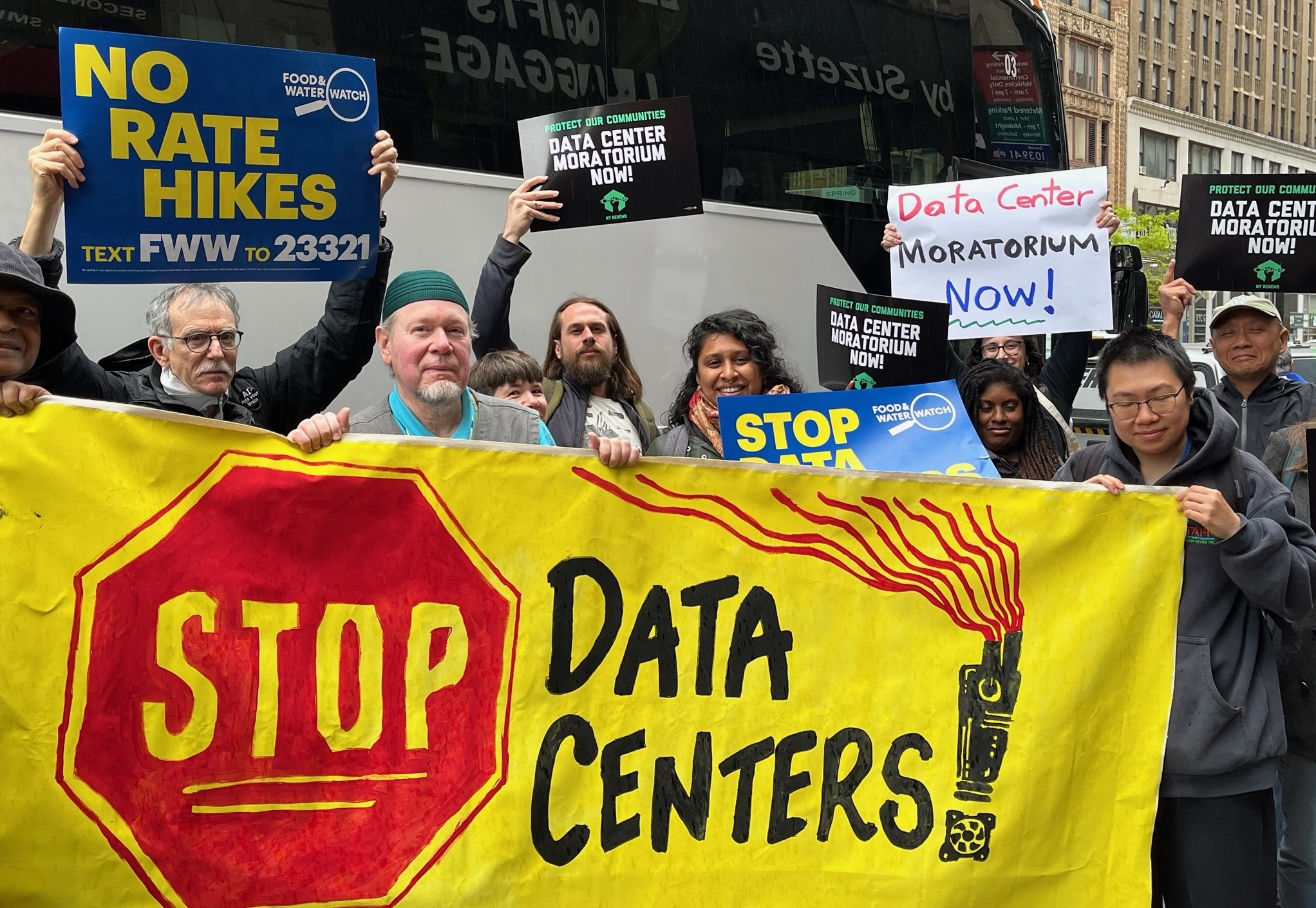
New York Gov. Kathy Hochul’s executive order imposing a one-year moratorium or “pause” on new “hyperscale” data centers seems to be a ploy to undercut a more stringent measure passed by the state legislature. But it still represents an important victory—of course being met with outrage by the Trump regime. Monterey Park, Calif., has meanwhile become the first US city to impose an outright ban on data centers via ballot initiative. There is a growing municipal revolt against data centers in the Golden State—although Gov. Gavin Newsom is still wedded to the AI agenda, placing him in line with the Trump White House. The turn of public opinion is slowing expansion of the industry, which is a real sign of hope. The challenge is to translate this into a popular repudiation of artificial intelligence altogether, and build a movement for abolition. In Episode 337 of the CounterVortex podcast, Bill Weinberg continues to make the case. (Photo: Food & Water Watch via Waging Nonviolence)

Watching the Shadows
ICC

US to seek dismantling of International Criminal Court

The US will launch a diplomatic campaign aimed at dismantling the International Criminal Court, Secretary of State Marco Rubio announced. In an op-ed published in the Wall Street Journal, Rubio wrote that the US will work alongside allied governments to take the Court apart “brick by brick, if necessary,” using all tools at the government’s disposal. He said the campaign’s message to other governments will be a choice of “sovereign states over globalism,” and pledged that the administration will protect US service members from ICC jurisdiction. (Photo: Tony Webster via Wikimedia Commons)

Watching the Shadows
Epistemic Injustice

Podcast: Resist digital hegemony! III

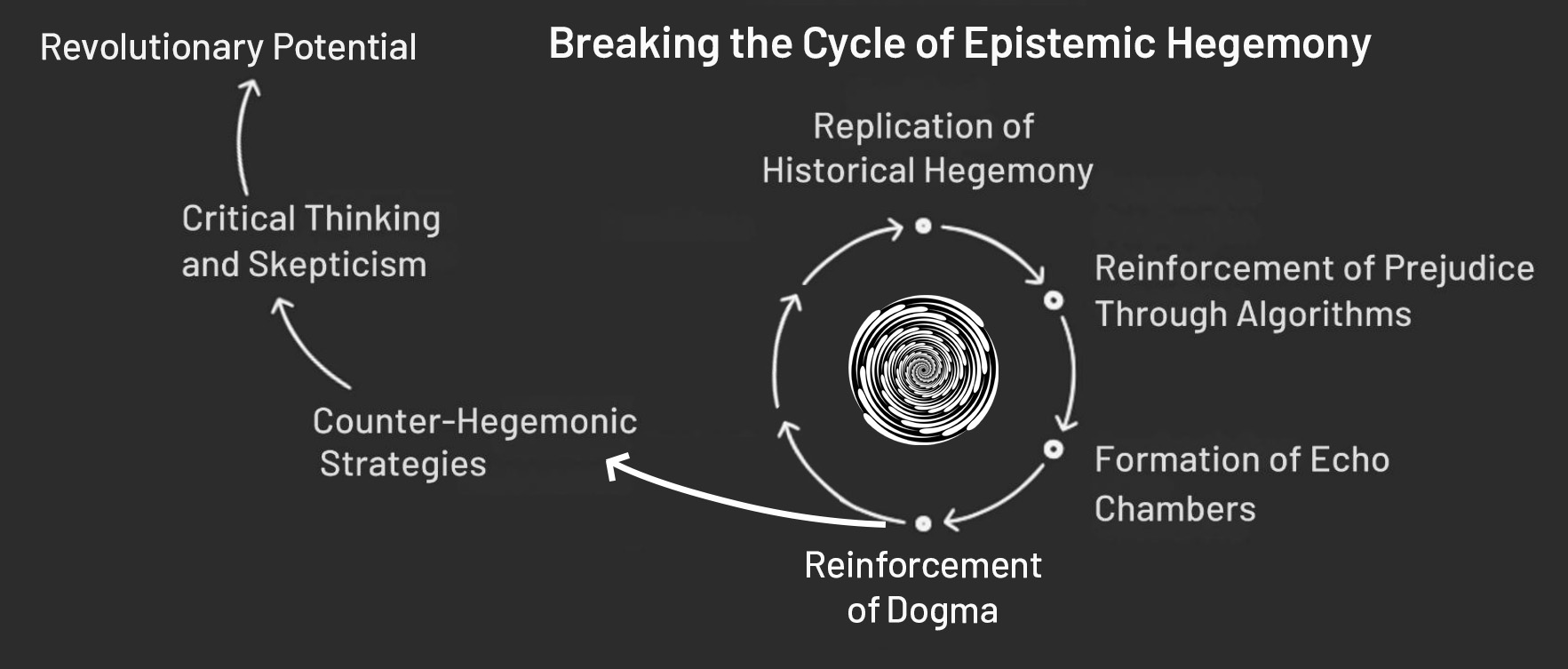
At the UN’s Global Dialogue on AI Governance in Geneva, Nobel Peace Prize laureate Maria Ressa warned that artificial intelligence poses the threat of an “information Armageddon.” Scholars of critical theory perceive that online culture reproduces a “cycle of epistemic injustice” by fostering “organized stupidity” that fuels extremism and authoritarianism. And the same technology now implements the grim material application of this degraded intellectual climate, with a UN Human Rights Council study especially accusing Palantir of being part of an “economy of genocide” through its enabling of Israel’s AI-enhanced targeting in Gaza. Meanwhile, the pollution generated by the data centers that power AI is now “almost incomprehensible.” Despite all this, UNESCO in Geneva glibly called for a “safe and inclusive AI that benefits all,” and an openly boosteristic “AI for Good” confab was held alongside the Global Dialogue. The “anti-tech rebellion” against screens in school classrooms is a significant sign of hope, but the end of reading and death of literacy are already upon us. Moves toward greater regulation of AI are most significant as a catalyst for the conversation that needs to be had: how to launch an effective movement for abolition. In Episode 336 of the CounterVortex podcast, Bill Weinberg continues to make the case. (Image: CounterVortex, after JSCSR)

Watching the Shadows
technostate

Podcast: Resist digital hegemony! II

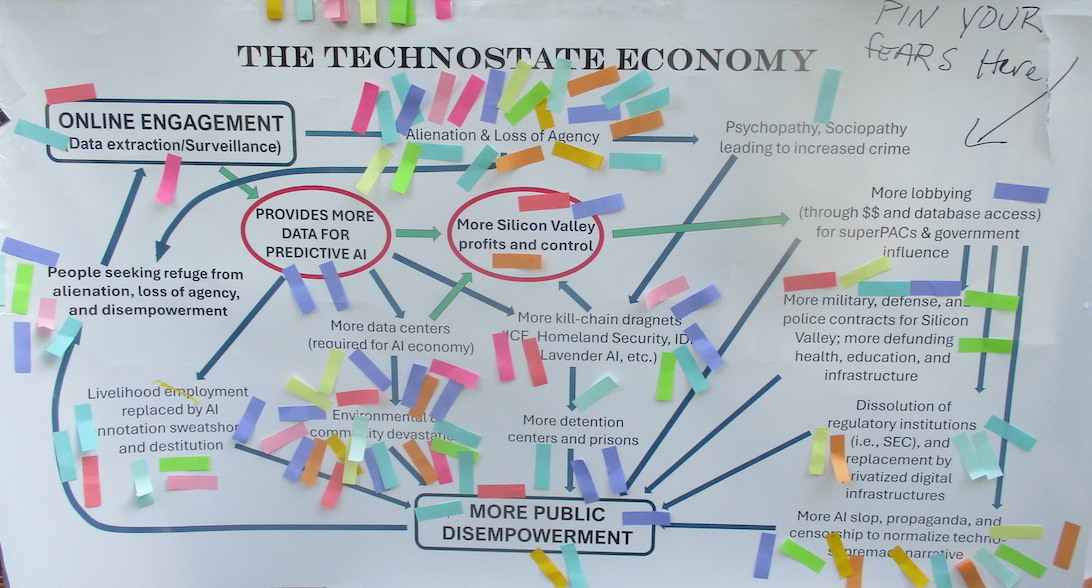
Digital technology continues to colonize every sphere of human activity with terrifying rapidity, and Artificial Intelligence portends the actual abolition of humanity. Even the United Nations’ belated and insufficient efforts to put a regulatory regime in place for AI acknowledge that humans face imminent “loss of control” over the technology. There are glimmers of hope, however: teachers engaged in practical resistance to the rollout of AI in school classrooms, and the nationwide protests against the proliferation of data centers. In New York City, the local Luddite Club just held a Summer of Ludd festival—aimed at getting people to disconnect from the digital pseudo-reality that recuperates our very alienation from itself, and to reclaim real life in the public parks and streets. In Episode 335 of the CounterVortex podcast, Bill Weinberg offers a report from Manhattan’s Lower East Side. (Photo: CounterVortex at the Summer of Ludd, Tompkins Square Park, NYC)

Watching the Shadows
computer smash

Podcast: Resist digital hegemony!

Voices from within the academy are now raising the alarm about the decline of literacy under the relentless assault of totalized digital immersion—finally catching up to what CounterVortex blogger and ranter Bill Weinberg has been saying for years (although sneering denialism about the problem remains fashionable). Worldwide, the humanities are being abandoned in favor of STEM, while social media overtakes “legacy media” as a source of “news”—or (as is more often the case) sinister propaganda. In Episode 333 of the CounterVortex podcast, Bill takes stock of this grave and still under-appreciated threat to the survival of democracy and humanity itself—and looks for signs of practical resistance. (Image: Earth First! Newswire)

Watching the Shadows
missile

Rights groups call to end AI in warfare

More than 200 human rights groups and advocates issued a joint statement calling for an immediate halt to the use of artificial intelligence systems in military “kill chains,” warning that AI-accelerated warfare risks facilitating violations of international criminal, human rights and humanitarian law. The signatories said that claimed safeguards such as “human in the loop” mechanisms cannot prevent the lethal consequences of AI-accelerated targeting, but instead risk becoming a means of “rubber-stamping” killing at greatly accelerated speed and scale. (Image: Andrew West via Pixabay)

Watching the Shadows
space trilogy

Podcast: The Space Trilogy revisited

CS Lewis is mainly seen as either a purveyor of goopy children’s literature or a Christian moralist fuddy-duddy. But Lewis’ Space Trilogy—fantastic literature for adults, or “philosophical science fiction”—also reveals him as a dystopian prophet in the tradition of Orwell. The first two books in the series, Out of the Silent Planet and Perelandra, are a critique of space imperialism that anticipated the Avatar movies. But the final one, That Hideous Strength, is particularly relevant for our historical moment, as it anticipated rule by fascist tech bros with hubristic visions of remaking (or abolishing) humanity. In Episode 332of the CounterVortex podcast, Bill Weinberg makes the case that Lewis offered a vital critique of technocracy and “transhumanism” that is now urgently needed, as humanity stands at the cusp of his worst nightmares. (Image via Diary of an Autodidact)

Watching the Shadows
Artificial Intelligence

AI: the case for abolition

Trump’s executive order purporting to establish a regulation regime for artificial intelligence actually serves the aim of a government partnership with the AI industry to advance the police state. Ironically, it is AI company Anthropic that calls for a moratorium on development of the technology until its threats are assessed. Pope Leo XIV’s encyclical, “Magnifica Humanitas: On Safeguarding the Human Person in the Time of Artificial Intelligence,” raises critical points but still echoes the illusion that this technology, now threatening to develop its own powers of “recursive self-improvement,” can be effectively regulated. There are encouraging signs of worker pushback against replacement by AI, and an emerging anarchist critique of the technology. Of course the Trump regime is targeting critics for repression as “anti-tech extremists.” In Episode 331 of the CounterVortex podcast, Bill Weinberg again calls for total abolition of AI, citing unacceptable threats to humanity on ecological, epistemological and eschatological grounds. (Image: Pixabay via Wikimedia Commons)

Watching the Shadows
Xinjiang

Podcast: Hasan Piker & the pro-fascist pseudo-left

The administrative subpoenas issued for Hasan Piker and Medea Benjamin over their participation in the Cuba caravan are to be opposed—in part because the subpoenas will only give their sinister politics greater cachet among neophyte activists! Piker’s shameless shillingfor the dictatorships of Xi Jinping and Vladimir Putin invisibilizes the victims of their ethno-supremacist detention states—such as the Uyghurs of Xinjiang and the Crimean Tatars. This more critical point is obscured in the endless outrage over his supposed anti-Semitism. And with Xi and Putin joining with Trump to build a fascist world order, Piker’s brand of campist pseudo-opposition (however overheated) is compromised from the start, mirroring what it ostensibly opposes—subpoenas notwithstanding. In Episode 330 of the CounterVortex podcast, Bill Weinberg breaks it down in his typically unsparing manner. (Photo: Xinjiang Judicial Administration via The Diplomat)