Central America
boswas

Nicaragua: armed colonists invade indigenous lands

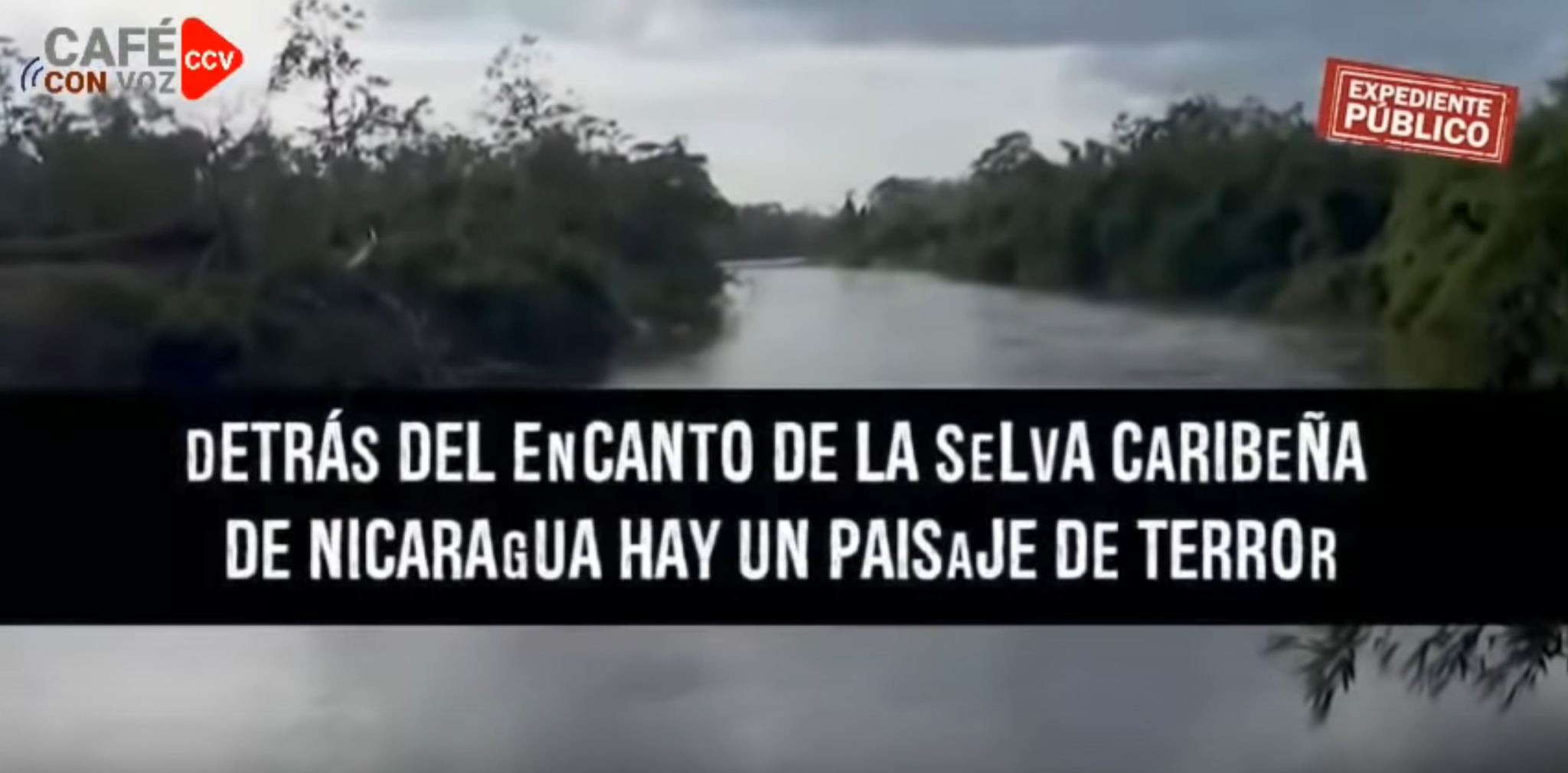
In a video conference with representatives of the Inter-American Commission on Human Rights, indigenous leaders from Nicaragua’s eastern rainforest protested an illegal “invasion” of their titled territories by armed campesino colonists, who seize lands, clear trees and terrorize their communities. The Miskito and Mayangna leaders said 13 indigenous residents were killed by settlers last year, with eight wounded and hundreds forcibly displaced. Lottie Cunningham of the Center for Human Rights & Justice of the Atlantic Coast of Nicaragua (CEJUDHCAN) said some 30,000 hectares have been expropriated, and the colonists often work in league with timber and mining interests—illegal operations that nonetheless have total impunity in the lawless region. Among the impacted areas is the ostensibly protected Bosawas Biosphere Reserve. (Image: CafeConVoz)

The Amazon
facebook

Facebook enables deforestation in Brazilian Amazon

Criminal networks in Brazil are illegally selling and deforesting protected lands—even within an indigenous reserve—and posting the plots for sale on Facebook, according to an investigation by the BBC. In a documentary, “Selling the Amazon,” BBC Brasil went undercover to reveal how illegal land-grabbers are moving in on public land in the Amazon—clearing rainforest and selling plots to ranchers at highly inflated prices. The documentary showed plots of these cleared lands being openly advertized on Facebook. Contacted by BBC, Facebook said it was “ready to work with the authorities” to investigate the matter, but would not take independent action to halt the land-trading on its platform. (Photo via Mongabay)

Africa
lake victora

Pipeline project threatens Lake Victoria

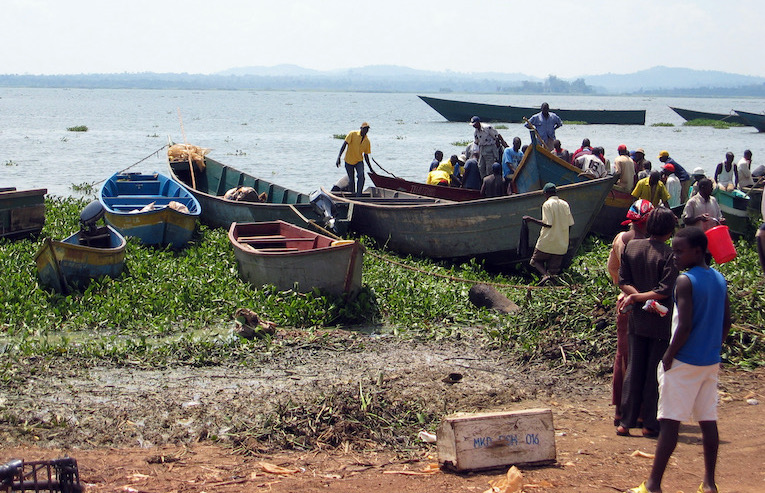
More than 260 organizations issued an open letter to banks and financial institutions involved in the construction of the East African Crude Oil Pipeline (EACOP), which would carry oil from fields in western Uganda to a port on the northern coast of Tanzania, passing near critical wetlands in the Lake Victoria basin. The human rights and environmental organizations say the line’s construction poses “unacceptable” risks to communities in the immediate 1,445-kilometer (898-mile) path of the project and beyond. They are calling on banks not to fund the $3.5 billion project, and asking government leaders to shift funding from infrastructure for fossil fuels to renewable energy. (Photo: Wikimedia Commons via Mongabay)

The Andes
Ica

Farmworker protests paralyze southern Peru

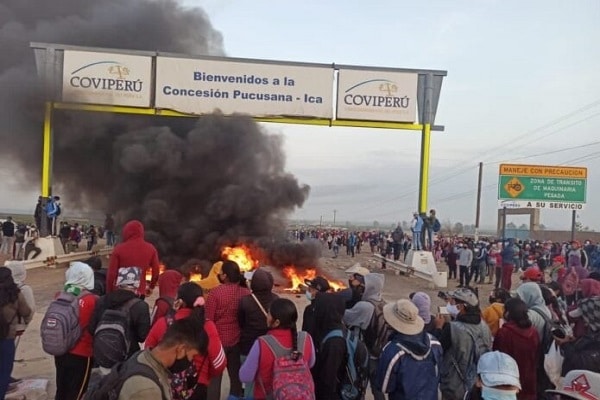
Hundreds of striking farmworkers are blocking the Panamerican highway through southern Peru, demanding revocation of a decree extending an anti-labor agricultural reform law that was supposed to sunset this year. The protests have prompted the central government to send a dialogue team from Lima to Ica region, but the farmworkers have refused dismantle the roadblocks, insisting on a face-to-face meeting with Agriculture Minister Federico Tenorio. At issue is the Law for Agrarian Promotion—dubbed the Chlimper Law for its author, José Chlimper, who served as agriculture minister under the authoritarian regime of Alberto Fujimori in the 1990s. (Photo via Expreso)

South Asia
Chalo Delhi

Farmers march on Delhi amid general strike

Thousands of farmers from across India’s north marched on Delhi despite efforts by police to block them with road barricades, tear-gas and baton charges. The cross-country march, which converged from Punjab and Haryana states, entered the capital one day after several Indian states were shut down by a general strike in support of the farmers’ demands. This was called by a newly formed Joint Platform of Central Trade Unions bringing together 10 of the country’s major organized labor federations. Leaders claimed 25 crore (250 million) workers participated in the strike. The “Chalo Delhi” (Go to Delhi) mobilization was called to protest a package of agricultural reform laws passed in September that lifts requirements for government purchases of grain at guaranteed prices. (Photo via @FightAnand)

The Andes
Minga

Colombia: indigenous ‘minga’ marches on Bogotá

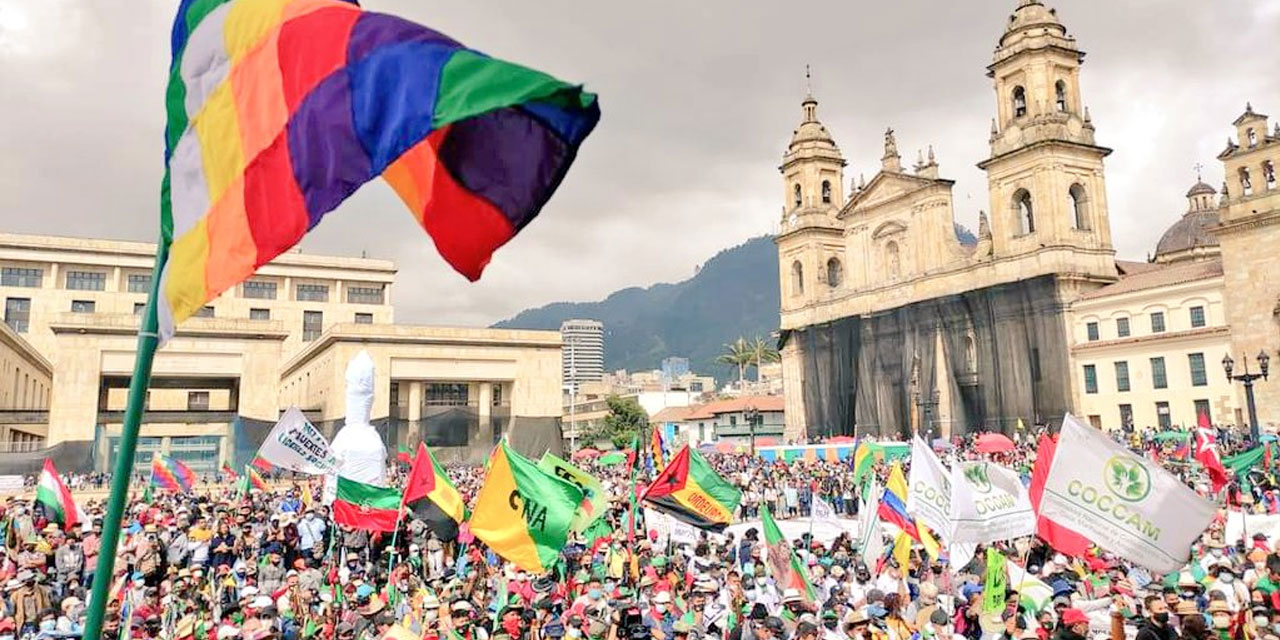
Some 10,000 participated in a cross-country march and motorcade through Colombia’s southern Andes, dubbed the “Minga for Life, Territory, Democracy and Peace,” culminating in a mass demonstration in Bogotá. Called by Nasa and Guambiano indigenous leaders in the southern department of Cauca, the Minga (a traditional Andean word for “collective labor”) was joined by Afro-Colombian and mestizo campesino communities in its 10-day trek to the capital. Chief among the marchers’ grievances is the ongoing wave of assassinations of social leaders by illegal armed groups operating on indigenous lands. They charge that their communities have been betrayed by President Iván Duque’s failure to fully implement terms of the peace accords with the demobilized FARC guerillas. (Photo: Colombia Reports)

Central America
Maria Elena Cuadra Movement

Nicaragua: sweeps target opposition activists

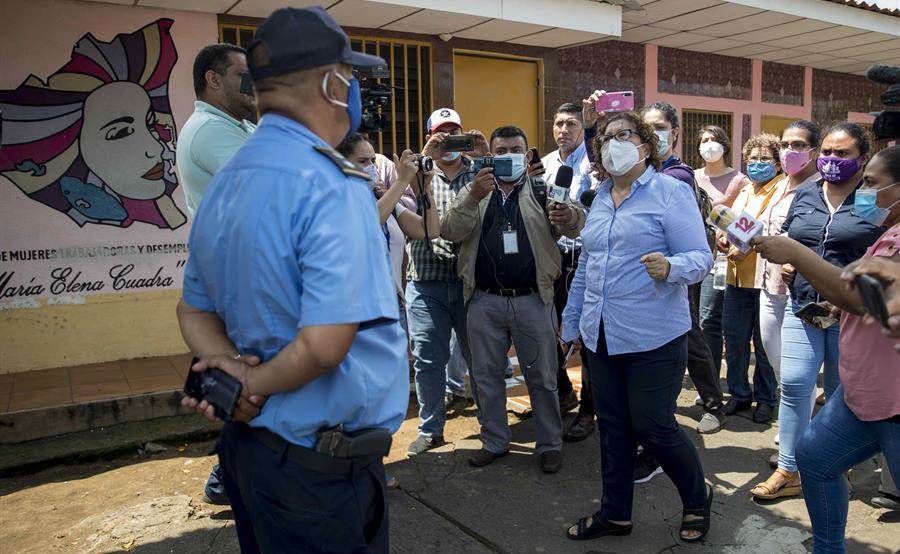
Over 30 opposition figures were detained by the National Police in nationwide sweeps across Nicaragua. Most were released after questioning, but some are still being held. The majority of the detained were members of a newly formed opposition body, the National Coalition, which brings together three political parties and several dissident organizations. Among the detained were 17 indigenous Rama and Kriol (Afro-Nicaraguan) activists from the Caribbean coast, including Kriol environmentalist Princess Barberena and Jaime McCrea Williams, president of the Territorial Government of Rama & Kriol. In Managua, police surrounded the offices of the Maria Elena Cuadra Movement, which advocates for the rights of working women, and interrogated the group’s representative Sandra Ramos when she arrived on the scene. Ramos told reporters she believed the group was targeted for its work representing the mothers of political prisoners since the protest wave of 2018. “We’re not a terrorist organization or anything resembling one,” said Ramos. “We’re a shitload of women who defend other women.” (Photo of Sandra Ramos confronting police via Nicaragua Confidencial)

Mexico
ocosingo

Mexico: Zapatista community attacked in Chiapas

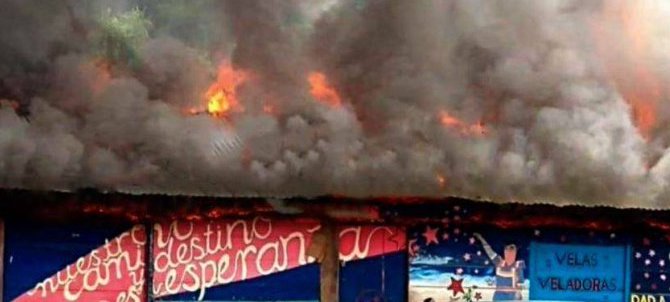
A communal coffee warehouse in one of the rebel Zapatista base communities in Mexico’s southern state of Chiapas was burned down in an attack by a rival campesino group that operates a paramilitary force in the area. The New Dawn of the Rainbow Commercial Center, maintained by small coffee cultivators loyal to the Zapatista rebel movement, was attacked by followers of the Regional Organization of Ocosingo Coffee Growers (ORCAO), according to a statement from the National Indigenous Congress. In response to the attack, a group of prominent Mexican cultural and intellectual figures, including popular singer Julieta Venegas, issued a statement, protesting: “This new aggression is part of the intensification of the war of attrition in the state of Chiapas, characterized by an increase in violence by paramilitary groups and organized crime.” (Photo via EspoirChiapas)

Southern Cone
quilombo

Military Police evict land occupation in Brazil

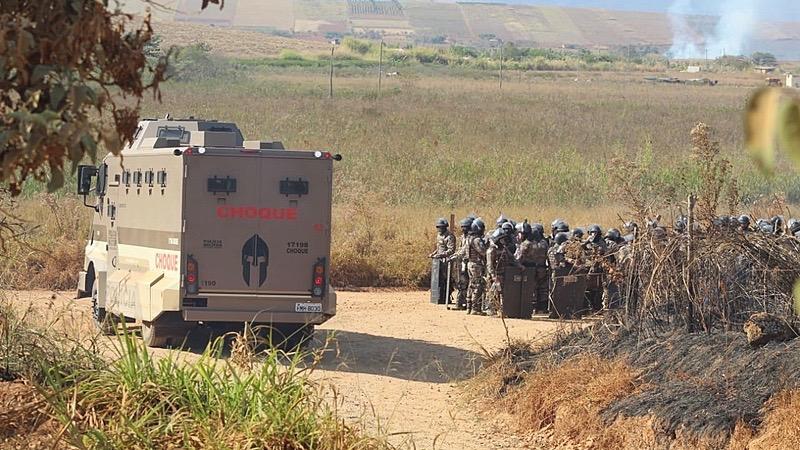
Brazilian Military Police completed the eviction of a long-standing land occupation called Quilombo Campo Grande in Minas Gerais state, after a struggle of almost three days. Police brought in armored vehicles and fired tear-gas to clear the community from the land, before moving in to destroy homes and crops. Also demolished was the Eduardo Galeano Popular School, where children, youth and adults studied together. The Landless Rural Workers Movement (MST), whose followers established the squatter community on the abandoned lands of a bankrupt sugar mill 22 years ago, protested that the mass eviction leaves some 450 families homeless in the midst of a pandemic. (Photo: MST via Brasil de Fato)

Central America
Cubilguitz

Maya villagers attacked by gunmen in Guatemala

Q’eqchi Maya campesinos in Guatemala’s central Alta Verapaz department were attacked by a group of unknown gunmen who violently evicted them from their homes before setting them to the torch. At least 40 families lost their homes in the attack at the hamlet of Balbatzul, in Cobán municipality. President Alejandro Giammattei said National Civil Police troops have taken control of the hamlet, and the Fiscalía has opened an investigation. Some of the targetted homes were on occupied lands of a large farm, Finca Cubilguitz, which appears to have been at issue in the conflict. Local campesinos moved onto the lands last year, but leadership of the occupation has been contested between followers of the Committee for Campesino Unity (CUC) and ex-guerilla commander César Montes. (Photo: CUC)

The Andes
Abelardo Liz

Colombia: indigenous journalist slain by army

An indigenous journalist was among two killed when army troops were called in to evict a land occupation in Colombia’s southern Cauca region. The lands of three haciendas had been under occupation for months by Nasa indigenous campesinos at El Guanábano, Corinto municipality, as part of a land reclamation campaign dubbed “Liberación de la Madre Tierra.” The National Police riot squad was first mobilized to clear them, burning their huts and destroying crops. When the occupiers fought back, the army was sent in, and troops opened fire. Abelardo Liz, who was covering the confrontation for Nación Nasa community radio station, was shot in the abdomen, and died while being rushed to the hospital in Corinto. (Photo via RSF)

Southern Cone
curacautin

Chile: Mapuche mobilize after racist mob attacks

Chile’s Mapuche indigenous people are holding emergency community meetings in their territory to discuss how to respond to a wave of racist attacks. The most serious incident occurred in Curacautín, Araucanía region, where a group of Mapuche protesters were holding an occupation of the municipal building. The protest had been called in solidarity with Celestino Córdova, a Mapuche leader imprisoned in relation to a conflict over land rights, and now on hunger strike to demand his freedom. The protesters were set upon by a mob, who ejected them from the municipal building before beating them in the street and setting several of their vehicles on fire. The attackers used racist slurs and slogans such as “¡Querían terrorismo, acá tienen terrorismo!” (You wanted terrorism, now you have terrorism!). The Carabineros looked on but did not interfere, only acting afterwards to remove remnant protesters from the building. (Photo: Resumen, Concepción)