Greater Middle East

Did John McCain meet with jihadists in Syria?
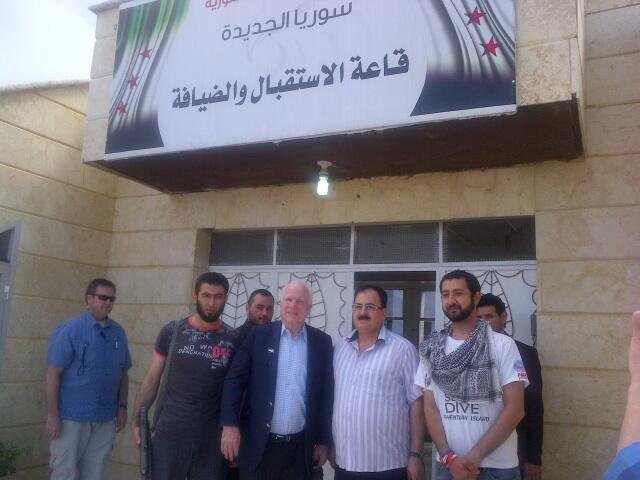
McCain SyriaUpon his death, many are reviving the discredited claim that John McCain met with ISIS on his Syria trip in 2013. But some are settling for the less ambitious, and perhaps plausible, claim that he met with jihadists who were implicated in atrocities. Ben Norton tweets: "John McCain was a staunch supporter of the CIA-backed, al-Qaeda-linked Salafi extremist opposition in Syria. In fact the late senator posed in a photo with a rebel who was involved in kidnapping 11 Lebanese Shia civilians." But Norton is repeating as "fact" what are actually unproven claims—while he still equivocates about "alleged" chemical attacks by the Assad regime. It's a bitter irony. McCain participated in war crimes in Vietnam. Two generations later, those who gloat at his death are covering up for equivalent war crimes by Assad and his allies. It fell to McCain, who was unapologetic about his Vietnam role, to try to drum up some support for the resistance in Syria. (Photo: John McCain Twitter feed)
Greater Middle East

Woman activist faces execution in Saudi Arabia

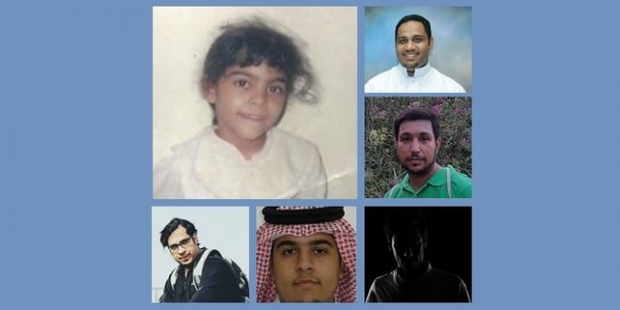
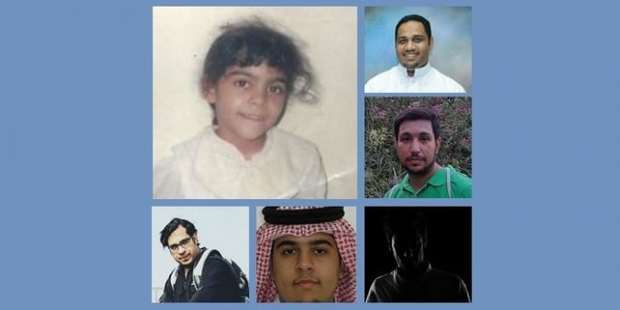
Israa al-GhomghamSaudi rights advocates are warning of the possible imminent beheading of detained activist Israa al-Ghomgham, who has been provisionally sentenced to death by a Riyadh court. At a hearing before the Specialized Criminal Court in the capital, the Public Prosecutor recommended the death penalty for six defendants, including Ghomgham and her husband, Moussa al-Hashem, who have been held for nearly three years on charges related to anti-government protests in the Shi'ite-majority eastern region of Qatif. The charges include "participating in protests," "incitement to protest," "chanting slogans hostile to the regime," "attempting to inflame public opinion," "filming protests and publishing on social media," and "providing moral support to rioters." The prosecutor called for their execution based on the Islamic law principle of ta'zir, in which the judge has discretion over the definition of what constitutes a crime. A judge is expected to either confirm or reverse the death penalty recommendation at Ghomgham's next hearing in October. (Photo of Israa al-Ghomgham as a child, with her co-defendants, via Middle East Eye)

Greater Middle East

Egypt: ‘cybersecurity’ law restricts social media

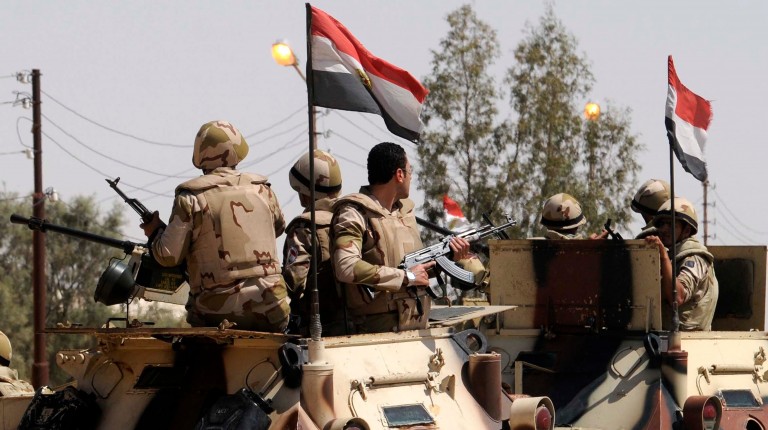
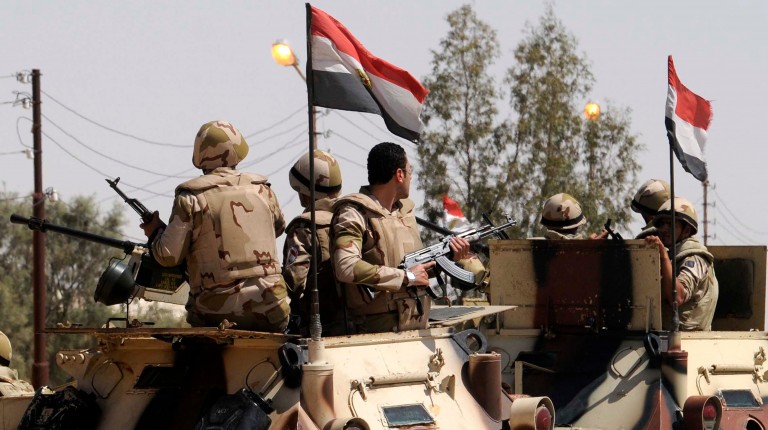
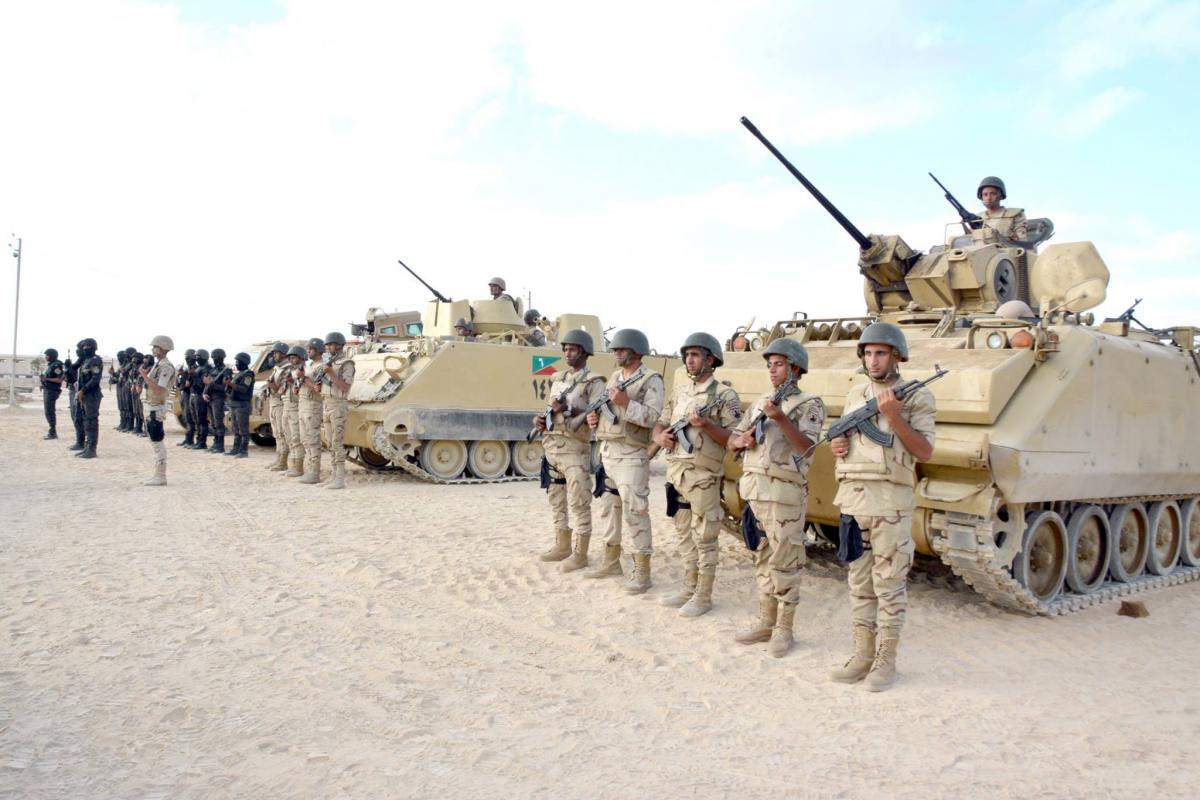
SinaiEgyptian President Abdel Fattah el-Sisi signed a cybersecurity law  that gives the government broad authority to block websites deemed to constitute a threat to national security or the economy, imposing prison terms for anyone found guilty of running or just visiting such sites. Amnesty International described the new law as giving "the state near-total control over print, online and broadcast media." More than 500 websites had already been blocked in Egypt prior to the new law being signed. There is another cybersecurity law before the president, which would places all Twitter accounts with more than 5,000 followers under government supervision. With street protests in Egypt all but banned, the Internet has been one of the last spaces left for dissent. (Photo: Egypt Daily News)

Greater Middle East

Afrin and Raqqa: fearful symmetry

RaqqaReports of rights abuses in the north Syrian enclave of Afrin, taken by Turkish forces and rebel allies from Kurdish defenders in March, continue to mount. Amnesty International charges that Afrin residents have been arbitrarily detained and tortured, with houses and businesses looted and confiscated, and schools destroyed or taken over by militia forces. Meanwhile the Syrian opposition cited sources on the ground accusing the Kurdish militia that was driven out of Afrin, the People's Protection Units (YPG), of press-ganging youth for compulsory military service in Raqqa. Afrin is a formerly Kurdish-majority city where displacement of Kurds and an influx of Arabs under Turkish occupation is affecting a demographic shift. Raqqa is an Arab-majority city which has been under occupation by Kurdish-led forces since it was liberated from ISIS last October. This situation obviously further heightens the risk of Kurdish-Arab ethnic war in northern Syria. (Photo: SDF)

Greater Middle East

Propaganda and the accounting of death in Syria

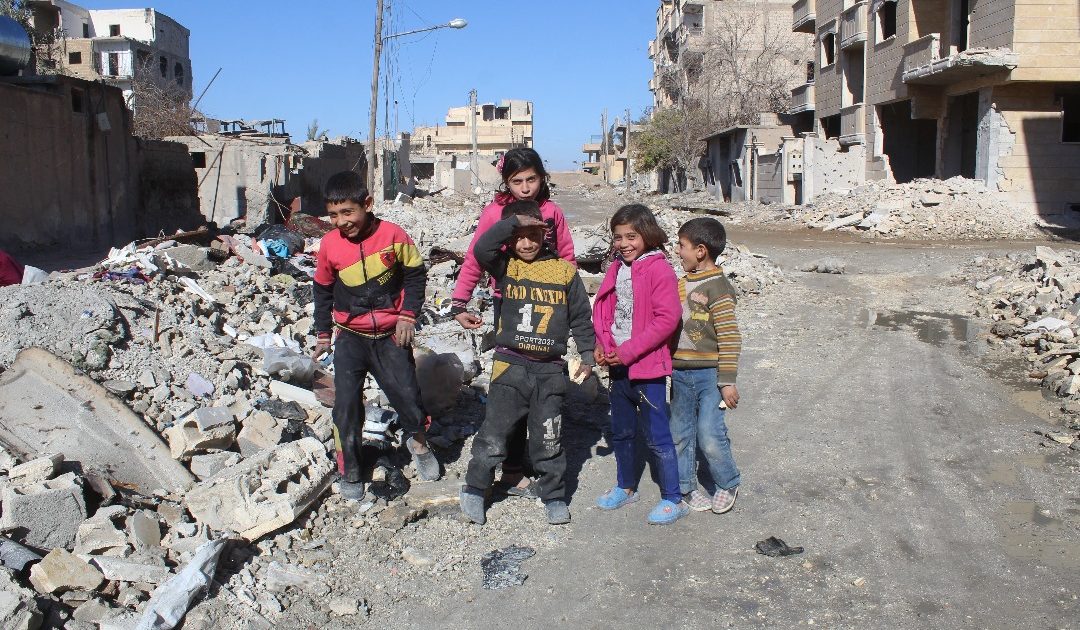
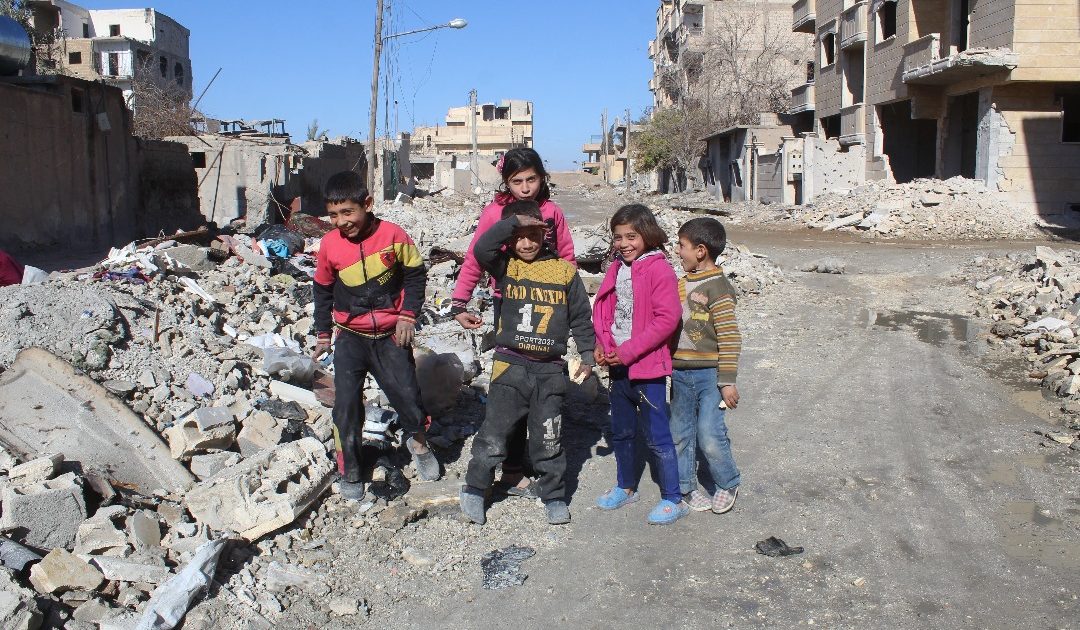
RaqqaThe US State Department harshly condemned the Syrian regime over thousands of death notices it has released in recent weeks, saying they confirm suspicions of mass detentions, torture and murder. The State Department said that over 117,000 are believed to have been detained or forcibly disappeared in Syria since the conflict began in 2011, "the vast majority" by the regime. Amnesty International meanwhile issued a statement protesting the US-led Coalition’s "flurry of responses" rejecting the findings of its recent report on devastation wrought by the aerial bombardment of Raqqa last year, revealing "how deeply in denial the Coalition leadership is about its failure to protect civilians caught in conflict." (Photo: SDF)

Greater Middle East

Book review: Impossible Revolution

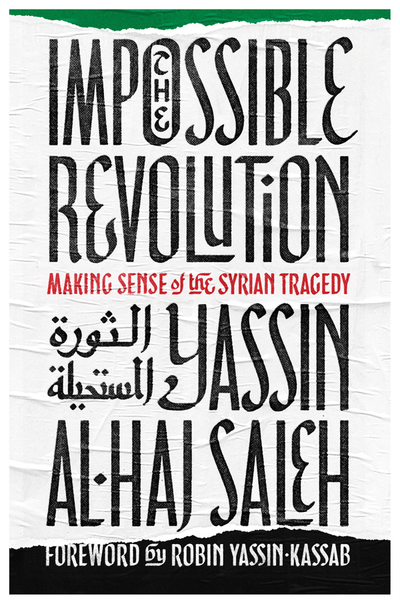
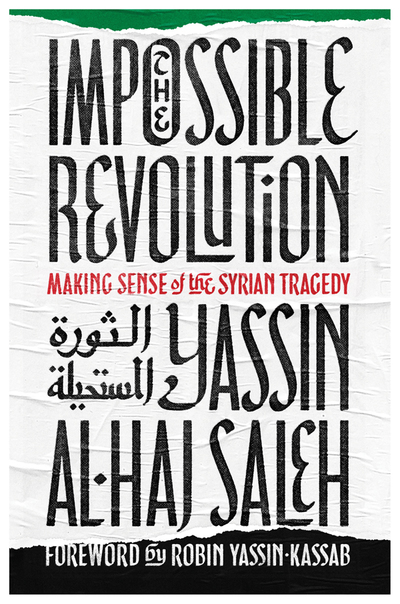
Impossible RevolutionThis book is a necessary corrective to the dominant perception—left, right and center—that the opposition in Syria are all jihadists and dictator Bashar Assad the best bet for "stability." Long a left-wing dissident in Assad's Syria, Saleh is a veteran of the dictator's prisons. Here, he traces the origins of the Syrian revolution to agony caused by the regime's "economic liberalization" (socialist phrases aside), describes the initially unarmed opposition's popular-democratic nature, and discusses the struggle to keep the Free Syrian Army accountable to this grassroots base after it became clear a military dimension to the revolution was necessary. He makes the case that the Assad regime can be termed "fascist" even by the most rigorous definition, and has been making good on its pledge to "burn the country" before ceding power. (Image: Haymarket Books)

Greater Middle East

Druze women and children abducted by ISIS

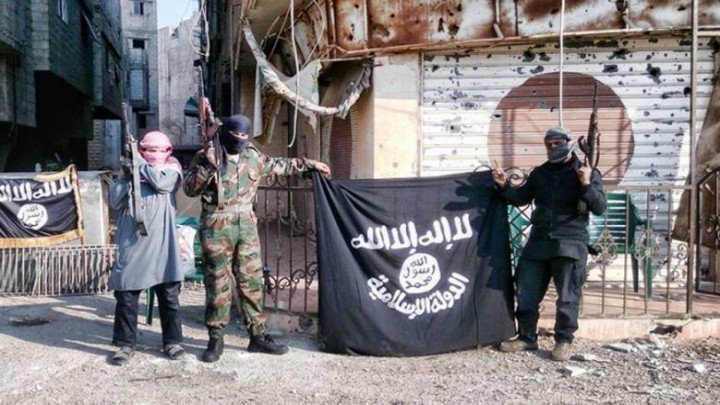
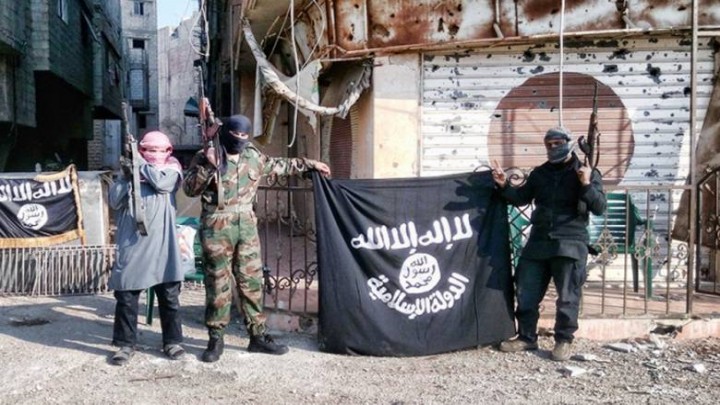
ISISDuring the wave of coordinated ISIS attacks that left 250 dead in Syria's regime-held southern governorate of Suweida, the militants also went door-to-door in Druze villages, abducting some 35 women and children. The militants are believed to have escaped with them into their remaining strongholds in Syria's eastern desert. The attack wave followed visits by Russian military delegations to Suweida, during which Druze elders were urged to cooperate in disarming the populace. This was apparently aimed at suppressing the Rijal al-Karama (Men of Dignity), a Druze self-defense militia that had emerged over the past years of violence in Syria. The ISIS assault came immediately after regime weapons seizures in Druze villages, leading to theories of regime complicity in the attacks. (Photo via Syria Call)

Greater Middle East

Syria endgame: Rojava seeks deal with Assad

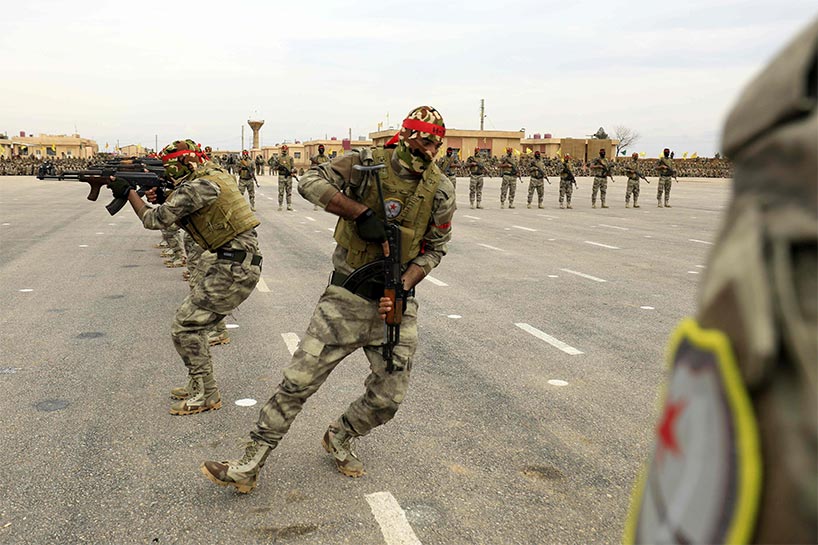
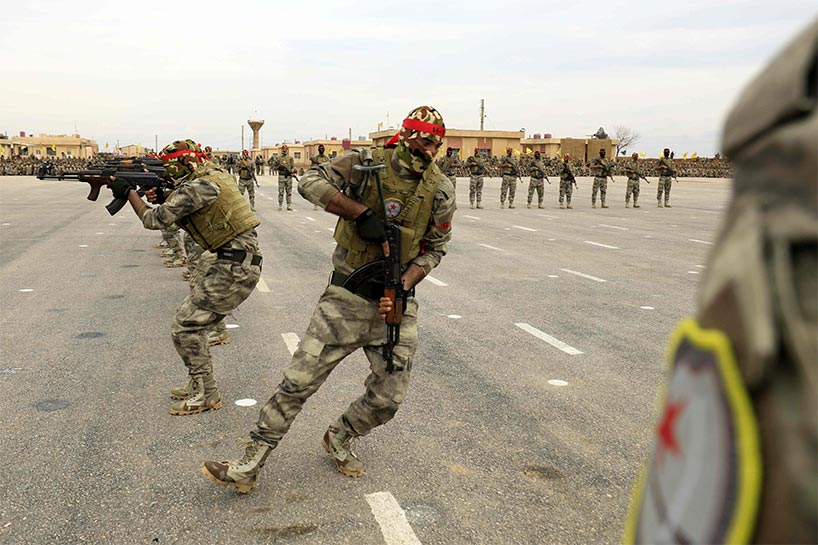
Rojava fightersRepresentatives of the US-backed Kurdish-led alliance known as the Syrian Democratic Forces are holding talks in Damascus with the Assad regime, apparently with an eye toward regime recognition of the Kurdish autonomous zone in exchange for unity against further Turkish expansion in northern Syria. The SDF controls more than 27% of Syrian territory. In effect, that means this region is under the Rojava autonomous administration, which is the real political force behind the SDF. The Rojava leadership's cooperation in a Syrian carve-up deal may be the price of survival for their autonomous zone. But it would certainly vindicate the long-standing accusations of Kurdish collaboration with Assad—despite Assad's previous refusal to recognize the autonomous zone. It would also yet further heighten the risk of Kurdish-Arab ethnic war in northern Syria. (Photo of Kurdish fighters in Rojava via Rudaw)

Greater Middle East

UN rights experts: end Bahrain rights abuses

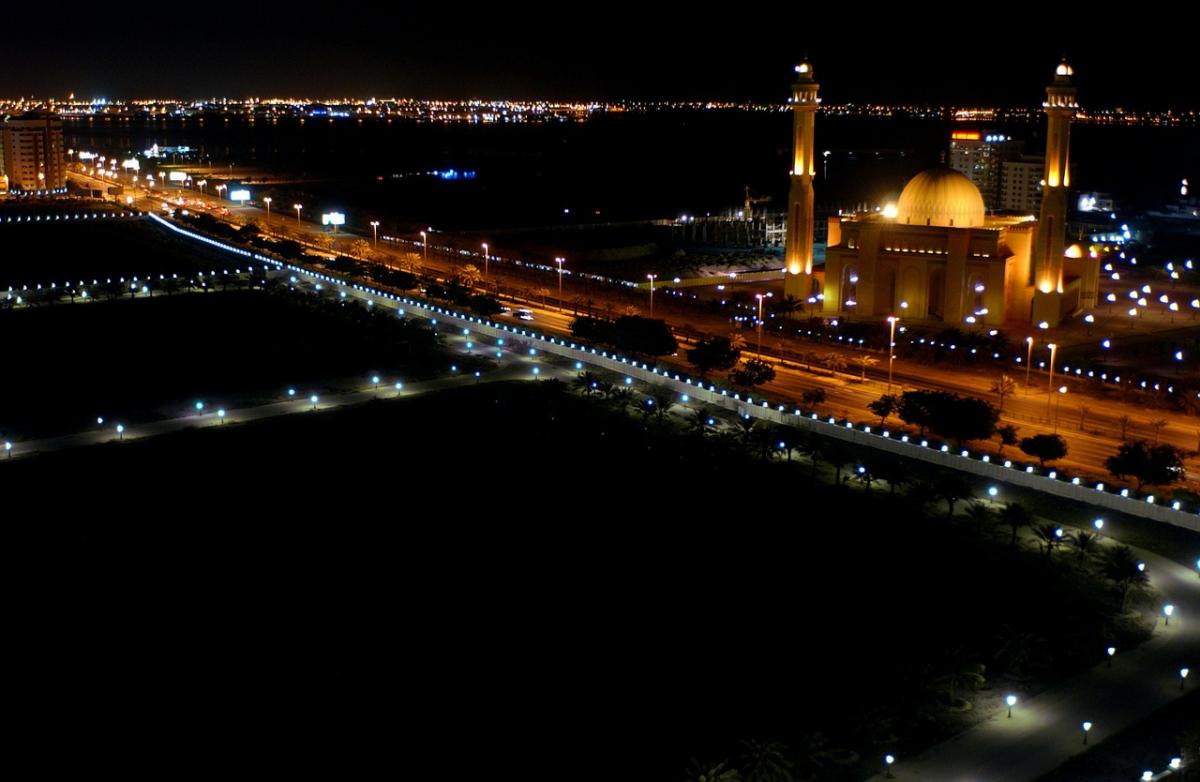
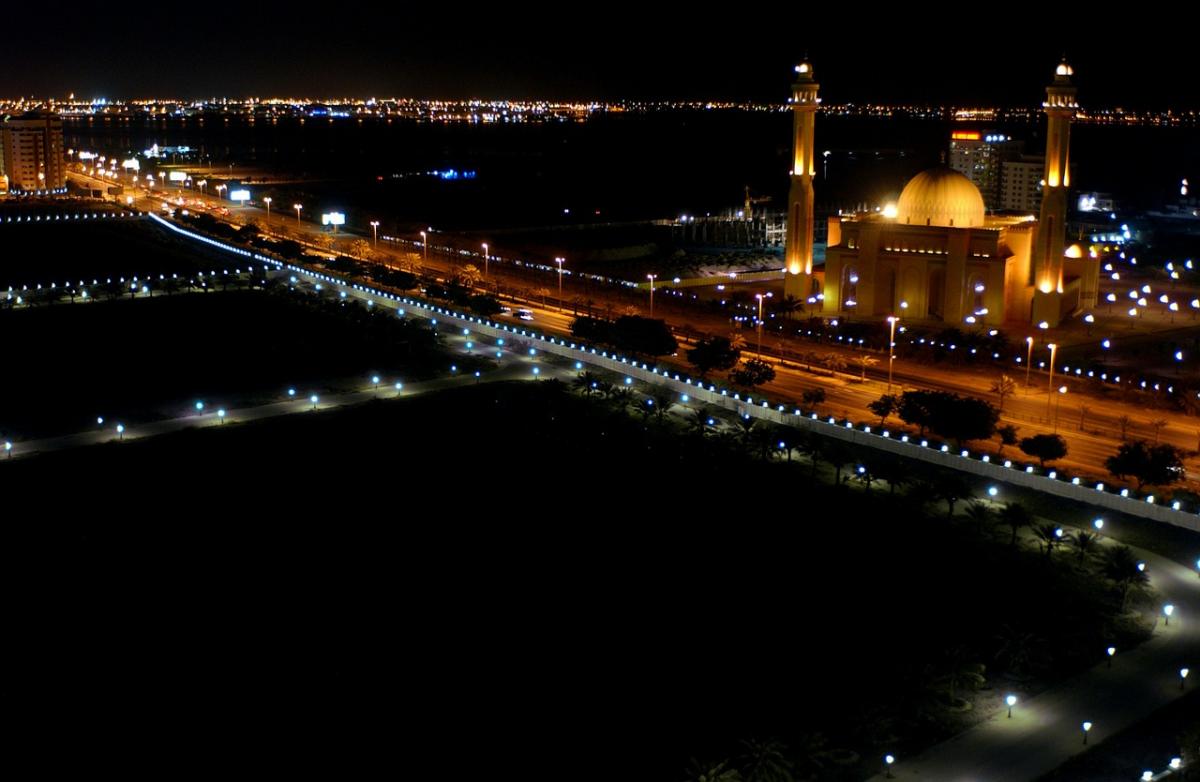
BahrainA group of independent UN human rights experts called upon Bahrain to put an end to rights violations and investigate events surrounding the "State of National Safety" declared in 2011. The experts warned against military courts exercising jurisdiction over civilians, and discrimination against women and the Shi'ite population. The report called for abolition of the death penalty, and a halt to the torture and ill-treatment of prisoners. While the "State of National Safety" officially ended after three months, the report noted an April 2017 amendment to the constitution granting military courts jurisdiction over civilians outside of a declared state of emergency. (Photo via Pixabay)

Greater Middle East

US unfreezes military aid to Egypt

Egyptian militaryThe Trump administration has decided to release $195 million in military aid to Egypt that had been frozen last year because of human rights concerns, the State Department announced July 25. The decision is intended to recognize "steps Egypt has taken over the last year in response to specific US concerns," the statement said. A high-level Egyptian military delegation had been in Washington for talks prior to the announcement. The funds, falling under Foreign Military Financing, are intended for Egypt to buy US-made military equipment. Human rights groups slammed the decision by Secretary of State Mike Pompeo, saying he had squandered valuable leverage over President Abdel Fattah el-Sisi at a time when his regime's rights record only seems to be worsening. (Photo: Egyptian Streets)

Greater Middle East

Syria endgame: whither Idlib?

Syria fighterWith the fall of Syria's southern province of Daraa to Assad regime forces, only Idlib in the north remains as a last pocket of opposition control. The besieged rebel forces there are anticipating a final offensive by Assad and his Russian backers. But a complicating factor is that Turkey is occupying areas of Idlib, which means an offensive there threatens international escalation. Speaking to reporters before heading for a summit of emerging market countries in South Africa, Turkey's Recep Tayyip Erdogan said he would speak there with Vladimir Putin about how to resolve "the issue of Idlib." This points to a possible carve-up deal, in which the bulk of Syria falls under Assad with Russian protection, Idlib remains under rebel control with Turkish protection, and the northeastern Rojava region will remain a Kurdish autonomous zone under US protection. (Photo: Syria News)

Greater Middle East

Yemen: demand investigation of UAE ‘war crimes’

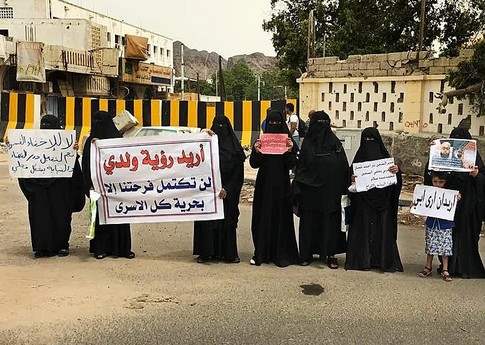
Yemen protest

A year after a network of secret prisons was first exposed in southern Yemen, Amnesty International has issued a report documenting continued rights violations in these facilities, including systemic forced disappearance and torture. The report details how scores of men have been arbitrarily detained by United Arab Emirates (UAE) and Yemeni forces operating outside the command of their own government. Many have been tortured, with some feared to have died in custody. Amnesty is calling for these violations to be investigated as war crimes. (Photo: Families of the disappeared protest outside presidential complex in Aden. Via Amnesty International)