

Inner Asia
Chamdo

Report: forced labor and relocation in Tibet

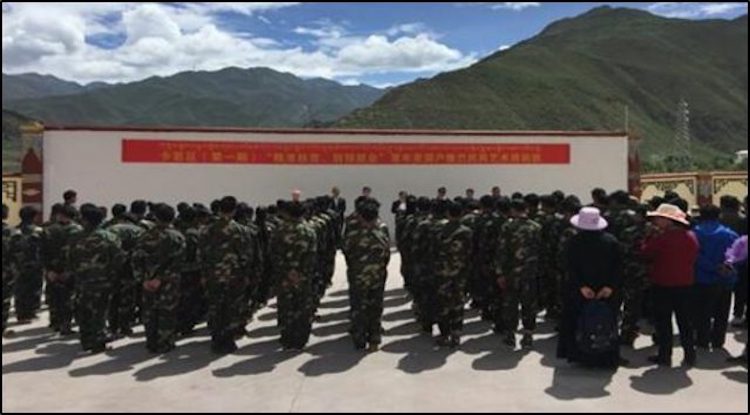
A new report by the Inter-Parliamentary Alliance on China and the Jamestown Foundation, a DC-based policy think-tank, has found evidence of a system of forced displacement and labor in Tibet, mirroring that put in place over the past two years in Xiinjiang. The report, entitled “Xinjiang’s Militarized Vocational Training System Comes to Tibet,” finds that over half a million people received instruction at “military-style” training centers as part of the program in the first seven months of 2020—around 15% of the region’s population. Of this total, almost 50,000 have been transferred to jobs away from their homes within Tibet, and several thousand have been sent to other parts of China. Many end up in low-paid labor, including textile manufacturing, construction and agriculture. Those targeted for the program are designated “rural surplus laborers,” which according to the report usually refers to traditional pastoralists and nomads. (Photo: military-style training of “rural surplus laborers” in the Chamdo region of Tibet, June 2016, via Phayul)
North America
ICDC

Forced sterilizations in ICE custody: reports

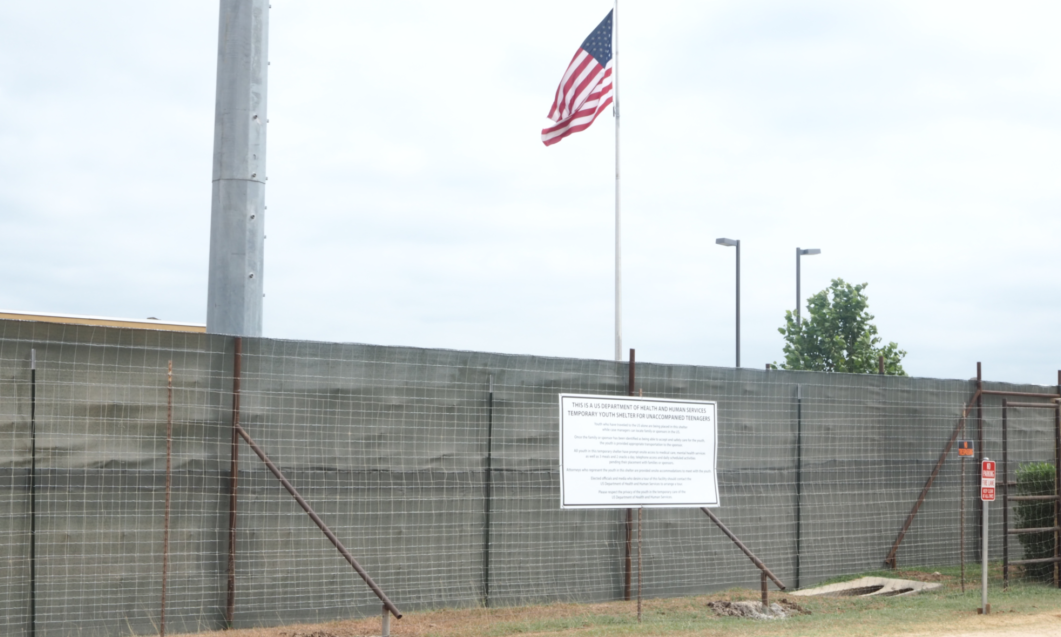
More than 170 members of the House of Representatives are demanding that the Department of Homeland Security carry out an immediate investigation into claims of “mass hysterectomies” at an Immigration & Customs Enforcement facility in Georgia. The allegations stem from a whistleblower complaint filed by advocacy group Project South on behalf of Dawn Wooten, a nurse who formerly worked full-time at the Irwin County Detention Center. “We are horrified to see reports of mass hysterectomies performed on detained women in the facility, without their full, informed consent and request that the Office of the Inspector General (OIG) conduct an immediate investigation,” a bloc of Democratic lawmakers wrote. Responding to the claims, Amnesty International emphasized that “forced sterilization can constitute a crime against humanity under international law.” (Photo via Texas Impact)

Greater Middle East
Lujain al-Hathloul

Saudi detention state under scrutiny

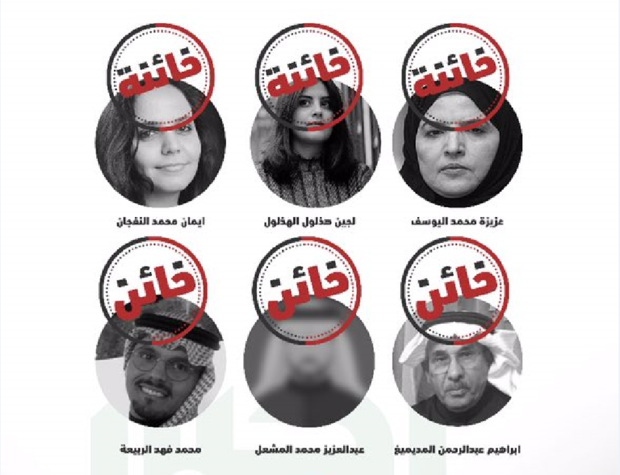
Saudi Arabia has denied prominent detainees contact with their family members and lawyers for months, Human Rights Watch said in a letter requesting access to the country and private prison visits with detainees. The situation raises serious concerns for the detainees’ safety and well-being, the rights group said. Saudi authorities have banned in-person visits with prisoners across the country since March to limit the spread of COVID-19. But Saudi activists and other sources say that authorities have also unduly denied numerous imprisoned dissidents and other detainees regular communication with the outside world. Prominent women’s rights activist Loujain al-Hathloul had been on hunger strike for six days before Saudi authorities finally allowed her parents to visit on Aug. 31, according to family members. Al-Hathloul had spent almost three months before that under incommunicado detention. (Image: social media post with the word “traitor” stamped on the faces of activists detained in 2018, including Loujain al-Hathloul, top center. Via Middle East Eye.)

Inner Asia
ET-Gulag-Archipelago

Uighurs charge China officials with ‘genocide’ at ICC

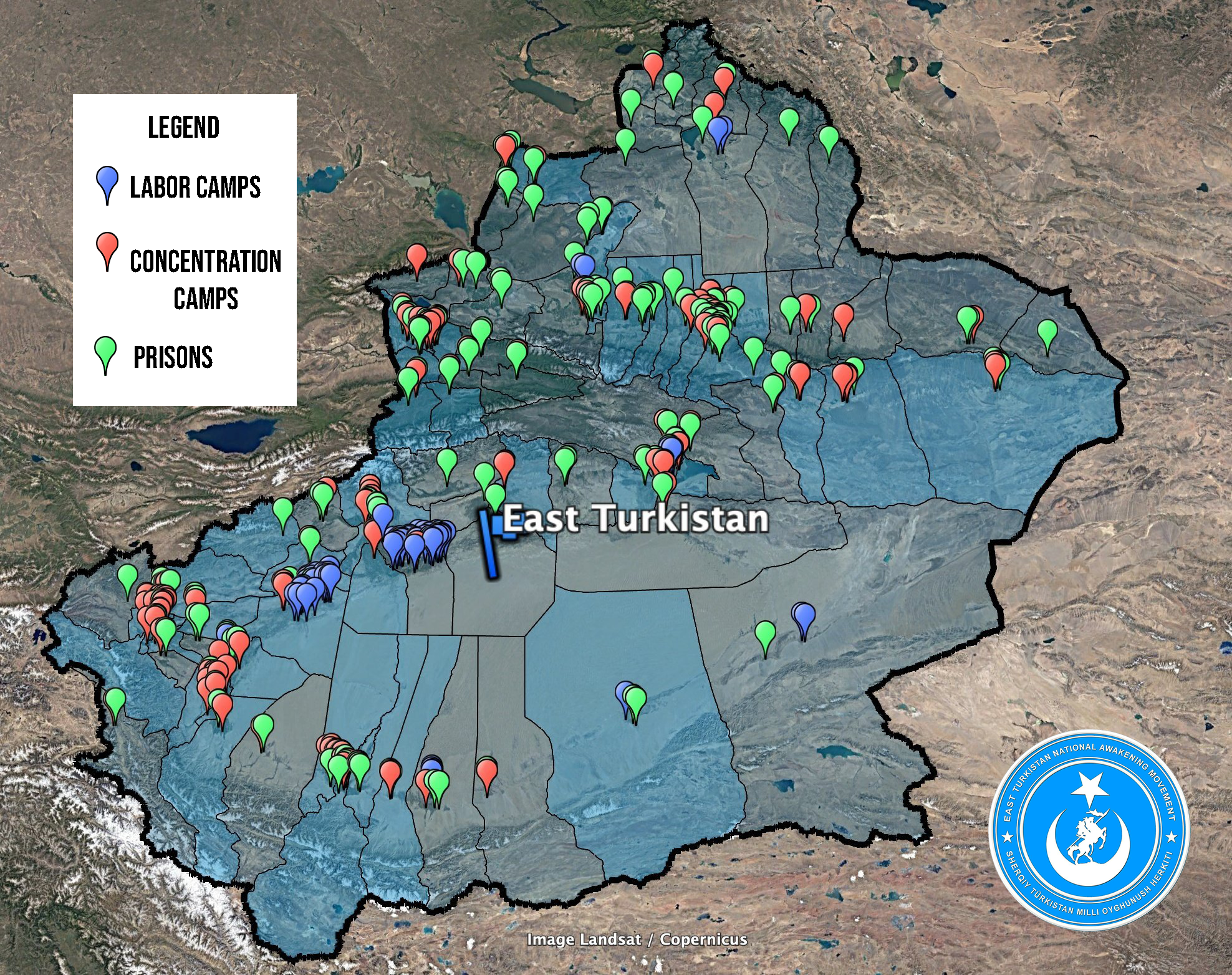
Lawyers submitted a complaint to the International Criminal Court (ICC), demanding that an investigation be opened into senior Chinese leaders for genocide and crimes against humanity, allegedly committed against the Uighurs and other Turkic peoples. The complaint was filed on behalf of the East Turkistan Government in Exile (ETGE) and the East Turkistan National Awakening Movement (ETNAM). China is not a signatory to the Rome Statute, but the lawyers argue that the ICC can exercise jurisdiction over these crimes because part of the criminal conduct occurred within the territory of two signatory states—Tajikistan and Cambodia. The complaint asserts that Uighur victims have been unlawfully deported to the People’s Republic of China from Tajikistan and Cambodia to face abuses including murder, unlawful imprisonment, torture, forced sterilization, and forced marriages. (Photo: ETNAM)

Planet Watch
peru exodus

Poor persecuted in COVID-19 police state

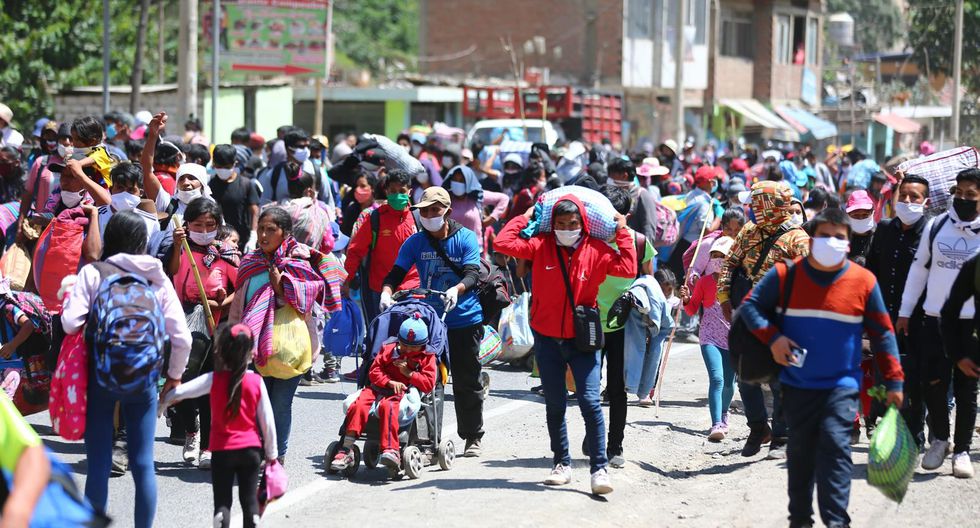
In countries across the world, the impoverished are in a grimly paradoxical position: disproportionately impacted both by COVID-19 and by the police-state measures imposed in response to the pandemic—and consequent economic pain. In Lebanon, which had been in the midst of a national uprising before the lockdown, protests have been re-ignited—and with far greater anger. In Venezuela and Argentina, harshly overcrowded prisons have exploded into uprisings over emergency restrictions that leave inmates incommunicado. As in India, stranded migrant laborers line the highways in Peru, defying lockdown orders that have left them destitute, far from home and without employment. UN Human Rights Commissioner Michelle Bachelet warns that “the public health emergency risks becoming a human rights disaster, with negative effects that will long outlast the pandemic itself.” (Photo: Rebelión)

Africa
OGFTZ

Worker uprising at Chinese FTZ in Nigeria

Aggrieved workers at a Chinese company in the Ogun-Guangdong Free Trade Zone, in Nigeria’s Ogun State, staged an uprising after they were locked within the complex, ostensibly under emergency measures to contain COVID-19. Several vehicles and a sentry box were set ablaze. The incident comes amid tensions between Nigeria and China over reports of Nigerian nationals in Guangzhou facing discrimination and harassment, apparently because of unfounded rumors that they are carrying the coronavirus. (Photo via Instagram)

Watching the Shadows
PNP_Checkpoints

Global COVID-19 police state escalates

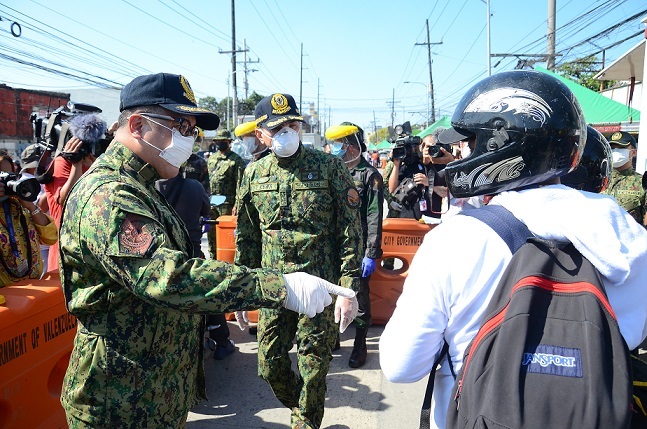
Mounting police-state measures in response to the COVID-19 pandemic are now resulting in stand-offs between executive and judicial authorities. In El Salvador, President Nayib Bukele is openly defying Supreme Court rulings to respect fundamental rights while enforcing the lockdown. His security forces have arbitrarily detained hundreds in containment centers, where rights observers charge they face an increased risk of spreading COVID-19. Israel’s High Court of Justice ruled that the government may not continue using tracking capabilities developed by the internal security service Shin Bet in efforts to contain COVID-19, imposing a deadline for Prime Minister Benjamin Netanyahu to seek legislative approval for the practice. In the Philippines, President Rodrigo Duterte, already threatening to shoot lockdown violators, has escalated to warning of an imminent declaration of martial law. (Photo: Philippine National Police via Wikipedia)

Syria
Syria prisoners

Demand urgent action to protect Syrian detainees

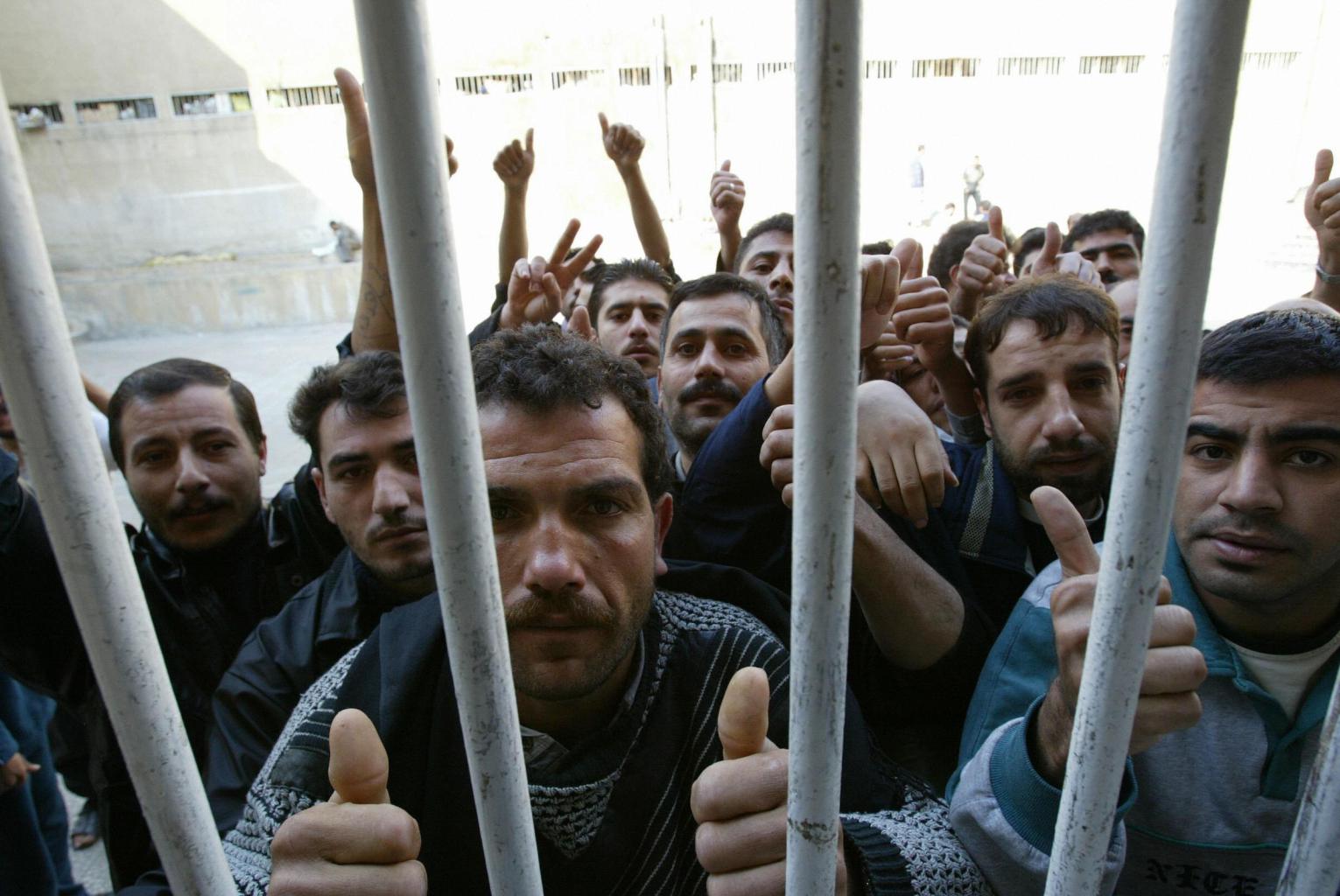
The Syrian regime has announced the first case of COVID-19 in the country after weeks of denial, and advocates in the diaspora believe the real number of cases is likely higher. The UK-based Syria Campaign writes that an outbreak in Syria could mean “horror beyond imagination.” Thousands of displaced families living in overcrowded camps cannot self-isolate. Health infrastructures in the country have collapsed due to the systematic targeting of hospitals by the regime and Russia. Especially vulnerable are the nearly 100,000 detainees and forcibly disappeared, many of whom are held in cramped underground centers where they are exposed to horrific conditions including torture and deprivation of proper food, water, hygiene, and medical care. These cells are already perfect breeding grounds for viruses and illnesses, and if coronavirus spreads containment will be impossible. (Photo of hunger strikers at Syrian prison via Foreign Policy. Credit: Louai Beshara/AFP/Getty Images)

New York City
Essex County jail

ICE detainees in Newark on hunger strike

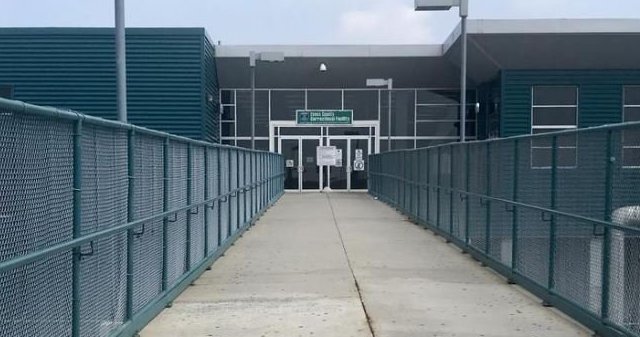
At least 10 detainees at the Essex County Correctional Facility in Newark, NJ, began a hunger strike and dozens more have agreed to join in, according to detainees, jailhouse advocates and attorneys. They are demanding to be released on bond, possibly with ankle bracelets to track their movements, and some even said they’re ready to be deported. Inside the jail, they have been following news reports on the COVID-19 pandemic, and say they’d rather die on the outside with family than locked in cells. They also say that if loved ones die, they want to be with them rather than hearing the bad news later. Essex County has a multi-million dollar contract with ICE to house detainees awaiting immigration proceedings. (Photo: Gothamist)

Watching the Shadows
Coronavirus

Podcast: COVID-19 and impending bio-fascism

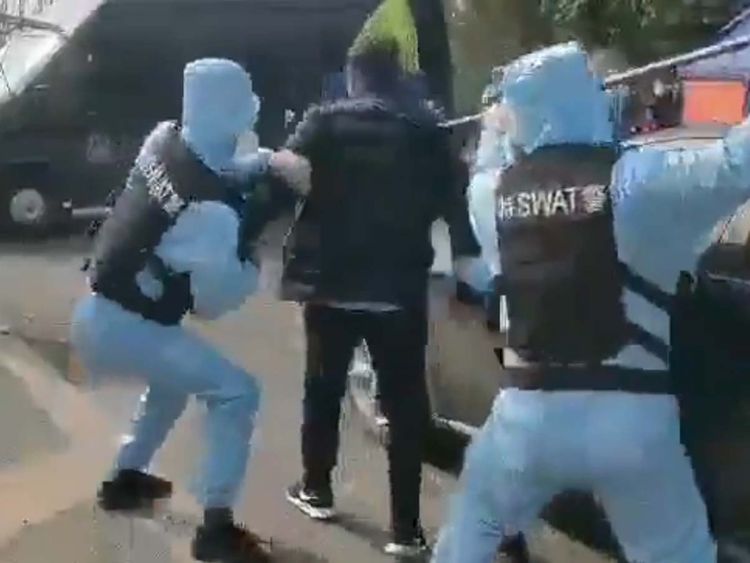
In Episode 49 of the CounterVortex podcast, Bill Weinberg discusses the grim political implications of the COVID-19 outbreak and resultant hysteria. Even before the outbreak, China had detained perhaps upwards of a million ethnic Uighurs in concentration camps as a “counter-terrorist” measure. Under emergency measures imposed in response to the outbreak, a staggering half-billion people have been placed under lockdown in Hubei and surrounding provinces. Italy has now just imposed a similar lock-down, affecting 16 million people in the country’s north. Here in the United States, where Trump is building an incipient concentration camp system for detained migrants, the White House has thus far been trying to downplay the COVID-19 threat—as Xi Jinping did before the depth of the crisis became inescapable. If such a point is reached here as well, the posture of the Trump administration could change fast—with potential for sweeping lockdowns, mass internment of targeted populations, and even exploitation of the crisis as a “Reichstag Fire” to throw or suspend the 2020 elections. The coronavirus hysteria could be a terrifying advance for the global detention state, and progressives must urgently formulate a response. Listen on SoundCloud, and support our podcast via Patreon. (Photo: Chinese police demonstration video, via Twitter)

East Asia
wenzhou

China: internal resistance to bio-police state

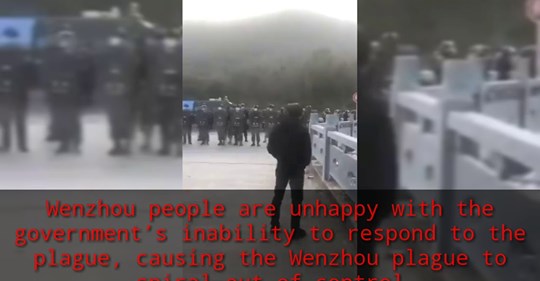
“Citizen journalists” and “netizens” in China who are critical of the government’s handling of the COVID-19 (coronavirus) outbreak are being “disappeared”—but online criticism is spreading faster than official censors can contain it, in by far the biggest eruption of dissent under Xi Jinping’s rule. At least one city, Wenzhou, has seen a street protest over the draconian controls the government is instating, in open defiance of the lock-down. Even voices from within China’s political establishment are saying this could be the biggest challenge to the regime’s legitimacy since 1989. (Image via YouTube)

South Asia

Modi and Bolsonaro: twin threat to tribal peoples

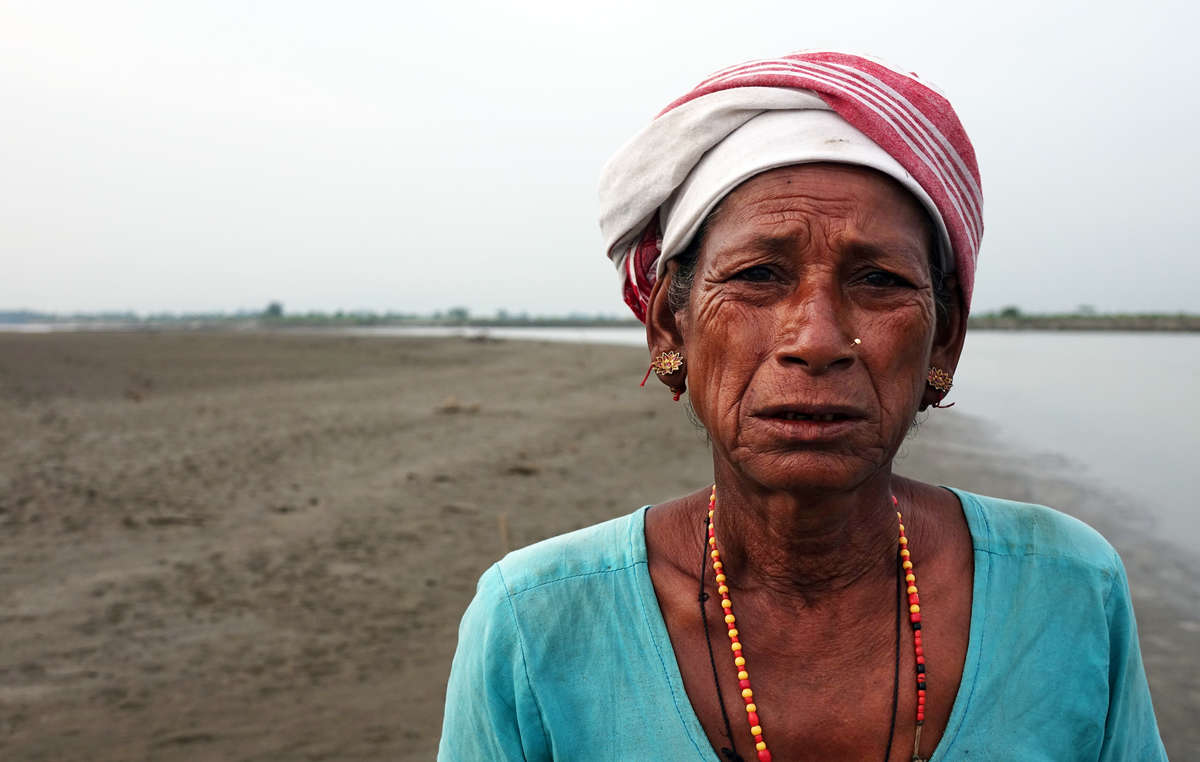
India’s Prime Minister Narendra Modi and Brazilian President Jair Messias Bolsonaro met in New Delhi, pledging a “new chapter” in cooperation between their two countries, especially naming counter-terrorism and exploitation of minerals, hydrocarbons and other natural resources. The juxtaposition of security concerns and extractivism is telling, as both leaders prepare to repress opposition to their plans to open the traditional territories of indigenous peoples to industrial interests. (Photo: Survival International)