Syria
Idlib displaced

Syria: thousands flee intensified Idlib offensive

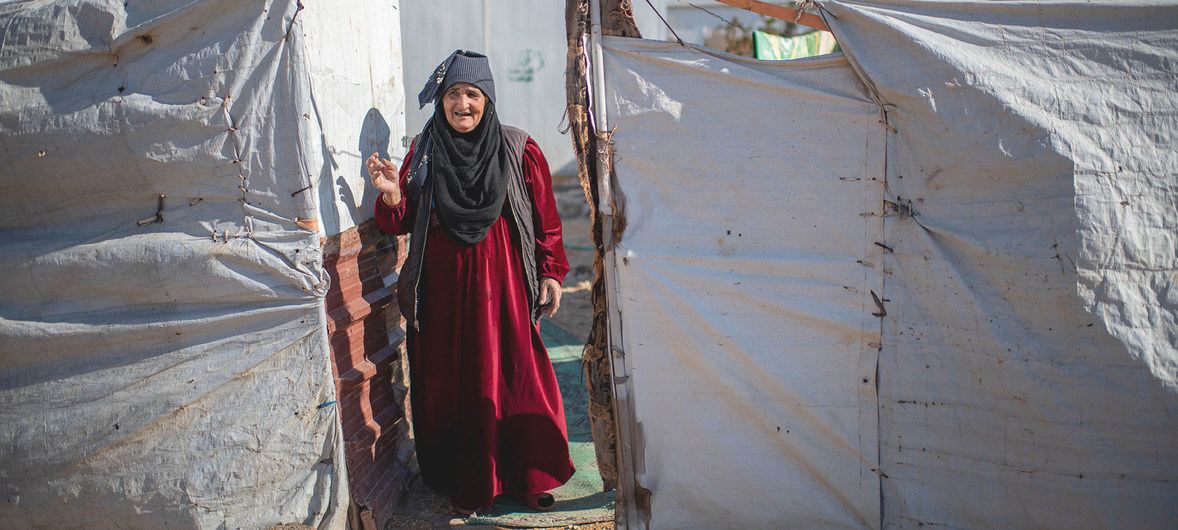
More than 235,000 people have fled from their homes in Syria’s rebel-held Idlib province over the past days, as the Assad regime and Russia escalate their campaign of aerial bombardment. A report from the UN Office for the Coordination of Humanitarian Affairs states that Ma’arrat An Nu’man and other towns in the province are now “almost empty,” while internally displaced persons (IDP) camps in the extreme northwest of the province are rapidly swelling. “Displacement during winter is further exacerbating the vulnerability of those affected,” the report states. Perversely, the renewed offensive comes days after Russia and China vetoed a UN Security Council resolution that would have extended cross-border aid convoys into Idlib from Turkey for another year—essentially condemning many of those not directly killed by the bombs to death by starvation and exposure. (Photo: UNHCR)

Watching the Shadows

Podcast: against the global detention state

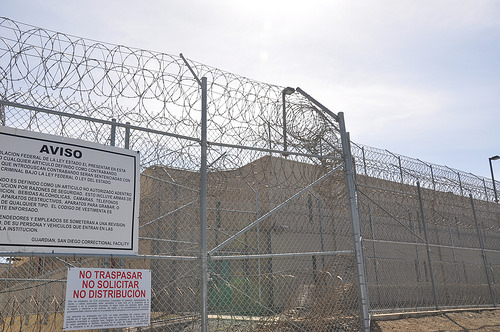
In Episode 45 of the CounterVortex podcast, Bill Weinberg notes with alarm the rapid consolidation of a global detention state, extending across borders and rival power blocs. In the United States, Trump moves toward indefinite detention of undocumented migrants, with horrific rights abuses widespread in the fast-expanding camp system. In China, up to a million Uighurs have been detained in “re-education camps,” and are facing such abuses as forced sterilization. As India hypocritically protests China’s treatment of the Uighurs, it is also preparing mass detention of its own Muslim population. Russia’s Vladimir Putin is similarly preparing mass detention of the Crimean Tatars. In Syria, the Bashar Assad regime has detained hundreds of thousands, and is carrying out a mass extermination of prisoners, almost certainly amounting to genocide. In Libya, countless thousands of desperate migrants have been detained, often by completely unaccountable militias, and an actual slave trade in captured Black African migrants has emerged. Yet Trump exploits the mass internment of the Uighurs to score propaganda points against imperial rival China—and some “leftists” (sic) in the US are so confused as to actually defend China’s detention state. International solidarity is urgently needed at this desperate moment to repudiate such divide-and-rule stratagems. Listen on SoundCloud, and support our podcast via Patreon. (Photo of Homeland Security’s Otay Mesa Detention Center from BBC World Service via Flickr)

South Asia
CAA

Protests sweep India over citizenship law

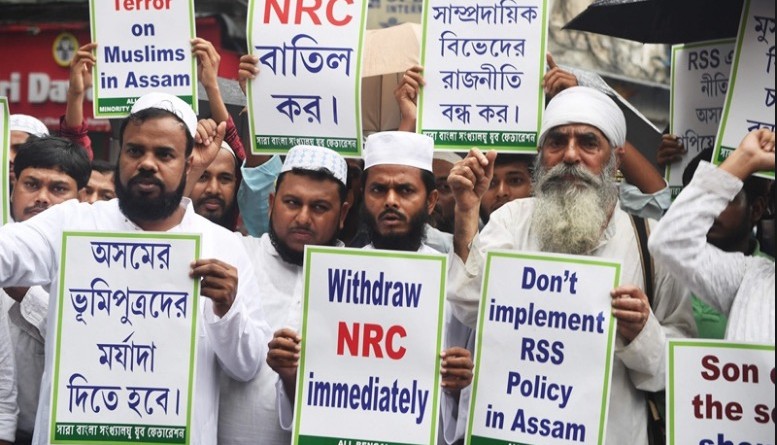
India’s northeastern state of Assam has exploded into protest over the passage of a new national citizenship law. The army has been deployed, a curfew imposed in state capital Guwahati, and internet access cut off. At least five people have been killed as security forces fired on demonstrators. The new law allows religious minorities from Pakistan, Bangladesh and Afghanistan to apply for Indian citizenship. This means it effectively excludes Muslims, and mostly apples to Hindus and Sikhs. Critics of the ruling Hindu-nationalist government say it therefore violates India’s founding secular principles. But while secularists and Muslims are protesting the Citizenship Amendment Act on this basis elsewhere in India, the biggest protests have been in Assam—motivated by fear that the state will be overrun by an influx from Bangladesh, threatening its cultural and linguistic identity. (Image: Sowmya Reddy)

North Africa
Libya migrant center

Controversy at UN migrant facility in Libya

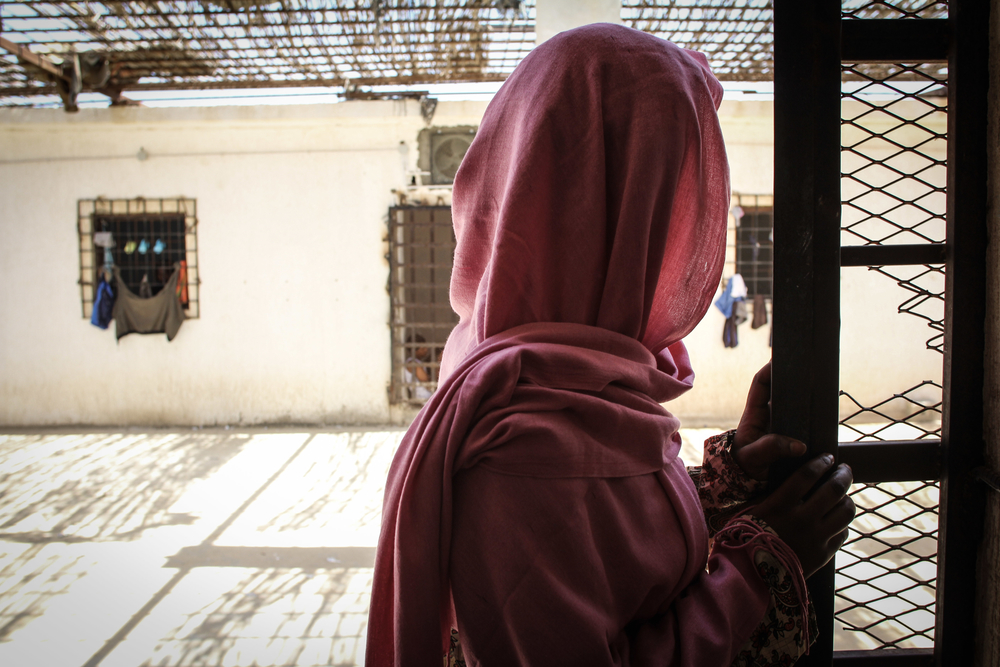
The UN’s holding facility for undocumented migrants in Libya was unveiled last year as an “alternative to detention,” but critics now say it is coming to mirror the notoriously harsh detention centers it was supposed to replace. The facility is overcrowded with nearly 1,200 migrants—about twice the number it was built for—including hundreds who fled from abuse at other detention centers in hopes of sanctuary. Conditions inside are deteriorating fast, and there are accusations that the UN refugee agency, UNHCR, is planning to force migrants, refugees, and asylum-seekers to leave by cutting off food (a claim the agency denies). The people inside are among an estimated 600,000 migrants in Libya, including more than 45,000 registered refugees and asylum-seekers. Some have come in search of work, others are hoping to make the incredibly dangerous trip to Europe. Those who risk it are often “rescued” by the Libyan coast guard and returned to land, and end up in the country’s oppressive detention centers—which is among the reasons a recent French plan to give the Libyan coast guard more boats met with strong opposition. (Photo: Sara Creta/MSF via TNH)

South Asia
Gandhi

Podcast: against Narendra Modi’s Gandhi-exploitation

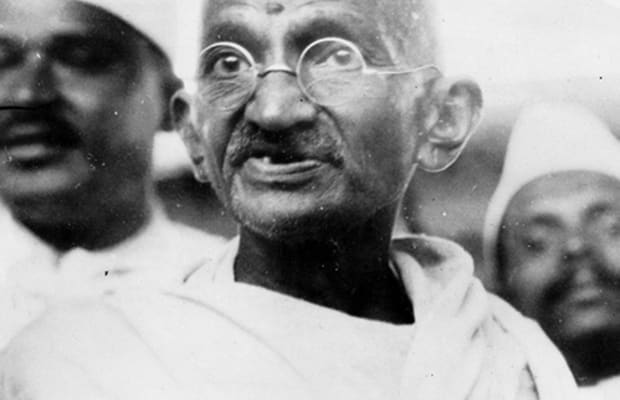
Amid moves toward mass detention of Muslims in Kashmir and Assam, a growing atmosphere of terror, and persecution of government critcs, India’s arch-reactionary Prime Minister Narendra Modi cynically places an op-ed in the New York Times extolling Mohandas Gandhi on his 150th birthday. In Episode 40 of the CounterVortex podcast, Bill Weinberg calls this out as Orwellian propaganda, and documents the historical reality: Modi is not the inheritor of the tradition of Gandhi, but that of his assassin. Those who assert that Modi’s Bharatiya Janata Party has fascist roots are factually correct. Progressives in recent years have been rethinking the sanctification of Gandhi, and that is one thing. But Modi should not be allowed to get away with wrapping himself in the legacy of a man who was the antithesis of everything he represents. And US political figures like Tulsi Gabbard who pretend to be progressives while embracing the fascistic Modi must be exposed and repudiated. Listen on SoundCloud, and support our podcast via Patreon.. (Photo via Biography.com)

Europe

Scores of Ukrainian detainees remain in Russia

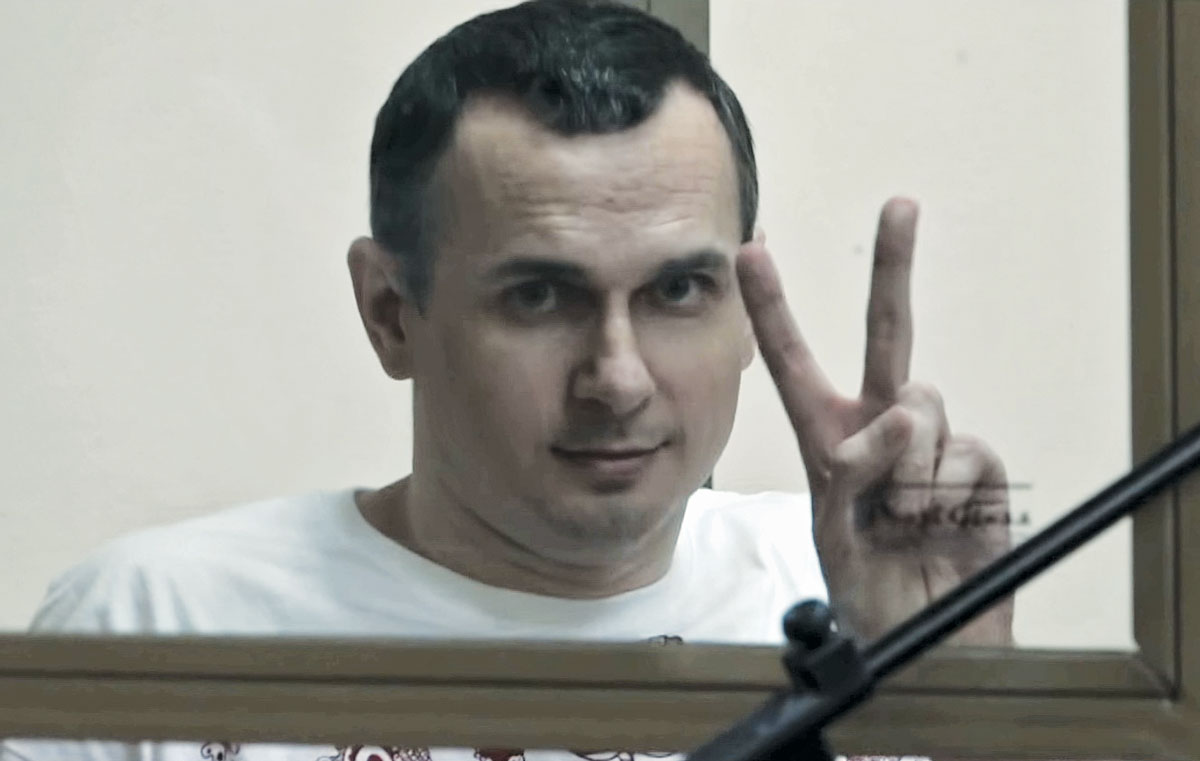
Ukrainian filmmaker Oleg Sentsov was among 70 detainees from Russia and Ukraine released in a prisoner swap—35 from each side. Last year, Sentsov spent 145 days on a hunger strike, demanding the release of all Ukrainians held in Russia and Russian-annexed Crimea on politically motivated charges. Human Rights in Ukraine decried the fact that, despite the swap, at least 87 Ukrainian political prisoners remain imprisoned in Russia or occupied Crimea, in addition to at least 225 hostages held by Russian-backed separatists in the Donbas region. In light of this reality, the group called the “upbeat noises” in Western media about a “normalization” in Ukrainian-Russian relations “at very least premature.” (Photo via Kyiv Post)

Inner Asia
China prison

India, China mirror each other in Islamophobia

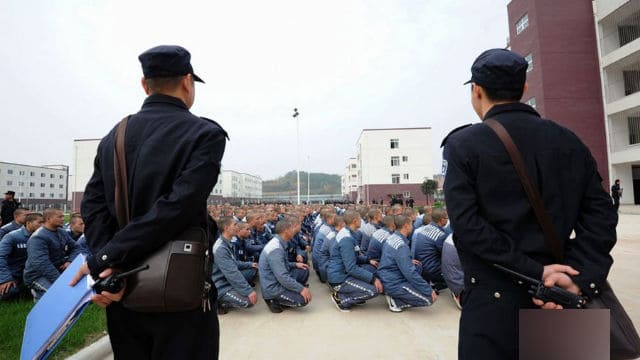
Well, this is grimly hilarious. Genocide Watch has issued two “warning alerts” for India—one for Kashmir and the other for Assam, with Muslims held to be at grave imminent risk of persecution and mass detention in both. Pakistan’s semi-official media are jumping all over this news, which is hardly surprising. But Pakistan is closely aligned with China due to their mutual rivalry with India, so it is also hardly surprising that Pakistani media have failed to similarly jump on the Genocide Watch report on the Uighurs of Xinjiang—despite the fact that the group categorizes the situation there as “preparation” for genocide, a more urgent level than “warning.” China itself has issued a protest to India over the situation in Kashmir. Delhi shot back that Kashmir is an internal matter. Beijing has been similarly dismissive of India’s protests over the mass detention in Xinjiang.  (Photo via Bitter Winter)

South Asia

Muslims face mass detention in India’s Assam

In the coming days, up to four million Muslims in India’s northeastern state of Assam could find themselves officially stateless, and facing detention or expulsion from the country. Last year, the Assam state government published a National Registry of Citizens—excluding the state’s Muslims, who now have until Aug. 31 to prove their residence in India before a 1971 cut-off point. State authorities are planning huge new detention camps for those deemed aliens. Rights groups are warning of a “Rohingya-like refugee crisis” in the making. Like the Rohingya of Burma, Assam’s Muslims are considered by authorities to be Bangladeshi citizens—yet this citizenship is not recognized by Bangladesh. (Photo via KashmirWatch)

Watching the Shadows

SCOTUS lets stand Guantánamo detention

The Supreme Court denied certiorari in the case of Moath Hamza Ahmed al-Alwi, a Yemeni who has been held as an “enemy combatant” at Guantánamo since 2002. Al-Alwi was captured in Pakistan in late 2001, and the government concluded that he had fought in Afghanistan as part of a Qaeda-commanded unit. Al-Alwi denied this unsuccessfully during his original round of habeas corpus proceedings, and in 2015 initiated a new habeas case arguing that the nature of US involvement in Afghanistan had changed such that the use of military detention is no longer justified under the 2001 Authorization for Use of Military Force (AUMF). The US Court of Appeals for the DC Circuit disagreed, and the Supreme Court has now declined to review the appellate court’s conclusion. (Photo via Jurist)

Inner Asia

China fast expanding detention camp system

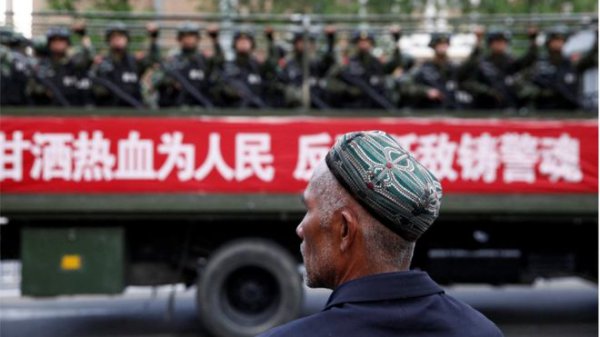
With China accused of detaining hundreds of thousands of Uighur Muslims without trial in its western province of Xinjiang, a BBC investigation analyzed satellite data to determine that the detention camp system in the region is rapidly expanding. Reviewing images from the European Space Agency's Sentinel satellite service, the BBC finds at least 40 such facilities across Xinjiang, half built within last two years—with a big thrust of construction just in the past six months. Among the largest is a "massive, highly secure compound" still being built at Dabancheng, about an hour's drive from the provincial capital, Urumqi. It is enclosed within a two kilometer-long exterior wall punctuated by 16 guard towers. (Photo via UNPO)

North America

Japanese-Peruvian veteran of US concentration camps dies waiting for justice

Isamu (Art) Shibayama, a rights advocate for Latin Americans of Japanese descent who were detained in prison camps in the United States during World War II, died July 31 at his home in San Jose, Calif. Born in Lima, Peru, in 1930, Shibayama was 13 when his family was detained and forcibly shipped to the United States. They were among some 2,000 Japanese-Peruvians who were rounded up and turned over to the US military for detention after the Pearl Harbor attack. Upon their arrival in New Orleans, the family was transported to the “internment camp” for Japanese-Americans at Crystal City, Texas. The family would remain in detention until 1946. Shibayama eventually won US citizenship, but was denied restitution for his wartime detention on the basis that he had not at the time been a US citizen or legal resident. He was still seeking justice from the Inter-American Commission on Human Rights at the time of his death. (Photo via the New York Times)

Greater Middle East

Yemen: demand investigation of UAE ‘war crimes’

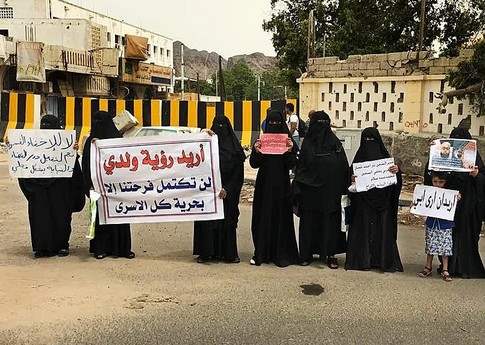
A year after a network of secret prisons was first exposed in southern Yemen, Amnesty International has issued a report documenting continued rights violations in these facilities, including systemic forced disappearance and torture. The report details how scores of men have been arbitrarily detained by United Arab Emirates (UAE) and Yemeni forces operating outside the command of their own government. Many have been tortured, with some feared to have died in custody. Amnesty is calling for these violations to be investigated as war crimes. (Photo: Families of the disappeared protest outside presidential complex in Aden. Via Amnesty International)