Planet Watch
Nairobi

World war or world revolution?

In Episode 239 of the CounterVortex podcast, Bill Weinberg provides an overview of the protest waves and uprisings going on across the planet—in Kenya, Uganda, Nigeria, Bangladesh, India, China, Serbia, Venezuela, and in Israel. This as worldwide protests in solidarity with the Palestinians of Gaza continue. Amid ongoing protests against Netanyahu in Israel, there have also been protests against Hamas in Gaza. Despite internal dangers and contradictions in all these upsurges, there is a sense that we could be approaching a revolutionary moment such as that seen in 2011—the year of the Arab Spring and Occupy Wall Street. And with the planet on an accelerating trajectory toward world war, the linking of these upsurges through conscious solidarity and the infusion of anti-war content to their demands is urgently mandated. Listen on SoundCloud or via Patreon. (Photo via Twitter)
Africa
west africa

West Africa: dissidents detained, disappeared

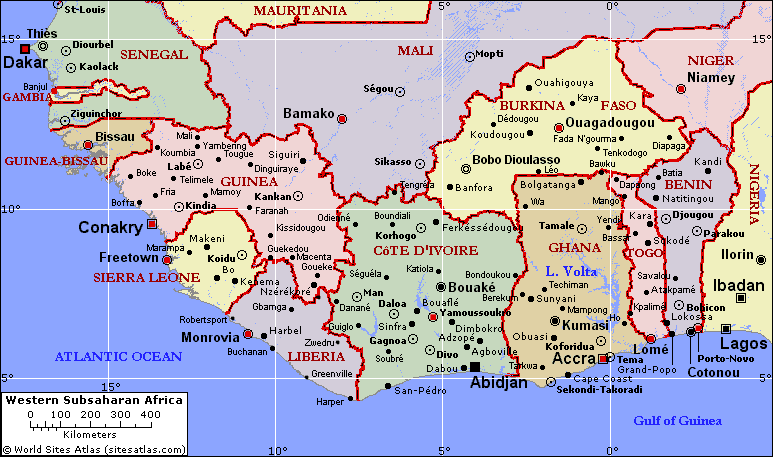
Amnesty International urged Malian authorities to immediately release dissident Youssouf Daba Diawara and 11 other arbitrarily detained opposition politicians. According to the statement, Mali’s junta has been arbitrarily holding these political figures solely for exercising their civil rights. Diawara was forced from his car by armed men in Bamako and taken to the Gendarmerie’s Criminal Investigations Brigade. He was charged with “opposition to legitimate authority” for participating in a protest against power cuts and inflation. The UN High Commissioner for Human Rights has also expressed concern over the “disappearance” of activists in neighboring Guinea. Both Mali and Guinea have been led by military juntas since coups d’etat in 2020 and 2021, respectively. (Map: World Sites Atlas)

South Asia
AJK

Uprising in Pakistan-controlled Kashmir

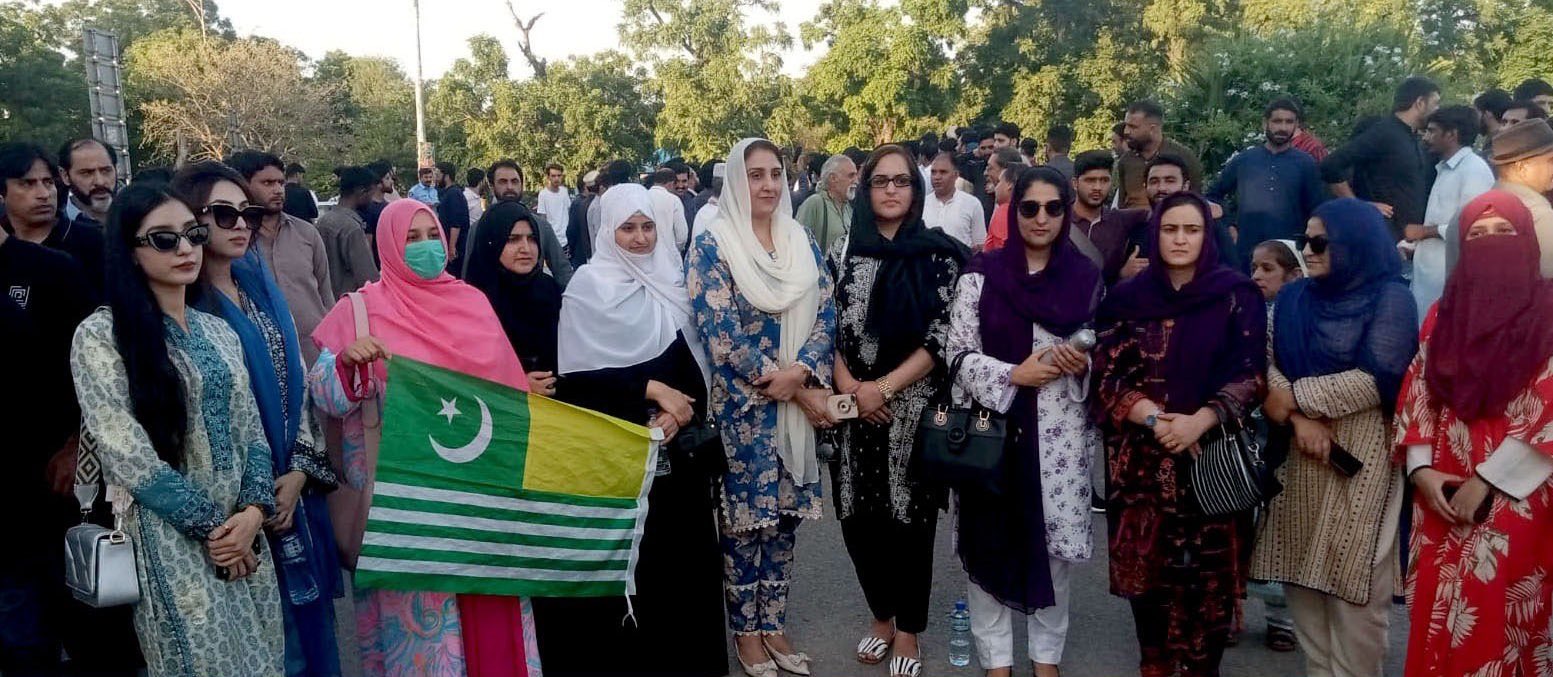
Three protesters were killed and six injured as Pakistani security forces fired on crowds during angry street demonstrations in Muzaffarabad, capital of Azad Jammu & Kashmir (AJK). The paramilitary Rangers were mobilized to Muzaffarabad after a police officer was killed amid protests over high food, fuel and electricity prices. A “wheel-jam and shutter-down” strike had been called by the Jammu Kashmir Joint Awami Action Committee (JAAC), but was called off as Islamabad agreed to a Rs 23 billion ($86 million) subsidy for the region. The new deadly violence erupted just as the Rangers were starting to withdraw from Muzaffarabad. A curfew remains in place in the city. (Photo of vigil for slain protesters via Twitter)

East Asia
china labor

Wildcat labor actions spread in China

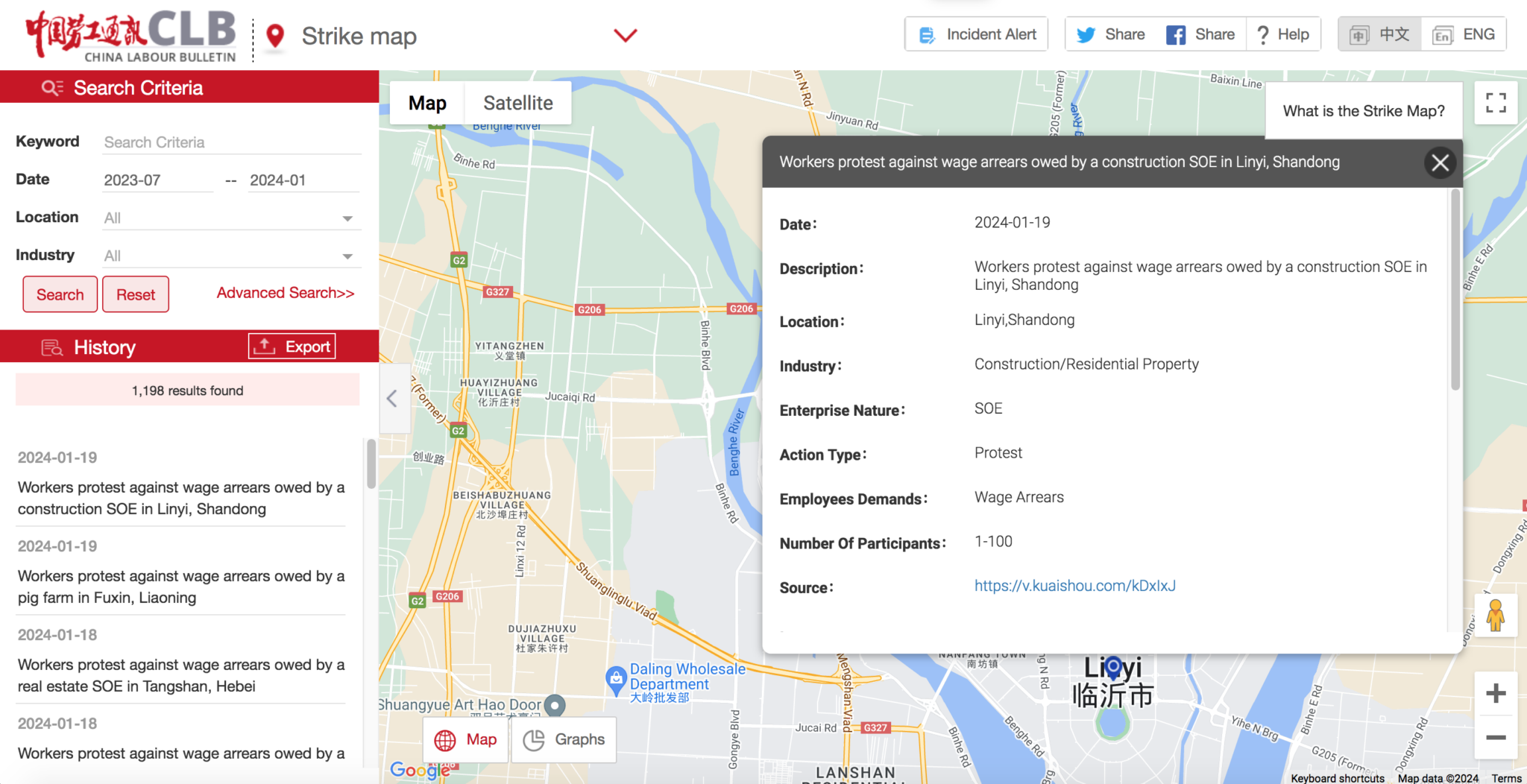
Although winning no coverage in English-language media, labor actions are spreading across China in the current economic downturn in the People’s Republic. This week, workers hung banners outside the headquarters of the Guilin No. 3 Construction Company in Guangxi province to demand payment of outstanding wages owed to hundreds of employees. On the same day, migrant workers in Jinan, Shandong province, raised banners in the city’s central business district demanding payment of backlogged wages by the China Railway Construction Corporation. By definition, such actions are not authorized by the state-controlled All-China Federation of Trade Unions (ACFTU). Numerous such recent actions were described at the symposium “Non-violent Resistance, High-Tech Totalitarianism and China’s Future,” held last weekend in Washington DC. (Image: China Labour Bulletin)

Africa
Mozambique

Mozambique: post-election protests turn deadly

Violence broke out in Mozambique’s capital Maputo between security forces and demonstrators protesting the results of nationwide local elections. Confrontations were also reported in the cities of Nampula and Nacala. Police are accused of using disproportionate force, including tear-gas and live bullets, and at least three people are reported dead, including a 10-year old boy. Demonstrations were called by the opposition Mozambican National Resistance (RENAMO) after the National Elections Commission announced that the ruling Liberation Front of Mozambique (FRELIMO) won in 64 of the country’s 65 municipalities. RENAMO and other oppositions parties denounced the results, claiming there was fraud. RENAMO, a former guerilla army that reorganized as a political party after the end of the civil war in 1991, briefly returned to arms following contested elections in 2016. (Image: via Flickr)

Africa
#OccupyJulorbiHouse

‘Occupy’ protests hit Ghana

Hundreds held a three-day protest campaign in Ghana’s capital, Accra, to denounce harsh economic conditions and the “moral decay” of the country’s leadership. With placards reading “Ghana deserves better,” protesters attempted to march on the seat of government, Golden Jubilee House, intending to “occupy” it—but riot police and armored vehicles barred their way. In response, demonstrators sat down in the road, effectively shutting down the area for hours. Over 50 were arrested when police finally cleared the intersection. (Photo: Jurist via GhanaWeb TV)

Syria
idlib

Syria: revolution reborn

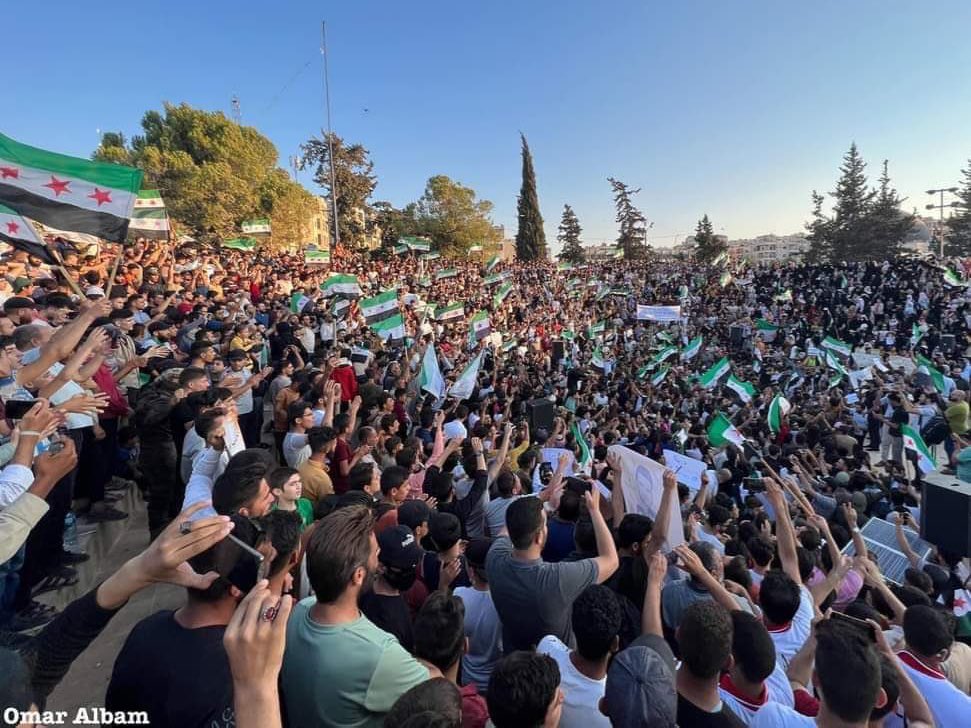
The Free Syria flag again flew high in villages, towns and cities across the country, as thousands filled the streets, reviving the chants of the revolution. Protests first erupted in the regime-held south of the country, especially the Druze-majority city of Suwayda. They were triggered by a recent increase in fuel prices as the regime has yet again cut subsidies. But the protests soon escalated to renewed calls for the downfall of the Bashar Assad dictatorship, and spread to other regime-held cities—including Aleppo, the country’s largest, which was savagely bombarded by regime and Russian warplanes in 2015-6. Demonstrations in support of the new uprising were also mobilized in the opposition-held northern pocket of the country. (Photo of Idlib demonstration by Omar Albam, via Leila’s blog)

Africa
Kenya

Cover-up of police killings seen in Kenya unrest

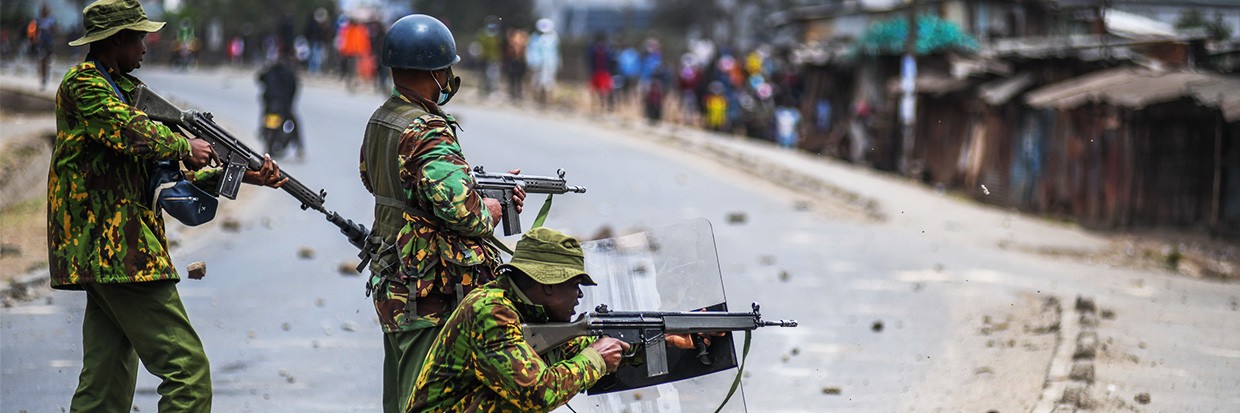
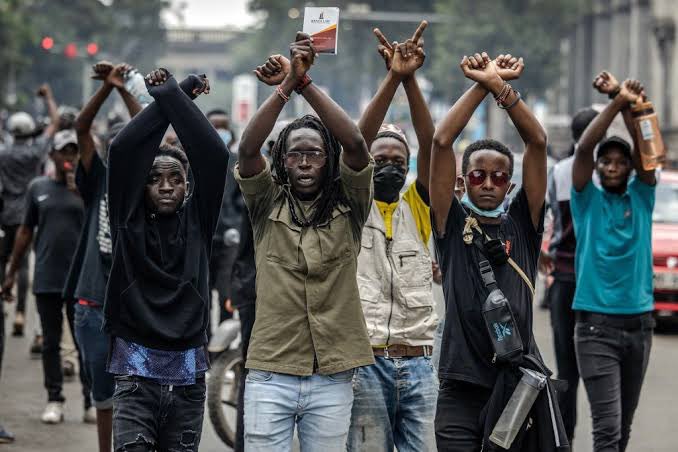
A Kenyan police official told the Associated Press that police received a warning against reporting deaths that have occurred during protests over the high cost of living under the government of President William Ruto. Although it was unclear who issued the direct order, it came after opposition leader Raila Odinga called for three days of protests. Since Ruto’s election last year, Kenya has witnessed tax increases and a steep rise in petrol prices. The demonstrations, and the brutal response from the state, have seen at least 30 people killed since March, according to Amnesty International. The UN says 5.4 million people need urgent food aid in Kenya following five consecutive seasons of drought. (Photo: OHCR)

Europe

Water also at issue in France protests

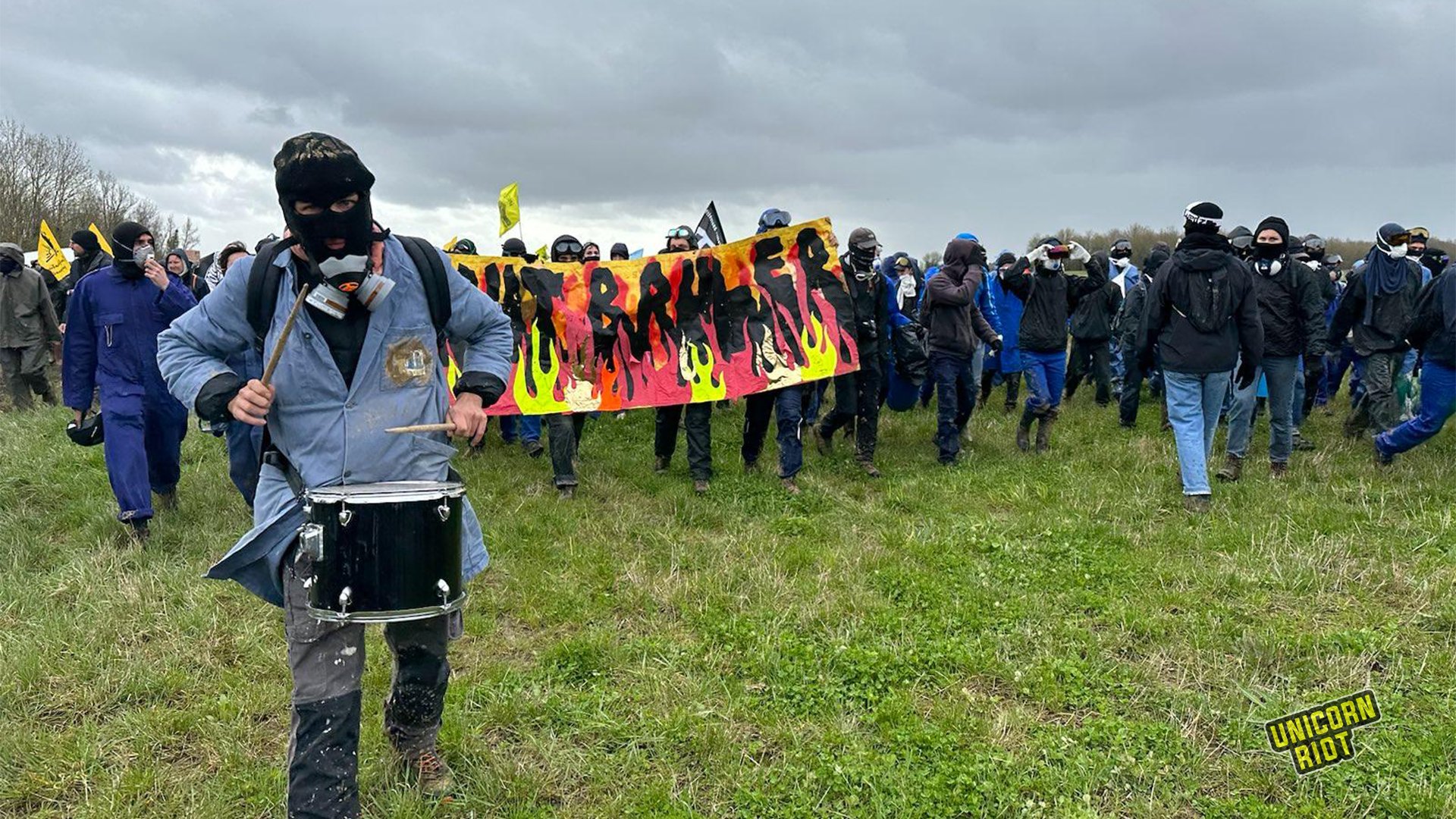
Amid nationwide protests over the government’s pension reform in France, clashes between demonstrators and police are reported from the rural commune of Saite-Soline, in the western department of Deux-Sèvres. Thousands defied an official ban to mobilize against construction of new water storage “basins” for crop irrigation. In the ensuing fracas, security forces deployed helicopters and tear-gas, and several protesters were wounded, some seriously. Authorities said gendarmes were injured as well, and patrol cars set ablaze. Some protesters reportedly dug up and dismantled a section of pipe that had been laid to feed the reservoir, and marched with the severed segments held aloft. Interior Minister Gérald Darmanin described the scene as “eco-terrorism.” The Bassines Non Merci group calls the “mega-basins” project a “water grab” by “agro-industry,” which will deplete the local aquifer amid ongoing drought conditions in the region. (Photo via Unicorn Riot)

Inner Asia
Ulaanbaatar

Mining corruption behind Mongolia unrest

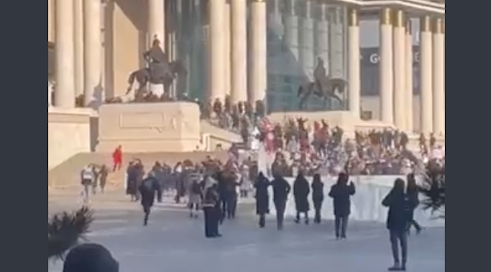
Following angry street protests in Ulaanbaatar, the Mongolian government has agreed to open an investigation into the so-called “coal mafia,” a group of state officials and executives accused pilfering the country’s subsurface wealth for personal profit to the tune of some $12 billion. Demonstrators attempted to storm the Government Palace, and blocked the capital’s main boulevard, Peace Avenue. At issue are the vast Tavan Tolgoi coalfields in the Gobi Desert, under exploitation by the Mongolian Mining Corporation, a pillar of the national economy. (Photo via EuroWeekly News)

Planet Watch
Chad

Podcast: climate change and the global struggle II

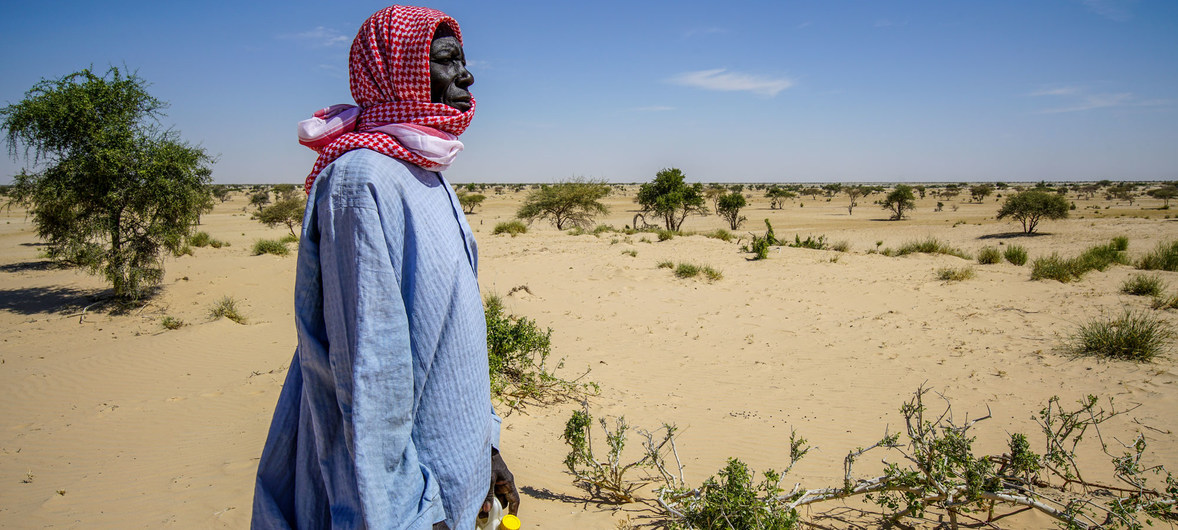
In Episode 147 of the CounterVortex podcast, Bill Weinberg notes the recent statement from the UN Environment Program that “only a root-and-branch transformation of our economies and societies can save us from accelerating climate disaster.” Studies from similarly prestigious global bodies have raised the prospect of imminent human extinction. An International Energy Agency report released last year warned that new fossil fuel exploration needed to halt by 2022 in order to keep warming within the limits set by the 2015 Paris Agreement. Adoption of new technologies and emissions standards does mean that CO2 emissions from energy generation (at least) are likely to peak by 2025. But the IEA finds that this would still lead to global temperatures rising by 2.5 C above pre-industrial levels by century’s end—exceeding the Paris Agreement limits, with catastrophic climate impacts. And the catastrophic impacts, already felt in places like Chad and Cameroon, win but scarce media coverage. Climate-related conflict has already escalated to genocide in Darfur. Climate protests in Europe—at oil terminals and car shows (as well as, less appropriately, museums)—do win some attention. But the ongoing resistance to oil mega-projects in places like Uganda and Tanzania are comparatively invisible to the outside world. The dire warnings from the UN and IEA raise the imperative for a globalized resistance with an explicitly anti-capitalist politics. Listen on SoundCloud or via Patreon. (Photo of Tantaverom region of Chad via UNDP)

The Amazon
COICA

Indigenous peoples issue urgent call for Amazon

More than 500 indigenous leaders from across the Amazon, meeting in Lima, issued an urgent call for the world to act against the destruction of the planet’s largest rainforest. The statement, “Amazonia Against the Clock,” was approved by the Coordinating Body of Indigenous Organizations of the Amazon Basin (COICA), at a summit of representatives from nine countries. The statement invokes the Emergency Motion 129 issued last September in Marseille by the International Union for Conservation of Nature (IUCN), calling for “permanent protection” of the remaining 80% of intact rainforest by 2025. (Image via Twitter)