Rojava

A FEDERAL SYRIA

Kurdish Initiatives on the Rise

by Rene Wadlow, Toward Freedom

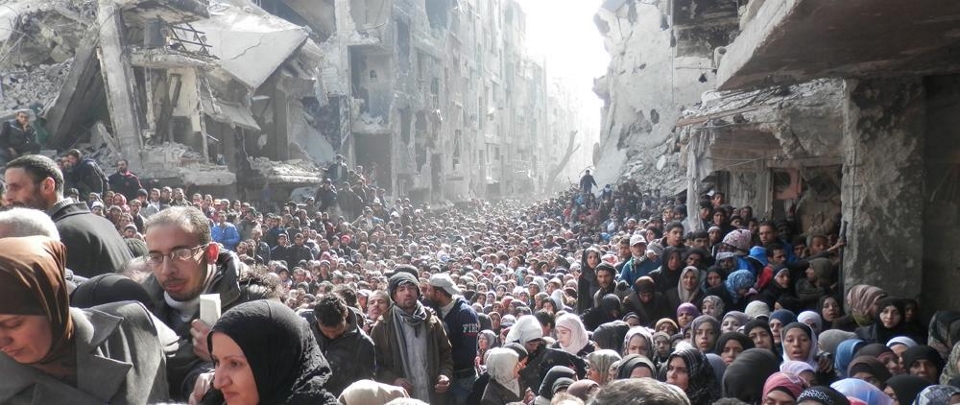
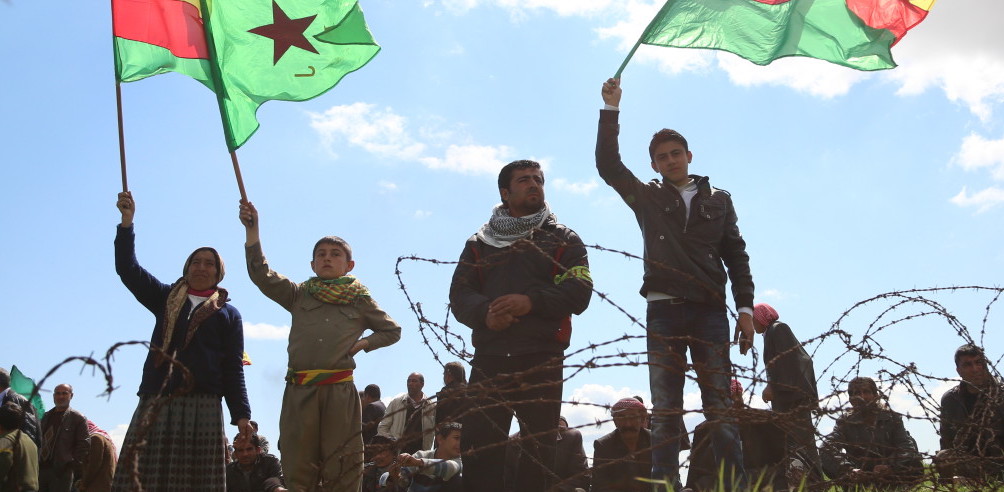
On March 17, 2016, the “federal democratic system of Rojava” (a Kurdish term for northern Syria) was proclaimed officially. Some 150 representatives of Kurdish, Arab, and Assyrian (largely Christian) groups met in the city of Rmellane in northeast Syria and voted in favor of the union of three “cantons” largely populated by Kurds—the cantons of Afrin, Kobani, and Jezireh.

The government as well as a major opposition coalition present in the Syria negotiations which have been going on in Geneva since the middle of March, the Syrian National Coalition, both stated their refusal of a federalist system which they saw as a first step to the breakup of Syria. The Syrian Foreign Ministry said that “Any such announcement has no legal value and will not have any legal, political, social or economic impact as long as it does not reflect the will of the entire Syrian people.” There was no indication of how the “will of the entire Syrian people” was to be determined in the war-torn land.

While the Kurdish issues in Turkey have attracted international attention, and the largely autonomous Kurdish region of Iraq is a major player in Iraqi politics, the Kurds in Syria have been less discussed.

Continue ReadingA FEDERAL SYRIA 
SYRIA’S INDEPENDENT MEDIA

A Bold Challenge to Extremism

by Julia Taleb, Waging Nonviolence

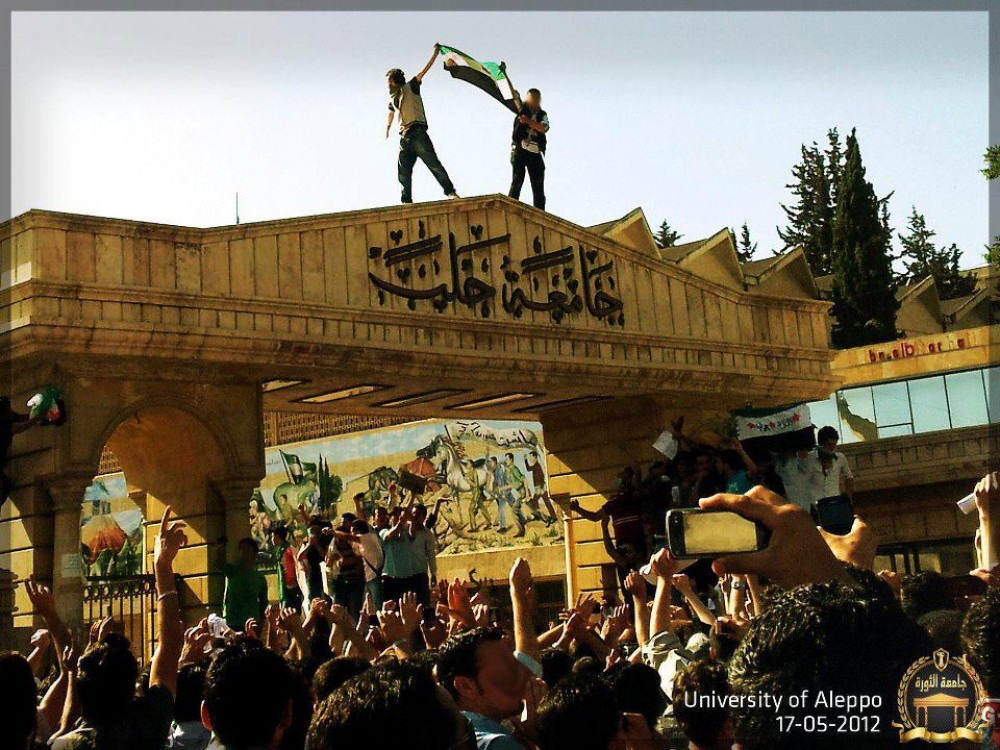
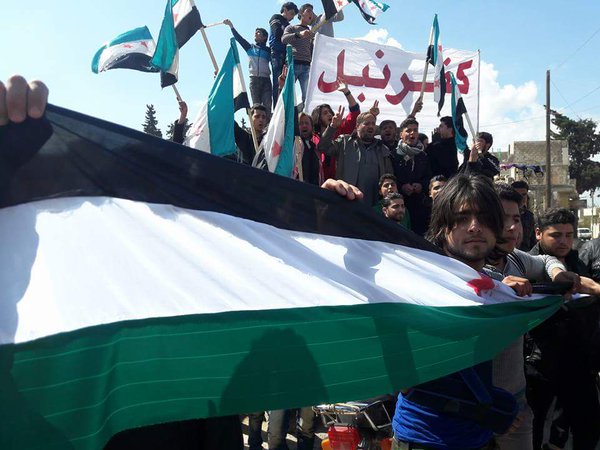
On January 10, the Nusra Front, an al-Qaeda-affiliated terrorist group in Syria, stormed the headquarters of Radio Fresh in Kafranbel and arrested its director Raed al-Fares and journalist Hadi Abdullah. The flag of the Syrian revolution was thrown on the floor and al-Nusra members stepped on it and forced the station’s members to do the same. They destroyed and confiscated equipment and books, burned the flag and—according to Ghalia al-Rahal, director of Mazaia, a women’s center in Kafranbel—shouted, “We do not want any media in Kafranbel.” They closed the station and placed a sign at the main door saying, “Confiscated by Jabhat al-Nusra, do not approach.”

This raid came in response to a post on al-Fares’ Facebook page, in which he said, “If our main concern is what’s between a man’s lips [cigarettes] and women’s legs, and as long as we are herding people to prayers and flooding our schools with Sharia books, we will have a thousand years of death to come in Syria.” Al-Nusra also claimed that songs broadcast on the station were against the Islamic ruling of Sharia.

Members of the radio station were held inside the office for almost two hours while al-Fares was taken by al-Nusra. After hours of negotiations with al-Nusra’s leaders and Sharia judges, Abdullah provided guarantees that al-Fares would not post messages critical of Sharia on Facebook again, and he was released. Al-Nusra had to also admit that raiding the station was a mistake and promised to return all their equipment.

“As we were waiting for the negotiation, we were organizing for a massive protest that was planned to take off the next morning,” al-Rahal said. “Al-Nusra knew that we would have not kept silent.”

Continue ReadingSYRIA’S INDEPENDENT MEDIA 

FAIR TRADE: THREAT TO GLOBAL POOR?

by David L. Wilson, MR Zine

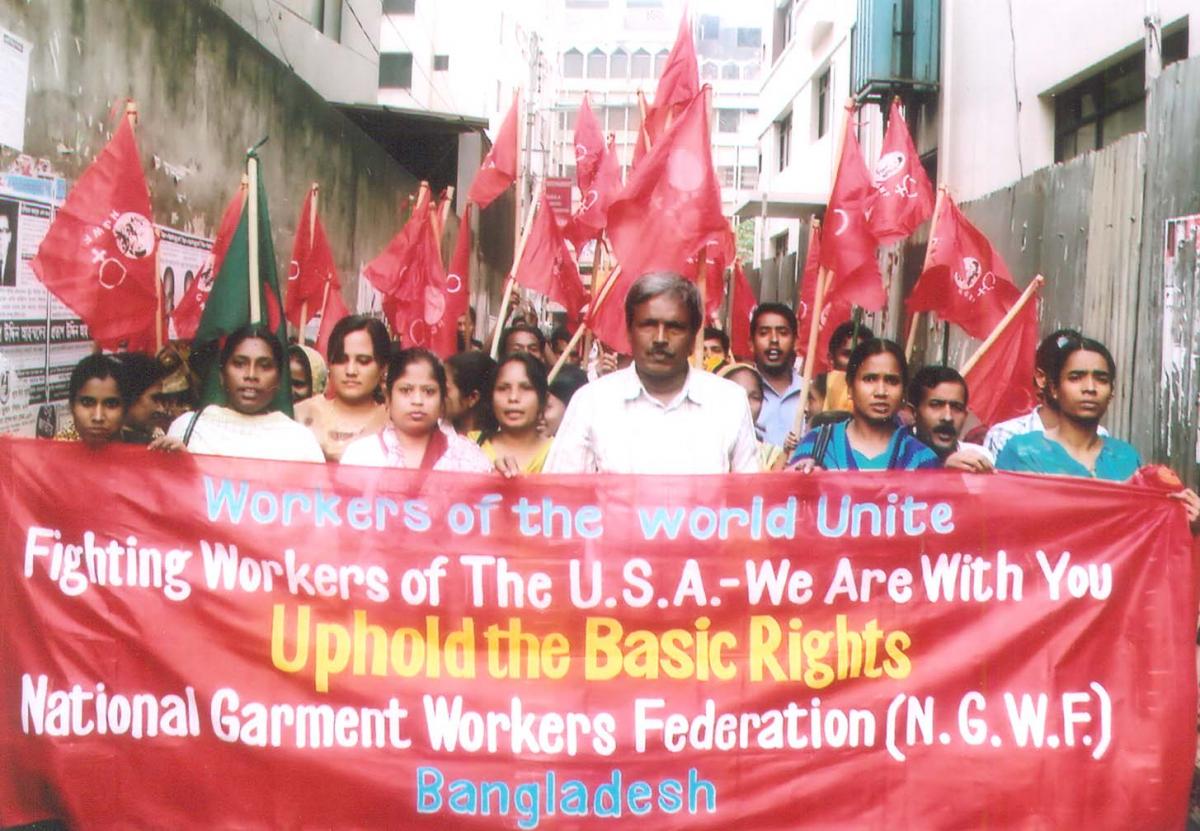
On April 24, 2013, some 1,134 people died in the collapse of the Rana Plaza complex outside Dhaka, the capital of Bangladesh. The building housed factories where low-wage workers, largely women, stitched garments for the U.S. and European markets.

For several years before the disaster a number of U.S. opinion makers—notably New York Times columnists Thomas Friedman and Nicholas Kristof—had been arguing that assembly plants like those at Rana Plaza were crucial to the development of economies in the Global South and therefore a boon to the world’s most impoverished. The media’s efforts to promote sweatshops suddenly slowed down after the collapse in Bangladesh, but they seem to be reviving now, just as we approach the third anniversary of the disaster.

The occasion for the new pro-sweatshop campaign is Democratic presidential candidate Bernie Sanders‘ opposition to trade pacts like the North American Free Trade Agreement (NAFTA) and the Trans-Pacific Partnership (TPP). Senator Sanders has made criticism of the trade deals a key part of his bid for the Democratic nomination.

Continue ReadingFAIR TRADE: THREAT TO GLOBAL POOR? 

MOZAMBIQUE’S MOVEMENT TO END LAND GRABS

by Anabela Lemos, Toward Freedom

This article was drawn from an interview with Anabela Lemos, and conducted, edited, and condensed by Simone Adler for Toward FreedomAnabela Lemos is co-founder, campaign coordinator and board member of Justiça Ambiental, the Mozambique branch of Friends of the Earth.

To corporations, the forest is only business. To communities, the forest is everything: trees, medicine, culture, spirituality. Land-grabbing and the removal of communities from forests and land breaks the community, displaces access to food and water, and uproots the connection to nature and [local] knowledge. If the community structure is broken, if the land—the means of food production—is lost, we lose everything.

Land That Can Only Grow Stones
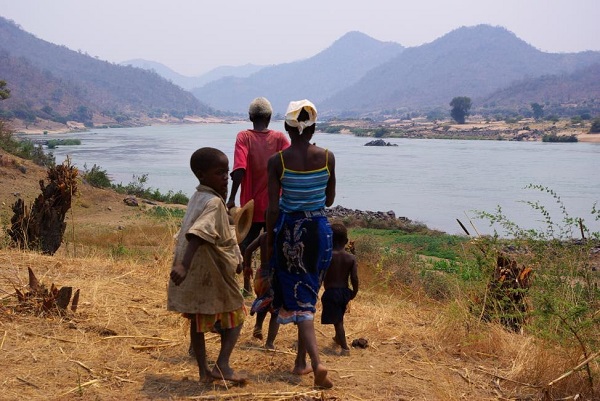
In Mozambique, where 80% of the population is campesinos—traditional, family farmers—companies are taking the best, most fertile land and moving people to land that can’t grow anything. For example, the coal mining project in the Tete province relocated people from the fertile soil by the Zambezi River, with the promise of houses and two hectares of land per family. They were moved to an arid place with land that can only grow stones, as they say, losing access to the land and river their lives depended on.

Continue ReadingMOZAMBIQUE’S MOVEMENT TO END LAND GRABS 

NO WAY OUT

How Syrians are Struggling to Find an Exit

by Eleonora Vio, IRIN

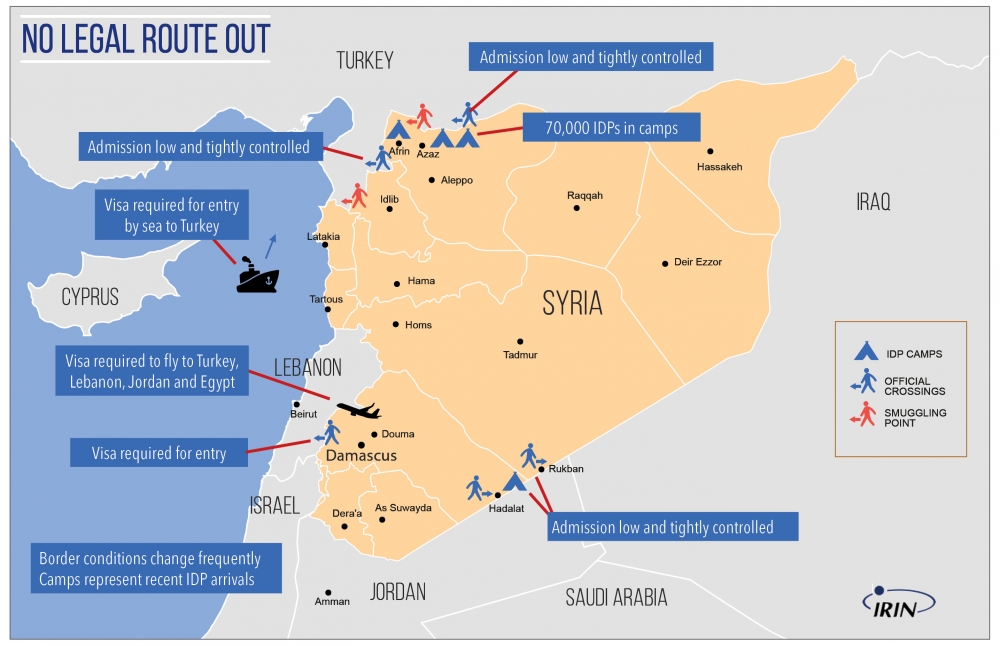
Over the last five years, close to 4.8 million Syrians have fled the conflict in their country by crossing into Jordan, Lebanon and Turkey. But as the war drags on, neighbors are sealing their borders. Forced from their homes by air-strikes and fighting on multiple fronts, the vast majority of Syrian asylum seekers now have no legal escape route.

Earlier this week, EU leaders reached a hard-won deal with Turkey aimed at ending a migration crisis that has been building since last year, and that in recent weeks has seen tens of thousands of migrants and refugees stranded in Greece. But the agreement turns a blind eye to the fact that even larger numbers of asylum seekers are stranded back in Syria, unable to reach safety.

Syrians hoping to apply for asylum in Europe first have to physically get there. EU member states closed their embassies in Syria at the start of the conflict, and even embassies and consulates in neighboring countries have been reluctant to process visa and asylum applications.

When Syria’s war erupted in March 2011, it was initially relatively easy for most refugees to leave the country. Those without the means to fly poured out in waves of tens of thousands across land borders into Jordan, Lebanon, and Turkey. But one by one, these exits have been restricted or closed off entirely.

Continue ReadingNO WAY OUT 

WATER: COMMODITY OR HUMAN RIGHT?

Lessons from Flint

by Ryan Stoa, Jurist

When I teach Water Resources Law to my students, I often start each semester by juxtaposing two competing conceptualizations: water as a private commodity vs. water as a human right. The contrast demonstrates the diversity in approaches to water management, while foreshadowing the public-private tensions that permeate contemporary water law debates. Some students are attracted by the promises of privatization, including capital investments to upgrade infrastructure and the efficiencies of allowing market forces to allocate water where it is most valued. Other students push back, noting the fundamental human need for water as a justification for holding water resources in common, while citing the negative externalities that frustrate attempts to monetize water accurately.

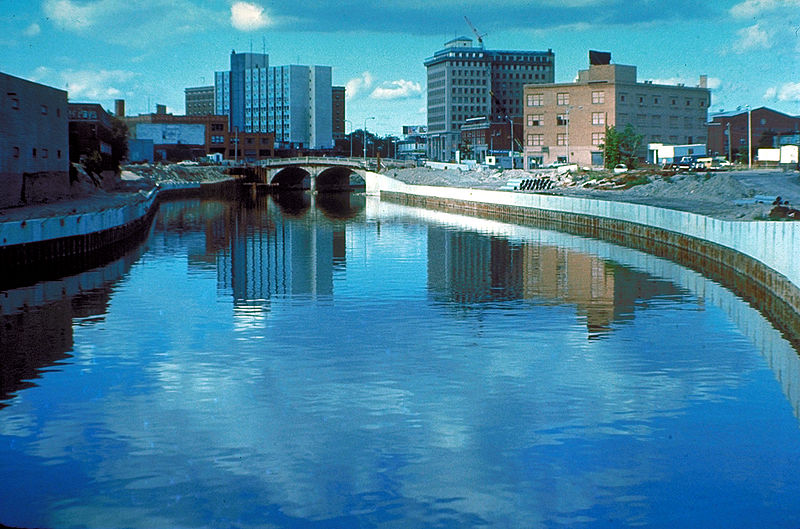
Both viewpoints are playing out in the wake of the Flint, Michigan, water crisis. Last month I wrote about the rhetoric following the crisis, noting that many critics were echoing the human right to water perspective. One Michigan state representative even proposed a bill that would declare water to be a human right. To many observers, the crisis was caused by water managers holding financial considerations above public health and environmental justice. Indeed, Flint’s decision to switch from water provided by the Detroit Water and Sewerage Department to water provided by the Karegnondi Water Authority was largely a financial one, as the move was projected to save the city $19 million over eight years. When the Flint city council voted to return to Detroit water, the city’s emergency manager opposed the move on financial grounds. To many, water cannot be managed with such financial tunnel-vision, and a human right to water might rebalance water managers’ priorities.

But in the last several weeks, another view has (re)emerged. Some have called for further privatization of water resources. To these critics, the Flint water crisis is a crisis of public governance, one that may have been avoided had a private utility been in charge. A private utility would still have received government oversight, while avoiding the messy political battles necessary to receive infrastructural investments. A private utility, furthermore, would not have enjoyed sovereign immunity, providing an incentive to avoid litigation arising from water contamination.

Continue ReadingWATER: COMMODITY OR HUMAN RIGHT? 

SYRIA: REVOLUTION AND INTERVENTION

An Interview with Joseph Daher

by Frieda Afary, Radio Zamaneh

Joseph Daher is a Syrian-Swiss Marxist intellectual with a PhD in development at the University of SOAS, London. He is also a member of Solidarités in Switzerland and of the Revolutionary Left Current in Syria. What do leftist Syrian intellectuals think about the current crisis, Assad’s future, the intervention of world powers, the activism of forces representing alternatives, and the role of the Syrian Kurds? This text contains Daher’s response to two questions posed to better comprehend the events in Syria from an alternative point of view.

What is your analysis of the Russian government’s air-strikes in Syria since September 30?

The objectives of these air-strikes are clear: save and consolidate the political and military power of the Assad regime. In other words, crush all forms of opposition—whether democratic or reactionary—to the Assad regime under the so-called “war on terror.” Most targets are civilians and factions of the Free Syrian Army (FSA) still existing. About 100,000 civilians have been forced to flee their regions because of Russian bombings. Russian bombings also destroyed dozens of hospitals while doctors and patients were killed in these raids. In areas such as the outskirts of Aleppo, the bombings in some cases even benefited the the Islamic State (IS), thanks to a lightning breakthrough against factions of the FSA disoriented by Russian strikes. Moreover, Russian strikes are operated with the direct collaboration of the US and Israel.

Continue ReadingSYRIA: REVOLUTION AND INTERVENTION 

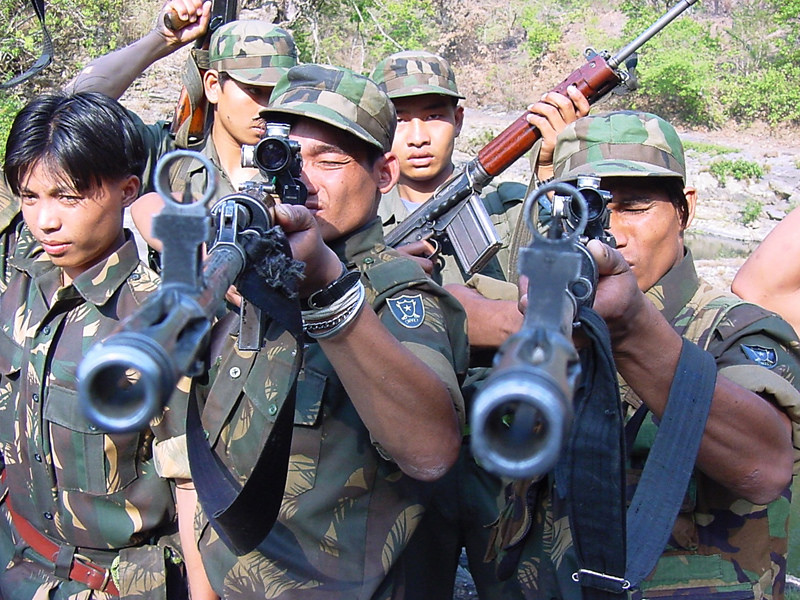
ELUSIVE JUSTICE FOR ASSAM VICTIMS

by Nava Thakuria, World War 4 Report

As most leaders of United Liberation Front of Asom (ULFA) and other banned militant groups of northeast India have now joined in peace talks with the authorities and are bargaining for amnesty from their past misdeeds, families of victilms of the insurgencies express concern about whether they will get justice. ULFA, which chased the dream of an independent nation of Swadhin Asom in what is now the Indian state of Assam, engaged in numerous acts of extortion, kidnapping and even in brutal killings. Journalists and common people sometimes targeted for their critical comments about the rebels.

One notable example is the brutal assassination of journalist Kamala Saikia, an elderly teacher, veteran of India's independence struggle and devotee of Gandhian principles in the town of Sivasagar, who became a commentator on social issues facing his conflicted state. He was taken away by ULFA fighters on the night of August 9, 1991; his body was recovered next morning on a roadside with signs of torture.

He was among 20 journalists, commentators and editors of Assam who lost their lives to political killings over the past two decades. Not one perpetrator has been brought to justuice.

Continue ReadingELUSIVE JUSTICE FOR ASSAM VICTIMS 

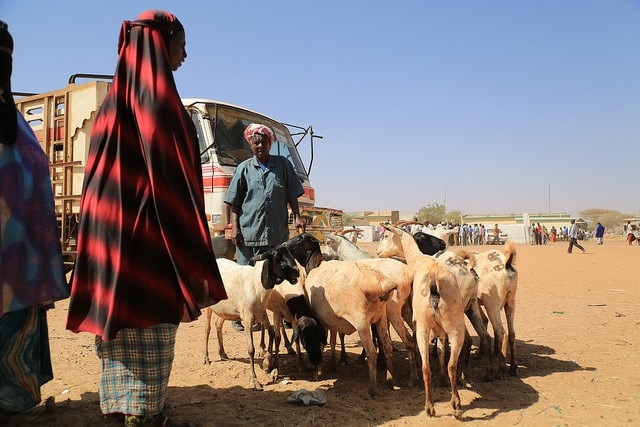
DROUGHT AND DISASTER FOR SOMALI HERDERS

by Mohamed Amin Jibril and Mohamed Omar Mulla, IRIN

HARGEISA/GAROWE — Two consecutive seasons of drought across northern Somalia are driving tens of thousands of pastoralists into hunger and debt.

Abdilahi Mohamed had 20 cattle in August. Only five now survive. He herded his animals 250 kilometers—from his home in Faraweyne to Banka Geriyaad, northwest of Hargeisa, capital of Somaliland region—in the hope that the Hays rainy season (December to February) had generated enough fresh pasture there.

"But before I got there people had already moved in and finished it all," he told IRIN.

It's a similar situation in the autonomous state of Puntland, to the east. Mohamoud Ahmed told IRIN by phone from Sanag region, one of the hardest-hit areas, that he had "lost a number" of his herd.

"My entire family is now in a critical situation: no water, no food, no nothing. Young ones and the elderly are suffering a lot. Sometimes I buy a drum of water for $120—when I can afford it."

Continue ReadingDROUGHT AND DISASTER FOR SOMALI HERDERS 

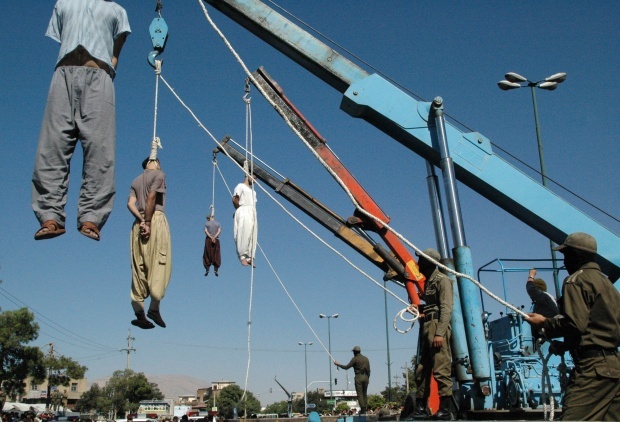
IRAN’S ‘MODERATE’ HANGMAN

by Rahim Hamid, Middle East Eye

The appalling human rights situation in Iran has not improved since Hassan Rouhani—touted in some circles in the West as a “moderate” and a “reformer”—became president of the Islamic Republic in 2013. Since taking office, more than 2,000 people have been hanged under Rouhani’s watch, the biggest scale of executions in the past 25 years, adding to the black pages of the regime’s history of human rights violations since the revolution of 1979.

The execution spree in the first half of 2015 was not missed by the human rights group Amnesty International, which noted that “death sentences in Iran are particularly disturbing because they are invariably imposed by courts that are completely lacking in independence and impartiality.” The rights group added: “They are imposed either for vaguely worded or overly broad offences, or acts that should not be criminalised at all, let alone attract the death penalty. Trials in Iran are deeply flawed, detainees are often denied access to lawyers in the investigative stage, and there are inadequate procedures for appeal, pardon and commutation.”

As a result, Iran became the top country committing executions per capita—again under Rouhani’s watch.

Continue ReadingIRAN’S ‘MODERATE’ HANGMAN 

RELIEF FOR LIBYA’S ‘CHINESE CAMP’?

by Tom Westcott, IRIN

GHAT — A peace deal signed last week in Qatar by warring tribes from the Saharan town of Ubari may bring some hope for displaced and marginalized people in Libya's desert south, including those holed up in a partially-built construction project known locally as the "Chinese Camp." We reported in August on the desperate situation in Ubari, a town of more than 30,000 people where civilians had to be on constant alert for street clashes and sniper fire, and where the wounded often died of their injuries because of the lack of medical supplies and assistance.

The fighting is predominantly between militias from two indigenous Saharan tribes, the Tuareg and the Tebu, which have taken opposing sides as Libya has descended into a complex web of conflicts after the ousting of long-time ruler Moammar Qaddafi. The Tuareg are aligned with the Tripoli government, installed 16 months ago as a rival to the internationally recognized government in eastern Libya, which has the support of the Tebu.

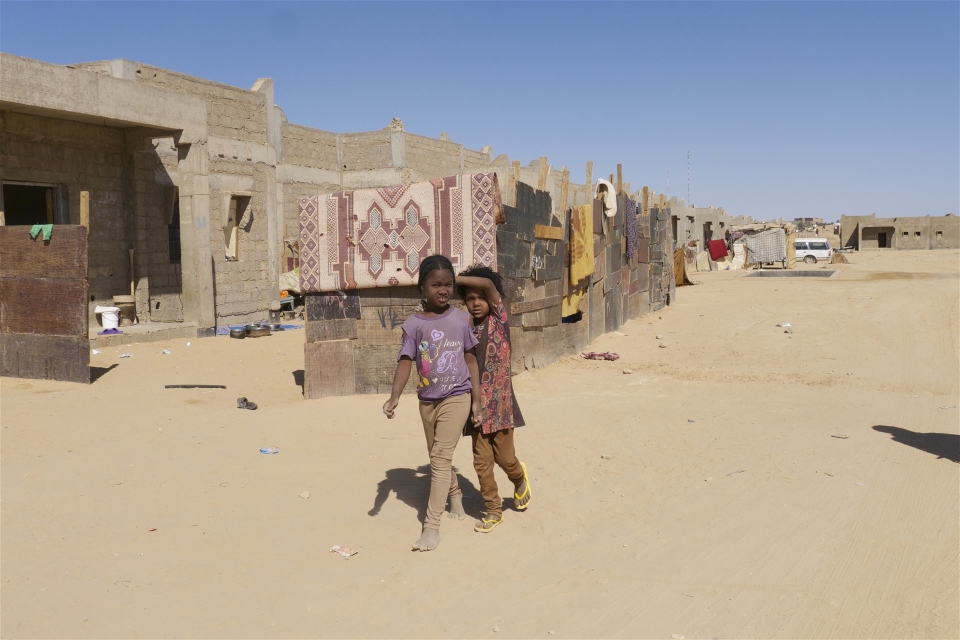
Many of those fleeing the fighting have had little choice but to seek refuge more than 300 kilometers to the southwest in Ghat, a predominantly Tuareg town. Some 600 families now occupy half-built homes on the outskirts of Ghat in an unfinished housing project abandoned by a Chinese construction company at the start of the 2011 uprising.

While many were displaced by fighting between the Tuareg and the Tebu, there are also migrants from neighbouring countries. Children play with abandoned cars in the dust, rather than spend time inside squalid two-roomed houses, where windows are bricked up against the summer sand that blows in from the Sahara and the cold winter nights.

Continue ReadingRELIEF FOR LIBYA’S ‘CHINESE CAMP’? 

THE SIEGES IN SYRIA

from IRIN

LONDON — At precisely the same time as aid lorries pulled into the besieged Syrian village of Madaya on Jan. 11, too late to save those who had already starved to death, convoys also entered the besieged areas of Fua and Kefraya. The timing was no coincidence. Last week’s deal to allow aid into Madaya, which is surrounded by forces loyal to Syrian President Bashar al-Assad, including Hezbollah fighters, was more of a swap by warring parties than a humanitarian gesture: the same militant group inside Madaya surrounds Fua and Kefraya.

That this was the only way the war’s belligerents could agree to rescue the estimated 42,000 civilians of Madaya, who had reportedly been eating spiced water and tree leaves, points to the complications of delivering aid through a blockade.

And the small village on the Lebanese border is not an isolated case. In the fifth year of Syria’s war, depending on who you ask, there are anywhere between 393,700 and 2 million people living under siege and in desperate need of help.

As aid trucks brought relief to Madaya, IRIN went looking for information on sieges, and found out that even the simplest questions don’t have easy answers.

Continue ReadingTHE SIEGES IN SYRIA