Yemen: next in GWOT cross-hairs
British Prime Minister Gordon Brown and US President Barack Obama have agreed to fund a special counter-terrorism police unit in Yemen to tackle the rising threat from the country.
by David L. Wilson, MR Zine
Congress is almost certain to consider some sort of reform to the immigration system in 2010; when it does, we can expect a repeat of the “tea bag” resistance we saw at last summer’s town halls on healthcare reform. The healthcare precedent “bodes badly” for immigration, Marc R. Rosenblum, a senior policy analyst at the DC-based Migration Policy Institute, told a forum at Columbia University in New York City the evening of December 1.
Unfortunately, the discussion that night indicated that progressives are planning to follow the same scenario we followed in the struggle for healthcare: we propose legislation that falls short of what we need, the right wing then whittles it down, and in the end we are told we have to be responsible and accept half a loaf—or a good deal less than half.
What makes it worse is that, if we follow this plan, we will probably lose a unique opportunity to have a lasting effect on the way people think about immigration in this country.
The “Three-Legged Stool”
Most proposals for “comprehensive immigration reform,” or “CIR,” conform to the “three-legged stool” concept that Homeland Security Secretary Janet Napolitano outlined in a speech on November 13. Each “leg” is meant to appeal to a different constituency:
* for the country’s 12 million undocumented immigrants, CIR offers a limited legalization program;
* to satisfy the immigration restrictionists, the package expands the enforcement of immigration laws;
* to keep the corporations happy, the legislation includes a mechanism for bringing in foreign workers.
Rep. Luis Gutierrez (D-IL) introduced one version of this on December 15. His bill, CIR-ASAP, sets up an “earned legalization” process for out-of-status immigrants and eliminates some of the worst abuses of the current system—the lack of proper medical attention for immigration detainees, for example, and the 287(g) program that brought local sheriff’s offices into immigration enforcement. At the same time, it expands more “humane” enforcement methods, like the E-Verify program, which requires employers to use a government database to check every job applicant’s immigration status.
For the corporations, the bill sets up an independent bipartisan “Commission on Immigration and Labor Markets” to determine when and how much to increase the flow of foreign workers for different industries. This proposal, which is backed by the Migration Policy Institute and the AFL-CIO, includes labor rights protections that would cut down many of the abuses in the present H1 and H2 guest worker programs.
The Gutierrez bill has a number of attractive features. Its big flaw is that it’s not going to pass.
A bill along these lines is never going to placate the restrictionists and the employer associations. The restrictionists won’t be satisfied because an expanded E-Verify program won’t stop people from coming here to look for work; it will just drive more of them to work off the books or with shady subcontractors. And the corporations won’t be satisfied because they don’t want labor commissions—they want a guest worker program, preferably with as few labor protections as possible.
“If the unions think they’re going to push a bill through without the support of the business community, they’re crazy,” Randel Johnson, U.S. Chamber of Commerce vice president of labor, told the New York Times last April. “As part of the trade-off for legalization, we need to expand the temporary worker program.”
Welcoming the Debate
The restrictionists and corporations will of course follow the healthcare scenario once the CIR debate gets under way, mobilizing their right-wing bases and pouring tens of millions of dollars into lobbying. The results are predictable: an immigration bill with more enforcement and a larger guest worker program. The only question is whether legalization will go the way of the public option.
That is, if we stick to the script. But we don’t have to.
Instead of acting out a rerun of the healthcare compromise, devoting resources to lobbying and focusing on arcane points of parliamentary procedure, the grassroots movement for immigrants’ rights needs to take the issue out to the population at large. This after all will be one of the rare occasions when people are actively thinking about immigration; and the economic crisis means they will be more open than usual to new and radical ideas.
But we’ll need to state our position clearly and forcefully, without apologies and equivocations, and we’ll have to take the discussion directly to the union hall, the community center, and the classroom, bypassing the controlled “debate” in the corporate media. Above all we’ll need to come right out and say what many immigrant rights advocates have been strangely reluctant to say in the past: immigration reform isn’t just good for immigrants—it’s good for everyone who has to work for a living.
It’s not as if the arguments from the right are so hard to defeat. We know what the anti-immigrant groups will say: the 1986 amnesty encouraged more immigration; legalization now will mean millions of new workers competing for jobs at a time of double-digit unemployment. But we’ll have no problem answering this, since it’s simply not true: there’s no evidence that undocumented immigration increased because of the 1986 amnesty. The fact that right-wingers have gotten away with saying this for two decades just shows their ignorance and dishonesty—and our own unwillingness to confront them.
The reality is that, by ensuring labor rights for immigrant workers, legalization will help “end the race to the bottom” and create an upward pressure on wages. “If you want to fix the economy, part of the way to fix it is legalization,” Frank Sharry, president of the pro-reform America’s Voice, said at the December 1 forum. “I welcome the debate.”
Confronting Enforcement
It’s encouraging that many liberals are finally starting to make this argument around wages, and we should push them to keep up the good work. But they’re not “welcoming the debate” when it comes to enforcement. As Marc Rosenblum noted in an email, “even most progressive lawmakers are pretty heavily invested in the sanctions approach.”
We don’t need to follow them on this. Nothing stops people at the grassroots from pointing out that the tens of billions of dollars spent on enforcement over the past 25 years have done next to nothing to slow the flow of undocumented immigrants; their real accomplishment has been driving down wages and sabotaging union organizing.
A 1999 study by Columbia University economist Francisco L. Rivera-Batiz indicates that the “employer sanctions” instituted in 1986—as part of a “trade-off for legalization”—almost immediately forced wages down for undocumented workers. And last October the AFL-CIO and other groups put out a report showing how the effect of enforcement at the workplace has been “chilling the assertion and exercise of workplace rights, a result that hurts all workers, regardless of immigration status.”
We need to make these arguments, and we also need to say that there’s no real way to slow down immigration without addressing its root causes, the political and economic situation in the countries to our south—and that to a large extent this situation is the product of economic policies like NAFTA that are promoted by the U.S. elite.
If people who claim to be concerned about the pace of migration are really serious about addressing the issue, they can join with us in supporting struggles against “free trade” agreements in South America, or in solidarity with the 42,000 laid-off electrical workers in Mexico City, or the Honduran unions fighting last June’s coup d’état. They can back the movement for the “right not to migrate,” Mexicans organizing for “development that makes migration a choice rather than a necessity,” in the words of University of California Los Angeles professor Gaspar Rivera Salgado. And they can support the efforts of leftist governments in Bolivia and Ecuador to use economic incentives to get migrants to come home.
The Trail of Dreams
Can immigrants win a New Deal in 2010? That will depend on a lot of things. One will be the impact of mobilizations by immigrants and their allies—not just the large protests but also small dramatic actions like the “Trail of Dreams,” a 1,500-mile walk a group of Florida students are starting on January 1. But another factor will be how vocal and effective we are in presenting the issues behind the mobilizations. If we do the job right, we’ll at least be able to weaken the influence of the anti-immigrant “tea parties,” and we’ll start to change the terms of the debate. Under the right circumstances, we might even build enough pressure on Congress to get a real immigration reform.
—-
This article first appeared, with footnotes, Jan. 1 in MR Zine.
Sources:
Julia Preston Napolitano, “White House Plan on Immigration Includes Legal Status”
New York Times, Nov. 13, 2009
Randal C. Archibald, “New Immigration Bill Is Introduced in House”
New York Times, Dec. 15, 2009 (A summary of the bill is at the ACLU website.)
Michelle Chen, “Troubled ‘E-Verify’ Program Highlights Dysfunctional Immigration System”
In These Times, Sept. 14, 2009
Julia Preston and Steven Greenhouse, “Immigration Accord by Labor Boosts Obama Effort”
New York Times, April 13, 2009
David L. Wilson, “The Truth about Amnesty for Immigrants”
MRZine, Aug. 8, 2009
James Parks, “Report: Unbalanced Immigration Enforcement Hurts All Workers’ Rights”
AFL-CIO Blog, Oct. 27, 2009
Amy Traub, “Getting Tough on Exploitation”
The Nation, Nov. 17, 2009
“NAFTA Boosted Mexican Immigration: Study”
World War 4 Report, Jan. 24, 2009
David L. Wilson, “Mexican Layoffs, U.S. Immigration: The Missing Link”
MRZine, Nov. 22, 2009
David Bacon, “The Right to Stay Home—Derecho de no Migrar”
New America Media, July 8, 2008
“Bolivia: Government Wants Immigrants Back”
Weekly News Update on the Americas, Dec. 27, 2009, also at World War 4Report
“Correa pide a emigrantes regresar”
El Universo, Guayaquil, Ecuador, March 24, 2009
Jane Guskin and David L. Wilson, “A Grassroots Vision for U.S. Immigration Policy—and Beyond”
NACLA Report on the Americas, January-February 2009
See also:
AMNESTY NOW: HOW AND WHY
by Jane Guskin, Huffington Post
World War 4 Report, April 2009
THE GREAT WALL OF BOEING
Corporate Power and the Secure Border Initiative
by David L. Wilson, MR Zine
World War 4 Report, October 2008
From our Daily Report:
Arizona: anti-immigrant sheriff vows defiance of feds
World War 4 Report, Oct. 19, 2009
——————-
Reprinted by World War 4 Report, January 1, 2010
Reprinting permissible with attribution
Why It Is On the Rise
by Gilbert Achcar and Pierre Puchot, Mediapart
What pushes Arabs to deny the existence of the Holocaust? How and why does Israel continue to instrumentalize the memory of the destruction of European Jewry? What was the attitude of Arab intellectuals during the Second World War? Why does Iran’s Mahmoud Ahmadinejad incessantly brandish the denial weapon while Hamas and Hezbollah turn away from it? In his new book, Les Arabes et la Shoah (The Arabs and the Holocaust), political scientist Gilbert Achcar—professor at London University’s School of Oriental and African Studies (SOAS)—reviews over a century of history from the birth of Zionism to last winter’s Israeli offensive against Gaza. Although he gives prominence to the political impasse constituted by the Israeli-Palestinian conflict, he indicates “new links” that today exist between Jews and Arabs.
Les Arabes et la Shoah is published in French by Actes Sud/Sindbad, and will be published in English by Metropolitan Books later this year. This interview with Pierre Puchot of the French online journal Mediapart ran along with an excerpt from the book in October.
Pierre Puchot: Your book’s subtitle is: “The Israeli-Arab War of Narratives.” What do you mean?
Gilbert Achcar: It’s about the war that opposes two entirely symmetrical visions of the origins of the conflict. Specifically, I refer here to the notion of “narrative” as the recitation of history as developed by post-modernism. The Israeli narrative describes an Israel that emerges as a reaction to anti-Semitism, beside the “Biblical rights” invoked by religious Zionists. And its justification by European anti-Semitism is extended to Arabs, who are presented as accomplices to this paroxysm of anti-Semitism that was Nazism—which would legitimate the birth of the State of Israel on lands conquered from the population of Arab descent. That’s why the Israeli narrative insists to such a degree on Amin al-Husseini, this character, blown up out of all proportion, who became the ex-grand mufti of Jerusalem.
On the Arab side, the most rational narrative—later we’ll mention the denialist escalations that are on the rise at present—may perhaps be summarized in these terms, “We had nothing to do with the Shoah. Anti-Semitism is not an established tradition for us, but a European phenomenon. Zionism is a colonial movement that really took off in Palestine under the British colonial mandate, even though there were earlier instances. In consequence, it’s a colonial implantation in the Arab world, on the model of what was seen in South Africa and elsewhere.” It’s the war between these two narratives that I explore in this book.
Is there a dominant Arab reading of the Shoah? In what respects is it specific and how does it differ from those in Europe or the United States?
There’s not a single Arab interpretation of the Shoah, just as there isn’t a single European reading either, even though there’s certainly more homogeneity in the perception of the Holocaust in Europe. However, even that is recent, since, as you know, the Shoah was not a very current theme in European news and education during the two decades that followed the end of the Second World War.
In the Arab world, the situation is far more diversified. That is chiefly the result of the existence of a great variety of political regimes in the Arab countries, with very different ideological legitimatizations. Similarly, very diverse—and even broadly antithetical—ideological currents traverse Arab public opinion.
In these last few years, there has been an escalation in the brutality of Israeli military operations—which have gone from being wars that Israel could present as defensive to wars that could no longer be presented that way at all—beginning with the invasion of Lebanon in 1982. That has been accompanied by an intensification of hatred in the Israeli-Arab conflict, notably because of the fate reserved for the Palestinians of the territories occupied since 1967.
In the face of growing criticism of Israel, including in the West, since 1982 especially, we have seen that state systematically resort to instrumentalization of the memory of the Shoah, beginning no later than the Eichmann trial in 1960. And that instrumentalization arouses, on the “opposing side,” a knee-jerk reaction that sometimes goes so far as to deny the Holocaust. The best indicator of this reactive quality is the fact that the Arab population which has received the widest education on the memory of the Shoah, the population of Arab citizens of Israel, has been prone to an absolutely striking explosion of denial these last few years.
To my mind, that very clearly illustrates the fact that denial in these cases corresponds more to a “gut reaction” out of political rancor, than to a true denial of the Shoah as is seen in Europe or the United States, where the deniers spend their time devising historical theories that don’t stand up to refute the existence of the gas chambers, etc.
Another indication of this difference is that within the Arab world where denial is riding high, there’s not a single author who has produced anything original on that theme. All the Arab deniers do is pick up theories produced in the West.
The political instrumentalization of denial as formulated by Ahmadinejad today was not used before in the Arab world, in the time of Nasser, for example. What does this development tell us?
The Islamic fundamentalism that has developed over the most recent decades, from the perspective of the Israeli-Arab conflict, carries an essentialist vision, even though it is not anti-Semitic in the strict racial sense of the term. It’s a vision that picks up the anti-Judaism that may be found in the Abrahamic religions that followed Judaism: Christianity and Islam. Those elements present in Islam are going to be pointed out to facilitate a convergence between this ideologically extreme current and Western denial.
What elements of Islam allow the realization of this anti-Judaism?
There are criticisms of Judaism within Islam and echoes of the conflict that arose between the Prophet of Islam and the Jewish tribes on the Arab peninsula. But it’s a contradictory background: we find anti-Christian and anti-Jewish statements in Islamic scripture. But at the same time, Christians and Jews are considered “people of the book” and may in consequence enjoy privileged treatment compared to other populations in the countries Islam conquered, populations which were forced to convert. The people of the book were not forced to convert and their religions were considered legitimate. Consequently, there is tension between these two contradictory dispositions.
I show in my book how the man who may be considered the main founder of modern Islamic fundamentalism, Rachid Rida, switched from a pro-Jewish attitude due to anti-Christianity—especially during the Dreyfus Affair, when he denounced anti-Judaism in Europe—to an attitude that, towards the end of the 1920’s, began to repeat an anti-Semitic discourse of Western inspiration, including the big Nazi anti-Semitic narrative attributing all kinds of things to the Jews in continuity with the fake Russian “Protocols of the Elders of Zion,” including responsibility for the First World War. Then we see a graft occur between certain Western anti-Semitic discourse and Islamic fundamentalism which veers in that direction on this question because of what was happening in Palestine. Before the conflict turned ugly in Palestine, this same Rachid Rida tried to dialogue with representatives of the Zionist movement to convince them to form an alliance between Jews and Muslims to confront the Christian West as a colonial power. From that anti-colonialism that determines anti-Westernism, they were to move on to anti-Zionism, which, in the case of a fundamentalist religious mentality, combined very easily with anti-Semitism.
With that said, the signs of anti-Judaism that one finds in Islam, one finds a hundredfold in Christianity, and in Catholicism in particular, with the idea of the Jews as deicides, the Jews responsible for the death of Jesus, the son of God. This anti-Jewish charge contained in Christianity has, moreover, resulted in a persecution of the Jews in the history of the West incomparably worse than was the case in Islamic countries. We have seen, for example, how Jews of the Iberian Peninsula, fleeing the Christian Reconquista and the Inquisition, found refuge in the Muslim world, in North Africa, Turkey and elsewhere.
How have Hezbollah and Hamas used this rising tendency towards denial for political ends?
Rachid Rida’s discourse, integral to their ideologies, was present from the outset in Hamas and Hezbollah. Much more, by the way, in Hamas, which is an emanation of the Muslim Brotherhood in Palestine. The founder of the Brotherhood, Hassan El-Banna, was largely inspired by Rachid Rida.
In the case of Hezbollah, the discourse is presented through the slant of what was to come from political Iran: in Shiite fundamentalism originally, there is no source for an anti-Judaic dimension comparable to the one developed by Rida. It was to be elaborated along with the Iranian regime’s opposition to the West, to the United States and to Israel.
That said, what distinguishes Hamas as well as Hezbollah is that they’re mass movements, and, as such, they have a pragmatic dimension. As much as it suits Ahmadinejad to perform denialist one-upsmanship for reasons of state policy, these movements have to a large extent reduced the anti-Semitic discourse they previously expressed and which proved to be counter-productive.
What I understand from your book is that Holocaust denial has become a political instrument per se in the Middle East, whether one chooses to use it or not. How was this instrument integral to the political foundation of the Palestinian movement, especially with respect to the PLO?
The PLO, ever since the armed Palestinian organizations got the upper hand within it after 1967, very quickly came to understand that anti-Semitic discourse is bad in itself and altogether contrary to the interests of the struggle of the Palestinian people. Hence the insistence on the distinction to be made between anti-Semitism and anti-Zionism, which was the issue in a political battle within the Palestinian movement.
Conversely, what are the mechanisms of what you call the “positive” instrumentalization of the Shoah, as it emanates from Israel?
What may be the legitimatizations for the State of Israel? I’m not talking about questioning its existence, but about examining the legitimatizations that it gives itself. One has to confess that, apart from religious Zionists, the Biblical legitimatization convinces very few people! As for the justification that we find in secular Zionism as expressed most notably by Theodore Herzl, it’s a justification that does not take into account what is actually there where the “State of the Jews” is going to be created. The only justification he gives for that state is anti-Semitism in the West. He doesn’t concern himself with what’s already over there. Moreover, we know that at the outset the Zionist movement occasionally had very intense debates about the possible location for the Zionist state. Therefore, for the Zionist movement, it was a matter of inserting itself within a colonial undertaking and we find references to colonialism in Herzl’s book, including the idea of embodying a rampart of civilization against barbarism.
Colonial ideology having expired globally, it was necessary to find an alternative legitimatization: that’s when the instrumentalization of the Shoah began to intensify, especially from the beginning of the 1960’s with the Eichmann trial. Excellent work has already been done on this subject, particularly that of Tom Segev. It’s an absolutely remarkable work on the manner in which, within Israel itself, the question of the Shoah was to suddenly emerge and change character. The relationship to the Holocaust was to change from a relationship of contempt for the survivors to claiming that memory as a legitimatization for the State. Moreover, as a narrative, this legitimatization has been highly effective in the West on several levels, including in the relations maintained between Israel and the Federal Republic of Germany at a time when the German administration was stuffed with former Nazis. People frequently obscure the absolutely significant role Germany played in strengthening the State of Israel, notably by the reparations Bonn dispensed, not to the victims of Nazism, to the survivors of the genocide, but to the State of Israel presented as the survivors’ state. Consequently, this legitimatization of the State of Israel was to appear over time as a very high-value political instrument for that State, an instrument that today is overexploited.
The memory of the Shoah is invoked to counter every criticism. At times, this has reached the level of the grotesque as when Prime Minister Begin made his famous answer to Ronald Reagan during the siege of Beirut: Begin compared Arafat to Hitler then, at the very moment when it was the Israeli Army besieging Beirut and while many Israelis and other observers were instead finding parallels with the Warsaw Ghetto.
Does the parallel between the Nakba and the Shoah exist in the Middle East? In what respect does it reveal possible political developments?
At that level, there are two different aspects: the one that we’ve talked about, the war over the instrumentalization of the Holocaust, and there is what you could call the local version of competition between victims: “My tragedy is more important than yours.” On the Palestinian side, one may often read statements that assert that the fate of the Palestinian people has been worse than that of the Jews under Nazism. These are obviously altogether outrageous and absurd exaggerations, but we can easily understand what drives them. Moreover, we find this victims’ competition with respect to the Shoah in the case of other historical tragedies such as the Armenian genocide, for example.
At the same time, it is good to listen to former Knesset Speaker Avraham Burg’s remarks. He says out loud: “We are guilty of denying the genocides and the tragedies of others.” Confronted with a situation, where, in Israel, they deny the Nakba — and where it required the appearance of those who are called the “New Historians” and of post-Zionism for the official discourse of Nakba denial to be strongly questioned — there is not only a development of Holocaust denial on the Arab side, but also an escalation in their claims about the scope and the drama of their own tragedy. That can often lead to contradictory statements: on the one hand, Holocaust denial, a minimization of the crimes of Nazism, and, on the other hand, a discourse accusing Israel of reproducing the crimes of Nazism … It’s perfectly clear that it’s not logic that holds sway. It’s an ideological war that proceeds more through feelings and passions than through rational discourse.
In your conclusion, you present a rather optimistic analysis: “The progress made between Arabs and Israelis is significant when one considers the virtual impossibility of communication between them in the first decades following the Nakba.”
This progress has, in part, been a product of the PLO, which opened the way to a more rational attitude vis-à-vis the Shoah, the State of Israel and Israelis on the Arab side.
Connections between Arabs and Jews exist today and in the end must favor recognition of the Holocaust and of the Nakba. Israelis’ recognition of the latter is more difficult because it implies recognition of their own responsibility, with the direct implications you can imagine, and which would lead to an attitude radically opposed to that of Israeli governments up to now. Yet that recognition of the Nakba by Israel is today an indispensable step towards achieving a true settlement of this conflict that has gone on for too long.
—-
This interview first appeared Oct. 11 in Mediapart and was translated into English by Truthout, where it ran Nov. 9. It also appeared in November on ZNet.
See also:
LEBANON: THE 33-DAY WAR AND UNSC RESOLUTION 1701
by Gilbert Achcar, Alternative Information Center
World War 4 Report, September 2007
From our Daily Report:
Holocaust museum opens in Palestinian village on frontline of anti-wall struggle
World War 4 Report, April 22, 2009
Nazis planned Holocaust for Palestine: historians
World War 4 Report, April 11, 2006
Iran: protesters condemn Holocaust conference
World War 4 Report, Dec. 12, 2006
——————-
Reprinted by World War 4 Report, January 1, 2010
Reprinting permissible with attribution
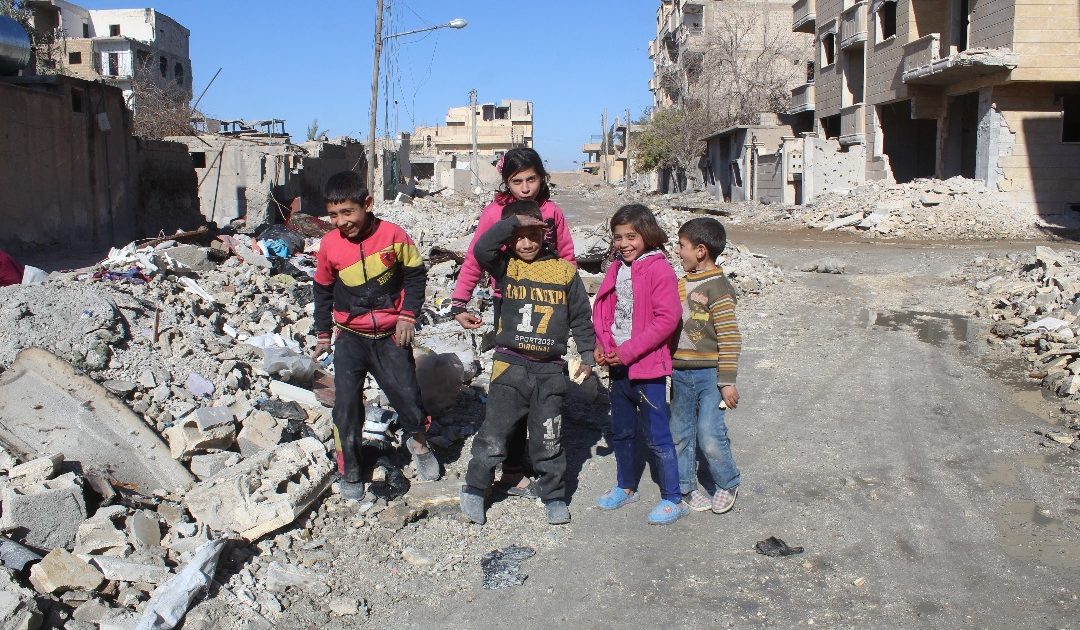
The US-led Coalition's ongoing failure to admit to, let alone adequately investigate, the shocking scale of civilian deaths and destruction it caused in Raqqa is a "slap in the face" for survivors trying to rebuild their lives and their city, said Amnesty International a year after the offensive to oust ISIS. In October 2017, following a fierce four-month battle, the Syrian Democratic Forces (SDF)—the Coalition's Kurdish-led partners on the ground—announced victory over ISIS, which had used civilians as human shields and committed other war crimes in besieged Raqqa. Winning the battle came at a terrible price—almost 80% of the city was destroyed and many hundreds of civilians lay dead, the majority killed by Coalition bombardment. In a September 2018 letter to Amnesty, the Pentagon made clear it accepts no liability for civilian casualties. The Coalition does not plan to compensate survivors and relatives of those killed in Raqqa, and refuses to provide further information about the circumstances behind strikes that killed and maimed civilians. (Photo: SDF)

by Bassam Aramin, Sara Burke and Yaniv Reshef, Peacework
Combatants for Peace is a group of Israeli and Palestinian individuals who were actively involved in the cycle of violence between their peoples. The Israelis served as combat soldiers and the Palestinians were involved in acts of violence in the name of Palestinian liberation. Yaniv Reshef is a former infantry soldier in Israel’s elite Golani unit; he now lives within range of rockets launched from Gaza. Bassam Aramin served seven years in jail for planning an attack against Israeli soldiers. Two years ago, his seven-year-old daughter was killed when an IDF soldier shot her with a (US-made) rubber-coated steel bullet. Together with the 600 other members of Combatants for Peace, they have pledged to abandon violence and work together using creative nonviolent tools to build justice and peace—and playgrounds in memory of Abir Aramin. Peacework Co-Editor Sara Burke spoke with them on March 17, 2009, during their speaking tour of the Northeastern US.
What do you draw on for your commitment to nonviolent solutions? Is it part of a wider commitment to pacifism?
Yaniv: No, I am not a pacifist. It’s just that I am learning how to use a new way. In Israel, we’ve gotten too used to the use of force—especially our leaders, who are not evil but can’t let go of the old ways. With one hand they give a handshake, while they are thinking about what hill to grab, or what settlement to build, with the other hand. I was told in my unit, “If you can’t get something by force, use more force.”
Having made this commitment to find another way, I feel great. I heard a lecture by two members of Combatants for Peace, doing what Bassam and I are doing now, and I knew it might be the beginning of a beautiful friendship. And it’s still a beginning—I don’t want to burn out. I want this to be a long-term relationship.
I am not a full-time activist—this is only one part of my life. When I said this recently at a speaking event, one audience member was upset. She said, “You are only doing this part-time, but Bassam doesn’t have that luxury.” But Bassam is doing this so that he can have a life—so how is it going to help him if I don’t live mine? I’m trying to tell my new peace friends to be gentler, more welcoming. Sometimes on both sides, right and left, some kind of “holy justice” is invoked. If I have one piece of advice for peace activists, it is “Don’t be so holy.”
Bassam: Yes, I am committed to nonviolence in all situations. This comes from my experience, my life, my sufferings and the sufferings of my people. We live in hell. I wish I could bring Palestine with me on my shoulders to show people how we live. I want even my enemy to see my humanity. My power comes from seeing my enemy change, when she or he begins to recognize that in fact we have a common enemy, the Occupation.
What are you learning on your US tour? Have there been surprises?
Bassam: This is my third tour with Combatants for Peace, including visits both to the US and to Europe. Europeans tend to be better educated, and more open to learning about what is happening. Here in the US, sometimes people don’t even know who occupies whom—even though the US is so heavily involved. They need to know that the soldier who shot and killed my daughter was firing an American M-16, from an American Jeep. But when US Americans do learn the facts, sometimes it brings more action, as they are moved to say “Not in our name.”
Yaniv: Sometimes I am surprised, when we speak in synagogues, by how the liberal Jewish community here doesn’t know the facts. They don’t grasp that the settlements are built in a certain way specifically to prevent the building of a Palestinian state, and to prevent peace. But I shouldn’t be surprised, since they are simply believing their leaders, just as Israelis do. Even in Israel, people don’t understand—they think that the hand of peace has been extended to the Palestinians and that the Palestinians did not accept it. I myself am not against the Separation Wall, if it was on the legal line, but instead it is being used to create facts on the ground that make peace impossible.
At one synagogue where we spoke, they welcomed Bassam as their first-ever Palestinian guest. I said, “How can this be? We’ve been occupying them for forty years and you haven’t had a single Palestinian in your synagogue? As you’ve been celebrating Passover, year after year?”
What do you see as the greatest challenges, internal and external, to the peacemaking work that you and others are doing?
Yaniv: The challenge is not to hate, but instead to forgive your enemy, because then you don’t fear them any more. If you try to understand your enemy’s humanity, you become very strong and it helps both of you. It’s the most powerful thing you can do for yourself.
Bassam: In each of our societies, we need to face the deep fear, and to bring people awareness of what is really going on. Especially the Israelis, who know so little about the Occupied Territories. That is what we do with our talks, and it works. Once they understand, many of the Israelis we speak to change their minds, and become active in peacemaking. But the separation and the war make it more difficult. Combatants for Peace is often unable to get the permits that allow us to meet, and the group is financially very poor.
The last battle, in Gaza, made it more difficult for people to hear us. In Tel Aviv, one of our members was attacked in the street after a demonstration, but the police were helpful. In the Occupied Territories, of course, it is different—the Israeli army is more brutal.
We are at our best when we are trying to be as peaceful as we can get. People notice this—even the army notices it. One of our group leaders says, when we are demonstrating at the Wall, that we should not even remove a brick or a stone from the wall, so that we will not be seen as provoking hostility. When we act entirely peacefully, whether we are demonstrating, speaking, or helping with the olive harvest, we can educate some of the soldiers this way.
I don’t ask other Palestinians to join me in this work. Most of my friends are ex-prisoners, and are not ready to join — but they do agree that there is no solution to the problem through violence. I tell Hamas about our meetings, and they are amazed and incredulous. I tell them they are welcome to come to our meetings and see for themselves. None have come — so far.
—-
This article first appeared in the April 2009 issue of PeaceWork.
Resources:
Combatants for Peace
http://www.combatantsforpeace.org
See also:
PALESTINE: OBAMA’S FIRST FOREIGN POLICY CHALLENGE
New Standards on Self-Determination Needed to Resolve Dispute
by William K. Barth, OpEdNews
World War 4 Report, February 2009
——————-
Reprinted by World War 4 Report, January 1, 2010
Reprinting permissible with attribution
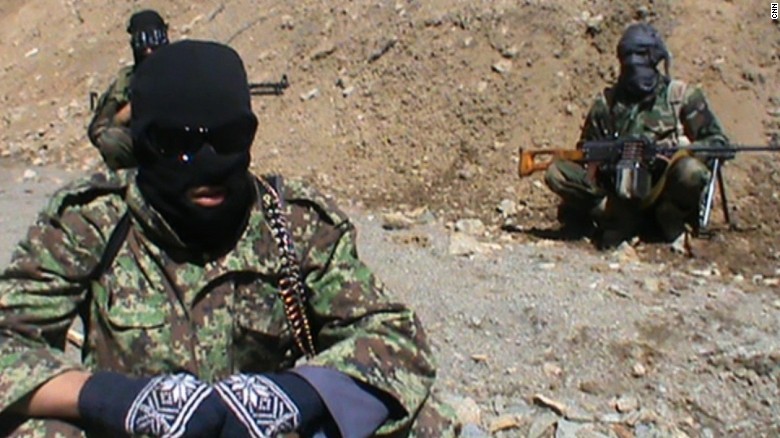
Taliban leaders confirmed that long-planned direct talks with the US took place in Doha, capital of Qatar. The Taliban said in a statement that their delegation met with US special adviser for Afghanistan reconciliation Zalmay Khalilzad. The statement said the two sides discussed the prospects for an end to the presence of the foreign forces in Afghanistan, and the return of "true peace" to the country. These overtures come as the US is stepping up operations against ISIS in Afghanistan. In an August air-strike in Nangarhar province, the US claimed to have killed Abu Sayed Orakzai, top ISIS commander in Afghanistan. Earlier in August, more than 200 ISIS fighters and their two top commanders surrendered to Afghan government forces in Jowzjan province to avoid capture by Taliban insurgents, after a two-day battle that was a decisive victory for the Taliban. (Photo: Khaama Press)