

ALGERIA: NEW STAGING POST FOR MIGRANTS

by Saskia Houttuin and Eva Huson, IRIN

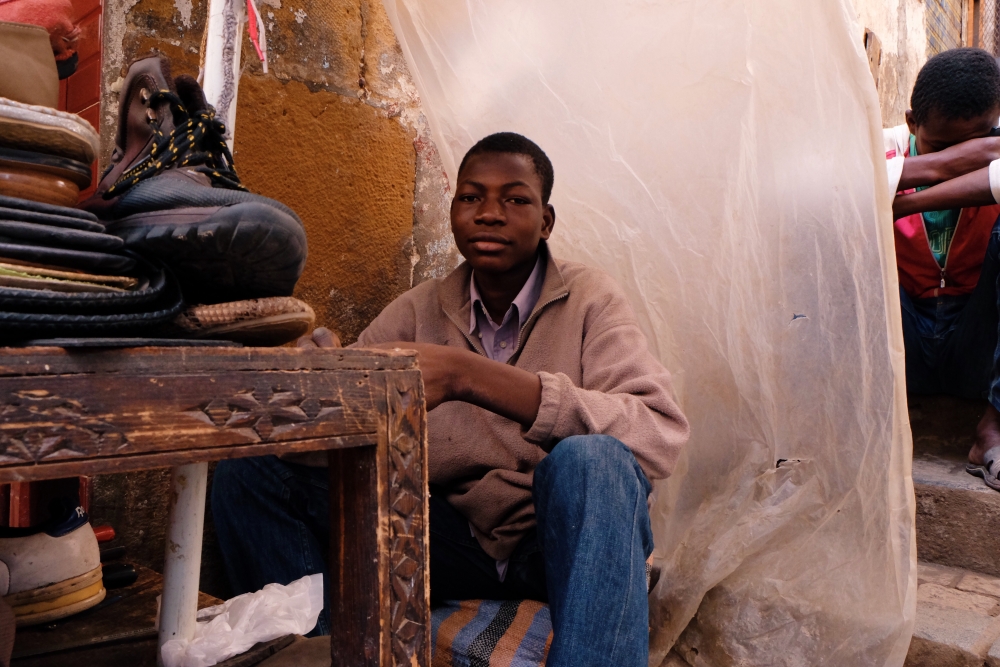
ALGIERS — Gerwinio never feels completely safe when he walks around Algiers. The other day, the 27-year-old from Benin was taking an evening stroll when he heard monkey sounds coming from a group of laughing teenagers. Gerwinio averted his gaze and kept walking. He has become used to such racist taunts. "I was called 'Ebola' so often that I changed it into my Facebook name," he says.

Gerwinio is one of a growing number of sub-Saharan Africans coming to Algeria, although exact numbers are hard to come by. The Algerian government claims there are 25,000 such migrants in the country, but local NGOs say the true number is at least four times higher.

"It is way more visible lately that there is more sub-Saharan migration," said Pascal Reyntjens, mission chief for the International Organization for Migration in Algiers.

Continue ReadingALGERIA: NEW STAGING POST FOR MIGRANTS 

DANES WHO STAND WITH REFUGEES

Activists Revive Heroic WWII-era Practice of Smuggling to Safety

by Phil Wilomt, Waging Nonviolence

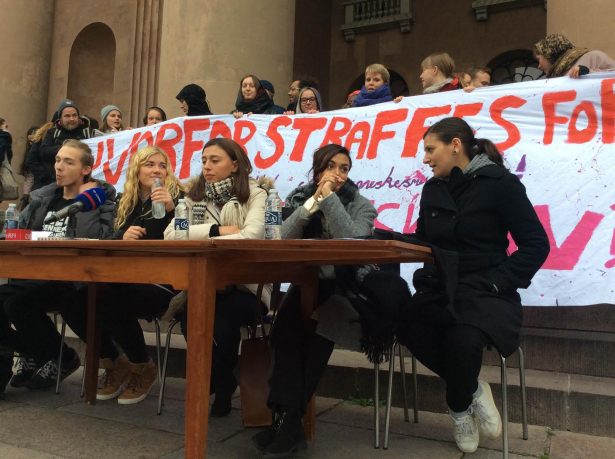
About 100 Danes, young and old, stood outside Copenhagen City Court in the chilly seaside winds last week to show their solidarity with four activists alleged to have illegally assisted refugees in their trek across the waters from Denmark to Sweden.

While only two of the accused are Danish citizens, all are members of MedMenneskeSmuglerne, or “Those who smuggle thy neighbor”—an outgrowth of the more broad-based initiative Welcome to Denmark, which welcomes migrants and refugees into the country.

Last year, over one million migrants and refugees from Syria, Afghanistan, Eritrea and other unstable nations endured the risks of exodus to Denmark and other parts of Europe. Many died during the journey or ended up in refugee camps for prolonged periods. This migration wave correlates directly to the growing xenophobia and shift to the right in many European countries, including Denmark.

“Pretty much all leftist organizations in Europe neglected to consider the refugee influx on their agendas,” said Mimoza Murati, one of the non-Danish activists facing criminal charges that day. “We should have been prepared because we know the political landscape.”

Continue ReadingDANES WHO STAND WITH REFUGEES 
Native protestors

THE DAKOTA ACCESS PIPELINE

A Legal Environmental Justice Perspective

by Dayna Jones, Jurist

The largest multi-tribal gathering of indigenous peoples in North America in over a century is happening now at the Sacred Stone Camp in North Dakota. Leading the cause is the Standing Rock Sioux Nation. The Standing Rock Sioux and their allies are standing against construction of the “black snake” Dakota Access Pipeline (DAPL), slated to run under the Missouri River and through their historically sacred tribal sites. The tribe states it had not been properly consulted prior to construction of the DAPL, a requirement legally mandated by Executive Order 13175 (PDF). The order stipulates that: “[e]ach agency shall have an accountable process to ensure meaningful and timely input by tribal officials in the development of regulatory policies that have tribal implications.”

The Standing Rock Sioux Nation’s assertion that the Army Corps of Engineers, an executive agency charged with overseeing and granting pipeline permits, has failed to meet the clearly-enunciated requirement of meaningful consultation, makes this case one of the strongest Native American environmental justice legal claims in history. Environmental justice, a paradigm born of a merger between the civil rights and environmental movements, is unique in Native American communities. This unique status stems from the legal classification of tribes as domestic dependent nations, sovereign as political entities, yet still under the plenary authority of Congress, as per Article 1, Section 8 of the Constitution. The plenary authority of Congress over the tribes is a stretch at best, as Native Americans predate the Constitution. Nonetheless, the Supreme Court has established a solid judicial body of law giving Congress, and only Congress, the ability to act in good faith as wards over the affairs of Indian Country, such as the 1886 case of US v. Kagama.

Continue ReadingTHE DAKOTA ACCESS PIPELINE 

ANOTHER WEEK CLOSER TO FASCISM

?Putin Shows What Trump Has in Store for America

by Michael I. Niman, The Public

It might seem like I’m writing a lot about fascism lately. It’s just the drought of journalists using the F-word that makes any use of the word stand out—this as a bona fide fascist is within striking distance of the White House.

In case you were on the fence and reluctant to believe that the Republican candidate for president—the one who claimed he could shoot a man in the middle of Fifth Avenue without losing steam among his supporters—is a fascist, this week’s pronouncements by him and his allegedly more palatable running mate reiterate the point.

As he climbs back up to a statistical dead heat in the polls, Trump complimented Vladimir Putin for his leadership style. Media criticism focused on the fact that Putin ordered the invasion and occupation of Ukraine’s Crimean peninsula. Others dusted off Cold War tropes to remind us that we hate the Russians. All of this misses the point that Trump zeroed in on Putin’s leadership style. This demands that we look at how he treats his own people—how he leads his own nation.

Continue ReadingANOTHER WEEK CLOSER TO FASCISM 

SELF-ORGANIZATION IN THE SYRIAN REVOLUTION

by Mark Boothroyd, The Project

Behind the headlines and vicious brutality of Syria's civil war lie amazing examples of self-organization, the story of which is largely unknown to most in the West. It is this self-organization, and not Saudi or Turkish aid, which has allowed the revolt to sustain itself through six long brutal years of repression and war.

The earliest form of self-organization in the revolt were the tanseeqiyat, coordination committees formed by groups of friends and activists based in each neighborhood or town, who would rally their community for protests and demonstrations. As the revolution progressed, the tanseeqiyat were superseded by the more overtly political Local Coordination Committees (LCCs). These were committees of activists, elected or nominated from different areas, which coordinated across the country. They were anti-sectarian, opposed to foreign intervention, committed to non-violent revolt against the dictatorship, and wanted the formation of a democratic civil state. They organized protests, publicized films and reports of the revolution, coordinated days of action, and as repression mounted, provided humanitarian aid to districts and neighborhoods in revolt. They sought to direct the mass of protests towards the non-violent overthrow of the regime.

Continue ReadingSELF-ORGANIZATION IN THE SYRIAN REVOLUTION 

THE FALL OF DARAYA

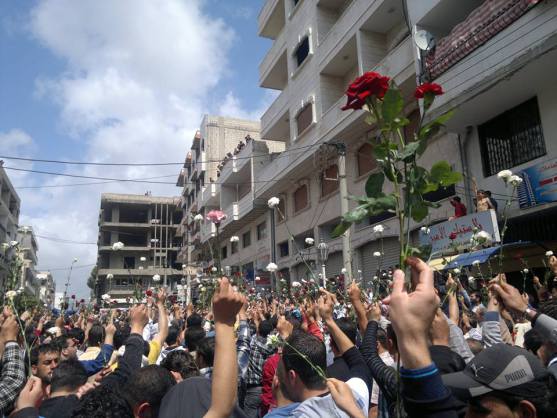
From Roses to Evacuation

by Leila Al Shami

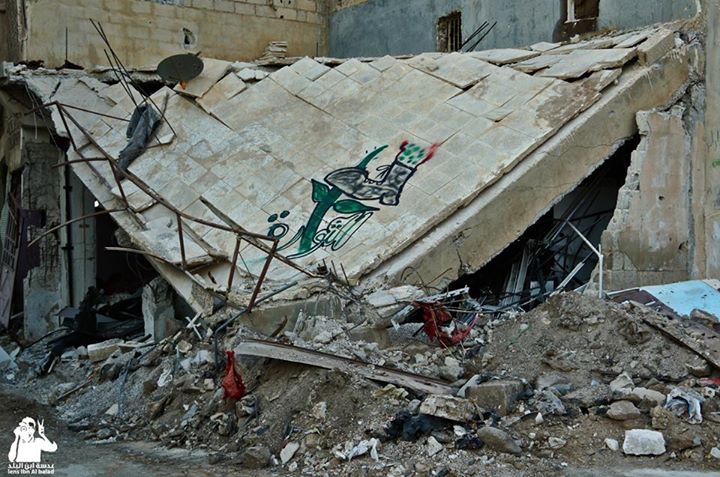
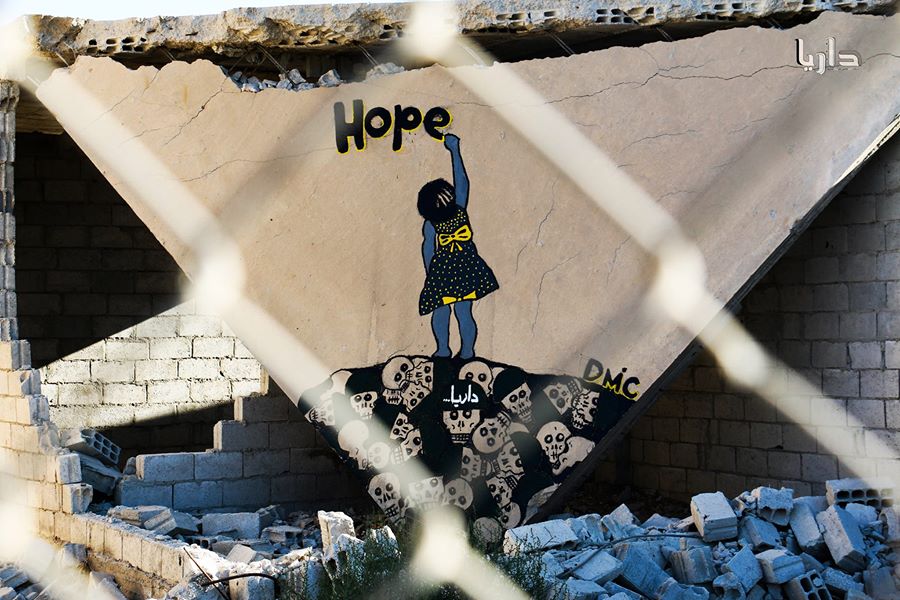
Four years following its liberation, the predominantly agricultural town of Daraya, strategically located near Syria’s capital, has fallen to the regime. A deal was reached to evacuate the 4,000-8,000 civilians remaining from a pre-uprising population of 300,000. The local fighters who defended their town so courageously will go to Idlib and join the resistance there.

Daraya’s residents know that they may never return to their homes. Photos circulated on social media showed residents gathered at the graves of loved ones to say goodbye. Fears abound of a plan to cleanse opposition strongholds permanently; and in previous evacuation deals, even those carried out under UN auspices, many were detained by the regime, never to be seen again.

Continue ReadingTHE FALL OF DARAYA 

PERU’S NEW GOVERNMENT WANTS MORE CHINA


by Nelly Luna Amancio, Diálogo Chino

Peru’s new president, Pedro Pablo Kuczynski (known as PPK), intends to stimulate the country’s economy by processing and refining minerals, in addition to simply exporting them. Since his victory in the runoff election on June 5, Kuczynski has declared the need for Peru to prioritize both mineral extraction and trade relations with China.

China is Peru’s biggest investor. With this in mind, Kuczynski—who will replace the outgoing President, Ollanta Humala, at the end of July—described as “necessary” a trip to China ahead of the Asia-Pacific Economic Cooperation (APEC) forum in Lima in November, his first official visit overseas. “China is our number one trading partner and they are the ones who purchase our minerals,” he said.

“We are an economy with enormous natural resources, but we have to industrialize and that is no easy task. So, we will have to work with those who buy significant amounts of our exports, which means, to a large extent, China,” Kuczynski insisted during the Eleventh Business Summit of the Pacific Alliance in Lima in June.


Continue ReadingPERU’S NEW GOVERNMENT WANTS MORE CHINA 

GREEN PARTY, WHITE PRIVILEGE

by Michael I. Niman, The Public

This might be a great year for the Green Party, which some polls are predicting could score a record-shattering five percent or more of the popular vote in the upcoming presidential election. Hillary Clinton is a tool of Wall Street and corporate interests such as Wal Mart, on whose board she once served. And Donald Trump, of course, is a fascist. The Libertarians want to do away with environmental and labor protections and open the door further for corporate pillage. This leaves opportunity for a strong Green Party run with the comparatively benign Jill Stein, who wants to grab the crown off Bernie Sanders’ head and hijack the movement his candidacy created.

The Green theme is generally the same as it was when I was an elector for Ralph Nader 16 years ago—vote “your hopes, not your fears,” only now it’s “vote your conscience.” George W. Bush, however, despite arguments that he was “the worst president in history,” and the reality that his foreign policy birthed endless wars and ISIS, never posed the level of threat that Trump presents. Trump is a bona fide fascist who assembled a following based on a cult of personality. Delegates at his Republican Convention, the whitest GOP soiree in over a century, regularly chanted for his political opponent to be jailed, presumably after his coronation. One campaign insider called for her execution.

Continue ReadingGREEN PARTY, WHITE PRIVILEGE 

OAXACA TEACHERS MOVEMENT

Not Thwarted by State Terror

by Shirin Hess, Waging Nonviolence

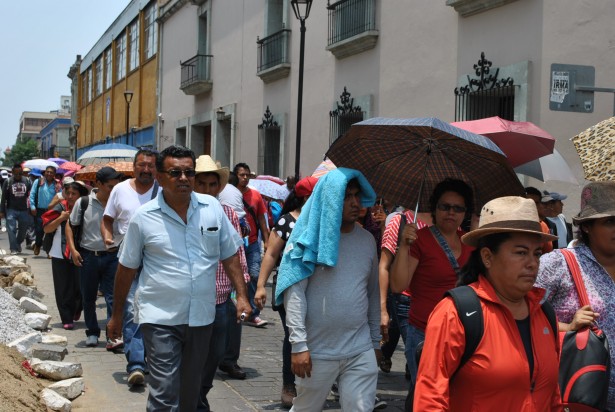
On June 19, the southern Mexican state of Oaxaca was the scene of a senseless massacre. The bloody battle took place in the rural town of Nochixtlan and resulted in the death of at least nine civilians. “Right now, the federal police are withdrawing, going back to their vehicles,” said a witness of the attack as he filmed the horrific scene. Bullets are heard smashing against metal traffic barriers on the roadside as the camera image shakes. Taking heavy breaths he calmly continued, “And as they retreat, they are shooting at us with firearms.”

A week earlier, police crackdowns had begun in various regions of Oaxaca state. These acts of violence are occurring in light of current protests in Oaxaca, where—since May 15—the teachers’ movement has set up a peaceful plantón, or encampment, in the city center, and dozens of roadblocks across the state, including Nochixtlan. The teachers demanded a dialogue with the local and federal government about a recently approved education overhaul and the implementation of its neoliberal policies in Oaxaca.

Continue ReadingOAXACA TEACHERS MOVEMENT 

CHIBOK GIRLS — DO WE REALLY CARE?

#BringBackOurGirls should be more than a hashtag

by Hilary Matfess, IRIN

MAIDUGURI — The world united in a campaign to demand #BringBackOurGirls after the abduction of the Chibok school girls two years ago by the Nigerian jihadist group Boko Haram. But there has been next to nothing in the way of support to the women that have managed to escape the militants.

They are now homeless, reduced to begging to survive, and forced to deal alone with the trauma of their ordeal.

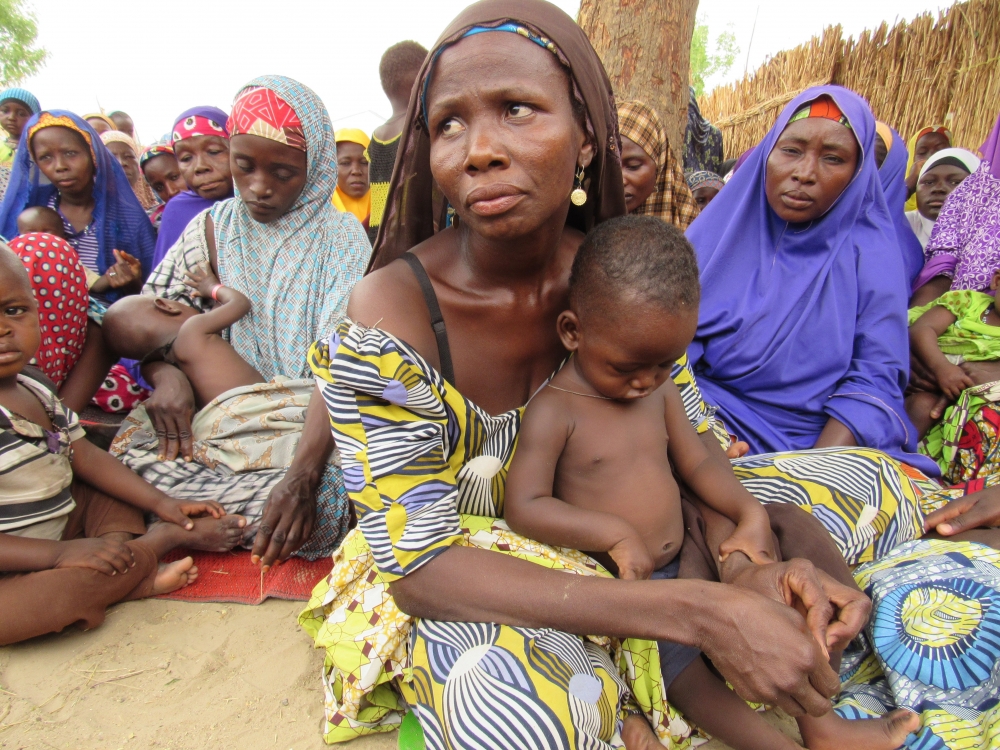
Safiya sits on a woven mat under a scraggly tree in the grounds of Madina Mosque, on the outskirts of the northeastern city of Maiduguri, rocking her newborn son. The mosque has become a rough-and-ready sanctuary for around 2,000 people who have fled the conflict.

“We spent three months in the forest, crawling through the bush, bringing all five children and trying not to disturb the infection in my husband’s wound from where Boko Haram shot him,” she says.

She was pregnant as well at the time. When she felt the baby was almost due, she left her husband with the children and walked the remaining 70 kilometres to Maiduguri, and this mosque.

Safiya delivered her son here a week later, without a doctor, midwife, or medicine. Her family finally managed to join her, helped by communities along their path, and though they are now physically safe and united, that’s about the extent of it.

Continue ReadingCHIBOK GIRLS — DO WE REALLY CARE? 

ADIEU TO THE ‘PEACE PENTAGON’

by Bill Weinberg, The Villager

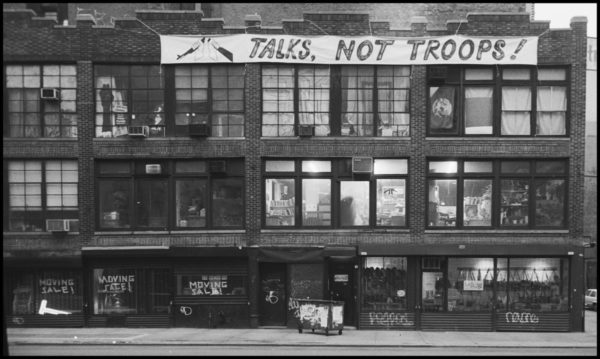
The night of Thursday May 5 was a bittersweet one for me. For probably the last time in my life, I crossed the threshold of 339 Lafayette St., for a “Moving the Movement” farewell party. I was bidding adieu to the building that three generations of activists had affectionately called the “Peace Pentagon.” The gathering was confined to one room of the three-story structure, with construction tape barring access to the other rooms, and the halls deserted. It was an eerie feeling.

The first time I entered the building at the corner of Lafayette and Bleecker, I was in my senior year of high school. It was 1980, Reagan’s election was imminent, the Iran hostage crisis and Soviet invasion of Afghanistan dominated the headlines, and the big lurch to the right was in frightening progress. President Carter, who had been elected on a pledge to pardon Vietnam-era draft resisters, capitulated to the new bellicose zeitgeist by bringing back draft registration. I was in the first crop of 18-year-olds to have to register with the Selective Service System since 1973. This precipitated my first activist involvement—a student anti-draft group. Through this, I was inevitably drawn into the orbit of the War Resisters League—the venerable pacifist organization that grew out of anti-draft efforts in World War I, and was the anchor tenant at 339.

Continue ReadingADIEU TO THE ‘PEACE PENTAGON’ 

CHALLENGING THE NATION STATE IN SYRIA

by Leila Al Shami, Fifth Estate

Syria’s current borders were drawn up by imperial map-makers a hundred years ago in the midst of World War I as part of a secret accord between France and Britain to divide the Mideast spoils of the Turkish Ottoman Empire. As the colonial state gave way to the post-independence state, power was transferred from Western masters to local elites.

The three major discourses which grew out of the anti-colonial struggle—socialism, Arab nationalism, and Islamism—all fetishized the idea of a strong state as the basis of resistance to Western hegemony. In the case of Syria, it led to the emergence of an ultra-authoritarian regime where power is centralized around one man in Damascus, Bashar al-Assad, bolstered by the state bureaucracy, and security forces. But today, new ways of organizing have emerged which challenge centralized authority and the state framework.

During the course of the revolution against Assad that began in Syria in 2011, land was liberated to the extent that by 2013 the regime had lost control over some four-fifths of the country. As the state began to disintegrate, communities needed to build alternative structures to keep life functioning in the newly created autonomous zones.

Continue ReadingCHALLENGING THE NATION STATE IN SYRIA