The Andes

Forgotten voices in Venezuela crisis

PemonTrump, the great enthusiast for dictators, suddenly develops a touching concern with democracy in Venezuela, grasping at the opportunity for long-sought regime change. Predictably overlooked in the world media's Manichean view of the crisis are voices of Venezuela's dissident left that takes a neither/nor position opposed to both the regime and the right-wing leadership of the opposition. Also unheard are voices of indigenous dissent and resistance. In an episode that received little coverage, December saw protests in the remote Orinoco Basin after a leader of the Pemón indigenous people was killed in a confrontation with elite Military Counterintelligence troops. The military operation was ostensibly aimed at clearing the region of illegal mining—while the Pemón themselves had been protesting the mining. The indigenous leaders view the militarization of the region as intended to make way for corporate exploitation under the Orinoco Mineral Arc plan. (Photo: EcoPolitica Venezuela)


Central America
Berta Caceres

Honduras: justice at last for Berta Cáceres?

Berta CaceresA court in Honduras convicted seven men in the 2016 murder of indigenous rights activist Berta Cáceres. Until her assassination Cáceres had been leading a campaign against the Agua Zarca dam, a joint project by Honduran company Desarrollos Energéticos SA (DESA) and Chinese-owned Sinohydro. The dam was being built on the Rio Gualcarque without prior consultation with the Lenca indigenous community that depends on the river for their food and water. Cáceres, who won the prestigious Goldman Environmental Prize in 2015, had received numerous threats for her activism against the dam before she was killed by gunmen at her home in the town of La Esperanza. Two of those convicted are former DESA managers. (Photo by UN Environment/ONU Brasil via Wikimedia Commons)

The Andes

Venezuela re-privatizing oil resources

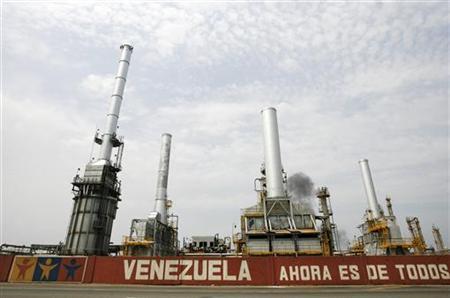
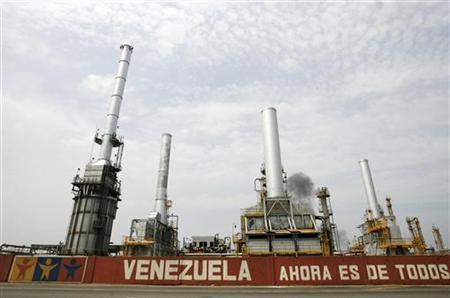
PDVSAFaced with declining production and economic chaos, Venezuela is again opening its oil-fields to private companies—reversing much of the progress in asserting state control of the hydrocarbons industry that was made under Hugo Chávez. Just after a series of new contracts with private firms was announced, President Nicolás Maduro flew to Beijing for a meeting with Xi Jinping. The two leaders announced further deals to open Venezuela's Orinoco Belt to Chinese companies. This comes a decade after Exxon withdrew from the Orinoco Belt, unable to come to terms with the Chávez government. (Photo via OilPrice.com)

Central America

Podcast: Nicaragua and political deja vu

FSLNIn Episode 10 of the CounterVortex podcast, Bill Weinberg notes the re-emergence in the news of three figures associated with the drama that played out over revolutionary Nicaragua in the 1980s. Daniel Ortega, president of Nicaragua then, is again today, and just faced massive protests calling for his ouster. Oliver North, who headed the Reagan White House covert operation to destabilize Nicaragua's Sandinista regime back then, was just named as head of the National Rifle Association. And Luis Posada Carriles the right-wing Cuban terrorist who was part of North's private spy network back then, just died. Historical ironies abound. North, who supported a counter-revolutionary terrorist network in Nicaragua (the "contras"), now baits nonviolent gun-control activists as "terrorists." Ortega, whose government distributed land to the campesinos in the '80s, is now seizing land from campesinos for his monstrous inter-oceanic canal plan. And the conspiracy theory popular among the NRA's white heartland base about the government preparing to disarm the populace and detain resisters in military camps has its roots in the actual FEMA martial law plan drawn up by Oliver North, to be implemented in the event of a US invasion of Nicaragua—with Central American refugees to be detained in military camps. A final irony is the NRA-Russia connection, which comes as Nicaragua is cooperating with a resurgent Russian military presence in the Caribbean. Vladimir Putin recently became the first Russian (or Soviet) leader to visit Nicaragua. So is it possible that we are today so far through the proverbial looking glass that Oliver North and Daniel Ortega are now on the same side? Listen on SoundCloud, and support our podcast via Patreon. (Image: Wikipedia)

The Andes

Peru: mass protest against political class

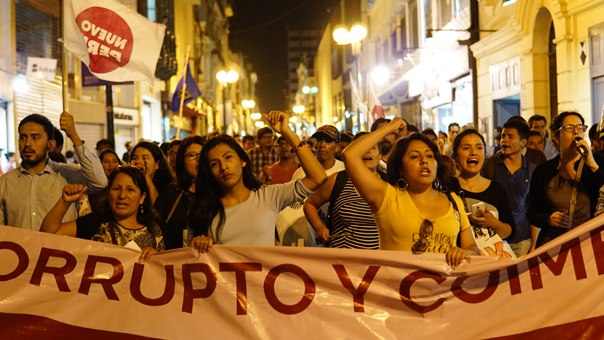
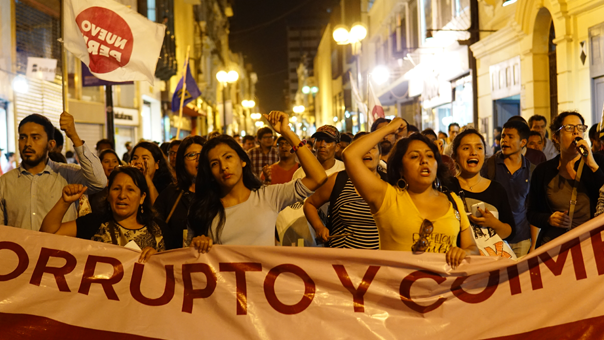
Nuevo PeruThousands of protesters took to the streets of Lima after Peru's scandal-embattled president Pedro Pablo Kuczynski announced his resignation. Clashes were reported in the city's downtown Plaza San Martín, with tear-gas used and several injured. The resignation came after months of political machinations in Peru's congress had put off Kuczynski's ouster, and the ire of the demonstrators was directed not just at the disgraced "PPK," but Peru's entire political class. The left opposition and trade unions are calling for a constituent assembly to "refound the country and devolve power to the people." The popular slogan heard again and again at the marches is  "¡Que se vayan todos!"  (Throw them all out!) (Photo: Nuevo Perú)

The Amazon

Ecuador: judicial abuse of ecological opposition

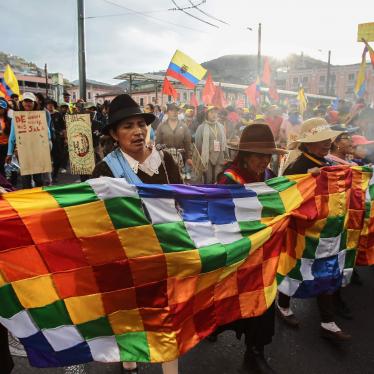
Ecuador protestHuman Rights Watch released a report charging that Ecuador's former president Rafael Correa abused the criminal justice system to target indigenous leaders and environmentalists who protested mining and oil exploitation in the Amazon. The report details use of criminal prosecution to silence ecological opposition, and the closure of one environmental organization by presidential order. The report credits new President Lenin Moreno with making positive change, opening a dialogue with environmentalists and indigenous leaders. But abusive prosecutions initiated by his predecessor remain in motion. (Photo: HRW)

Planet Watch

Oil prices surge: vindication is tedious

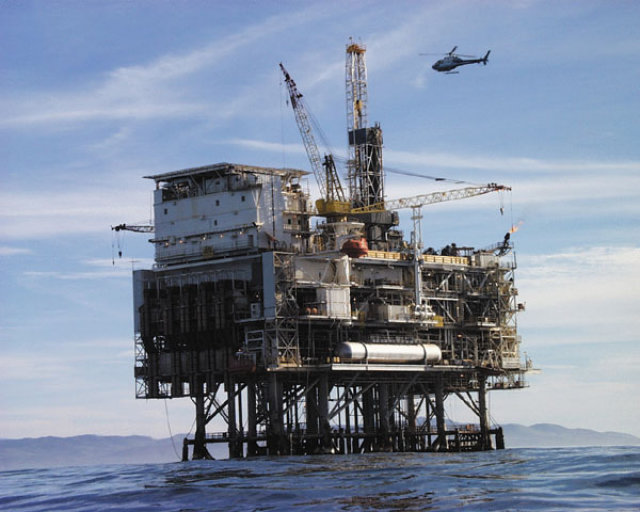
oil rigWe've been told for the past several years now that the depressed oil prices were permanent, thanks to fracking and the surge in US domestic production. Now prices are rising again, due to a convergence of crises in major producers: escalating tensions among the Gulf states, labor unrest in Nigeria, deepening instability in Venezuela. The US was able to contain the price spike after the ISIS irruption in 2014 by boosting its own production. This trick isn't going to work forever.

The Andes

Peru and Australia sign free trade pact

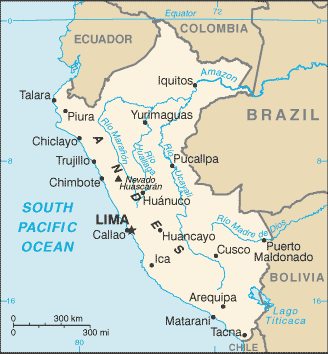
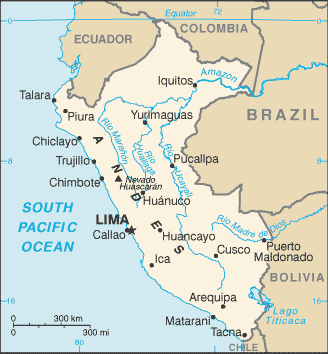
PeruPeru and Australia signed a free trade pact that does away with 99% of tariffs on imported goods from Australia, while securing Peruvian exports greater access to Australian markets. The Peru-Australia Free Trade Agreement (PAFTA) was signed in Vietnam, at the 25th summit of the Asia-Pacific Economic Cooperation (APEC) forum. Peru's President Pedro Pablo Kuczynski, speaking at the summit, reiterated his support for free trade and warned about the dangers of protectionism–comments seemingly aimed at the Donald Trump administration.

The Andes

Peru seeks to overtake Chile in copper production

traffic deathIn Episode 142 of the CounterVortex podcast, Bill Weinberg takes on the ugly backlash against bicyclists in New York City, which has escalated from petitioning against bike lanes to dangerous anti-bicycle vigilantism. The recent killing of Chelsea resident Gavin Lee by a hit-and-run bicyclist became a rallying point for the anti-bike partisans. But 255 New Yorkers were killed by motorists last year, their names quickly forgotten by all but their loved ones. The killing of young bicycle messenger Robyn Hightman by a truck driver in 2019 briefly sparked protests. But the names of most victims of automotive terror quickly go down the media Memory Hole. Weinberg recounts some of the recent lives claimed by motorists in the city: Be Tran, Carling Mott, Christian Catalan, Lynn Christopher, Karina Larino, Eric Salitsky, Raife Milligan. It is the auto-centric system that pits pedestrians and bicyclists against each other. What is needed is the dismantling of this system, and its replacement with one that centers human beings and human-powered transport—as is already underway in several European cities. Listen on SoundCloud or via Patreon. (Photo: Bill Weinberg)

The Andes

Peru: campesina sues Newmont Mining

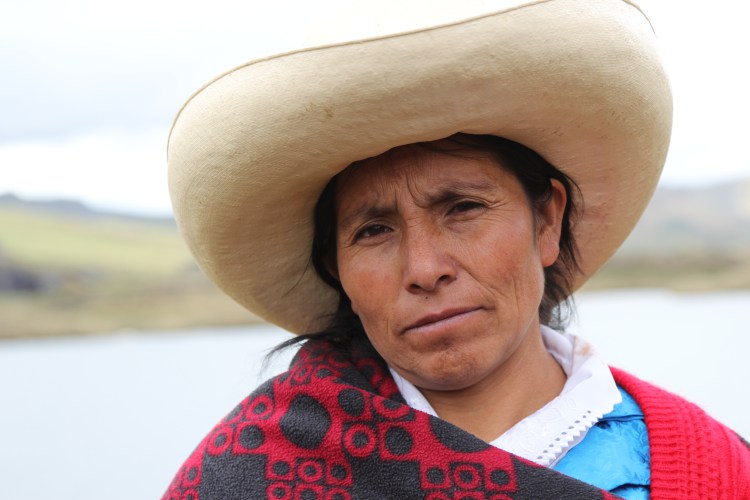
Maxima AcuñaPeruvian campesina Maxima Acuña de Chaupe and her family are suing Newmont Mining in US federal court, claiming the company used violence and threats to try to evict them from their home to make way for the controversial Conga open-pit gold project. The lawsuit charges Newmont with "instructing, authorizing, aiding and abetting, conspiring in and/or ratifying a violent harassment campaign" against Acuña's family.

The Amazon

China wins contract for Amazon mega-project

PeruPeru's Transport and Communications Ministry signed a contract with Chinese state-owned engineering giant SinoHydro to build the Hidrovía Amazónica, a mega-project aimed at turning the major rivers of the Amazon into arteries for delivering the resources of the rainforest basin to foreign markets. The government claims to have carried out a "prior consultation" with impacted communities along the rivers, having won 40 agreements to proceed with work.

The Andes

Venezuela drops petro-dollar: how meaningful?

dollarVenezuela, under growing pressure from US sanctions, has told oil traders that it is dropping petro-dollars for petro-euros and petro-yuans. Despite the instinct to cheer the decline of US world domination, will this make any real difference—either to Venezuela, still dependent on oil exports in a world of depressed prices, or to Planet Earth, facing biosphere collapse as a result of burning hydrocarbons?