Watching the Shadows
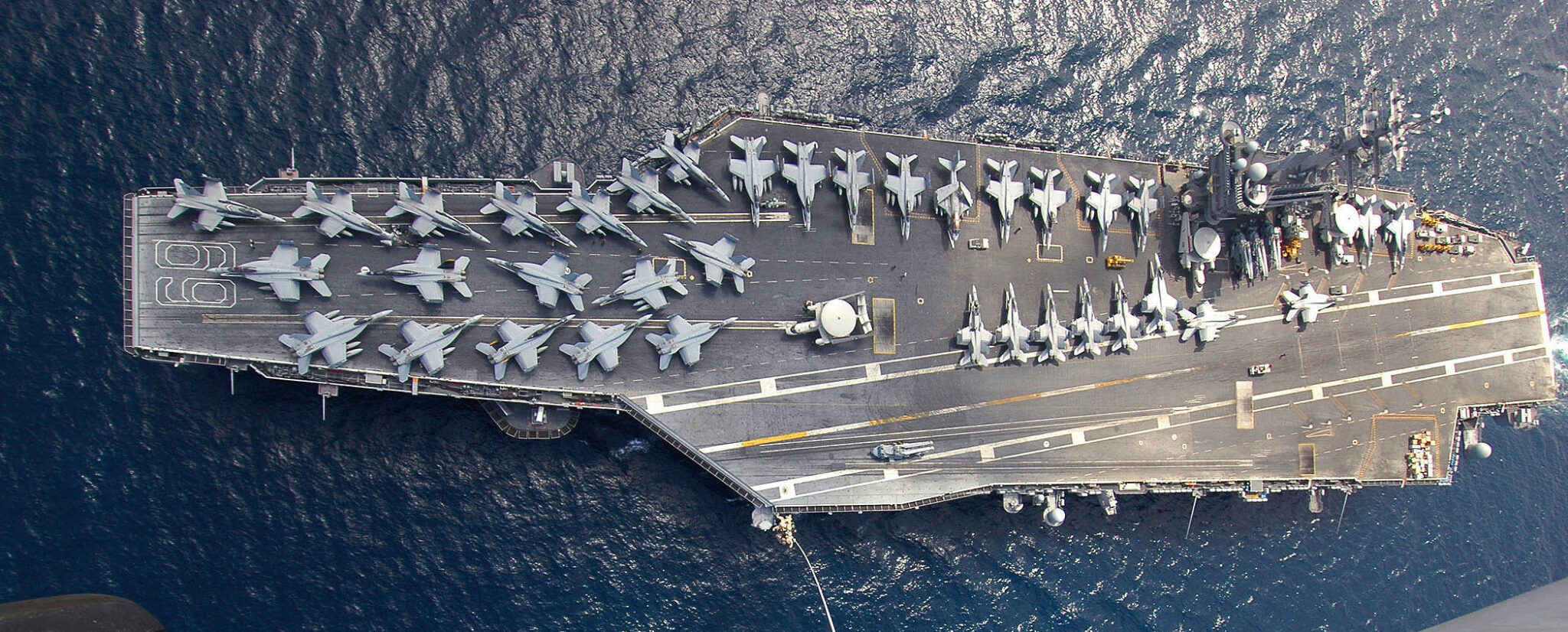
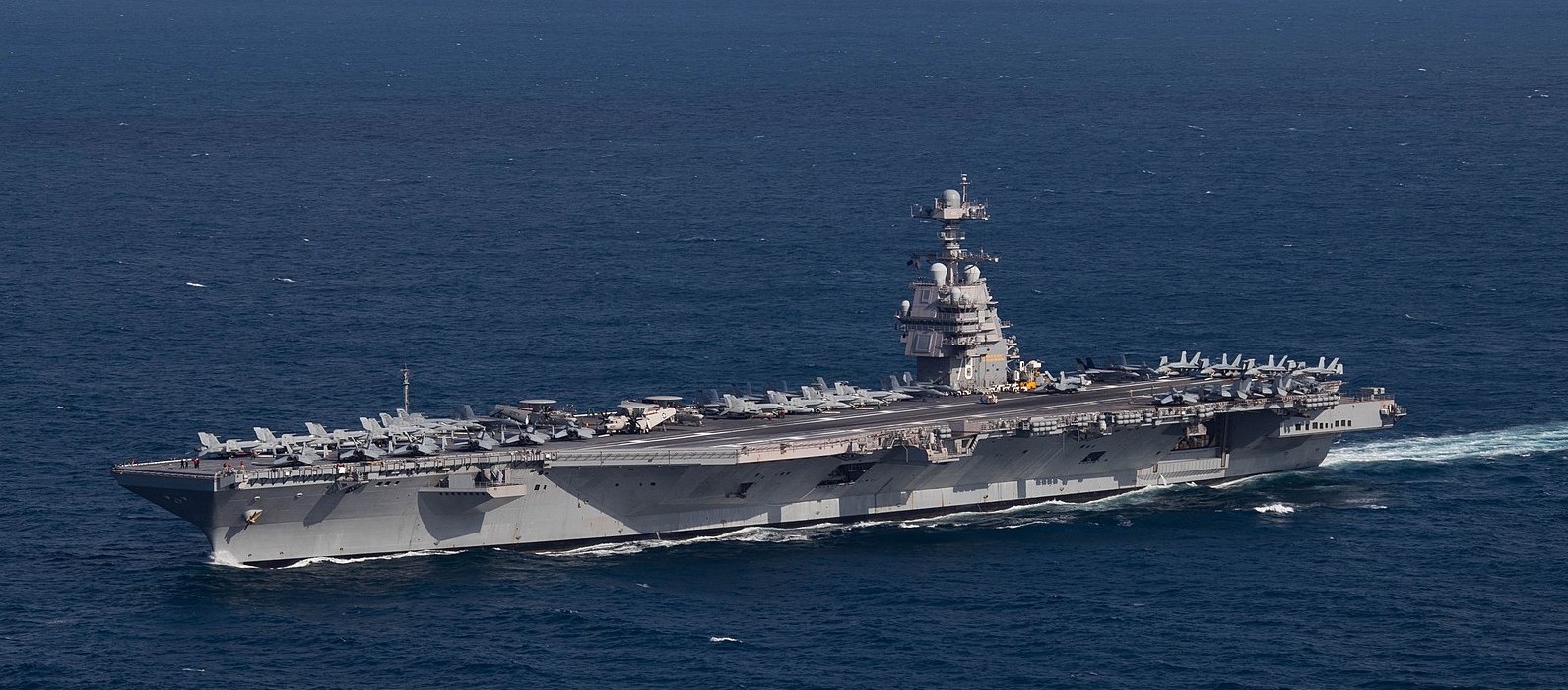
USS Gerald Ford

US instates ‘Trump Corollary’ to Monroe Doctrine

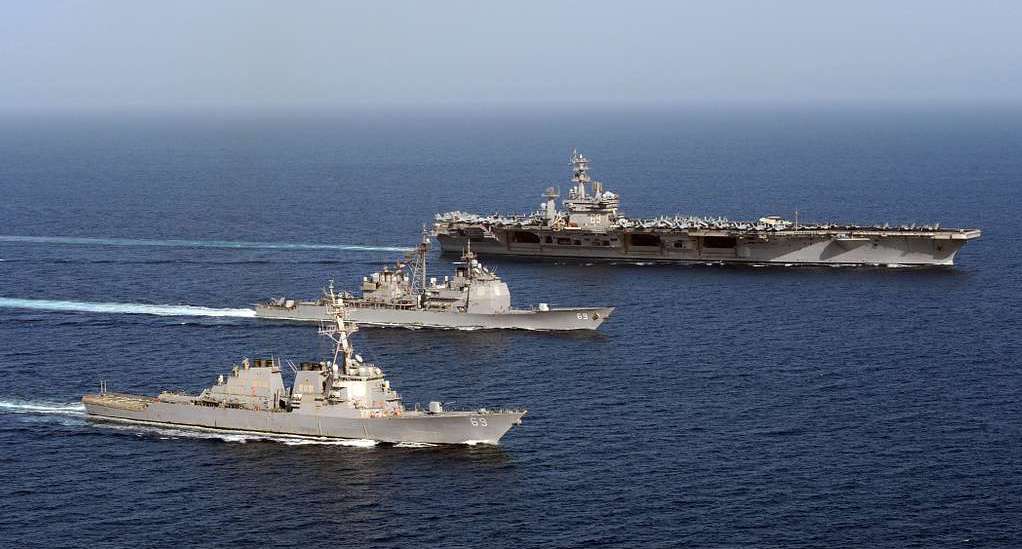
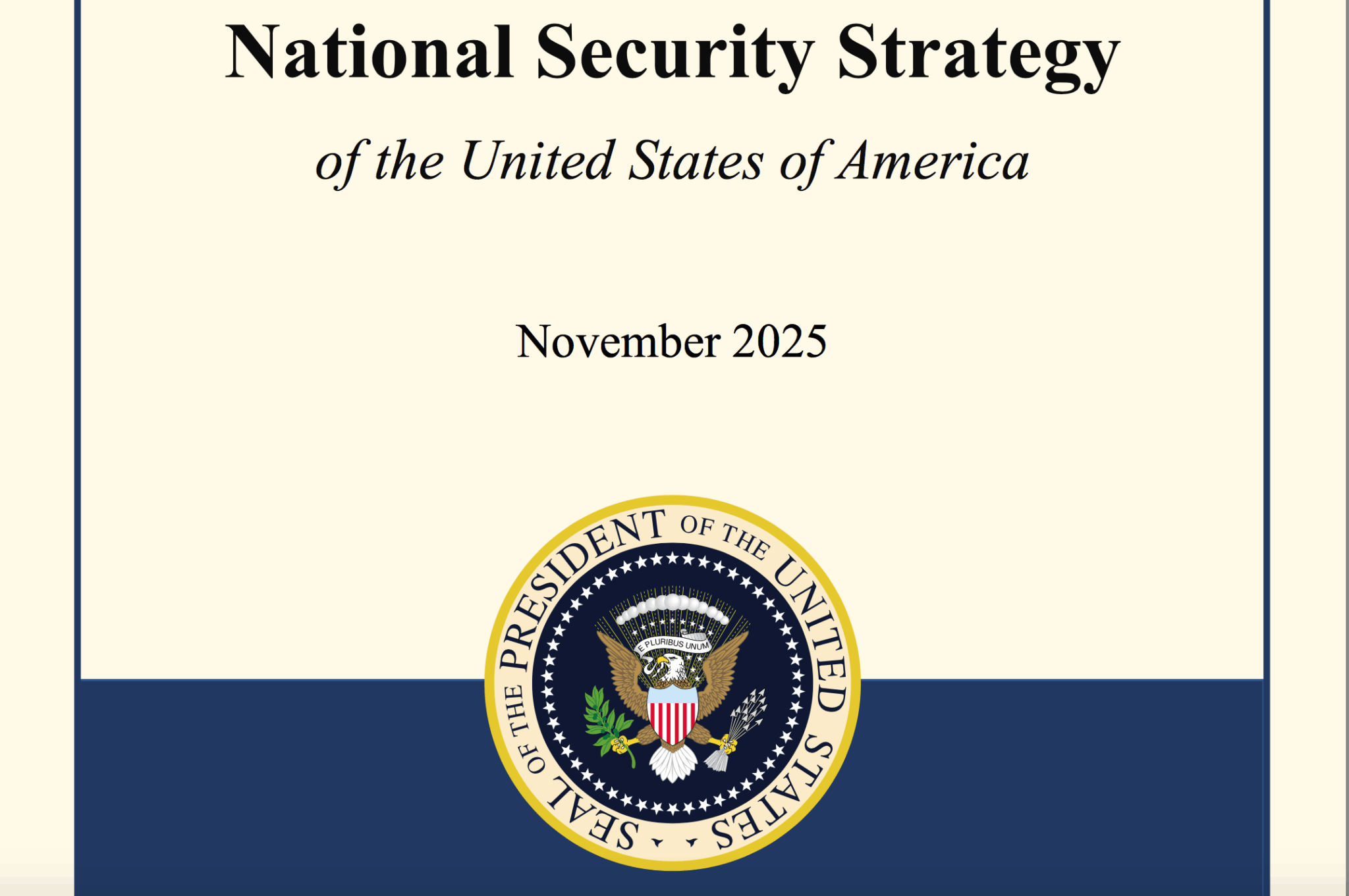
President Donald Trump’s new National Security Strategy puts the Western Hemisphere at the center of US foreign policy and revives the Monroe Doctrine of 1823, appending it with a “Trump Corollary.” The document presents the Americas as the main line of defense for the US homeland and links that doctrine directly to ongoing military operations against suspected drug traffickers in Caribbean and Pacific waters. It places the Hemisphere as the top regional priority, above Europe, the Middle East and Indo-Pacific, and ties that status to controlling migration, drug flows, and foreign influence before they can reach US territory. It also states that the US will block “non-Hemispheric competitors” from owning or controlling “strategically vital assets” in the Americas, including ports, energy facilities, and telecommunications networks. (Photo: USS Gerald R. Ford. Credit: US Navy via Wikimedia Commons)
Watching the Shadows
Orwell

Podcast: Trump for War-is-Peace Prize III

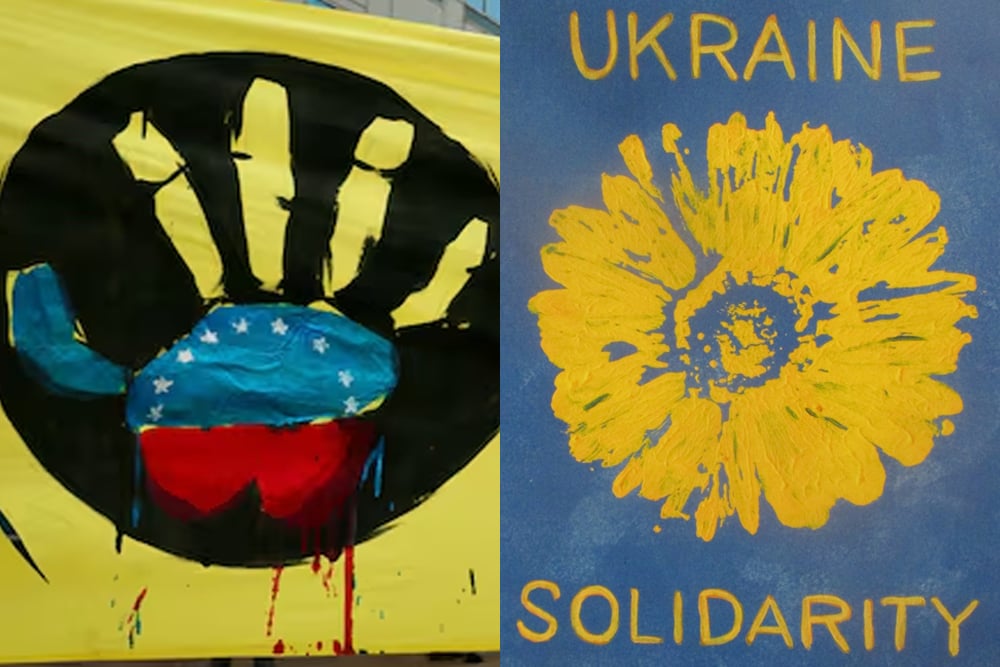
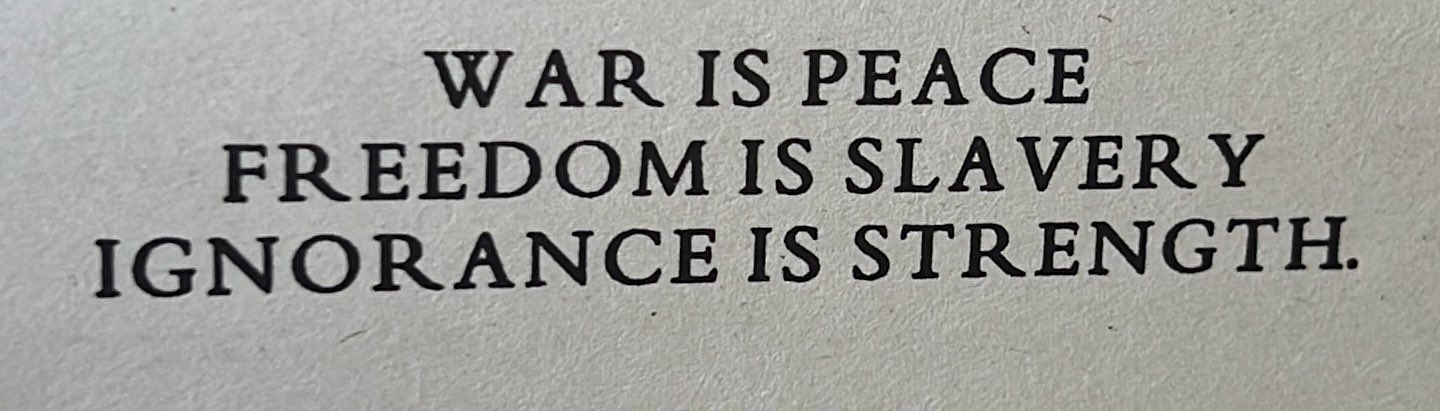
Trump’s perverse ambition to win the Nobel Peace Prize was given a boost by his “winning” of the first “FIFA Peace Prize“—just as he is carrying out illegal deadly air-strikes in the Caribbean, and threatening Venezuela with war. “Secretary of War” Pete Hegseth is denying claims that he gave orders to “kill them all” in the strikes, but Congress is preparing an investigation. Regardless of whether this order was given, the strikes are clearly illegal under the international laws of war. Nonetheless, the Pentagon has opened an investigation into Sen. Mark Kelly for his video calling for troops to refuse illegal orders. Trump—who pardoned soldiers convicted of war crimes in his first term—has called for Kelly to be hanged for sedition. In Episode 307 of the CounterVortex podcast, Bill Weinberg continues to be flabbergasted by the Orwellian war-is-peace propaganda. (Image via Twitter)

The Caribbean
CVN

UN protests as Trump threatens Venezuela

The United Nations urged all countries to respect international norms safeguarding civil aviation, following US President Donald Trump’s announcement of his intention to “completely shut down” Venezuelan airspace. The statement added that the Secretary-General is also “gravely concerned” about the strikes on Venezuelan civilian vessels at sea, which the US alleges were involved in drug trafficking. UN High Commissioner for Human Rights Volker TĂĽrk asserted that the strikes violate international human rights law, and called for transparent investigations into the attacks. TĂĽrk described the strikes as “extrajudicial killings,” emphasizing that “the intentional use of lethal force is only permissible as a last resort against individuals who pose an imminent threat to life.” (Photo: US Navy via Wikimedia Commons)
The Caribbean
Aegis

Potential war crimes seen in Trump’s Caribbean airstrikes

UN human rights experts raised concern over “repeated and systematic lethal attacks” by the US military against vessels in the Caribbean and Eastern Pacific, which they said could constitute war crimes under international maritime law. Three UN special rapporteurs stated that the attacks “appear to be unlawful killings” that lack any “judicial or legal process allowing due process of law.” They said that no efforts were made to “apprehend the individuals or provide concrete evidence about why they were lawful targets.” They further charged that the strikes were not motivated by “national self-defence,” and did not target “individuals posing an imminent threat to life.” The experts said that they had raised these concerns directly with the US government, calling for an immediate halt to the strikes, and an independent investigation. (Photo: US Navy via Latin America Reports)

The Andes
Petro

US imposes sanctions on Colombian president

The US administration announced sanctions against Colombian President Gustavo Petro, his family, and Colombia’s Minister of the Interior Armando Benedetti. The US will also reduce financial assistance to Colombia by about $18 million. The Department of State said the move was “due to President Gustavo Petro’s disastrous and ineffective counternarcotics policies.” The Colombian government has recalled its ambassador to the United States in protest. Simultaneously, the Pentagon announced that it is moving the aircraft carrier USS Gerald R. Ford and its group to the Caribbean Sea, where the US military already hasapproximately 10,000 personnel pre-positioned. (Photo via MROnline)

The Caribbean
police

New international ‘Gang Suppression Force’ for Haiti

The UN Security Council approved a resolution transforming the Kenya-led Multinational Security Support (MSS) mission, whose mandate has ended, into a Gang Suppression Force (GSF). Sponsored by the United States and Panama, the new force is set to include up to 5,500 military and police officers—far more than the old MSS force, which mustered fewer than 1,000. It’s not clear which countries the personnel for the GSF will come from, but it will also have “a broader mandate” than the MSS, which was restricted to supporting the Haitian National Police (PNH). The initial 12-month mandate includes “intelligence-led targeted counter-gang operations,” as well as supporting the PNH and Haitian armed forces. (Photo: Amnesty Kenya via PolicingInsight)

The Andes
Venezuela

Trump officials push Venezuela regime change

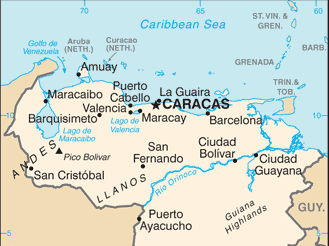
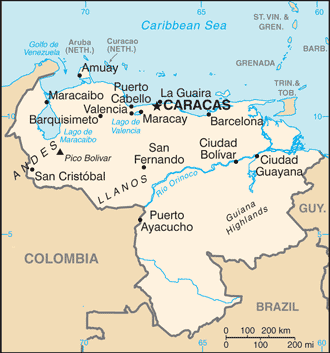
Venezuelan President Nicolás Maduro announced that he is ready to declare a state of emergency in response to aggression by the United States. Such a declaration would give the army control over public services and the country’s oil industry, which Venezuelan leaders say the US is preparing to grab. US officials, led by Secretary of State Marco Rubio and CIA director John Ratcliffe, are reported to be pushing plans to overthrow Maduro. The US has increased its naval presence in the Caribbean and launched repeated deadly strikes on civilian vessels in international waters off Venezuela. President Trump has claimed, without evidence, that the vessels were carrying drug traffickers. Rubio recently described Maduro as a “fugitive from American justice” who leads a terrorist and criminal organization bringing narcotics into the US, posing an “imminent, immediate threat.” (Image: Grunge Love via Flickr)

The Caribbean
Aegis

US destroyers menace Venezuela

Three US Aegis guided-missile destroyers have been dispatched to waters off the coast of Venezuela, as part of what the Trump administration calls an effort to counter threats from Latin American drug cartels. The mobilization follows Washington’s decision to increase the bounty for the capture of Venezuelan leader Nicolás Maduro, doubling it to an unprecedented $50 million. In response to the increased US military presence in the Caribbean, President Maduro announced plans to mobilize 4.5 million members of the territorial militia across the country. “Rifles and missiles for the rural forces! To defend Venezuela’s territory, sovereignty and peace,” he proclaimed. (Photo: US Navy via Latin America Reports)

The Caribbean
Cherizier

US mercenaries to fight gangs in Haiti

The US indicted Jimmy ChĂ©rizier AKA “Barbecue,” leader of the gang coalition in control of most of the Haitian capital Port-au-Prince, and offered a $5 million reward for information leading to his arrest. ChĂ©rizier and an alleged stateside collaborator, Bazile Richardson, are charged with sanctions violations related to arms sales. Meanwhile, private military contractor and Trump ally Erik Prince told Reuters he has signed a 10-year deal with the Haitian government to fight armed groups and help collect taxes—a move some observers fear could further weaken the Haitian security forces and lead to rights violations. Prince’s new security firm, Vectus Global, has been operating in Haiti since March. (Photo: Haiti Liberte)

Watching the Shadows
guantanamo

Trump plans transfer of thousands of migrants to Gitmo

President Donald Trump’s administration plans to increase the number of undocumented migrants being transferred to the US Naval facility at Guantánamo Bay, Cuba, according to government documents obtained by the Washington Post. The documents state that 9,000 undocumented immigrants are currently being vetted for transfer to Guantánamo, with the first transfers to begin this week. (Photo: Spc. Cody Black/WikiMedia via Jurist)

The Caribbean
Trinidad

Growing climate of fear in Trinidad & Tobago

Reporters Without Borders (RSF) urged political candidates in Trinidad & Tobago (T&T) to reaffirm their commitment to press freedom ahead of the upcoming elections, following a sharp drop in the country’s security ranking on RSF’s World Press Freedom Index. Rising crime and the declaration of a state of emergency have caused the country’s security score, ranking the level of safety for journalists, to fall from 6th to 24th in 2024. By the end of 2024, the traditionally stable country’s murder rate had surged to one of the highest per capita in Latin America and the Caribbean, with 624 homicides in a population of just 1.5 million people. Most killings were linked to organized crime, as more than 100 gangs are believed to be active in the two-island nation. (Photo: Christianwelsh via Wikimedia Commons)

Watching the Shadows
Gitmo

Trump orders expansion of Gitmo migrant facility

President Trump has ordered the construction of a 30,000-bed facility to hold migrants at the notorious US naval facility at Guantánamo Bay, Cuba, as part of his mass deportation campaign. The US base has been used to house terrorism suspects since 2002, becoming synonymous with torture and unlawful imprisonment. The US has secretively detained refugees and migrants intercepted at sea at Guantánamo Bay for decades, but the facility has not previously been used for people apprehended on US soil or at this scale. (Photo: Spc. Cody Black/WikiMedia via Jurist)