Africa
Ouaddai

Chad: protests over Ouaddai sultanate autonomy

At least 14 protesters were killed in Chad’s Ouaddai province, climaxing several days of mounting violence and unrest. Protests broke out in provincial capital Abéché after the central government suspended the powers of Ouaddai’s traditional sultan, Cherif Abdelhadi Mahdi. The appointed prefect of the province is to assume his traditional powers over the ethnic Ouaddai community. The traditional Ouaddai chieftain of the locality of Bani Halba has also had his powers dissolved by decree. The appointed replacements are apparently to be Arabs, exacerbating tensions between the Arab and ethnic Ouaddai communities. Local rights groups say several more were killed by security forces in the days of protest, and are demanding an investigation. The heretofore autonomous sultanate of Dar Ouaddai is a survival of the Wadai Empire, which ruled much of the region from the 15th century through the consolidation of French colonial rule in 1914. (Photo via Twitter)

Africa
Apiate

Mining disaster wipes out community in Ghana

A rural community in Ghana’s Western Region was virtually flattened when a truck carrying explosives to a gold mine collided with a motorcycle, setting off a massive blast. Some 40 have been hospitalized, and the official death toll of 17 is expected to rise. The truck, owned by a local mining services company called Maxam, was en route to the Chirano gold mine, operated by Toronto-based Kinross Gold. The explosion left a huge crater and reduced dozens of buildings to dust-covered piles of wood and metal in the community of Apiate, near the city of Bogoso, some 300 kilometers west of the capital Accra. The chief executive of Prestea Huni-Valley municipality told local media “the whole community is gone” after the blast. (Photo: Prestea Huni-Valley Municipal Assembly via Mining.com)

Africa
uganda

Uganda-DRC joint offensive against ISIS franchise

Uganda and the Democratic Republic of Congo are continuing to pursue a joint military offensive launched late last month against the Allied Democratic Forces (ADF), a rebel group that is now said to be integrated into the Islamic State Central Africa Province (ISCAP). The ironically named ADF has carried out a string of recent attacks in Uganda, and has for years been terrorizing the DRC’s North Kivu province. The Ugandan and DRC militaries say they have captured some 35 fighters and “neutralized” four rebel camps. The campaign has included air raids and artillery strikes. (Photo via Africa Institute for Security Studies)

Africa
cameroon

Water scarcity sparks clashes in Cameroon’s North

The UN Refugee Agency reports that “intercommunal clashes” in Cameroon’s Far North region have displaced thousands inside the country and forced more than 30,000 people to flee to neighboring Chad. At least 22 have been killed and 30 others injured. The fighting began in the border village of Ouloumsa following a dispute between herders, fishermen and farmers over dwindling water resources. Violence then spread to neighboring villages. Ten villages have been burned to the ground. The violence also reached Kousseri, Cameroon’s northern commercial hub, where the cattle market was destroyed and thousands forced to flee. (Photo: Aristophane Ngargoune/UNHCR)

Africa
khartoum

Sudan: civil resistance rejects ‘power-sharing’ deal

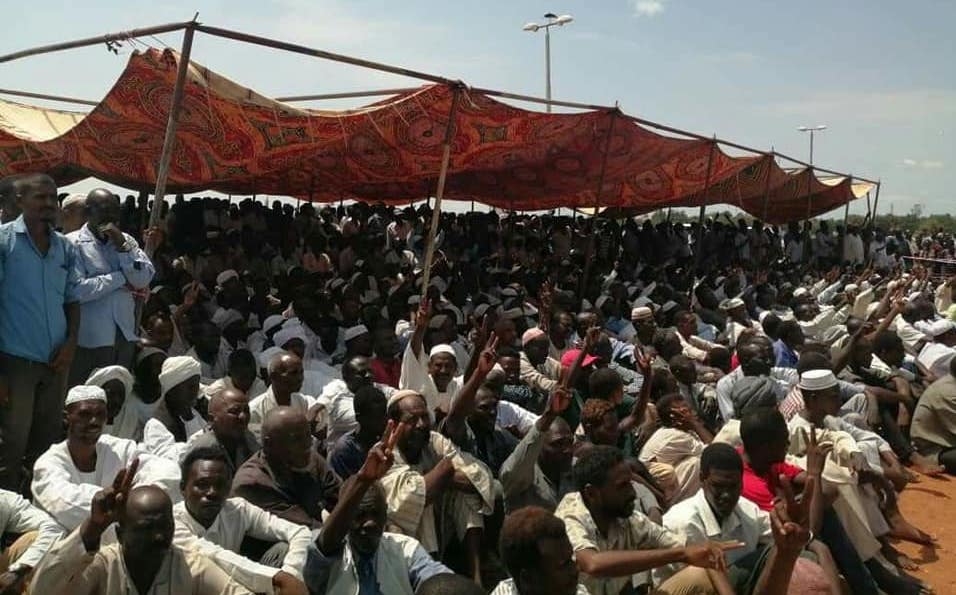
Sudan’s ousted Prime Minister Abdalla Hamdok, who had been placed under house arrest with last month’s military coup, appeared on TV to sign a new power-sharing agreement with putsch leader Gen. Abdel Fattah al-Burhan. But the deal officially restoring Hamdok as prime minister was immediately rejected by the pro-democracy movement in the streets. Just after the announcement, security forces in Khartoum fired tear-gas at protesters marching toward the presidential palace to demand the military’s complete withdrawal from politics. “The future of the country will be determined by the young people on the ground,” said Siddiq Abu-Fawwaz of the Forces for Freedom & Change coalition. (Photo via Twitter)

Africa
ethiopia

‘Crimes against humanity’ seen in Tigray conflict

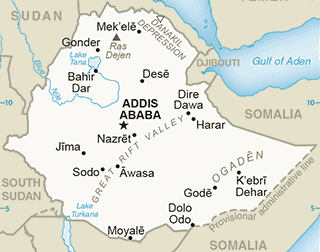
A joint investigation by the independent Ethiopian Human Rights Commission (EHRC) and the UN Human Rights Office has found that there are reasonable grounds to believe that all parties to the conflict in Tigray have, to varying degrees, committed violations of international human rights, humanitarian and refugee law, some of which may amount to war crimes and crimes against humanity. In its report, the Joint Investigation Team details violations and abuses including unlawful killings and extra-judicial executions, torture, sexual and gender-based violence, and forced displacement of civilians. (Map: Political Geography Now)

Africa
ASWJ

Somalia: Sufi militia takes up arms against regime

Fighting in Somalia’s central Galmudug state has killed 120 people and displaced 100,000 in recent days. Two hospitals were shelled, presumably by government forces, in the town of Guri-El, causing aid groups to suspend operations in the area. The conflict pits government forces against the regional militia group Ahlu Sunna Wal Jamaa (ASWJ)–former allies in the fight against the jihadist al-Shaabab insurgency. A moderate Sufi sect, ASWJ has been fighting the Shaabab since 2008, and forged a pact with the government two years later. But Mogadishu is now denying the group’s bid for a regional power-sharing deal, and demanding that the militia be integrated into the national armed forces. (Photo via Strategic Intelligence)

Africa
kampala

ISIS claims Uganda bomb attacks

A suicide bomber killed himself and injured several others on a bus as it travelled to the Ugandan capital, Kampala. The blast, on the road from the Democratic Republic of Congo, followed a bomb attack in a Kampala café two days earlier that killed a worker and injured three others. The police described the devices as “crude.” Both attacks were claimed by the Islamic State in Central Africa, which is said to be operating in both Uganda and Congo through the former Uganda-based opposition group, the Allied Democratic Forces, although exact links are uncertain. (Photo: Travel Aficionado via Flickr)

Africa
Sudan

Counter-revolutionary coup in Sudan

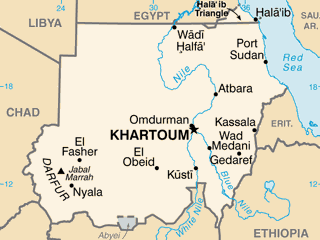
Sudan’s interim prime minister Abdalla Hamdok and his senior officials were arrested as the military seized full power in a coup d’etat and imposed a state of emergency. The two principal pro-democracy formations, the Forces for Freedom & Change and Sudanese Professionals Association, have called for a popular mobilization to overturn the coup, and thousands have answered the call, filling the streets of Khartoum, Omdurman and other cities. Troops fired on protesters outside the army headquarters in Khartoum, killing at least three and injuring more than 80. The paramilitary Rapid Support Forces have also been mobilized. The military head of the now officially dissolved joint civilian-military Transitional Sovereign Council, Lt Gen Abdel Fattah al-Burhan, is apparently behind the coup and in control. The putsch follows days of rival demonstrations in Khartoum, with pro-democracy protesters demanding full civilian rule and pro-army counter-demonstrators demanding that the military take complete control. (Map: Perry-Castañeda Library Map Collection)

Africa
beja

Sudan: ethnic protesters paralyze oil port

Sudan is at the brink of a nationwide fuel shortage as Beja ethnic protesters in the country’s east have for weeks blocked roads and oil arteries—including the critical pipeline that pumps crude from South Sudan to the Port Sudan terminal on the Red Sea, and a second that brings imported petroleum products from the terminal into the country. The High Council of Beja Nazirs & Independent Chieftains is demanding cancellation of the 2020 Juba Peace Agreement, asserting that the Beja people were excluded from the negotiations. Shortages of fuel have sparked large counter-protests against the blockades. (Photo via Dabanga)

Africa
Sudan

Sudan: Omar Bashir plots comeback?

A failed coup by army officers allegedly linked to ousted long-ruling strongman Omar al-Bashir underscored the fragility of Sudan’s transition to civilian rule. Some 20 officers were arrested in the coup attempt. Military leaders from the country’s power-sharing government, the Sovereign Council, blamed their civilian counterparts for neglecting public welfare and opening the door to the coup plotters. Civilian cabinet minister Khalid Omer Yousif called the officers’ comments “astonishing” and “a direct threat to the transition.” Bashir, overthrown in 2019 after nearly 30 years in power, is presently in prison in Khartoum, where he faces multiple trials. He continues to be wanted on genocide charges by the International Criminal Court. (Map: Perry-Castañeda Library Map Collection)

Africa
jihadis

Russian mercenaries to Mali?

France, now in the process of drawing down its military presence in West Africa’s Sahel nations, criticized plans that could see Russian mercenaries brought to Mali, where jihadist groups tied to ISIS or al-Qaeda operate in large parts of the country. Reports suggest that Mali’s transitional government is considering a deal with the Wagner Group, which has close links to Vladimir Putin and is also active in Central African Republic. The Coordinating Body of Azawad Movements (CMA), a coalition of Tuareg rebel groups that signed a peace deal with the Malian government in 2015, likewise expressed its “firm opposition” to any agreement to bring in the Wagner Group. (Photo: FIDES)