Africa
Kenya

Cover-up of police killings seen in Kenya unrest

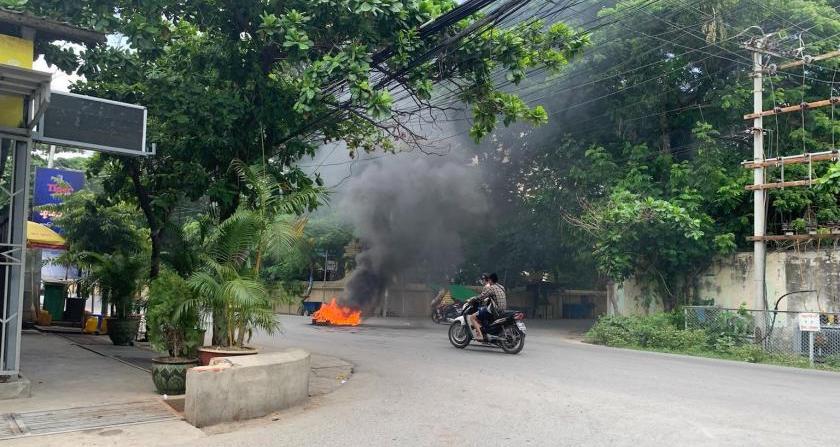
A Kenyan police official told the Associated Press that police received a warning against reporting deaths that have occurred during protests over the high cost of living under the government of President William Ruto. Although it was unclear who issued the direct order, it came after opposition leader Raila Odinga called for three days of protests. Since Ruto’s election last year, Kenya has witnessed tax increases and a steep rise in petrol prices. The demonstrations, and the brutal response from the state, have seen at least 30 people killed since March, according to Amnesty International. The UN says 5.4 million people need urgent food aid in Kenya following five consecutive seasons of drought. (Photo: OHCR)

Central America
Primavera

Guatemala: opposition party headquarters raided

Guatemalan presidential candidate Bernardo Arévalo accused authorities of “political persecution” after police raided his center-left Semilla party headquarters. Arévalo condemned the raid as an attempt to hinder his campaign for the 2023 election, the second round of which is scheduled for August. Prosecutors say they were enforcing a court order that suspended Semilla due to alleged irregularities in party member registration. However, that order had been canceled by Guatemala’s Supreme Electoral Tribunal. (Image via Twitter)

Syria
al-hol

UN: halt indefinite detention at Syria camps

UN Special Rapporteur for human rights Fionnuala Ní Aoláin released a statement urging the cessation of “indefinite mass detention without legal process,” particularly of children, in northeastern Syria detention centers. Around 52,000 people are held in the camps at al-Hol and al-Roj in Syria’s northeast. Around 60% are children, of whom 80% are under 12. Most children are there due to their parents’ supposed links to ISIS. Many are separated from their parents, with Ní Aoláin asserting that boys are often forcibly separated from their mothers upon reaching adolescence. Both camps are under the control of the Syrian Democratic Forces (SDF), a primarily Kurdish organization which has fought ISIS since 2014. (Photo: Abdul Aziz Qitaz/UNOCHA)

Africa
Burkina Faso

Ghana: cease forced return of Burkinabé refugees

The United Nations refugee agency (UNHCR) said it is concerned about reports that hundreds of Burkinabé refugees fleeing to Ghana, including women and children, are being deported. According to UNHCR, more than 17,500 Burkina Faso nationals have fled to neighboring countries, including Niger, Mali and Ghana, since January 2021 as a result of the ongoing internal conflict. Ghana is accused of having forcibly deported more than 500 Burkinabé seeking protection along the border. A video on Twitter showing expelled women and children sitting in a parking lot near the border has been widely circulated. The UNHCR called on Ghana to stop the deportations, saying that they amount to a violation of the non-refoulement principle. (Photo: Leonardo Perez Aranda via Wikimedia Commons)

North Africa
migrants

EU-Tunisia migration deal amid rights abuses

Amnesty International condemned a new migration agreement between the European Union and Tunisia, saying it makes the EU “complicit in the suffering that will inevitably result” from what represents a “dangerous expansion” of failed policies. The deal commits the EU to providing €105 million (around $120 million) in aid to Tunisia to deter Europe-bound migration. The signing of the deal came mere days after Tunisian authorities forcibly deported hundreds of Black African migrants across the Libyan border, amid a surge of xenophobic violence. The UN condemned the Tunisian government’s actions as “cruel and inhuman treatment.” (Photo: US Navy via Wikimedia Commons)

Southern Cone
Montevideo

Uruguay: water crisis sparks protests

With the return of El Niño, rising temperatures are leading to a surge of life-threatening weather patterns across the globe. In Latin America drought is affecting countries in unprecedented ways. In Uruguay, the lack of rain has emptied one of the capital’s main reservoirs, forcing the government to declare a state of emergency in Montevideo and to add salty water to public drinking water supplies—provoking protests from citizens angry over the significant decline of water quality. While the country faces its worst drought in the past 74 years, critics accuse the government of prioritizing water use by transnationals and agribusinesses over human consumption. News of a plan to build a Google data center that would require 3.8 million liters of water a day further infuriated Uruguayans. (Photo: ANRed)

Watching the Shadows
computer smash

Podcast: artificial intelligence and the abolition of humanity

In Episode 183 of the CounterVortex podcast, Bill Weinberg continues his rant on the dangers of artificial intelligence, this time focusing on the threat it poses to human evolution. The advent of Elon Musk’s Neuralink brain implant technology, now approved for human testing by the FDA, actually portends the ultimate abolition of humanity, and its replacement by a conditioned post-humanity stripped of all dignity and reason. But there are signs of human resistance to robot rule that we must fan the flames of before it is too late—such as the current strike by Vancouver dockworkers against their replacement by automation. Listen on SoundCloud or via Patreon. (Image: Earth First! Newswire)

Inner Asia
China prison

Probe corporate profit from Uyghur forced labor

Canada’s Ombudsperson for Responsible Enterprise has launched an inquiry into accusations over use of Uyghur forced labor in the People’s Republic of China by Western corporations Nike and Dynasty Gold. While the initial evaluation stipulates that Nike has not engaged in the direct use of such labor, the company’s association with Chinese third-party entities does not absolve it of accountability. Vancouver-based Dynasty Gold faces allegations of directly employing coerced labor of Uyghurs at a mining site in China. The initial evaluation finds that the company’s denial of operational control over the mine at Hatu, Xinjiang region, “should not be taken at its face value,” as Dynasty still possess a controlling interest in the operation. (Photo via Bitter Winter)

North Africa
SADR

Abraham Accords’ betrayal of Sahrawi consolidated

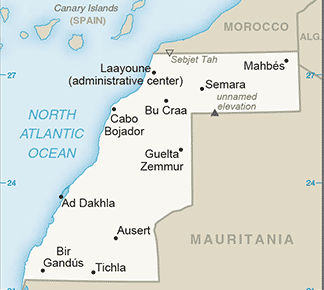
Israel announced that it has formally recognized Moroccan sovereignty over the disputed territory of Western Sahara. The US in 2021 became the first nation to recognize Morocco’s claim to the territory—an open quid pro quo for Moroccan recognition of Israel as a part of the so-called Abraham Accords. Israeli recognition of Morocco’s claim was promised at that time. However, much of the territory is controlled by the Polisario Front, independence movement of the Sahrawi Arab people. Some 45 countries around the world recognize Polisario’s declared Sahrawi Arab Democratic Republic (SADR); the US and Israel are alone in recognizing Rabat’s rule over the territory. (Image: Wikimedia Commons)

Iran
Iran protest

Iran: ‘morality police’ to resume hijab patrols

With the protest movement in Iran now in abeyance, Tehran’s national Police Command announced that the feared “morality police” will resume patrols enforcing the mandatory wearing of the hijab by the country’s women. Formally known as the Guidance Patrols (Gasht-e Ershad), the force created in 2006 was that which arrested Mahsa Amini, a 22-year-old Kurdish woman, last September. Her death in custody three days later sparked the uprising that has lasted for months. The patrols were suspended for review as the protests mounted last December. Article 638 of Iran’s Islamic Penal Code states that: “Women who appear in public without prescribed Islamic dress (hejab-e-shar’i), shall be sentenced to either imprisonment of between 10 days and 2 months, or a fine of between 50,000 and 500,000 rials.” (Photo of Melbourne protest in solidarity with Iran uprising: Matt Hrkac/Flickr)

Africa
Darfur

ICC opens investigation into Sudan conflict

International Criminal Court (ICC) prosecutor Karim Khan announced before the UN Security Council that the court has opened an investigation into atrocities committed by the Sudanese Armed Forces (SAF) and rival Rapid Security Forces (RSF), 90 days into the current conflict in Sudan. Khan said that investigators are following up on claims of attacks on civilians, the targeting of ethnic minorities, and sexual violence and violence against children. The fighting has been particularly fierce in Darfur region, where Khan referenced reports of “looting and extrajudicial killings, burnings of homes.” The bodies of at least 87, mainly ethnic Masalit believed to have been killed by the RSF and their allied Arab militia in West Darfur, were buried in a mass grave outside the state capital El-Geneina, according to information obtained by the UN Human Rights Office. (Photo: Henry Wilkins/VOA via Jurist)

Syria
Idlib displaced

Syria: grim reality behind Assad’s new aid offer

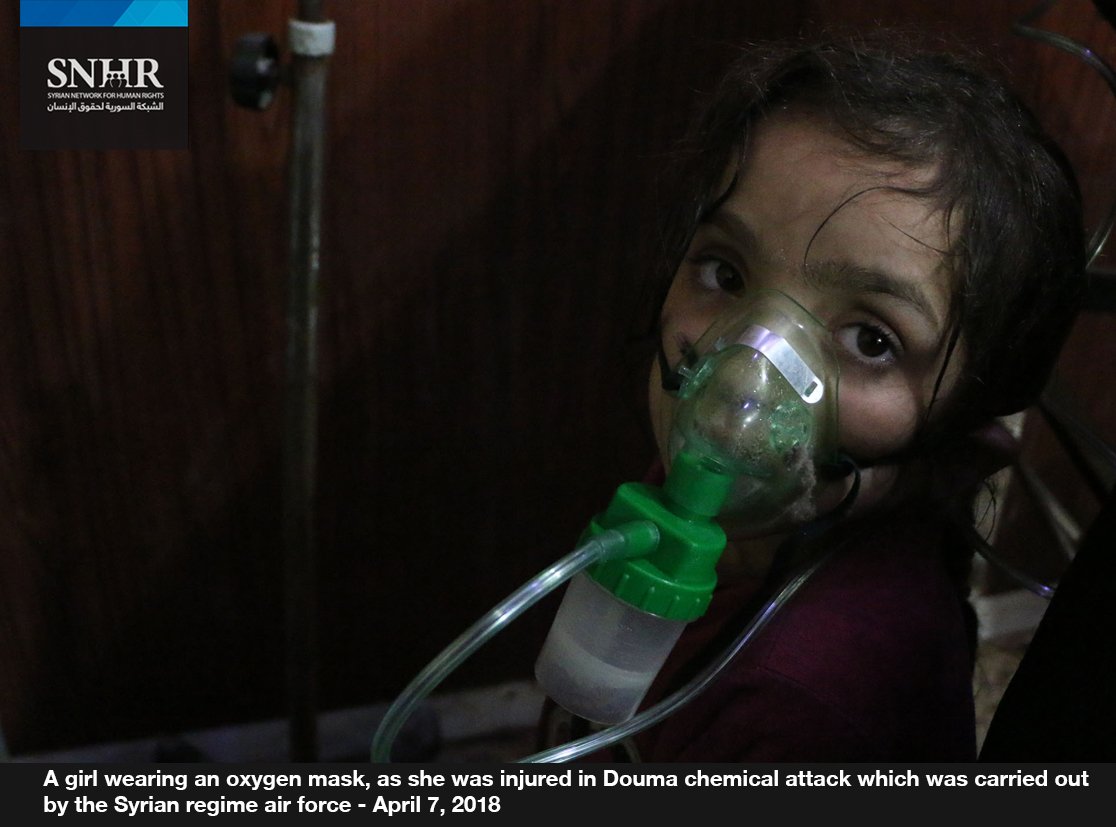
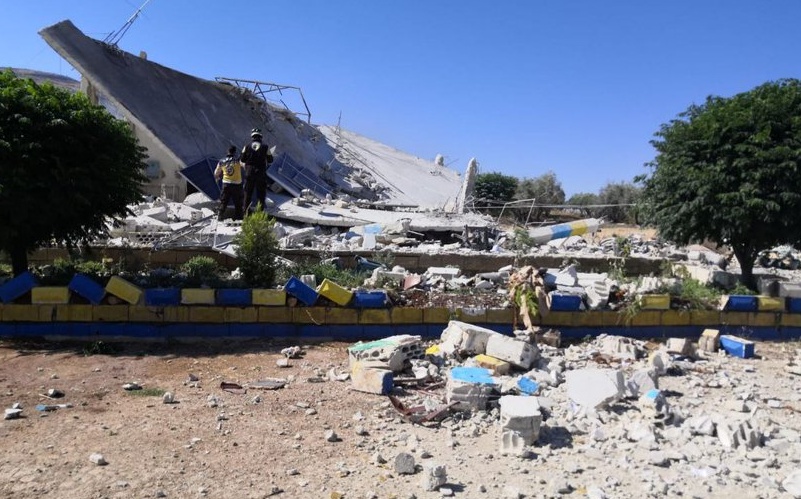
The Security Council has failed to renew the resolution allowing the UN to deliver aid across the border from Turkey to rebel-held northwest Syria, throwing into question the future of a relief effort that is crucial for millions of people. The day after the resolution expired, Russia vetoed a new resolution that would have allowed access through one border crossing into the region, Bab al-Hawa, for nine months. Two days after that, The Assad regime said it will allow UN aid into the northwest via Bab al-Hawa for six months—if it is done “in full cooperation and coordination with the government.” But this is unlikely to be welcomed by many Syrian and international aid groups, given that the current system was set up back in 2014 largely because of the Assad regime’s obstruction of aid. (Photo: UNHCR)