North America
Cowichan

British Columbia: protest call to amend Indigenous rights act

The Law Society of British Columbia warned that the provincial government’s intention to amend the Declaration on the Rights of Indigenous Peoples Act (DRIPA) may erode judicial independence and improperly constrain the power of the courts. The proposed amendment would limit the role of the judiciary in matters related to DRIPA’s implementation, and follows two landmark court rulings upholding Aboriginal rights and title last year. The BC Supreme Court held in August that the Cowichan Tribes have established Aboriginal title in the city of Richmond, meaning that the province is obliged under the DRIPA to “reconcile” fee simple interests in the city with tribal authorities. In December, the BC Court of Appeal held that the provincial mineral tenure system—allowing registration of mineral rights online without notifying or consulting the GitxaaĹ‚a and Ehattesaht nations—is impermissible under the DRIPA, which commits the province to upholding principles of the UN Declaration on the Rights of Indigenous Peoples. (Photo: Wikipedia)

Europe
#NoWords

Danish veterans stage silent protest at US embassy

Hundreds of Danish veterans and supporters staged a silent march from the historic Kastellet fortress to the US Embassy in Copenhagen as part of a “No Words” mobilization to protest recent US rhetoric that organizers said demeans Denmark’s combat contributions alongside American forces. Organizers also linked the march to the status of Greenland, upholding the right of self-determination for the Danish island territory. Recent demands by President Donald Trump for US annexation of Greenland, and comments seeming to question the courage of Danish soldiers, have stirred a sense of betrayal for many in Denmark, particularly those who fought alongside US troops in Iraq and Afghanistan. (Image: No Words)

Planet Watch
Bonaire

Dutch court orders climate measures for Bonaire

The Hague District Court ruled that the Netherlands has failed to meet its international obligations on climate change. The court ordered the government to adopt adequate measures to better protect Bonaire, a Dutch Caribbean island, within 18 months. The court concluded that the government had violated the rights of the residents of Bonaire under the European Convention of Human Rights. The recent advisory opinion by the International Court of Justice significantly influenced the Dutch court in determining the state’s obligations in regard to climate change. (Photo: Dialogue Earth)

Planet Watch
doomsday

Doomsday Clock moves: 85 seconds to midnight

The Science & Security Board of the The Bulletin of the Atomic Scientists moved the symbolic hands of the Doomsday Clock to an unprecedented 85 seconds to midnight. The decision came a year after the clock was set to an also unprecedented 89 seconds to midnight—and three years after it was moved to 90 seconds to midnight. Each increment since 2017, when it was set at 2.5 minutes of midnight, has brought the Clock closer to doomsday than ever before. This year’s statement reads: “A year ago, we warned that the world was perilously close to global disaster and that any delay in reversing course increased the probability of catastrophe. Rather than heed this warning, Russia, China, the United States, and other major countries have instead become increasingly aggressive, adversarial, and nationalistic. Hard-won global understandings are collapsing, accelerating a winner-takes-all great power competition and undermining the international cooperation critical to reducing the risks of nuclear war, climate change, the misuse of biotechnology, the potential threat of artificial intelligence, and other apocalyptic dangers.” (Image: misucell.com)

Syria
Rojava solidarity

Podcast: twilight of Rojava?

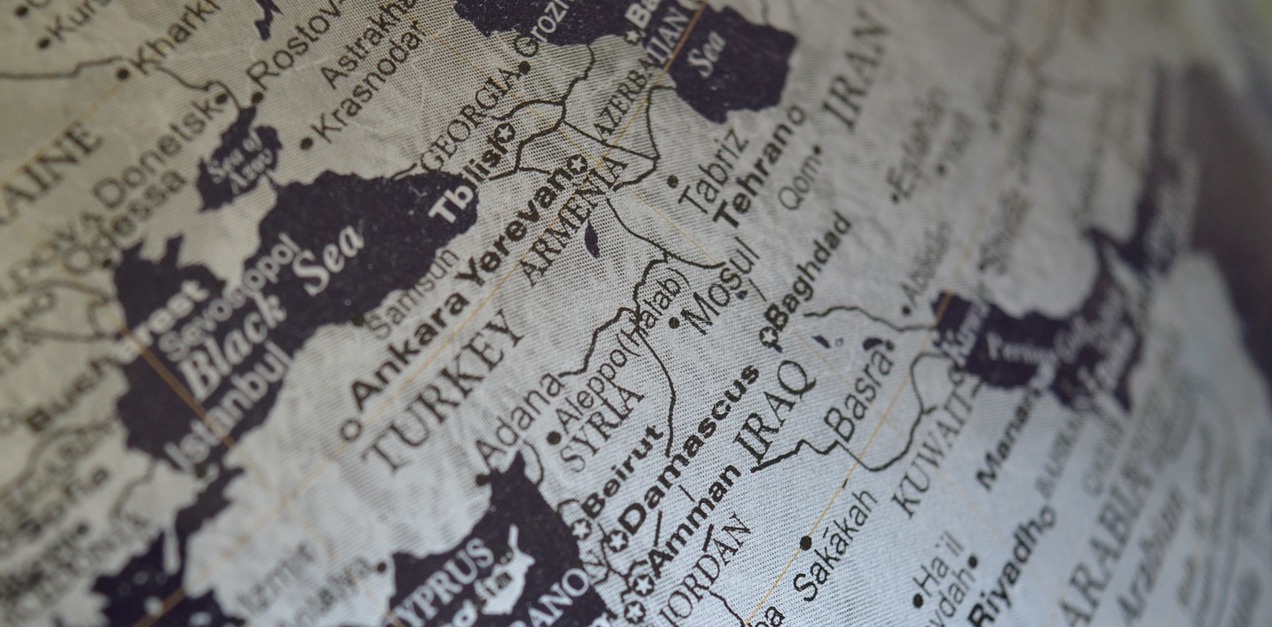
A last-minute “permanent ceasefire” may mean that northeast Syria is back from the brink of Arab-Kurdish ethnic war. But ceasefires have repeatedly broken down since fighting resumed earlier this year, with Damascus demanding disbandment of the Rojava autonomous zone, and the integration of its institutions—including its military wing, the Syrian Democratic Forces (SDF)—into the central government. While the new pact sets a more “gradual” pace for this integration, the Kurdish aspiration to regional autonomy and the central government’s insistence on centralization may prove a long-term obstacle to peace. In Episode 315 of the CounterVortex podcast, Bill Weinberg weighs the odds for avoiding a conflict that holds the potential for escalation to genocide, with the connivance of the Great Powers that so recently backed the SDF to fight ISIS. (Photo via Facebook)

Syria
SDF

Russia joins US in betraying Syrian Kurds

The Kurdish-held border town of Kobani in northern Syria is under siege again, as it was by ISIS in 2014—but this time by forces of the Syrian central government, which has cut off water and power to the town in the dead of winter, with snow on the ground. Since the start of the year, the Kurdish forces in northeastern Syria have lost almost all of the territory they controlled to a new offensive by the central government. Kobani with Hasakah and Qamishli are the last besieged strongholds of the reduced Rojava autonomous zone. And both the US and Russia, which have backed the Kurdish-led Syrian Democratic Forces (SDF) against ISIS, now appear to be cutting them loose—effectively green-lighting the government offensive against them. US special envoy for Syria Tom Barrack has already warned that US support for the SDF is coming to an end. And in the midst of the offensive, Russia has withdrawn its forces from Qamishli, its principal military outpost in Rojava. This came just as Syrian interim president Ahmed al-Sharaa was on his second trip to Moscow to meet with Vladimir Putin—pointing to a quid-pro-quo in which Russia will be allowed to maintain its two major military bases in Syria, on the Mediterranean coast at Khmeimim and Tartous. (Photo: SOHR)

The Amazon
IBAMA

Cross-border crackdown on Amazon gold mining

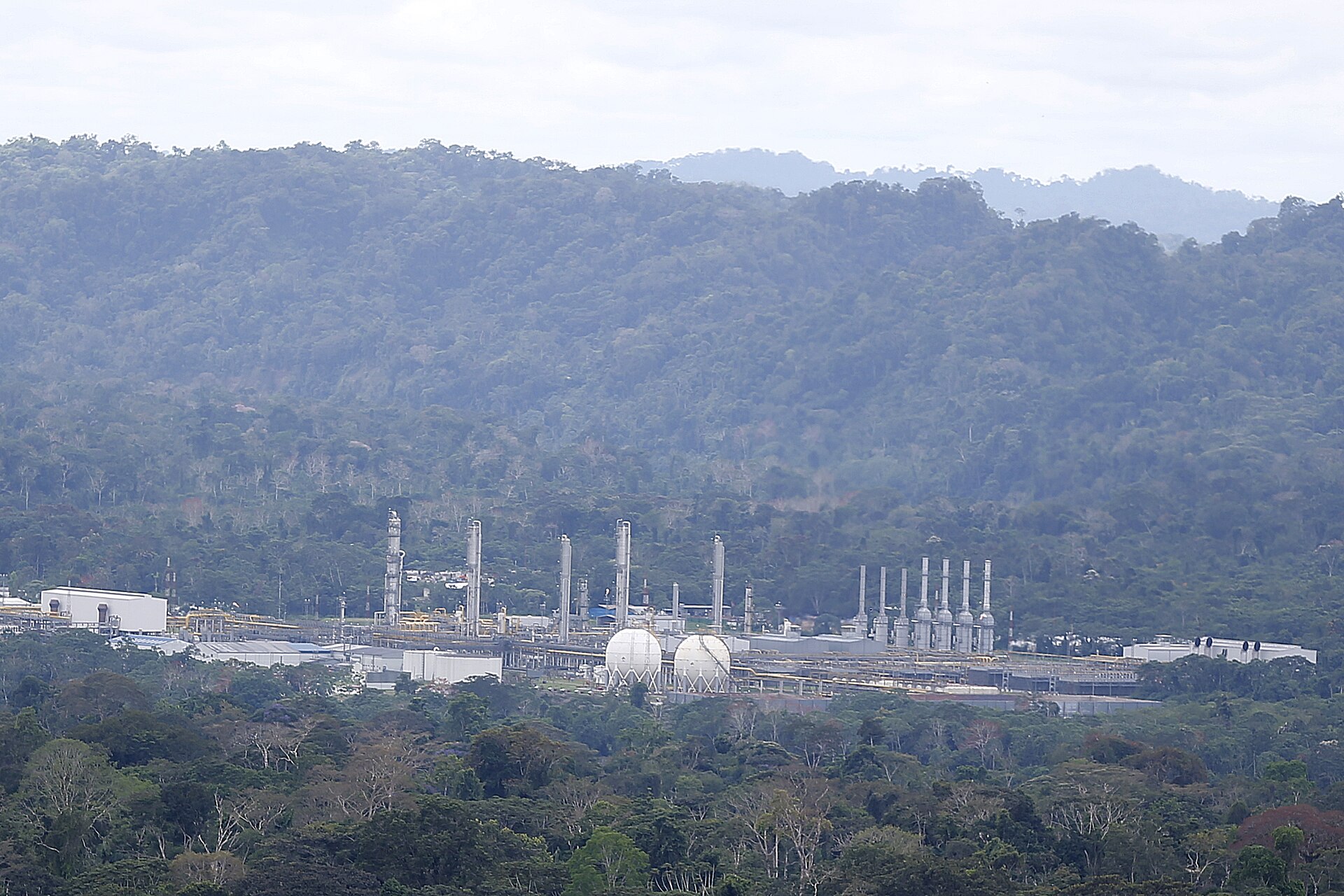
Police and prosecutors from Brazil, Guyana, French Guiana and Suriname announced the arrest of nearly 200 individuals in a transnational operation to combat illegal gold mining in the Amazon. Backed by Interpol, the European Union, and Dutch police specializing in environmental crime, “Operation Guyana Shield” involved over 24,500 checks on people and vehicles across remote border areas. Officers seized large quantities of cash, unprocessed gold, and mercury, as well as firearms, drugs and mining equipment. Authorities said organized crime networks behind these operations are linked to a major Guyanese gold exporting firm. The operation signals a new enforcement posture, marked by cross-border collaboration to disrupt transnational networks that evade jurisdictional boundaries and exploit enforcement gaps across the Amazon border region. (Photo: IBAMA via Flickr)

Europe
Paris

Arrests as French farmers protest EU-Mercosur trade deal

UN experts cautioned against the escalating use of arrests and criminal proceedings against agricultural trade union activity in France, after authorities detained 52 farmers during peaceful protests in Paris. Union leaders and members of the Confédération Paysanne held protests in opposition to the EU-Mercosur Deal, signed in December 2024 but still pending ratification, which would reduce tariffs and more deeply link the European market with the bloc of South American nations. Participants unfurled banners in offices of the Agriculture Ministry in protest of the agreement. Protesters included a large delegation from the French overseas regions of Guadeloupe, Martinique, French Guiana, Reunion and Mayotte, all of which have denounced unfair import costs imposed upon them by the government. Three key spokespersons were among those arrested. (Photo: UN Human Rights Council via Twitter)

Inner Asia
Kazakhstan

Kazakhstan: activists protesting Xinjiang abuses face prison

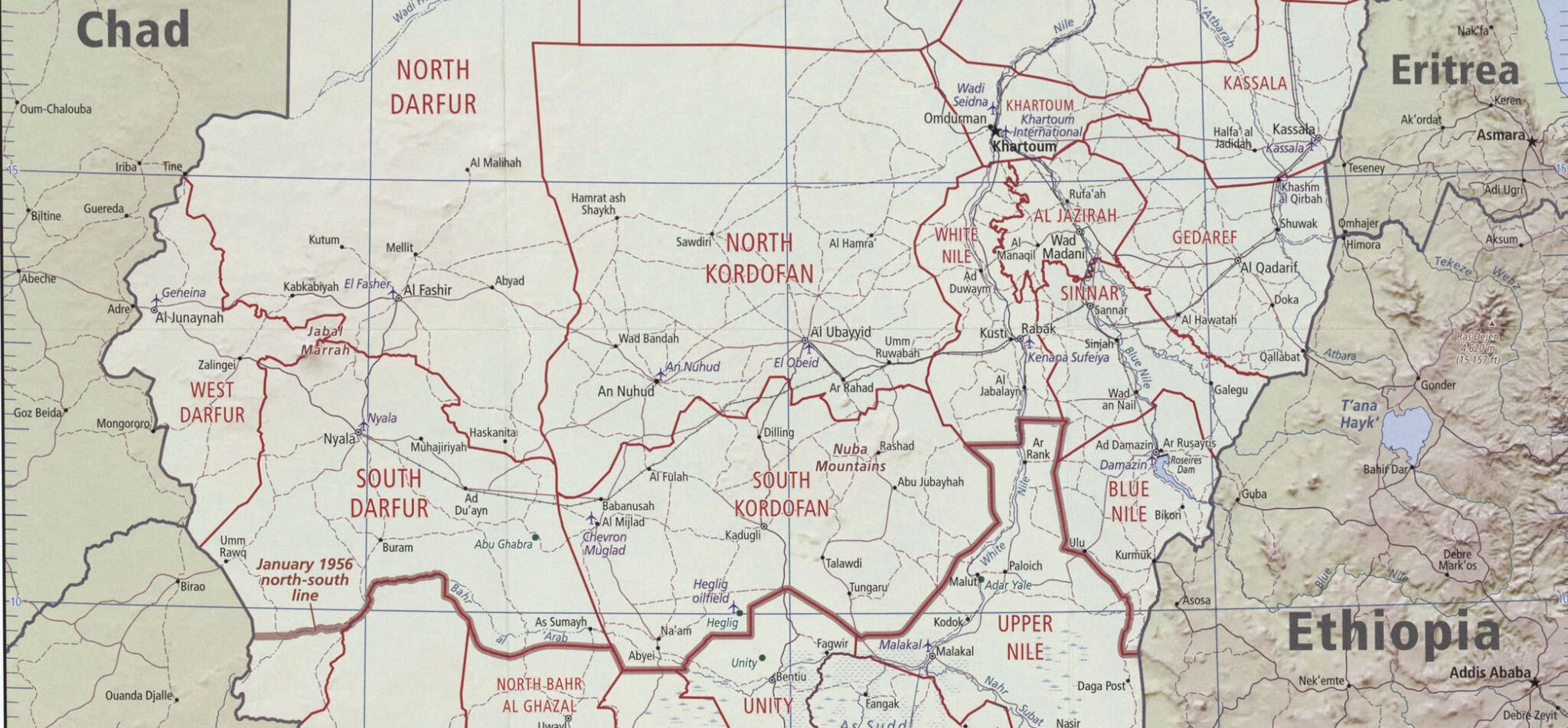
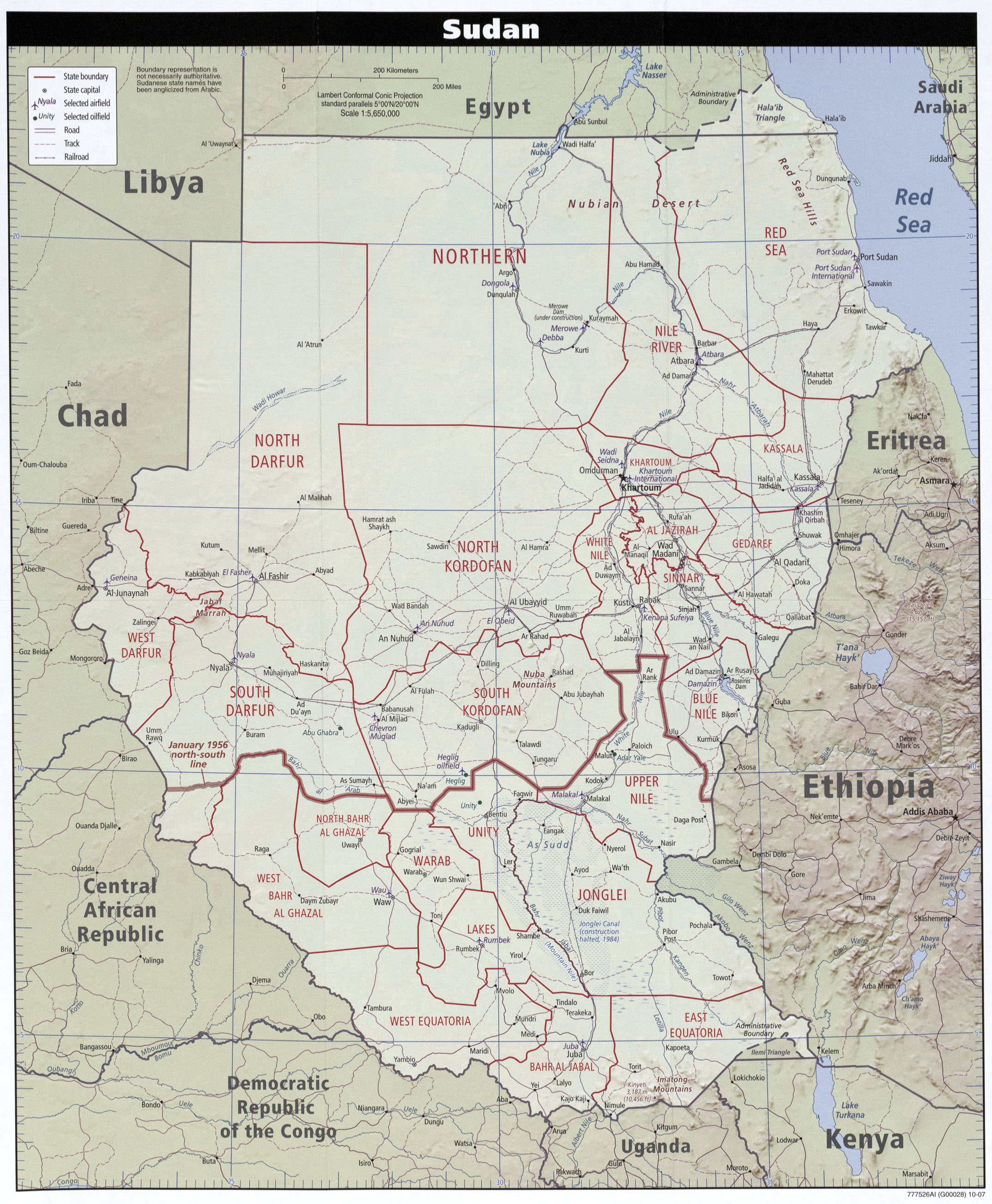
Amnesty International called on Kazakhstan to immediately drop criminal charges against 19 activists affiliated the local Atajurt human rights movement who face up to 10 years in prison for participating in a peaceful protest near the nation’s border with China. The demonstrators, many of whom are ethnic Kazakhs originally from China’s Xinjiang Uyghur Autonomous Region, had gathered to demand the release of Alimnur Turganbay, a Kazakhstan citizen detained in China since July under unclear circumstances. Authorities initially pursued administrative charges, including “hooliganism,” imposing fines and short-term detention of up to 15 days. Reportedly, following a diplomatic note from Chinese authorities, prosecutors escalated the case with criminal charges. (Map: Perry-Castañeda Library)

Planet Watch
executions

UN condemns ‘alarming’ global increase in executions

The UN Human Rights Office raised concern over a “sharp hike” in the number of executions globally in 2025. UN High Commissioner for Human Rights Volker TĂĽrk said his office “monitored an alarming increase in the use of the capital punishment in 2025, especially for offences not meeting the ‘most serious crimes’ threshold required under international law, the continued execution of people convicted of crimes committed as children, as well as persistent secrecy around executions.” The increase primarily came from executions for drug-related offenses in a small number of retentionist states. These are countries that continue to retain capital punishment, as opposed to the growing number of abolitionist states. which do not employ the death penalty. (Photo: ICHRI)

Planet Watch
Greenland

Today Greenland, tomorrow the world

Trump’s Greenland annexation drive is only secondarily about the strategic minerals, but fundamentally driven by a geostrategic design to divide the planet with Putin. Even if his belated and equivocal disavowal of military force at the Davos summit is to be taken as real, the threat has likely achieved its intended effect—dividing and paralyzing NATO, so as to facilitate Putin’s military ambitions in Europe, even beyond Ukraine Also at Davos, Trump officially inaugurated his “Board of Peace,” seen as parallel body to the United Nations that can eventually displace it—dominated by Trump and Putin, in league with the world’s other authoritarians. In the Greenland gambit, the territory itself is a mere pawn in the drive to establish a Fascist World Order. In Episode 314 of the CounterVortex podcast, Bill Weinbergcalls for centering indigenous Inuit voices on the future of Greenland, and universal repudiation of annexationist designs. (Image: TruthSocial)

Planet Watch
Board of Peace

Trump’s global imperial court

When US President Donald Trump first proposed establishing a so-called “Board of Peace” to oversee governance of the Gaza Strip for a transitional period back in September, the idea was quickly likened to a form of colonial takeover. The UN nonetheless adopted a Security Council resolution in November giving its blessing to the board’s creation—a vote some member states may now regret. The board was just officially inaugurated in a ceremony in Davos, Switzerland, where Trump was attending the World Economic Forum. But Gaza seems almost incidental to its true mission, which appears to be creating a global strongmen’s club—led by Trump, potentially for life—to rival, if not replace, the UN itself. (Image via Wikipedia)