New York City
Yippie

Podcast: Bill Weinberg’s neo-Yippie memoir

In Episode 233 of the CounterVortex podcast, Bill Weinberg recalls his days as a young neo-Yippie in the 1980s. A remnant faction of the 1960s counterculture group adopted a punk aesthetic for the Reagan era, launched the US branch of the Rock Against Racism movement, brought chaos to the streets at Republican and Democratic political conventions, defied the police in open cannabis “smoke-ins”—and won a landmark Supreme Court ruling for free speech. The Yippie clubhouse at 9 Bleecker Street, the hub for all these activities, has long since succumbed to the gentrification of the East Village, but it survived long enough to provide inspiration to a new generation of radical youth during Occupy Wall Street. Listen on SoundCloud or via Patreon. (Photo from the CounterVortex collection)

North Africa
abu salim massacre

Survivors of Libya prison massacre demand justice

A group representing families of the victims of Libya’s Abu Salim Prison Massacre protested in Tripoli on the 28th anniversary of the killings, decrying the failure to achieve justice in the case. The association urged “that the secrets of the crime be revealed, justice be established, retribution be imposed, and that everyone who participated in this horrific massacre receive their deserved punishment.” Thirteen years after the fall of Libyan dictator Moammar Qaddafi’s regime, there has still been no legal judgment or even serious investigation in the case. It is believed that over 1,000 were killed by prison guards in the 1996 incident, sparked by an inmate protest over poor conditions. (Photo: Libya Observer)

Africa
Mali

ICC convicts Mali militant of war crimes

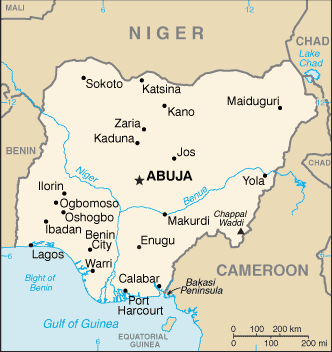
The International Criminal Court (ICC) convicted al-Qaeda-linked militant leader al-Hassan ag-Abdoul Aziz ag-Mohamed ag-Mahmoud of war crimes and crimes against humanity for his role in terrorizing the civilian population of the Malian city of Timbuktu. The charges against al-Hassan stem from his time as de facto leader of the Islamic Police, an unofficial enforcement body established by armed Islamist groups when they controlled the city between 2012 and 2013. The group patrolled the city day and night, imposing harsh new rules that severely restricted daily life. The force imposed extreme punishments, including flogging and amputation, for such perceived violations of Islamic law as extramarital relations, alcohol consumption, and smoking. The Court found that al-Hassan played a “key role” in the Islamic Police throughout the period of of control of Timbuktu by Ansar Dine and al-Qaeda in the Islamic Maghreb (AQIM).  (Map: PCL)

Africa
west africa

Uranium at issue in Great Game for West Africa

The ruling junta in Niger revoked the operating license of French nuclear fuel producer Orano at one of the world’s largest uranium mines. Russian companies have meanwhile indicated interest in picking up the lease for the giant Imouraren mine. However, exports are stalled by closure of the border with Benin, the vital sea corridor for landlocked Niger, as tensions mount between the two countries. The uranium dispute comes as French and US troops have been forced to withdraw from Niger, and Russian forces have moved in. The Pentagon’s AFRICOM commander Gen. Michael Langley has acknowledged that the US is seeking to establish new bases in neighboring West African countries, including Benin. (Map: World Sites Atlas)

Africa
Niger

Niger: jihadis score deadly blow against junta

Authorities in Niger declared three days of national mourning after an ambush on security forces near the village of Tassia resulted in the deaths of at least 20 soldiers and one civilian. Tassia lies in the western Tillabéri region bordering Mali and Burkina Faso, long a stronghold of jihadist​ insurgents. The incident highlights the growing challenges facing the ruling junta one year after it came to power in a July 2023 coup, overthrowing the civilian government led by Mohamed Bazoum. (Map: PCL)

Europe
Crimea

ECHR: Russia liable for rights violations in Crimea

Ruling in the case Ukraine v. Russia (re Crimea), the European Court of Human Rights unanimously found that Russia is guilty of a pattern of human rights violations since 2014 in Crimea, as codified under under the European Convention on Human Rights and international humanitarian law. These violations included ill-treatment, intimidation, disappearances, forced Russian citizenship, and suppression of Ukrainian media and press. (Photo: chief39/Pixabay)

Watching the Shadows
Bialystok

From Baghdad to Bialystok —to Pico-Robertson

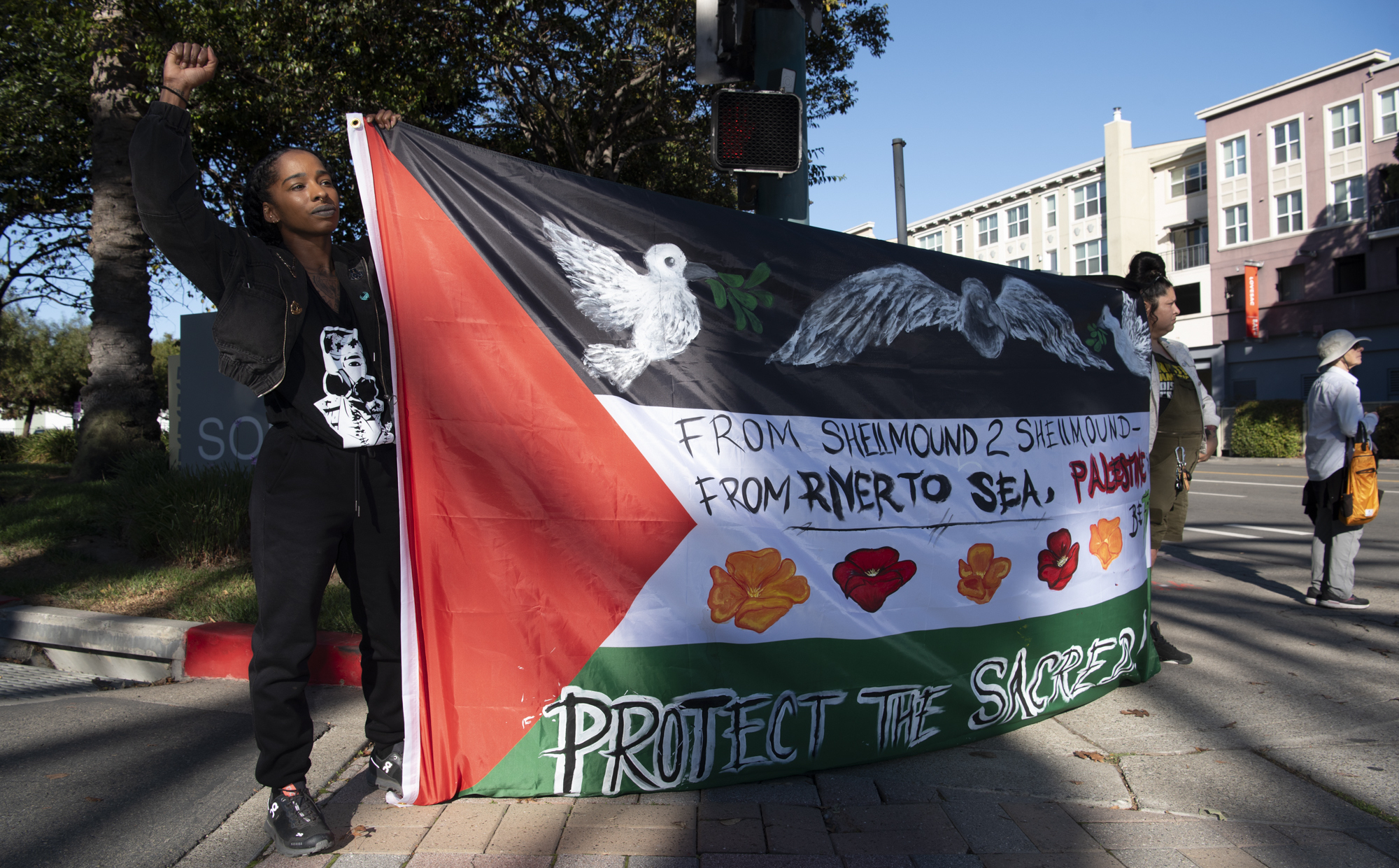
In Episode 232 of the CounterVortex podcast, Bill Weinberg examines the politics of the ugly dust-up between pro-Palestinian protesters and local Jewish residents in the Los Angeles neighborhood of Pico-Robertson—and notes the anniversary of June 1941 anti-Jewish pogroms in Bialystok, Poland, and Baghdad, Iraq. Propagandistic and distorted portrayals of the LA protest as mere arbitrary anti-Semitism ignore the fact that the targeted synagogue was hosting a real estate event promoting sale of lands to create “Anglo neighborhoods” in Israel, and probably in the occupied West Bank (which would be a clear violation of international law). On the other hand, insensitivity to (or ignorance of) the historical context(and contemporary context) that makes an angry protest outside a synagogue an inevitably problematic “optic” only abets the propaganda. Listen on SoundCloud or via Patreon. (Photo: The Great Synagogue of Bialystok before it was destroyed by the Nazis in 1941. Via Jewish Historical Institute)

The Andes
Bolivia coup

Bolivia: coup attempt collapses, top general arrested

In an apparent coup attempt against Bolivia’s President Luis Arce, military vehicles surrounded the presidential palace in La Paz—with one ramming open the building’s front doors. Arce took to Twitter to denounce the “irregular mobilization of some units of the Bolivian Army,” and called for democracy to be respected. As La Paz residents converged on Plaza Murillo to confront the troops outside the palace, Arce officially dismissed armed forces commander Gen. Juan JosĂ© Zúñiga, replacing him with Gen. JosĂ© Sánchez—who promptly issued orders for all troops to return to barracks. This caused the occupying troops to retreat from the plaza. Shortly thereafter, Zúñiga was arrested. Upon being taken into custody, Zúñiga told reporters that the apparent coup attempt had been requested by Arce himself to “rehabilitate his popularity.” This theory has been aggressively taken up by Bolivia’s opposition, but crowds continue to show up in Plaza Murillo in huge numbers to support Arce’s government. (Photo via Twitter)

Palestine
Sde Teiman

Israel high court responds to prison abuse revelations

Israel’s Supreme Court issued an order demanding the Benjamin Netanyahu government provide an update on conditions in the Sde Teiman detention facility, where the government has been holding Palestinian detainees from the war in Gaza. The order came in response to a challenge from a constellation of human rights organizations, including the Association for Civil Rights in Israel, Physicians for Human Rights—Israel (PHRI), and the Public Committee Against Torture in Israel, seeking to shut down the prison over allegations of harsh abuses there. Sde Teiman, in the Negev desert, was the focus of a CNN investigation into the treatment of Palestinians detained during Israel’s war with Hamas. Whistleblowers from the detention center spoke to CNN, describing scenes of torture and severe dehumanizing conditions. (Photo of blindfolded prisoners inside of the camp, released by an anonymous whistleblower in May 2024. Via Twitter, obtained by CNN)

Africa
Nairobi

Kenya backtracks on tax bill after deadly protests

Kenyan President William Ruto backtracked on a contentious tax-hiking finance bill, after street protests left at least 13 people dead and 150 injured as police opened fire with live ammunition. The youth-led protests were triggered by a range of proposed new taxes that critics say will increase the financial burden on families already struggling with rising prices. Before capitulating to protester demands, the government declared a “security emergency” and deployed the military to support the police—a move that technically requires parliamentary approval. Ruto claimed the protests had been infiltrated by organized criminals whose actions were “treasonous.” (Photo: Anthony Langat/The New Humanitarian)

Europe
Ukraine

Russia suppressing Ukrainian language in occupied areas: report

A Human Rights Watch report finds that Russian authorities have violated human rights obligations by suppressing the Ukrainian language and injecting propaganda into educational curricula in occupied Ukrainian territories. Changes to school curricula include an array of disinformation aimed at justifying Russia’s invasion and portraying Ukraine as a “neo-Nazi state.” Russian authorities have also introduced military training in schools, mirroring the resurgence of youth military training in Russia, and require secondary schools to send lists of all students aged 18 and up for conscription into the Russian military. International law prohibits forced enlistment of an occupied population into the occupier’s military. (Map: PCL)

East Asia
Taiwan

China: death penalty for advocating ‘Taiwan independence’

China instated the death penalty for “particularly serious” cases involving supporters of Taiwanese independence. New judicial guidelines, entitled “Opinions on Punishing the Crimes of Splitting the Country & Inciting Splitting the Country by ‘Taiwan Independence’ Diehards,” were jointly issued by the Supreme People’s Court, the Supreme People’s Procuratorate, the Ministry of Public Security, the Ministry of State Security and the Ministry of Justice. The new standards stipulate severe punishments for those identified as leaders or significant participants in secessionist activities, and classify actions causing “significant harm to the state and its people” as offenses that may result in the death penalty. (Photo: shutterbean/Pixabay via Jurist)