


Europe

Bad news both sides of Russo-Ukrainian breach

A UN Human Rights Office report charges Russia with forced disappearances, torture and persecution of the Tatar minority in annexed Crimea. Ukraine meanwhile passes an education law that discriminates against minority languages such as Russian and Hungarian. 

Planet Watch

San Francisco sues fossil fuel companies

San Francisco filed a lawsuit against five fossil fuel companies due to expected expenses the city will incur from global warming. The companies named in the suit are BP, Chevron, ConocoPhillips, ExxonMobil and Royal Dutch Shell—chosen because they are "the largest investor-owned fossil fuel corporations in the world as measured by their historic production of fossil fuels."

Africa

Ruling for Ghana in Ivory Coast boundary dispute

The International Tribunal for the Law of the Sea ruled in favor of Ghana in a lengthy maritime dispute with Ivory Coast. The case, which was brought to the international body by Ghana in 2014, was an attempt to clarify the boundary between the two countries, as both countries were vying for control of offshore oil leases in the contested area.

The Andes

Colombia: peace process model for world

In his final address to the UN General Assembly as president of Colombia, Juan Manuel Santos delivered a message of peace, portraying the agreement between his government and the FARC guerilla as a model for the rest of the world. But the peace process continues to face numerous challenges in its implementation—not least of which from US pressure to maintain aggressive counter-narcotics operations.

The Andes

Venezuela drops petro-dollar: how meaningful?

Venezuela, under growing pressure from US sanctions, has told oil traders that it is dropping petro-dollars for petro-euros and petro-yuans. Despite the instinct to cheer the decline of US world domination, will this make any real difference—either to Venezuela, still dependent on oil exports in a world of depressed prices, or to Planet Earth, facing biosphere collapse as a result of burning hydrocarbons?

The Andes

Bolivia: indigenous protesters lift road blockade

Indigenous protesters at the Bolivian Altiplano pueblo of Achacachi lifted their blockade of the main highway to the Peruvian border after a full month of paralyzing traffic on the artery. Following a clash with National Police, villagers agreed to dialogue on their grievances, to be mediated by the Catholic church and Bolivia's human rights ombudsman. The conflict reveals a split over the stance of Bolivia's powerful indigenous movement toward the government of President Evo Morales.

The Andes

Colombia: cocaleros resist forced eradication

Colombia's government—under Washington pressure—is pushing ahead with plans to forcibly eradicate 50,000 hectares of coca leaf this year, despite mounting resistance from peasant growers. Violent confrontations between cocaleros and eradication forces are reported across the country. Even "voluntary eradication" is meeting protest, as campesino communities are flooded with National Police troops, in violation of their pacts with the government.

Southeast Asia

Philippines: Duterte in bed with narco gangs?

Is it really possible that Philippine President Rodirgo Duterte—who has unleashed a "war on drugs" that has now reached the point of mass murder—is himself mixed up in the drug trade? With the Philippine Senate now launching multiple investigations into the drug-related violence, charges of involvement in the narco trade have reached some of Duterte's closest family members.

Europe

Moscow stonewalls on fate of Holocaust hero

A Moscow district court rejected a lawsuit by relatives of Raoul Wallenberg, seeking to access uncensored documents concerning his death in Soviet captivity. Wallenberg was a Swedish diplomat who rescued thousands of Hungarian Jews during World War II. Soviet forces detained Wallenberg in 1945, supposedly for espionage. He was reported to have died two years later in Moscow's notorious Lubyanka Prison.

Syria

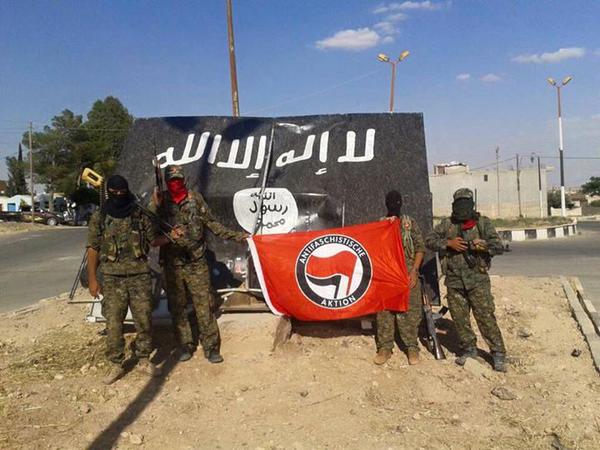
Syria: Russia denies bombing Kurdish forces

With Russian-backed Assad regime forces advancing on the ISIS-held city of Deir ez-Zor from the west and Kurdish forces advancing from the east, a breaking point appears to be approaching in the Kurds’ own tactical alliance with Moscow. Now, with reports that Russian warplanes bombed Kurdish positions outside the city, this breaking point may have arrived. And US advisors are embedded in the Kurdish units, holding the risk of escalation to a global conflict.

North Africa

Tunisia: one step forward, one step back

Tunisia's parliament voted to overturn a 1973 directive prohibiting marriage between a Muslim woman and a non-Muslim man—a victory for the country's transition to secular rule. But one day earlier, the parliament voted overwhelmingly to approve a controversial amnesty law pardoning thousands implicated in corruption and embezzlement under the former regime of Zine El-Abidine Ben Ali. The opposition bloc boycotted the vote, as protesters massed outside the parliament building, calling the step a move back toward dictatorship.

Central America

Guatemala: general strike to demand prez resign

Independence Day celebrations in Guatemala were disrupted by protests across the country, as thousands took to the streets to demand the resignation of President Jimmy Morales. The protests were sparked after the country's Congress voted down a measure to remove Morales' immunity from prosecution and instead approved legislation that decreases the penalties for campaign finance crimes.