

THE TSUNAMI’S HIDDEN CASUALTIES

Indigenous Cultures “Wiped Off the Map” as Governments Exploit the Disaster

by Sarah Robbins

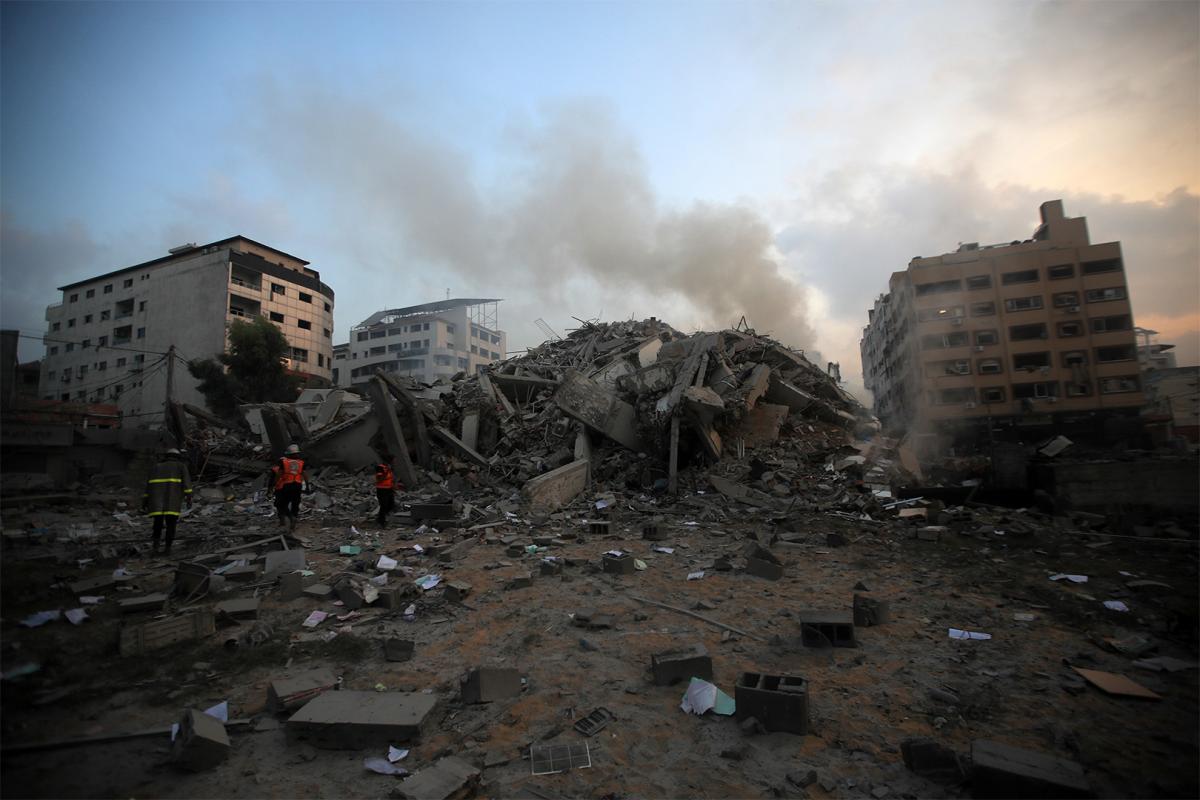
On December 26, 2004, the Indian Ocean tsunami wreaked unimaginable havoc, leaving devastation in its wake and a still-climbing death toll that’s already topped 160,000. But world media have taken little note that entire indigenous cultures–already battle-weary from generations of colonization, inappropriate tourism, war, and disease–may have been swallowed by the waves. And the national governments of some impacted countries are accused of actually exploiting the disaster against restive indigenous populations.

While government officials and aid workers toiled to assess damage and casualties on Thailand’s beaches and even Indonesia’s civil war battlegrounds, the gravest toll may be among small, already-threatened populations in places barely known to the outside world. “This disaster is really about indigenous populations who have been completely wiped off the map,” says Rudolph Ryser, chairman of the Center for World Indigenous Studies, based in Olympia, WA. “We suspect that off the west coast of Sumatra, where a number of islands were completely obliterated, some of those populations have been wiped out.”

Indonesia was hit the hardest—about 115,000 deaths in total–and the war-torn province of Aceh, on Sumatra, was the closest to the earthquake. Aceh’s coastline was shattered, villages were destroyed, and much of Banda Aceh, the capital, was obliterated. Relief efforts are complicated by the Indonesian government’s military campaign against the Free Aceh Movement (GAM), which has been engaged in a struggle for independence from Indonesia since 1976. Before the disaster, the Indonesian government had banned foreign journalists and observers from visiting the province, and now aid workers must register with officials before leaving. GAM’s international supporters accuse the Indonesian military of obstructing aid efforts.

“It’s important for people to realize that these countries have been engaged in battles against the indigenous population for the last generation,” says Ryser. “Indonesia has been involved in a war against the West Paupuans, and of course the people of Aceh.”

In Sri Lanka–where more than 30,000 people were killed and over a million displaced–questions arise over whether the government has given enough aid to the northeastern part of the country, which is controlled by Tamil rebels. The country’s aboriginal inhabitants, the Veddhas, may also be profoundly affected. “They’ll suffer enormously,” Ryser says, “because they were very small, and are right in the middle of the target area.”

The death toll in the Indian province of Tamil Nadu was 7,800, and indigenous peoples may be disproportionately affected there as well. “There’s been such substantial physical disruption, and I’m not sure the Indian government is going to be so friendly,” Ryser says, noting that the Yenadi and Bondo indigenous peoples are particularly threatened.

Cascading down a the Bay of Bengal like a broken necklace, the 572 islands that constitute the Andaman and Nicobar archipelago–36 of which are inhabited–were also hit hard. The India-governed island chain–days’ sailing from the mainland–was a source of tension and speculation in the wake of the disaster, as the Indian government barred foreign aid from the archipelago. Fear mounted that those who survived the tsunami’s initial impact now faced starvation.

According to the Sydney Morning Herald, most of the fatalities occurred in Katchal, once dubbed “Sunrise Island,” in the Nicobar chain. Of its population of 8,300, over 300 have been confirmed dead, while up to 4,500 remain unaccounted for.

The archipelago has a history of displacement of its native population. After the 1857 Indian Mutiny, the British established prisons on the islands, though prisoners sent there often died of disease or were shot by natives unhappy with the encroachment onto their traditional lands. The Japanese occupied some of the islands during World War II, further displacing native communities. The penal colony was closed in 1945 and is now a tourist attraction. After independence, many Bengali and Bangladeshi settlers came to the islands, as did Tamils from Sri Lanka. Of the twelve indigenous tribes that once occupied the islands, six remain. For years, the islands have faced a situation of unsympathetic cohabitation between the native population and the settlers–with the latter facing a threat of actual extinction.

After settlers from the Indian mainland, Bangladesh and Sri Lanka, the largest population in the archipelago is the Nicobarese tribe. These estimated 22,000 people have for the most part cordial relations with the settlers, and have even adopted some of their ways. The other tribes maintain greater distance, and their isolation from modern society has allowed them to preserve the hunter-gatherer ways of their ancestors. The Jarawas, who only came in contact with government authorities in 1996, remember bitter experience with violence and disease in World War II and still stay clear of outsiders. They live in six jungle settlements in the Andamans, surviving on wild pork and fish killed with arrows. On Jan. 6, seven Jarawa tribesmen, who had marched out of the forest armed with bows and arrows to establish contact with outsiders after the disaster, reported that all 250 of their people had escaped inland and were living on coconuts. The tribesmen, speaking through an interpreter, objected to an Associated Press photographer taking their picture, saying that they fall sick when photographed.

Only a few families of the indigenous Andamanese ethnicity remain, as 150 years ago missionaries, in their attempt to “civilize” the people, ended up exposing them to measles and mumps. The 40 remaining Sentinelese, another hunter-gatherer society that subsists largely on wild boar, have not been contacted directly by the government, as they are typically hostile, but they have been seen from the air.

The largest group on the Andaman Islands are the Onge, most of whom, according to a representative of the islands’ Tribal Welfare Department, were found safe in the forested highlands of the interior. “Development has been taking place all around these people,” Ryser said. “There were 678 members of the Onge tribe in 1901. Now there are only 101.” Their ability to survive the tsunami is likely attributed to their ancient wisdom. Sophie Grig, a campaign officer for Survival International, said that a member of the Onge tribe told rescue workers that they took the ocean’s suddenly receding waters–a signal of the oncoming tsunami not heeded elsewhere–as a sign to rush for higher ground.

The most threatened group in the archipelago are the Shom Pens, who are scattered across 17 villages on the Great Nicobar islands, situated at the closest point to the epicenter of the quake. Only 250 tribe members existed before the disaster, and the area around their remote villages has been devastated to the point that relief workers are forced to reach them by foot.

Ryser says that in order to preserve the remnants of these cultures, the relief effort must be focused and sustained. “When you have so many people in a society rubbed out in a day, you lose major parts of the cultural infrastructure,” Ryser says. “The equivalent would be losing teachers, doctors, political leaders. It’s not about money, it’s about the restoration of a whole society in all its aspects. Clearly we need different policies all over the world, and India’s tribal policies are the worst.”

The Indian government is the only affected nation to refuse outside help, and though the death toll in the Andaman and Nicobar islands may account for half of that in all of India, the government has denied humanitarian groups access. This is likely due to the archipelago’s strategic sensitivity. The Indian military uses Car Nicobar as a listening post, and other islands are used to monitor oil shipments through the Strait of Malacca between Sumatra and the Malay Penninsula.

But tourism may ultimately be a greater threat than military activities to indigenous cultural survival in the islands. The region is celebrated for its marine life and pristine beaches–Andaman’s Havelock Island beach was recently rated one of the best in the world by Time magazine–and the influx of tourists has increased almost tenfold since 1980. The Andaman Association, an NGO that supports indigenous peoples in the islands, has posted a letter on its website written by tribals who want protection from the illegal presence of non-tribals on traditional lands.

Ryser charges that state officials are using the disaster to integrate indigenous populations into the majority culture. Almost 10,000 people have been evacuated to the capital, Port Blair, and 21,000 or more are living in relief camps. Not all natives seem disappointed by this prospect. Washington Post reporter Rama Lakshimi met Patlo Ma, a tribal coconut farmer whose extended family traveled through the jungle for two days, surviving on bananas and coconuts. “We want to go to the city of Port Blair and lead a different kind of life from now on,” he is quoted by Lakshimi.

Ryser notes that the brief media focus on tribal peoples in the archipelago represents a rare exception in a world where indigenous cultures are under daily attack. “This is interesting to us because CNN sent 38 reporters over there, and it’s pretty dramatic with all the water rushing around,” he says. “But there are 100 people dying every day in the Congo, all of whom are indigenous people. There are 100 indigenous populations in Iraq, but we cover it up by calling them all Iraqis. I guess if there’s a message here, we need to notice that indigenous people are suffering enormously all over the world, not only because of natural disasters, but because of human disasters.”

RESOURCES:

Andaman Association page on the disaster

——————-

Special to WORLD WAR 4 REPORT, Jan. 17, 2005
Reprinting permissible with attribution

WW4Report.com

Continue ReadingTHE TSUNAMI’S HIDDEN CASUALTIES 

PERU: MILITARY REVOLT IN ANDES; PIPELINE PROTESTS IN AMAZON

by Weekly News Update on the Americas

RESERVISTS SEIZE POLICE POST

Just after 4 AM on Jan. 1, Peruvian former army major Antauro Igor Humala Tasso and some 150 of his followers, mainly army reservists, seized a police station in the town of Andahuaylas in the southern Andean department of Apurimac. Despite having few weapons, the reservists quickly overpowered the 16 police agents guarding the post. Humala said the police agents had gotten drunk for New Year’s Eve and were caught off guard by the surprise attack. The reservists then took control of the police station and its arsenal: 80 FAL semiautomatic rifles, four shotguns, 29 grenades, 11 pistols, 800 tear gas grenades and 50,000 rounds of ammunition. Five police agents and two of Humala’s followers were wounded in the confrontation, according to a police statement. Interior Minister Javier Reategui denied the police agents were drunk when the assault took place, and praised their courage in resisting the attack.

“This is a military protest,” Humala told Radioprogramas radio. “We are prepared to give up our weapons and surrender, when and if [President Alejandro] Toledo leaves his post.” Toledo’s administration has been plagued by a series of corruption scandals involving relatives and members of his cabinet, and polls show his popularity at around 9%. Humala, a leader of the “Etnocacerista” movement–officially called the Peruvian Nationalist Movement (MNP)–accused Toledo of being a corrupt sellout to foreign investors, and demanded an end to inflows of capital from neighboring Chile. (AP, Jan. 1; La Republica, Lima, Jan. 2; Reuters, AFP, Jan 2)

Humala is the brother of Lt. Col. Ollanta Moises Humala Tasso, Peruvian military attache in South Korea, who was forced into early retirement from the army on Dec. 31. On Dec. 30, Ollanta Humala had protested his announced retirement as “unjust”; the same day, Antauro Humala said his brother was forced out of the army for having sent a Dec. 17 letter to new army general commander Luis Alberto Munoz, criticizing him for having links to former spy chief Vladimiro Montesinos Torres. Munoz replaced Jose Antonio Graham Ayllon as army general commander in a surprise shakeup of the military high command in mid-December following a power struggle between Graham and Defense Minister Roberto Chiabra over promotions in the ranks. (Chiabra has also been accused of links to Montesinos.)

On Dec. 31, Ollanta Humala announced he would run for president in 2006. In a communique released Jan. 1, Ollanta Humala demanded that Toledo immediately resign, that Vice President David Waisman take over as president in accordance with the Constitution, and that Toledo be put on trial. Ollanta Humala also called on reservists throughout Peru to organize in defense of the public and for the “recovery of our institutions.” (LR, Dec. 14-8, Jan. 1, 2)

[On Oct. 29, 2000, the Humala brothers led some 50 followers in a brief military uprising against the government of then-president Alberto Fujimori in the town of Toquepala, in southern Moquegua department. The rebels escaped and went into hiding. Their rebellion was unsuccessful, but the regime was already near collapse; Fujimori fled the country, then resigned on Nov. 19. The Humala brothers and their followers surrendered to the transitional government a month later on Dec. 16 and were pardoned by Congress on Dec. 22.–WNU]

Antauro Humala said on Jan. 1 that his brother would soon return to Peru to resume leadership of the movement. As of Jan. 2, Ollanta Humala was still in Seoul; he told Radioprogramas the military was delaying his departure with administrative matters. (AP, AFP, Jan. 2)

“The Etnocacerista group took as hostages police major Miguel Angel Canga, three commissioned and six non-commissioned officers,” the National Police said in a statement. Some 2,000 people gathered outside the Andahuaylas police station in a show of support for the military rebellion. Toledo responded by cutting short his holiday vacation to convene a cabinet meeting and declaring a 30-day state of emergency in Apurimac department. The state of emergency suspends basic constitutional rights such as freedom of assembly; permits authorities to enter homes without search warrants; and allows the president to assign the armed forces to police duties. Cabinet chief Carlos Ferrero claimed the Etnocaceristas are “closely linked” to drug traffickers, and that they had staged the assault on the police station after the police commander there refused to sell them weapons. Reategui, the interior minister, said there would be no dialogue between the government and Humala’s forces. (AP, AFP, LR, Jan. 2)

Before dawn on Jan. 2, the rebel reservists attacked a police vehicle heading to the airport on a bridge on the other side of Andahuaylas from the police station. A police captain, a police lieutenant and two police agents died from bullet wounds; three police agents and one Humala follower were wounded. Ollanta Humala said the deaths occurred when state security forces tried to retake a bridge held by the reservists. “They attacked the reservists with guns with silencers–there were four police deaths. We had one man injured–the Red Cross evacuated him,” Humala said. Calm had returned to Andahuaylas, according to Humala, but some 800 police agents and 700 troops were massed there. Humala said the hostages were safe and that police had captured seven of his men. Humala claimed more supporters had joined him since the initial assault on the police station, and his group now numbered more than 200, including seven women. Humala said he had posted snipers on the police station roof and had taken over 25 police vehicles. Locals in Andahuaylas donated sacks of potatoes and fruit, and some blocked roads in support, Humala said. Andahuaylas Mayor Julio Huaraca said he had left the town “for safety reasons.” (AP, Reuters, Jan. 2)

In a Jan. 1 interview with the Lima daily La Republica, attorney Isaac Humala Nunez, father of the Humala brothers (and president of the MNP in 2000), said the latest rebellion emerged from the results of the Etnocacerista Forum held last Oct. 29, where members discussed the need to confront the “strategic war” started by Chile. (LR, Jan. 2) The term “Etnocacerista” combines a prefix meaning “ethnic”–a reference to the group’s indigenous nationalist stance–with the name of Andres Avelino Caceres, a nationalist Peruvian army commander who served during the 1879 war with Chile and led a campaign of guerrilla warfare against Chile after Peru’s defeat. Caceres served as president of Peru from 1886 to 1890, and again briefly in 1894. (MNP website, Columbia Electronic Encyclopedia; LR, Jan. 2)

In its Nov. 20, 2003 edition, the weekly magazine Caretas implied that Antauro Humala had participated in the execution of campesinos while leading army patrols in Huaunco department in 1986 and 1987. From January 1986 to April 1987, Humala, then a second lieutenant, headed up the army’s Antisubversive Battalion 314, based in Acobamba, Huanuco. He later served on similar “anti-subversive” patrols in Santa Rosa, Cuzco and Moquegua.

From Weekly News Update on the Americas, Jan. 2

SIEGE IN ANDAHUAYLAS ENDS

The armed takeover in Andahuaylas ended early on Jan. 4 following the arrest of retired army major Antauro Humala Tasso, leader of the rebellion. Late on Jan. 2, after four police agents and one of his supporters were killed in a confrontation in Andahuaylas, Humala had announced that he would surrender at noon the next day in exchange for a guarantee of safety for his followers. But he later retracted his offer, saying the government had reneged on a deal to withdraw its troops from around the police post.

Instead of surrendering on Jan. 3, Humala walked out of the police post and told some 200 followers he would hold his ground. He also released a hostage police agent. Humala said he respected the wishes of his brother, Ollanta Humala, who had publicly urged a peaceful negotiated solution to the standoff, but that he preferred to listen to his followers, who had urged him not to surrender. Humala and his supporters marched to the town’s central plaza, then back to the occupied police station. The government responded by clearing out the streets around the police station and posting snipers on nearby roofs. As Humala’s supporters surrounded the police post to prevent an assault, the snipers shot and killed one Humala supporter, reservist David Ortiz, and wounded four others. Humala’s supporters responded by seizing five members of the government security forces and beating them up.

Later in the day, as the government enforced a curfew in the town, Humala went with some 50 followers–all unarmed–to negotiate with national police chief Gen. Felix Murazzo and other officials in the Andahuaylas municipal building. Humala and his top deputy, Jorge Villalba, were arrested around 10:30 PM; the government claimed it did not accept Humala’s conditions and simply ended the negotiations by arresting him, though sources consulted by the Lima daily La Republica say the arrest was negotiated.

While the negotiations were going on, police freed some 20 hostages who had been held at the police station. Humala will be charged on six counts, including terrorism, illicit association, illegal arms possession, kidnapping and homicide. The fact that Humala was charged under a terrorism statute means the case was transferred to the jurisdiction of anti-terrorism prosecutor Maria del Pilar Malpica Coronado in Lima, and Humala and Villalba were flown there for arraignment on Jan. 4. Public Ministry officials said Andahuaylas provincial prosecutor Edgar Chirinos Apaza, who had already begun an investigation into Humala, declined jurisdiction in the case. If Humala’s lawyers challenge the jurisdictional question–either on the grounds that the case should be tried in Andahuaylas or that it should not be tried as a terrorism case–it could take as long as a year before the Supreme Court makes a decision. (LR, Jan. 4, 5; Miami Herald, Jan. 5; BBC, Jan. 4)

Authorities also arrested about 100 of Humala’s followers. On Jan. 4 the Second Provincial Criminal Prosecutor’s office in Arequipa charged 15 military reservists and civilians, including union leaders, with the crime of attempted rebellion for allegedly participating in the three-day siege. Seven of those charged were arrested; eight remained at large. (MH, LR, Jan. 5)

Followers of Humala’s Peruvian Nationalist Movement (MNP) demonstrated on Jan. 2 in the departmental capitals of Tacna and Arequipa as well as in Ilave, in Puno department, all in southern Peru. On Jan. 3 in Arequipa, police used ample quantities of tear gas in an effort to stop some 3,000 MNP supporters from demonstrating in the Plaza de Armas; the chaos shut down the city center and led some 500 tourists to cut short their visits. Seven people were reported arrested. MNP supporters also marched on Jan. 4 in Puno and Tacna in support of Humala’s actions. (LR, Jan. 3-5)

From Weekly News Update on the Americas, Jan. 9

MNP website

AMAZON RESIDENTS BLOCK PIPELINE

On Dec. 13, some 800 indigenous and mestizo residents of the Alto Maranon region of Loreto department in the Peruvian Amazon region blocked access to Petroperu’s #5 oil pipeline pumping station between the villages of Saramirisa and Santa Rosa and threatened to shut off the flow of oil to the coast in a protest seeking government attention to local demands. Residents also blocked traffic along the Maranon River. The indigenous residents are members of the Huambisa, Shapra, Cocama and Aguaruna ethnic groups. The protesters kept the pipeline facilities blockaded until Dec. 18, when they reached an agreement with Loreto regional president Robinson Rivadeneyra. Rivadeneyra agreed to facilitate the constitution of Alto Maranon as a province; the opening of a branch of the national bank, Banco de la Nacion, in San Lorenzo; and establishment of a radiophone system in 14 communities. Jose Valera, president of the Front of Defense and Integration of the Upper Amazon (FREDESAM) said he was satisfied with the accords. (LR, Dec. 19; El Nuevo Herald, Miami, Dec. 15)

From Weekly News Update on the Americas, Dec. 19

——————-

Reprinted by WORLD WAR 4 REPORT, Jan. 17, 2005
Reprinting permissible with attribution

WW4Report.com


Continue ReadingPERU: MILITARY REVOLT IN ANDES; PIPELINE PROTESTS IN AMAZON 

THE WAR’S TOLL AT HOME

With all eyes on the troops in Iraq, their families—a huge and growing segment of the population—are suffering largely in media silence

by Peter Gorman

Lynn Jeffries is a single mother from Lubbock, Texas, whose son Nathan was deployed to Iraq in late 2003. A registered nurse who worked for years in an emergency room at a Lubbock hospital, Jeffries says that shortly after her son was deployed, she found herself unable to take care of trauma patients and left the emergency room for work as a hospice nurse. “I just started crying at everything,” she says. “I was so angry about this war, but at the same time I felt like I couldn’t fight against it without betraying my son. It just ate at me every day, more and more.”

Jeffries’ depression grew until, she says “at one point I thought of taking my own life in order to get my son home. It’s just made me a little crazy. I’ve never felt so helpless in my life–there are days I could not even leave the house.”

Jeffries’ son was home on leave when she spoke with this reporter, and she said she was feeling a little better–but having difficulty facing that her son is scheduled for redeployment to Iraq early in 2005. “What will happen the day I have to put him back on the plane to go back? I would do anything to have him go to Canada, but he says his friends need him and he can’t leave them.”

Teri Wills Allison of Austin, is a mother of two boys–one of whom is deployed in Iraq. She says that the depressions she began to have after her son left for Iraq got so bad that “though I’d never taken pills before I’ve needed Xanax just to get through the day since my son’s deployment.”

Jeffries and Wills Allison are not unique. They are part of a growing number of military families who find themselves dealing with what psychologists are beginning to recognize as Secondary Traumatic Stress Disorder. Like the better-known Post-Traumatic Stress Disorder, Secondary TSD can clearly be debilitating.

Says Wills Allison: “We, the mothers and fathers of the boys in Iraq–we’re getting by, but barely. Some of them tell me they need a six-pack before bed to fall asleep. Others can’t leave the house for fear they’ll come home to have that call from the military waiting on the machine. Some families are just torn apart by this.”

Some more than others. In late November, Marine Lance Cpl. Charles Hanson Jr., was killed in a roadside bombing of his convoy in Iraq. One week later, on Nov. 30, his stepdad, 39-year-old Mike Barwick, entertained guests at his Crawfordville, FL, home with stories of the stepson he loved so much. Three days later, just hours before guests were coming for a viewing at the home Barwick shared with Hanson’s mother, Dana Hanson, Barwick shot and killed himself. Family members were quoted in the local newspapers as saying it was clear he simply couldn’t live with the pain.

Misha ben-David, a drug and trauma counsellor in Austin, says he remembers his family being torn apart when his father went to Vietnam, and is beginning to fear the same thing will happen now that his son is being deployed to Iraq. “The stress on the family is unbearable,” he says. “I can already hear my ex-wife starting to freak out, retreating into a ‘rah-rah, do you love your son or not?’ frame of mind. We’ve got so much pressure on us from people like the Fox network to see this as a black-and-white issue–either you’re for the war and a patriot or you’re a no good, liberal, anti-American. Add to that stress that it’s your child that might be killed, or wounded, or permanently maimed and you’ve got a lot of family members going crazy out there.”

“Every member of every family who has ever sent a loved one to war has suffered,” says Nancy Lessin from Massachusetts, whose stepson, Joe Richardson, served in Iraq during the invasion and is expected to be called back for a second deployment there any day. “But this one is different. The stresses are different.”

Lesson is a co-founder, with her husband, Charlie Richardson and a friend, Jeffrey McKenzie, of an organization called Military Families Speak Out. MFSO was started in November, 2002, after Joe Richardson and Jeffrey McKenzie’s son–who is scheduled for a second tour in Iraq in 2005–was initially deployed to Iraq. “We realized we had no place to turn, no one to talk to about our anger at this war, about the feeling of helplessness we had, about our outrage over our sons being used in this unjust war. So we started our own organization.” Since its inception, MFSO has grown to over 2,000 members, most of whom are against the war in Iraq.

Lesson was asked why she thinks the suffering of families is different in this war than in other wars. “Because this is a war that didn’t have to happen. This is a war built on lies. We were told that this war was about weapons of mass destruction, about Iraq’s ties to al-Qaeda and the Twin Towers horror. But there were no weapons of mass destruction, no ties to al-Qaeda. We were told ‘Mission Accomplished’ when Saddam Hussein fell, but there was no mission accomplished.”

Lesson portrays a betrayal of the government’s most fundamental commitment to its soldiers. “All of our loved ones signed up to protect our country and our country’s constitution. They took a vow to give their lives, if necessary. But the assumption was that they would be fighting for a just cause. And if this were a just war–while Charlie and I would still have been terrified of that knock on the door or that telephone message telling us that Joe had died–we would have been able to move on. But in this war, a war for oil markets and corporate interests, a war in which every reason given for fighting it has proven to have been a lie, I don’t know that we would ever be able to move on if that knock on the door came. And what that has done to the families of the men and women fighting this war is horrible.”

There is also the added stress–not just on the soldiers, but on the family members as well–of involuntary tour extensions, multiple deployments, shortages of both body and vehicle armor. “Put it all together, and what you’ve created is an emotionally explosive situation,” says ben-David.

This is also the first war in which soldiers have access to the internet, intended by the military to keep morale up by giving soldiers regular contact with their families. But there have been unintended consequences to such regular contact as well. Says Lessin: “It’s not a letter every couple of weeks, where parents can try to imagine that everything is OK. With the internet we’re learning that our loved ones don’t have enough food or water or weapon replacements or armored vests, things that leave us feeling helpless.”

“Don’t even get me started on that,” says Sharon Allen, a single mother from Fort Worth, whose son is in Germany preparing for a second deployment to Iraq. “While he was in Iraq the first time, my son wrote me that the Halliburton people who were hired to bring things like mail and water and parts for the troops said it was too dangerous to go where my son was, and that the company would have to send people to a safer place to get what they needed. They were in the middle of a war, and they couldn’t. My son said the only way he kept his tank going was to steal parts from another tank. Can you imagine giving that choice to a 22-year-old? I’m a wreck knowing he’s going back.”

Wills Allison eloquently described her feelings of helplessness in an essay she wrote titled “A Mother’s View”, that initially appeared on the internet. “A just war there may be, but there is no such thing as a good war. And the burdens of an unjust war are insufferable. I know something about the costs of an unjust war, for my son, Nick–an infantryman in the US Army–is fighting one in Iraq… First, the minor stuff: my constant feelings of dread and despair; the sweeping rage that alternates with petrifying fear; the torrents of tears that accompany a maddening sense of helplessness and vulnerability… I feel like a mother lion in a cage, my grown cub in danger, and all I can do is throw myself furiously against the bars, impotent to protect him.”

One of the worst aspects of this war, wrote Wills Allison, is the wedge it’s driven between her and much of her family. “They don’t see this war as one based on lies. They’ve become evangelical believers in a false faith, swallowing Bush’s fear-mongering, his chicken-hawk posturing and strutting, and cheering his ‘bring ’em on’ attitude as a sign of strength and resoluteness… These are the same people who have known my son since he was a baby, who have held him and loved him and played with him, who have bought him birthday presents and taken him fishing. I don’t know them anymore.”

The military offers social services and family counseling for husbands, wives and children of servicemen and women deployed overseas. But the services are only available to those who live on base. As few parents do, they have almost nowhere to turn for support.

There are a couple of exceptions. In August, 2003, under the watch of Lt Col Anthony Baker, Sr., the National Guard began working with Guard families in crisis situations, sometimes in a one-to-one setting. The Tragedy Assistance Program for Survivors (TAPS)–a non-profit with strong ties to the Department of Defense and the Dept. of Veterans’Affairs–primarily provides services to those who have lost a loved one while serving in the armed forces. But director Bonnie Carroll says the people who staff the 24-hour hotline (1-800-959-8277) will try to help anyone in a crisis situation resulting from the stress of a loved one deployed in Iraq.

“We’ll try the best we can,” Carroll says. But for most families, MFSO.org and a few other internet forums are the only places filling the void. “It’s the only place I can go at 4 AM when I can’t sleep, even with the Xanax, to talk with people who feel like I do,” says Wills Allison. “One of my friends has a son who returned home with such PTSD that he had flashbacks of the smell of burning flesh, of the sight of dead people torn to bits on the side of the road.” While home on leave, Allison says, he crawled to his mother’s bed every night to cry and fall asleep. “And then he was redeployed. His mother is barely holding on. There’s no-one in the military there for her.”

Cathy Wiblemo, deputy director for health care at the American Legion, the veterans’ organization that serves as a watchdog on the Veteran’s Administration, says there is simply no funding to provide services for the families of deployed or returning soldiers. “We do have a hotline [1-800-5040-4098] referral service for family members where we try to find them the services they need in their local community, but in terms of paying for those, they’re on their own.

She takes a stark view of the situation. “The truth is that the VA is not ready to supply the services that are going to be needed for the returning vets. And if we can’t even provide those services for soldiers, how could they possibly be available to family members?”

Unfortunately, because the phenomenon of Secondary Traumatic Stress Disorder is just beginning to be recognized, there are no studies on the numbers of people severely affected to the point where they are functioning less well than normal. It might be thousands; it might be tens of thousands. It’s also unknown how long the stress will last even after the family members return home.

“We’ll find out as we go along,” says ben-David. Until we do, they’re on their own–just incidental collateral damage.

RESOURCES:

Military Families Speak Out

Tragedy Assistance Program for Survivors

——————-

Special to WORLD WAR 4 REPORT, Jan. 17, 2005
Reprinting permissible with attribution

WW4Report.com

Continue ReadingTHE WAR’S TOLL AT HOME 

OIL, OLIGARCHS AND THE UKRAINE CRISIS


Pipeline Politics Behind "Orange Revolution"

by Raven Healing

While blogs and alternative media in the US were still debating whether or not Bush had actually won the elections, representatives of the Bush administration were criticizing the accuracy of the presidential results in Ukraine. As reports of electoral irregularities mounted in Ohio, Secretary of State Colin Powell stated, "the Ukrainian people deserve fair elections." However, a peek behind the headlines indicates that neither candidate ever represented the needs of the Ukrainian people.

Ukraine was already a divided country, ethnically, linguistically and religiously. The western regions are inhabited mostly by Ukrainian-speaking Uniate Catholics who identify more strongly with Europe, while the east is predominantly Russian-speaking, Orthodox Christians who generally favor close ties to Moscow. The eastern provinces supported Russian-speaking Viktor Yanukovich, and the western provinces largely went for Viktor Yushchenko, the Ukrainian-speaking candidate.

However, the elections became more than just a contest over which candidate the Ukrainian people wanted, but rather which world power Ukraine should align itself with–and, given the country’s dire economic situation, potentially be dominated by. The Ukraine electoral crisis–which nearly led to a civil war, according to many analysts–was manipulated by rival outside powers, each with its own economic agenda. One of Ukraine’s most important economic interests is provided by its strategic location between the oil-rich Caspian Sea and western markets–and particularly the Odessa-Brody pipeline, recently built to carry Caspian oil from Ukraine’s Black Sea port of Odessa to Brody, near the Polish border. Controlled by Ukraine’s state pipeline company, the Odessa-Brody has ironically only been used to carry oil in the reverse direction–exporting Ural oil from a Russian company to Odessa for export via the Black Sea.

In November of 2004, Victor Yanukovych was declared the winner of the elections in the Ukraine. His opponent, Victor Yushchenko, along with some NGO’s, criticized the election as rigged; claiming votes had been added to mobile ballots. Colin Powell said that the US refused to accept the results of the elections, adding: "If the Ukrainian government does not act immediately and responsibly there will be consequences for our relationship." Groups of young protestors flooded Kiev, and the Ukrainian Supreme Court ruled the first election a fraud. This circumstance was coined the "Orange Revolution," evoking the "Rose Revolution" in Georgia a year earlier–in which Russian-backed President Eduard Shevardnadze was ousted by a protest wave following contested elections.

Before the revote, Yushchenko revisited a clinic in Vienna that he had been in twice before for a mysterious disfiguring illness–only this time the doctors rather quickly came to a conclusion that Yushchenko had been poisoned with dioxin. In an environment tainted with accusations of an attempted assassination, the re-vote was held Dec. 26. Yushchenko was found to be the winner by 52 percent. In both elections, the results were divided along the linguistic and cultural rift–Yushchenko winning in the west while Yanukovich won in the east.

Yanukovich was acting prime minister of Ukraine from November 2002 to December 7, 2004, when he resigned due to fallout from the assassination accusation. Yanukovich’s candidacy was supported by Leonid Kuchma, president of Ukraine for over ten years, as well as by Russian President Vladimir Putin, who often appeared alongside Yanukovich during his campaign. Just before the first election, Putin told the Ukrainian press that dual citizenship was a possibility, as well as an easier visa process–the unspoken condition, by strong implication, being the election of Yanukovich.

Yanukovich tried to present himself as a tough-guy populist, but the opposition saw him as a "business as usual" candidate representing the interests of the various oligarchs who had taken control of Ukrainian industries–as well as those of Russia, which is selling oil to western markets via Ukraine pipelines. He is connected to the "Donetsky clan," a powerful business and political group, and its leader Rinat Akhmetov, Ukraine’s richest tycoon. Yanukovich advocated closer relations with Russia and even favored some political integration with Russia. Furthermore, he represented the continuation of the authoritarian tendencies and suppression of media freedom that plagued Kuchma’s presidency. Some critics of Yanukovich feared that he has close ties to both the FSB (successor to the KGB) and to Bratva, the organized crime machine. He was said to have acted as a lobbyist for Bratva in national-level politics.

Yushchenko’s past is by no means clear of similar negative associations. He was the head of the National Bank of Ukraine (NBU) in 1997 when, according to some critics, millions of dollars in IMF loans were embezzled and laundered, profiting certain oligarchs, although apparently not Yushchenko personally. Some oligarchs, such as Yuliya Timoshenko, who has been publicly implicated in unethical economic practices, openly supported Yushchenko’s candidacy. While Yushchenko was acting as prime minister in 2000, the IMF audited the NBU, finding "irregularities" in accounting practices and suspended a loan. Yushchenko worked to mend fences with the IMF, as well as with US leaders. By the end of 2000, the IMF reinstated the loan under condition that Ukraine submit a list of enterprises subject to privatization. By this time, Ukraine had borrowed over $3 billion from the IMF, most of which was used to stabilize the national currency, an accomplishment for which Yushchenko is given credit. Bill Clinton praised Ukraine for its "progress" and encouraged "efforts to more fully integrate Ukraine into the West." Meanwhile, Clinton was also brokering plans for a Baku-Ceyan pipeline, a second artery to carry Caspian oil to western markets, through the Caucasus.

Western media portray the "Orange Revolution" as a movement of the people, and Yushchenko’s presidency as heralding a new era of freedom and prosperity for Ukraine. Yushchenko’s presidency may mean a revolution, but this revolution only changes which wealthy hands are grabbing the profits from oil transfers, while the people themselves remain in poverty. And the youthful protests were, at least, greatly aided by the US and Western financial interests.

The US State Department funded the exit poll in the first election that showed Yushchenko leading by 11 points. The State Department sent $65 million over the past two years to groups in support of democracy in Ukraine. One of these groups was the International Center for Policy Studies, on whose board Yushchenko sits. The US Agency for International Development (AID) sent millions to the Poland-America-Ukraine Cooperation Initiative, an NGO that in turn funded various other NGOs in support of Yushchenko. There are accusations that some of the NGOs which assessed the fairness of the elections are affiliates of the US National Endowment for Democracy, which is closely associated with US AID. The "Pora" youth movement responsible for many of the protests was funded by financier philanthropist George Soros and by Freedom House, a Washington-based proponent of "democracy" and "free markets" which is funded by such groups as the Soros Foundation, Whirlpool, US Steel, the Ford Foundation, the National Endowment for Democracy and US AID. Western media generally did not cover protests by supporters of Yanukovich.

With Yushchenko seeking membership to the EU, and potential membership in NATO; with his clearly pro-Western position; with the role the US has played in promoting a re-vote; with Ukraine so dependent on loans from the IMF, which insists that Ukraine’s oil trade be in US dollars–it was easy for Putin to accuse the US of playing "sphere of influence" politics. Of course Putin was himself playing "sphere of influence" politics.

The "Rose Revolution" in Georgia was also a funded "revolution." Again, George Soros funded the youth group (Kmara) responsible for most of the protests; a Russian-backed president was unseated and replaced with a more pro-Western one. This new pro-Western president, Mikhail Saakashvili, seeks membership into both the EU and NATO. President Saakashvili did not herald a new time of freedom for the people; there have been many concerns about his authoritarian tendencies, including heavy-handed use of the police to break up protests. However, he did lessen Russia’s traditional control over Georgian politics. After his meeting with Powell in January 2004, Powell called for the removal of all Russian troops from Georgia, and for opening the country to more US military advisors. Saakashvili also protects the interests of the US companies who want to pump their oil through Georgia in the Baku-Ceyan pipeline.

The Ukrainian people were caught between two imperialist powers vying for control of the world’s oil. They were essentially asked to vote for which world power they would rather have reaping the profits from the flow of Caspian oil through their country–for it is certainly not the impoverished Ukrainian people who will be making any money. To both Russia and the West, the countries on the precious route from the Caspian to insatiable western markets are important due to their geopolitical location–not their culture or people. As Russia has shown in Chechnya, and the US in Iraq, the rights of the people are of little consequence when control of oil resources are at stake.

RESOURCES:

Wall Street Journal on the Odessa-Brody pipeline

——————-

Special to WORLD WAR 4 REPORT, Jan. 17, 2005
Reprinting permissible with attribution

WW4Report.com

Continue ReadingOIL, OLIGARCHS AND THE UKRAINE CRISIS 

COLOMBIA & IRAQ: HALLIBURTON MAKES THE CONNECTION

by Daniel Leal Diaz

The Bogota daily El Tiempo recently reported that the US military contractor Halliburton has recruited 25 retired Colombian police and army officers to provide security for oil infrastructure in Iraq. One of the men, speaking on condition of anonymity, said the officers met in Bogota on Dec. 2 with a Colombian colonel working on behalf of Halliburton Latin America, who offered them monthly salaries of $7,000 to provide security for oil workers and facilities in several Iraqi cities. The claim was confirmed by a Colombian government source, said El Tiempo, but denied by a Halliburton representative in Bogota. US media have reported that former soldiers from Chile, South Africa and Spain are being recruited to beef up Iraqi security forces. Halliburton, the oil services giant once run by US Vice President Dick Cheney, has won billions of dollars in Iraq contracts, but has been accused of overcharging and accounting irregularities. (Al-Jazeera, Dec. 13; AP, Dec. 17)

Colombia is a member of President Bush’s “coalition of the willing” in Iraq, but hasn’t sent troops because its army is battling a guerilla insurgency with US aid at home. The wars in Iraq and Colombia are coming to reflect each other more and more.

Rights abuses by the military continue in Colombia’s rural communities. On Dec. 29, in the self-declared “peace community” of San Jose de Apartado, Antioquia department, a 10-year-old girl, Flor Alba Nerio Usuaga, was shot in the back, while running with some campesinos that refused to stop when an army patrol told them to. According to a statement from the community leaders, the campesinos had seen guerillas in the area, and were afraid of getting caught in cross-fire. The girl survived, and is now in the hospital in nearby Apartado city.

On Dec. 22, in La Cristalina, one of San Jose’s outlying communities, three campesinos, including 70-year-old Miguel Arango, were forcibly detained by army troops in their own houses. Accused by the troops of being guerilla collaborators, Arango was tortured by having his head held under water repeatedly. The family was finally set free. (San Jose de Apartado statement, Jan. 2)

On Sept. 29, in the peace community of Cacarica in neighboring Choco department, three residents, including an 11-year-old boy, were detained by the military’s XVII Brigade after being accused of being members of the guerilla militia. In the course of a three-hour interrogation, they were threatened with death and humiliated. One soldier told an officer through his radio, “one of them has the face of gonorrhea.” (Cacarica statement, Dec. 7)

Sadly, such rights violations are also taking their toll in Colombia’s mayor cities. An employee of a Coca-Cola plant, affiliated to the beverage workers union SINALTRAINAL, is the latest target. The events took place Nov. 25 in the city of Cucuta, Norte de Santander department. Gustavo Lindarte received a bullet in his right leg in what was apparently an attempted assassination. The president of SINALTRAINAL, Javier Correa, said that Lindarte’s life is “in serious risk.” Cucuta’s government functionaries have been nationally and internationally denounced by rights groups for maintaining links with the right-wing paramilitaries. The mayor of the city, Ramiro Corzo, is currently in jail on charges of collaborating with outlawed paramilitaries. (ANNCOL, Dec. 9).

As in Iraq, designs on local oil resources are a major factor in the war. In the spring of 2001, Guimer Dominguez, president of Occidental Petroleum’s Colombian operations made a private visit to the fortress-like U.S. Embassy in Bogota to plead for help. A bombing campaign by leftist guerillas had nearly shut down Oxy’s Cano-Limon oil field in Arauca department. Dominguez threatened to permanently shut Oxy’s operations unless security improved. The pull-out would have been a harsh blow to Colombia’s government, which is heavily reliant on oil royalties. “Oxy will not resume production at the Cano-Limon field until the [Colombian government] addresses the security situation in Arauca significantly,” then-US Ambassador Anne Patterson wrote in a confidential memo to the State Department after Dominguez visited the embassy. A subsequent Colombia aid package sent to Congress by the Bush administration included a provision to send US military advisors to train Colombian soldiers to protect oil infrastructure. Patterson worked closely with both Oxy and the Colombian government to draw up the plan. The US has now trained some 2,000 soldiers to protect the Cano-Limon pipeline. Attacks on the pipeline have dropped from 170 in 2001 to only 17 in 2004. Colombia’s government is receiving $500 million more from Oxy’s oil operations annually. (LAT, Dec. 29)

Finally, these abuses are taking place as Colombia’s fragile democracy appears to be degenerating into a US-backed authoritarian state. Colombia’s Congress approved on Nov. 30 an amendment to the constitution that permits President Alvaro Uribe, the Bush administration’s closest ally in South America, to run for re-election in 2006. Uribe signed the measure, making it official, Dec. 27. His term is to expire in August 2006, and the Colombian constitution has until now barred re-election. Wrote the New York Times: “The Bush administration has quietly but steadily supported a re-election drive by government supporters who argue that Mr. Uribe needs four more years to help extricate Colombia from its long, drug-fueled conflict with Marxist rebels. Since 2000, the United States has provided Bogota with 3.3 billion in mostly military assistance, and President Bush offered more when he visited Colombia on Nov 22.” (NYT, Dec. 28)

The US has transformed Colombia’s soldiers into some of the best mercenaries in the world through decades of a mutating war that never seems to end: communism, drugs and–the latest version–terrorism. As Halliburton exploits this expertise for the Iraq campaign, Colombia becomes poorer in every dimension: violations of human rights, indiscriminate violence, loss of sovereignty and a crumbling democracy.

——————-

Special to WORLD WAR 4 REPORT, Jan. 17, 2005
Reprinting permissible with attribution

WW4Report.com

Continue ReadingCOLOMBIA & IRAQ: HALLIBURTON MAKES THE CONNECTION 

COLOMBIA: REBEL LEADER EXTRADITED, MASSACRES MOUNT

by Weekly News Update on the Americas

REBEL LEADER EXTRADITED TO U.S.

On Dec. 31 a leader of the Revolutionary Armed Forces of Colombia (FARC), Juvenal Ricardo Ovidio Palmera Pineda (alias Simon Trinidad), was taken from a maximum security Colombian prison and flown to Washington on a US Drug Enforcement Administration (DEA) plane. In Washington, Palmera was taken to US District Court–kept open late on New Year’s Eve, just for him–where the Justice Department said he appeared before Magistrate Judge John Facciola; he was then driven to an undisclosed location. Palmera has been indicted in the US on charges of drug trafficking, kidnapping and supporting terrorists. The US government says Palmera shipped five kilos of cocaine to the US; the kidnapping charges stem from the FARC’s February 2003 capture of US military contractors Thomas Howes, Keith Stansell and Marc Gonsalves after their plane crashed in the southern department of Caqueta.

Palmera was serving a 35-year prison sentence in Colombia after courts there convicted him of aggravated kidnapping. Palmera was a negotiator for the FARC during peace talks with the government of Andres Pastrana Arango. He was arrested in Ecuador on Jan. 2, 2004. Palmera is the first FARC leader to be extradited to the US. Alleged FARC member Nelson Vargas Rueda was extradited to the US on May 28, 2003, to face charges for the March 1999 murder of three US activists, but he was returned to Colombia on July 1 of this year after the US government dropped its case against him for lack of evidence.

The US has made 270 extradition requests to Colombia. On Nov. 24, Colombia’s Supreme Court authorized the extradition of Palmera and two leaders of the rightwing paramilitary United Self-Defense Forces of Colombia (AUC): Salvatore Mancuso and Carlos Castano. On Dec. 16, the Colombian government agreed not to extradite Mancuso, who faces drug trafficking charges in the US, as long as he complies–and pushes other AUC members to comply–with the terms of a “peace accord.” All arrest orders against Mancuso are suspended while the peace process proceeds, and he travels in Colombian government vehicles under state protection. Castano disappeared last April and rumors spread that he was killed in a factional fight within the AUC; other reports suggest he may be in Israel, or in the US, where his wife, Kenia Gomez, and their daughter were recently granted asylum.

On Dec. 17, Colombian president Alvaro Uribe Velez authorized Palmera’s extradition but issued an ultimatum giving the FARC until Dec. 30 to free 63 hostages in exchange for halting the extradition. The list of hostages includes the US military contractors–Howes, Stansell and Gonsalves–along with politicians, soldiers and a German businessperson. The FARC did not respond–and did not refer to the offer in three communiques issued on Dec. 27 and 29–but had made clear in the past that it would not accept such a deal, and would only free the hostages in exchange for the release of 500 jailed rebels.

(Miami Herald, Jan. 1, Nov. 26; El Nuevo Herald, Miami, Jan. 1, Nov. 26; AP, Jan. 1; El Mostrador, Chile, Dec. 31; FARC Communiques, Dec. 27, 29)


28 DEAD IN TWO MASSACRES

On Dec. 23, several contingents of the AUC’s “Northern Bloc”–headed by Salvatore Mancuso and currently engaged in “peace negotiations” with the Colombian government–came to the Middle Catatumbo region of Norte de Santander department from Ocana municipality and the southern area of neighboring Cesar department. The paramilitaries set up a roadblock on the road that links the town center of Convencion to the village of Cartagenita in Convencion municipality, where they abducted and murdered campesino Jesus Humberto Guerrero Jimenez and stole 10 million pesos ($4,147) from him. At the same site, the paramilitaries abducted and killed an unidentified young campesino who lived in Cartagenita.

Early on Dec. 25, the paramilitaries entered the village of Santa Ines, in El Carmen municipality, where they forced the community’s residents to gather before separating seven campesinos from the group and killing them. Four of the victims were identified as Leonel Bayona Cabrales, Samuel Perez Abril, Custodio Melo and William Montano. The paramilitaries also abducted, tortured and freed two other campesinos, and robbed the village residents of 15 head of cattle, money and other possessions.

Also on Dec. 25, the paramilitaries abducted two unidentified men near the border of Ocana and Convencion municipalities, and murdered them in the hamlet of Culebritas in Convencion. Some 1,000 residents of the villages of Cartagenita, Miraflores and La Trinidad in Convencion municipality have fled their homes in terror and are hiding in rural areas, unable to reach larger towns because of the paramilitary siege. They are running out of food and have no access to medical attention.

The paramilitaries remain in the area, divided into two groups: one stationed in the hamlet of Santa Maria, between Cartagenita and Miraflores in Convencion municipality, 12 kilometers from the base of the army’s Energy Road Plan Battalion #10; the other in the hamlet of Planadas, in El Carmen municipality. The residents of La Trinidad, Miraflores and Cartagenita had previously been displaced by paramilitary violence at the hands of the AUC’s “Catatumbo Bloc”–which was officially demobilized this past Dec. 10–and had returned to their homes on May 20, 2003 after being promised that the government would provide them with security.

Minga, a Colombian human rights group, is asking the government to protect the civilian population, neutralize the paramilitaries responsible for the violence, provide emergency humanitarian assistance to displaced communities and assist their safe return, and open criminal investigations into the killings. In addition, Minga wants Sergio Caramagna, head of the Organization of American States (OAS) accompaniment mission which is overseeing the negotiations with the paramilitaries, to verify these violations of the ceasefire. (Minga, Dec. 29, via Prensa Rural)

On the night of Dec. 31, at least 17 campesinos were shot to death in the rural community of Puerto San Salvador, Tame municipality, in the eastern Colombian department of Arauca. Another three campesinos were wounded in the attack. The victims had gathered in a public spot to celebrate New Year’s Eve. Tame mayor Alfredo Guzman said the victims included six women, seven men and four children. One of those injured in the attack said the perpetrators had accused the victims of being paramilitary supporters. That testimony led local authorities to blame the FARC for the massacre, though Arauca police commander Col. Rodrigo Palacio told the press that the police and military are still trying to determine who was responsible. (EFE, AFP, Jan. 1)

From Weekly News Update on the Americas, Jan. 2

ARAUCA: ARMY KILLS GIRL

At 3 AM on Nov. 28, the Colombian army’s Mobile Brigade 5 entered the village of El Botalon in Tame municipality, Arauca department. The uniformed troops were accompanied by individuals out of uniform who have been recognized as participating in past paramilitary actions. Later in the morning, as fighting broke out between troops and insurgents in the area, the soldiers set up a sniper post and fired at a busy intersection, badly wounding Karly Johana Suarez Torres, who was either nine or 11 years old. Wounded by a bullet to the head, Suarez died en route to a hospital in the city of Arauca. The army surrounded El Botalon, preventing any of the residents from leaving and blocking food and supplies from entering. (Humanidad Vigente, Comite Regional de Derechos Humanos Joel Sierra, Nov. 29, via Colombia Indymedia)

From Weekly News Update on the Americas, Dec. 19


BOGOTA: CAMPESINOS PROTEST TRADE PACT

On Nov. 29, Colombian campesinos marched in Bogota with their cows, oxen and tractors to protest a planned free trade treaty (TLC) between the US and three Andean nations. The protest was held a day before the sixth round of trade talks was set to begin in the US city of Tucson, AZ, between representatives of Colombia, Ecuador, Peru and the US. The talks were scheduled to close on Dec. 4. The previous round of talks was held Oct. 25-29 in Guayaquil, Ecuador. The four governments have been discussing the trade pact since last May, and hope to sign it by February 2005, despite opposition in all four countries. (Caracol Noticias, AP, Nov. 29) The talks come on the heels of a four-hour visit to Colombia on Nov. 22 by US president George W. Bush. Colombian president Alvaro Uribe Velez used the visit to press Bush for a “fair trade accord” with special consideration for the Colombian agricultural sector and more flexibility on intellectual property rights; Bush apparently did not respond to the request. (Red Colombiana de Accion frente al Libre Comercio y el ALCA [RECALCA], Nov. 29)

From Weekly News Update on the Americas, Dec. 5

——————-

Reprinted by WORLD WAR 4 REPORT, Jan. 17, 2005
Reprinting permissible with attribution

WW4Report.com


Continue ReadingCOLOMBIA: REBEL LEADER EXTRADITED, MASSACRES MOUNT 

CENTRAL AMERICA: ANTI-CAFTA PROTESTS, GANG TERROR

by Weekly News Update on the Americas


EL SALVADOR: MORE ANTI-CAFTA PROTESTS

On Dec. 22, thousands of Salvadorans blocked main highways in 10 of the country’s 14 departments to protest the Legislative Assembly’s Dec. 17 vote which ratified the Central American Free Trade Agreement (CAFTA). The protests were called by the Grassroots Social Bloc (BPS) of El Salvador, a coalition of campesino, union, community, environmental, youth, religious, teachers’ and veterans’ groups. A day earlier, Dec. 21, parallel actions protesting the CAFTA ratification were held at Salvadoran consulates and embassies around the world. (Servicio Informativo Ecumenico y Popular [SIEP], Dec. 21, 22)

The Dec. 22 blockades in El Salvador began simultaneously at 9 AM and ended around midday. Police said demonstrators blocked traffic at nine sites around the country, and that there were no confrontations or arrests. Protesters say the legislature’s passage of CAFTA was unconstitutional, since treaties cannot be approved by a simple majority. (La Prensa Grafica, San Salvador, Dec. 23)

BPS campesino leader Guadalupe Erazo blasted governance minister Rene Figueroa and Enrique Viera Altamirano, director of the Diario de Hoy newspaper; he said they believe that “by waging a publicity campaign against our popular organizations they’re going to demobilize us, but they’re wrong, we’re here in the streets because there is hunger, there is repression, and this generates resistance.”

In a televised interview on Dec. 21, Viera accused the Lutheran Church and other grassroots sectors supporting the anti-CAFTA protests of being instruments of the leftist Farabundo Marti Front for National Liberation (FMLN). Lutheran pastor Rev. Roberto Pineda responded that “in the past such accusations have served as an excuse for death squad actions; in the past repressive military officers faced trial, but people like Viera Altamirano were never tried, [though] from his pages he sentenced to death thousands of Salvadorans, including Msgr. [Oscar] Romero [archbishop of San Salvador, murdered by death squads on March 24, 1980].”

BPS community leader Gloria Rivas condemned “the military deployment carried out by the PNC [National Civilian Police] around the Hotel Presidente, which is a display of unnecessary and repressive force, and [President Antonio] Saca’s statements that he’s going to use force against us–let him do it and let him face the consequences of unleashing a new civil war in our country.” (SIEP, Dec. 21, 22)

From Weekly News Update on the Americas, Dec. 26

HONDURAS: PROTESTS DELAY TRADE PACT?

Hundreds of members of the Coordinating Committee of Popular Resistance demonstrated in Tegucigalpa on Dec. 27, 28 and 29 to demand that the Honduran legislature not ratify the CAFTA, which is referred to in Central America as the Free Trade Treaty (TLC). The legislature was discussing budget issues and did not end up debating the TLC. “At least we have won a delay in the approval of the TLC, but the struggle continues; we are in permanent struggle and we aren’t going to give in as long as the treaty is still on the [agenda] of the legislative power,” said Doris Gutierrez, a deputy for the Democratic Unification party, which participated in the protests. Legislative sources say the TLC will be debated in February 2005. (Tiempo, Honduras, Dec. 30)

From Weekly News Update on the Americas, Dec. 2

HONDURAS: 28 KILLED IN BUS ATTACK

On the evening of Dec. 23, in the Honduran city of San Pedro Sula, several heavily armed individuals opened fire at a public bus, then boarded the bus and shot the passengers at close range. At least 16 people died at the scene, and by Dec. 26, the death toll had reached 28–including seven children–with another 17 people wounded. Nearly all the dead were hit by between three and five bullets each, in the head, face and upper body. The assailants used AK-47 and M-16 semi-automatic rifles, and apparently a handgun.

Police arrested a suspect, an alleged member of the Mara Salvatrucha gang, armed with a pistol and traveling nearby in a vehicle where police found AK-47 and M-16 ammunition. As of Dec. 26, a total of three suspects had been arrested. Authorities suggest the attack was carried out by the Mara Salvatrucha gang, motivated by anger at the government’s anti-gang measures and by competition with another major gang, “La 18.” (Tiempo, Dec. 24; Diario Hoy, La Plata, Argentina, Dec. 26; La Republica, Lima, Dec, 26)

Before fleeing the scene of the attack, the assailants left a message, written on pieces of red poster-board, resting on the hood of the bus, held in place by two rocks. The lengthy, slang-filled message railed against Congress president Porfirio Lobo Sosa, referred to as a “mafioso drug trafficker”; Security Minister Oscar Alvarez, a “homosexual”; and President Ricardo Maduro, who “steps in shit.” The message threatened to kill anyone who supports Lobo, and to shoot at any vehicle which bears Lobo’s campaign posters or insignias, “as with this bus.” Lobo is seeking the candidacy of the ruling National Party for the November 2005 presidential elections. The message also criticized Alvarez’s failed security measures, asking him: “Where are the chepos [police agents] you promised the people [you would put] on every bus?”

The message warned that “for those who don’t believe in us there are going to be more deaths before the end of the year, let’s see if Pepe [Lobo] or Oscar Alvarez can prevent all these massacres that are coming; now Pepe Lobo is going to come out again asking for the death penalty but who is going to be sentenced if he’s the guilty one. Honduran people that’s all for now, and eat tamales because you could be the next victims.” The sign’s message, with spelling errors and lacking in punctuation, was reproduced–apparently verbatim –in the daily Tiempo newspaper, though no news outlet seemed to carry photographs of it.

The message was signed by the “Movimiento Popular de Liberacion Sinchonero,” a misspelling of the Cinchonero Popular Liberation Movement, a leftist rebel group which has long been inactive. (Tiempo, Dec. 24) [The Cinchoneros’ last known armed action was a bomb attack on Apr. 18, 1991, against the headquarters of the National Party in San Pedro Sula, which caused damages but no injuries. The Cinchoneros were also blamed for the kidnapping in April 1994 of Jose Adolfo Alvarado Lara, a National Party deputy from Copan, who was freed unharmed (or rescued) within two days. Alvarado remains a deputy in Copan and is running for reelection in 2005.–WNU]

On Dec. 24, President Maduro said he did not believe the Cinchoneros were responsible for the bus attack. Alvarez also dismissed as “unlikely” that the Cinchoneros were to blame, since “those things remained in the past.” (EFE, Dec. 12)

Late on Dec. 22 in San Pedro Sula, three men wearing police uniforms shot to death former National Party deputy Ricardo Antonio Pena in his home. Pena was a deputy for Ocotepeque department from 1998 to 2002; he was arrested in Panama in 2003 on heroin trafficking charges but escaped from prison and was sought by Interpol. (La Prensa, Panama, Dec. 24; EFE, Dec. 23)

From Weekly News Update on the Americas, Dec. 26

——————-

Reprinted by WORLD WAR 4 REPORT, Jan. 17, 2005
Reprinting permissible with attribution

WW4Report.com

Continue ReadingCENTRAL AMERICA: ANTI-CAFTA PROTESTS, GANG TERROR 

BOLIVIA: NEW “WATER WAR,” VIOLENT LAND CONFLICTS

by Weekly News Update on the Americas

EL ALTO: PROTESTS OUST WATER COMPANY

On Jan. 10, members of more than 600 neighborhood organizations in the Bolivian city of El Alto mobilized in an open-ended peaceful civic strike to press a series of demands, including cancellation of the city’s water and sewer contract with the private consortium Aguas del Illimani. The Federation of Neighborhood Boards (FEJUVE), which organized the strike, says the water company charges rates that put water and sewer service out of reach for a majority of El Alto residents. The protesters were also demanding that the government reverse its Decree 27959 of Dec. 30, which instituted price increases of 10% for gasoline and 23% for diesel, causing the cost of basic goods to skyrocket.

The water and sewer system of El Alto and neighboring La Paz was privatized to Aguas del Illimani in July 1997 when the World Bank made water privatization a condition of a loan to the Bolivian government. The Aguas del Illimani consortium is owned jointly by the French water giant Suez (formerly Suez Lyonnaise des Eaux) and a set of minority shareholders which include an arm of the World Bank. Suez’s water and wastewater business, which is run through its subsidiary Ondeo, is the second largest in the world. El Alto residents say that by pegging rates to the dollar, the company raised water prices by 35%. A water and sewer hookup for a single household now costs over $445, while many Bolivians earn about $2.50 a day. The company has also failed to expand water service to the outlying areas of the municipality, residents complain. The latest population census showed that 52% of El Alto residents lack basic water and sewer services.

FEJUVE called the strike for Jan. 10 after five months of protests and negotiations failed to win a solution to El Alto’s water crisis. On Jan. 9, FEJUVE rejected a Jan. 6 government decree–a last-ditch effort to halt the strike–which called for “review” of the contract with Aguas del Illimani, de-dollarization of the company’s rates and expansion of its service. “The ‘Bolivianization’ of the rates is a promise from November of last year,” complained FEJUVE president Abel Mamani Marca. “Now they want to talk about expansion of the service, but they don’t say anything about non-fulfillment of the contract terms or of irregularities in the bidding for the concession. Aguas del Illimani has not complied, they have to go,” he said.

Later on Jan. 9, President Carlos Mesa Gisbert made a national television address in an attempt to stem the mobilizations in El Alto and a 48-hour civic strike planned for Jan. 11-12 in Santa Cruz department against the fuel price increase. Mesa urged Bolivians not to participate in strikes or protests, and threatened to resign if violence breaks out. He justified the fuel price increase by arguing that cheaper subsidized Bolivian fuel was being smuggled into neighboring countries, causing a national shortage.

On Jan. 10, thousands of El Alto residents hit the streets, setting up road blockades which cut off traffic in and out of La Paz, and shutting down El Alto’s international airport, which serves as the main airport for the capital. At the same time, in the city of Cochabamba, factory workers, students, campesinos, retirees, homemakers, unemployed workers and others joined in a march organized by the Departmental Labor Federation (COD) against the fuel price increase and to protest Mesa’s Jan. 9 speech, while truckers held a separate march against the fuel hike. The national Bolivian Workers Federation (COB) also coordinated marches on Jan. 10 in La Paz and Potosi.

Later on Jan. 10, the government tried to convince El Alto residents to halt their strike by announcing a new decree, 29745, which would institute a series of economic measures to encourage investment in El Alto. The decree would suspend the charging of utility taxes for 10 years and of the value-added tax and another tariff for two years in the municipality.

On Jan. 11, residents of the outlying El Alto neighborhoods of Ballivian and Alto Lima–which lack water and sewer hookups–seized several Aguas de Illimani facilities, including a water tank. That same day, Mesa sent FEJUVE a letter, saying he was beginning “the necessary actions for the termination of the concession contract” with Aguas del Illimani. The heads of the neighborhood associations met at FEJUVE headquarters to discuss the letter; after three hours, they decided to continue their strike. They gave Mesa’s government 24 hours to promulgate a decree immediately cancelling the contract with the water company; otherwise, protesters would seize the company’s facilities. Shortly afterwards, a government official called Mamani to tell him the decree would be ready the next morning.

On the morning of Jan. 12, as El Alto remained paralyzed and the civic strike in Santa Cruz entered its second day, the government gave FEJUVE an unsigned decree, prompting the neighborhood associations to convene another assembly. FEJUVE rejected the new decree, saying it needed to make clear that Aguas del Illimani would leave Bolivia “immediately.” After 6 PM, the government presented Supreme Decree 27293–already promulgated–stating that the government would take the “necessary actions” to terminate the contract “immediately” and to guarantee water and sewer service for El Alto and La Paz. This time, after each neighborhood association had a chance to discuss the document with its members, FEJUVE called an end to the strike–but warned that its members would remain on alert to make sure the company does not remove any equipment from its facilities, and would continue pressing other demands. “Electropaz is next,” activists warned, referring to the electricity company for El Alto and La Paz, operated by the Spanish transnational Iberdrola.

On Jan. 13, El Alto residents had already planned to march into La Paz; some 20,000 participated in what became a victory march, celebrating the cancellation of the contract with Aguas del Illimani. (La Jornada, Mexico, Jan. 13; Los Tiempos, Cochabamba, Jan. 10-3; Pacific News Service, Dec. 17; Servicio Informativo “Alai-amlatina,” Jan. 10; La Prensa, La Paz, Jan. 7, 9)

The former Municipal Autonomous Drinking Water and Sewer Service (SAMAPA) will be revived to take over water and sewer service in La Paz and El Alto for a three-month period while a new entity is established. FEJUVE is working on proposals for the new company, possibly a cooperative or with partial worker control. “We have two proposals, but the objective is that it will be a company with majority citizen participation and with minimal municipal and state participation,” said Mamani. Meanwhile, the Regional Workers Federation (COR) of El Alto plans a march on Jan. 17 to La Paz to demand repeal of the fuel price hike and passage of a new gas law that includes nationalization. (Bolpress, Jan. 16)

The Jan. 11-12 civic strike in Santa Cruz department was called by the Santa Cruz Civic Committee, which is dominated by regional agribusiness interests; the Santa Cruz Departmental Labor Federation (COD) also backed the protest, against the instructions of its national affiliate, the COB. Another 13 campesino and indigenous organizations in Santa Cruz department rejected the strike, accusing large-scale farmers of using it to try to destabilize the country’s democratic system. The Santa Cruz FEJUVE backed the civic strike, and FEJUVE members and factory workers began an open-ended hunger strike on Jan. 13, which the Civic Committee said it would join beginning on Jan. 17 unless the government reverses the fuel hike. Some sectors in Santa Cruz and other cities were also protesting public transport fare hikes instituted by drivers in response to the fuel increase.

On Jan. 11, in an unsuccessful attempt to halt the Santa Cruz strike, Mesa issued six new decrees supposedly designed to support agriculture, stimulate the economy and generate jobs. At least one of the decrees seems to reduce tariffs on imports; others extend rural debt forgiveness for small farmers and facilitate the importing and distribution of farm machinery. (LT, Jan. 11, 12, 14; LP, Jan. 9)

Bolivian campesinos are planning to mobilize against the government starting on Jan. 17. Campesino sectors led by Felipe Quispe Huanca are planning a national hunger strike to demand that Mesa step down, and sectors led by Roman Loayza plan to join indigenous people and colonists in blocking roads to demand reversal of the fuel hike or the calling of early elections. (Servicio Informativo “Alai-amlatina,” Jan. 13) Sectors of the Only Union Confederation of Bolivian Campesino Workers (CSUTCB) led by Quispe have also threatened to seize military and police installations. (LJ, Jan. 13) Cocaleros in Los Yungas region of La Paz department are planning to block highways to protest construction of an anti-drug police base in the region. The COB, Quispe’s sectors of the CSUTCB, the Coca Producers Association (ADEPCOCA) and the Committee to Defend Coca Leaf of Traditional Origin signed a “revolutionary unity pact” on Jan. 10 in which they agreed to coordinate protest actions. Campesinos in Tarija, Oruro and Chuquisaca departments are not expected to participate in the national highway blockades because they don’t recognize Quispe’s leadership. (Bolpress, Jan. 16)

The “water war” that ended the Aguas del Illimani contract brought comparisons to a successful April 2000 revolt in Cochabamba that forced the cancellation of a water contract with a consortium led by the Bechtel corporation. Bechtel and its shareholders in the Aguas de Tunari consortium later filed a $25 million legal action against Bolivia in a secretive trade court operated by the World Bank. This past December, Deputy Minister of Basic Services Jose Barragan revealed that Bechtel now wants to drop the claim in exchange for a token payment equal to $0.30. According to Barragan, the resolution is being held up by another Aguas de Tunari partner, the Abengoa corporation of Spain. (PNS, Dec. 17)

From Weekly News Update on the Americas, Jan. 16

SANTA CRUZ: ONE DEAD IN LAND CLASH

On Dec. 20, Bolivian police surrounding the Paila estate in San Julian municipality, Santa Cruz department, fired their weapons at landless campesinos who were trying to reoccupy the site. The 150 landless families had been evicted from the estate the previous week after living there for two years. The eviction came after the Eastern Agricultural Chamber (CAO), a rural business group, began pressing the government to get tough on squatters in the region.

Landless resident Medrin Colque Mollo was killed by a bullet to the chest, 20 others were injured (including one wounded by gunfire) and two disappeared. Eight police agents were also injured, one by gunfire. Campesinos say it was the police commander who killed Colque. Some 115 police agents had been stationed at the property for a week when the conflict occurred; after the clash, police commander Freddy Soruco sent in another 120 agents. The landless residents insist they will not give up their struggle to obtain 50 hectares of productive land per family. (Los Tiempos, Cochabamba, Dec. 21-2; Bolpress, Dec. 25)

Authorities from La Paz arrived on Dec. 22 to begin talks with the landless residents at Paila. The same day, Presidency Minister Jose Galindo Nedder said the government planned to distribute 30,000 hectares of land starting in January to landless campesinos in the area of San Julian. The Bolivian Movement of Landless Rural Workers (MST) said it doubted the government’s offer and was urging its members to “take up arms” to defend themselves against forced evictions. (LT, Dec. 23)

From Weekly News Update on the Americas, Dec. 26

See also WW4 REPORT #104

——————-

Reprinted by WORLD WAR 4 REPORT, Jan. 17, 2005
Reprinting permissible with attribution

WW4Report.com

Continue ReadingBOLIVIA: NEW “WATER WAR,” VIOLENT LAND CONFLICTS 

Update From Jayyous: ISRAELI SETTLEMENT SEIZES PALESTINIAN FARMLAND

by David Bloom

On Nov. 29, Jayyous residents awoke to find yet a new disaster befalling their already beleaguered Palestinian farming village of 3,000, in the form of a massive new land confiscation. Jayyous farmers arriving in their fields found construction crews with US-made Caterpillar D-9 bulldozers destroying village farmland just west of the north gate–the main access Jayyous has to its fields beyond Israel’s illegally constructed "separation barrier". The crew explained to the Jayyousi they had their orders from the army to confiscate 850 more dunams of land (1 acre = 4 dunams), and to build 80 housing units, to start with. The workers warned that over 2,000 dunams may be taken in the end–nearly the remainder of the village’s land, belonging to 79 Jayyous farmers.

Temporary street signs in Hebrew have been placed on these lands, including one that says, "Sharon street." The Jayyousi farmers fear the gate they use to access their fields will be blocked off, forcing them to travel an additional several kilometers to access their field from the Falamya gate to the north. This would add yet more expense to their farming, which already was failing to yield a profit. The farmers are mostly maintaining their land now to try to keep it alive, hoping to prevent Israel from confiscating it under the Ottoman Land Law of 1858–still used to seize "unused" lands.

The construction workers said the new settlement they were building was to be called "Zufim North." A warning of the planned confiscation came in mid-July, when a group of settlers and Israeli army troops drove up in busses and jeeps to the North gate, and staged what StopTheWall.org referred to as "war games"–with some of the settlers in the role of Palestinians. The Israelis filmed their strange shadow play, and left. Afterwards, Jayyous residents saw signs posted in the area with the names of famous Zionists, and saw that further properties had been marked to be confiscated. A new dirt road was built leading towards the illegal settlement of Zufim, which has already confiscated 450 acres of Jayyous’ farm land.

Jayyous proceeded with its vital fall harvest of figs, tomatoes and olives–with the now-usual difficulties of "conditional permits" for access to their own fields not being issued to all farmers, and unpredictable gate openings and closings, at the whim of local soldiers. As a result, some of the harvest is in, but much of it lies rotting on the trees with fruit falling on the ground.

Another ominous development came in November, in the form of Military Order #04/75646-2004, affecting farming villages in the agriculturally vital Tulkarm and Qalqilya districts. The order stated that "no building is to be allowed within a 300 meter wide area on the eastern side of the Wall," further hampering development of towns already hemmed in by the barrier, and possibly presaging demolition of already-built structures near the fence. (StopTheWall.org, Dec. 1)

On Dec. 9, Zufim settlers uprooted 117 olive trees at Jayyous, the Israeli daily Ha’aretz reported. Villagers said dozens of settlers, some of them armed, entered the olive grove owned by Jayyous resident Mohammed Salim that morning and began razing it with a bulldozer. Villagers alerted the occupation authorities, but police and troops only arrived in the afternoon–long after the trees had been destroyed. "How would you like to buy one of my trees?" a settler told an international. The uprooted trees were carted away in the direction of Israel, possibly to end up in Israeli nurseries for sale, construction workers reported. The phenomenon of Palestinian olive trees uprooted by Israel in the building of its separation barrier ending up being sold as trophy plants in Israeli nurseries was well documented in "The battle of the Olive," by Danny Adino Ababa, Meron Rapaport and Oron Meiri, Jan 22, 2003, in the Israeli paper Yediot Ahanorot .

Also on Dec. 9, farmers went to the regional military authority at the settlement of Kedumim to contest the documents possessed by the construction company, Ge’ulat Haaretz [the Redemption of the Land]. They will now begin a legal battle to prove that the proof of sale was forged. It appears that bulldozing of the land has been stopped until there is an outcome from the court. Another farmer, Sharif Omar, owns land which is designated on the new map for an expanded Israeli military training ground; yesterday the Israeli military authority denied that his land has been confiscated. His lawyer expects that the army plans to use it on a "temporary" basis, which can be months or even years. As Omar will not be allowed to enter a restricted military area, he will have no ability to farm his land, and he anticipates that his 1,300 fruit and olive trees will die. However, he cannot contest this in military court until he is served with a notice from the Israeli government.

West Bank Apartheid

In August of 2003, WW3 REPORT and an Israeli activist from Jews Against the Occupation went to the settlement of Zufim dressed as religious settlers, and visited a real estate agent there, saying we were looking to buy a house. It’s easy to get to Zufim; a wide, well-paved settler road tears through the landscape of the occupied West Bank, skirting by the walled-in prison-city of Qalqilya, without having to pass by the checkpoint that is the only way in and out of the town of 40,000 Palestinians. The road passes a billboard declaring, "Follow your dreams"–advertising the Jewish-only settlement of Zufim, sporting images of two gleaming villa-like houses. All Qalqilyians must pass by this sign every time they enter or leave the city.

Up the road to the top the hill, where Zufim is situated, we entered with a laconic wave of the hand by an armed security guard who does not bother asking us for ID. At the time, Zufim comprised about 1,600 housing units, said the real estate agent we found. He wore a knitted, colored kippa, signifying him as a member of the National Religious Party led by Effi Eitam. The agent explained that for the price of a two-bedroom apartment in Tel Aviv, we could get a multiple-bedroom house in Zufim, where the air is clean, you have space, and the children can play. Only 45 minutes’ drive to the center of Tel Aviv, he says, and with the light rail expected to be built from the nearby city of Rana’ana in Israel, it will be a ten minutes drive to the train station, and 20 minutes by train into Tel Aviv. All subsidized through housing grants from the Israeli treasury, which receives money directly from the US government without the oversight of US AID–the only country to have such an arrangement for receiving US aid.

The agent took us up to where we could have a view. The view to the west looks towards Israel and Tel Aviv; to the north, Jayyous’ farmland, with all seven of its wells, are visible. Jayyous’ irrigated land, all of it now enclosed west the barrier, can be seen, some six kilometers from the Green Line. This area, called the "Seam Zone" by the Israelis, is off-limit to Palestinians without permits, but this reporter, as someone eligible for instant citizenship under Israel’s Jews-only Law of Return, does not require a permit. We ask the agent what the land in the valley below is–is it part of Zufim? "No," he replies, "it belongs to the Arabics." What "Arabics?" we ask, what’s the name of their village? "I don’t know, " he says. But he does tell us that Zufim plans to build 1,000 new units in the valley, to be called Zufim North. Zufim, he tells us, has about 2,500 current residents, but it is planned to have enough housing for 12,500 people–all Jewish, of course–when it is finished. If the Arabs own the land, the agent is asked, how will Zufim build there? He thinks for a moment. "Maybe they will sell it." Have you ever had any problems with the local Palestinians? "No," he answers. "No problems."

But the Jayyousi have had problems with Zufim. The settlement is made up of a mixed secular-religious population, and religious settlers have attacked farmers whose land abuts Zufim with stones. They have also stolen olives from the farmers. Zufim itself was started in 1989, and is being developed by the LIDAR corporation, owned by Lev Leviev, said to be the richest man in Israel. Leviev–educated by the Lubavitch Chassidic sect which opposes giving any land to a Palestinan state, believing God meant for all the land "between the river and the sea" to be settled by Jews–also owns Africa Israel, which runs malls in Europe and urban development projects in the former Soviet Union, where Leviev, a Bukharin Jew from Tashkent, is from. It also deals in diamonds. It was in the diamond trade with apartheid-era South Africa that Leviev made his fortune.

LIDAR also owns the Zufim North quarry, which sits on land confiscated from the largest landowner in Jayyous, Sharif Omar. On Omar’s land is built a large water tower, constructed mostly with foreign aid, which provides most of the water for Jayyous’ farmers. The edge of Zufim North Quarry is now just 15 feet from the water tower, and every time they drill new blast holes and expand it, it carves further into the land under the tower, threatening its structural integrity.

"Israel confiscates land by destroying it first," Omar says. Omar has managed to obtain a temporary restraining order on further blasting. In 1988, he won a legal case against LIDAR preventing the confiscation of part of his lands, a parcel 30 meters to the east of the water tower. It is this land that Israel started to bulldoze on Nov. 29. In a Dec. 12 Ha’aretz article by Akiva Eldar, he mentions that Ge’ulat Haaretz is the "yazam," or developer, and the contractor, "kablan" in Hebrew, is LIDAR. For some reason, Ge’ulat’s relationship to LIDAR is mentioned in the Hebrew-language edition of Ha’aretz, but any mention of LIDAR has been censored from the English-language edition.

Before Zufim was built in 1989, its land was part of the at least 600-year old village of Jayyous, and was called "Zufin." The first two parcels of land were bought from Jayyousi widows, who have since moved away; the third was an elderly Jayyousi who claims he was tricked by the buyers, who he says claimed to be Palestinians who intended to build a factory there. When he found out the land was to be used for an Israeli settlement, he was horrified and tried to give the money back. He died a broken man. Another Jayyousi, whose family still owns a parcel of land just outside the entrance of Zufim, was under great pressure from Israelis to sell his land, but always refused. One night he was beaten and handcuffed, and thrown atop a donkey. Alert Bedouin in the area scared his attackers off. His son, Abu Ali Nofal, took his elderly father to three different Israeli police stations before anyone would remove his handcuffs. His son pursued the matter to the highest levels of the Israeli government to seek redress for this crime, only to be told several times that all information relating to the case had been lost. He finally dropped the matter after threats from Israeli authorities, he told WW3 REPORT. Nofal still has all the resulting documents, and press clippings, some in English, relating to the case, as well as a photograph of his father handcuffed, his hands bloodied. Nofal’s family still owns the parcel of land, situated improbably between an Israeli army and the entrance to Zufim.

From the Fields of Jayyous to the Corridors of Power

Any permanent Israeli settlement, and any transferring of its civilians into the occupied West Bank, is in contravention of the Fourth Geneva Convention, which bars the settlement of occupied territory. Israel’s government has generally referred to the West Bank, including East Jerusalem, as "disputed" rather than occupied. But as recently as last summer, the Israeli High Court confirmed the West Bank (except East Jerusalem, which Israel has illegally annexed) exist "under a state of belligerent occupation." This was confirmed by the July 9 decision of the International Court of Justice at the Hague, which found all Jewish settlements in the Occupied Palestinian Territories to be illegal, and ruled that the entire barrier must be removed in areas where it is not built on the Green Line, which is most of it.

In the wake of the decision, Israel feared possible sanctions, and the Israeli attorney General Menahem Mazuz even floated the idea of belatedly applying the fourth Geneva Convention to the occupied territories. But the idea has gone by the wayside. To date, not a single country has applied punitive measures towards Israel, as mandated by the ICJ’s decision. Apparently encouraged by the total lack of international will to enforce the rule of law in the West Bank, Israel is seeking funds from international donor countries for construction of bypass roads and 16 tunnels, to connect Palestinian cities and villages, bypassing the separate roads built for Jewish settlements. The New York Times’ James Bennet aptly referred to this system as a "habitrail." Donor countries balked when the Palestinian Authority refused to accept the money, saying that the construction would ensure a permanent state of apartheid in the West Bank. (UK Guardian, Dec. 5)

President Bush, during his recent trip to Canada, declared: "Achieving peace in the Holy Land is not just a matter of pressuring one side or the other on the shape of a border or the site of a settlement. This approach has been tried before without success. As we negotiate the details of peace, we must look at the heart of the matter, which is the need for a Palestinian democracy. The Palestinian people need a peaceful government that truly serves their interests. And the Israeli people need a true partner in peace."

Bush has gradually taken on the advice of his neo-con advisors, some of whom once worked for Israeli Prime Minister Benjaymin Netanyahu. In 1996 Douglas Feith, David Wurmser, and Richard Perle, who were later all to work for the Bush administration, wrote a white paper for Netanyahu. "A Clean Break: A New Strategy for Securing the Realm" recommended, among other things, that Israel abandon the "Land for peace" formula of solving the Israeli-Palestinian conflict with the nebulous "peace-for-peace" idea, keeping whatever land Israel wants.

Bush’s Canadian trip also netted another prize: on Dec. 1, Allan Rock, the Canadian ambassador at the UN, announced that Canada will abandon its traditional "honest broker" position in the Palestinian-Israeli conflict, and instead of abstaining from resolutions condemning Israel’s occupation and illegal settlements, will for the first time ever vote against the resolutions, with the United States. (Ottawa Sun, Dec. 3)

In Feith’s office at the Pentagon works Larry Franklin, the bureaucrat at the center of allegations of spying for Israel–specifically passing privileged information about US policy on Iran to Israel through employees of American Israel Public Affairs Committee (AIPAC). Four AIPAC employees have just been served grand jury subpoenas in the affair, and the FBI searched their offices for a second time. Also working under Feith is Alan Makovsky, brother of David Makovsky, former Jerusalem Post editor and Senior Fellow at the Washington Institute for Near East Policy (WINEP), a "public educational foundation dedicated to scholarly research and informed debate on U.S. interests in the Middle East" founded by senior administrators of AIPAC. One of David Makovsky’s tasks at WINEP has been selling the separation barrier to the US government and public, through numerous op-eds, and a monograph, "A Defensible Fence". Makovky appeared this Feb. 10 before a Congressional committee discussing the barrier as an expert witness, along with WINEP’s director and former Mideast negotiator under Clinton, Dennis Ross.

In his testimony, Makovsky that "there is hardship" for Palestinians impacted by the fence, but asserted that most "are very happy to hear the Israeli government coming out this week with a 2-billion shekel or $500 million program on the hardship. I happened to speak to the mayor of Qualqilya, and I saw the wall on the Palestinian side, and I asked him, I said, ‘if there was a compensation program to offset some of these hardships, would you be for it?’ He said absolutely. "

Having spent three months in Qalqilya district, including Jayyous, this reporter never met a Palestinian who would accept compensation for their land–regarding it as their ancestral and cultural heritage, the selling of which amounts to collaboration with the Israeli occupiers. Marouf Zahran, the mayor of Qalqiya who Makovsky reportedly spoke to, told WW3 REPORT in a Feb. 9 e-mail:

"It is with deep regret that I learn that David Makovsky of the Washington Institute for Near East Policy implied that I would accept ‘compensation’ for the impoverishing and destructive effects of Israel’s Wall as built around the West Bank town of Qalqilya, the town of which I am Mayor. As I made clear to Mr. Makovsky during his visit that while I would welcome any relief offered to the suffering residents of Qalqilya, such relief would not be necessary if Israel builds its Wall on the border [the Green Line] between what became Israel in 1948 and Occupied Palestinian Territory. I made it very clear to Mr. Makovsky, with the express intent that Mr. Makovsky not misconstrue my statements for his own purposes, that under no conditions would I or the residents of Qalqilya accept or otherwise acquiesce to the construction of the Wall in exchange for compensation. Our property and our human rights are not for sale."

The Industrial Agenda

What Israel and Makovsky have in mind for the people of Qalqilya district first became clear during a November 2003 visit to Washington by Israeli Defense Minister Shaul Mofaz. On Nov. 14, the Israeli daily Yedioth Aharonot ran an article titled "Mofaz’s Initiative: Jobs for Palestinians," reporting that Mofaz presented the US government with an "initiative to build industrial parks that will create jobs for 120 thousand Palestinians." Yediot’s Washington correspondent, Orly Azulai, noted that Secretary of State Colin Powell had asked Mofaz to "minimize the suffering caused on Palestinians as a result of the construction of the Separation Fence."

"To implement the initiative, of course, there is a need for an end for terrorism and financial resources," Mofaz said after a meeting with Dick Cheney and Condolezza Rice. "As part of the plan, industrial parks will be built in the Palestinian side and on the seam line. The Palestinians will be able to go to these places without going through IDF checkpoints; private security companies will monitor these passages."

Possibly this will be the fate of Jayyous. The independent farmers of Jayyous who have tilled the land for at least nine generations will be a dependent Israeli-controlled industrial workforce on what used to be their land, without even entering Israel. This is already happening to the south of Jayyous, where residents of Arab Ramadin, who lived off of sheep herding, have been enclosed inside the fence with the illegal Jewish settlement of Alfe Menashe, and, thus cut off from their grazing lands, have been compelled to abandon their traditional way of life and take jobs in the settlement’s industrial zone. In a Dec. 18, 2003 press release, the Anti-Apartheid Wall Campaign of the Palestinian Environmental NGOs Network (PENGON) concluded: "The completion of the Wall and its ghettoization of Arab Ramadin are turning a community of shepherds into exploited workers for Israeli settlement industrial zones, as they are unable to sustain their lives."

See also WW3 REPORT #95
——————-

Special to WORLD WAR 4 REPORT, Dec. 10, 2004
Reprinting permissible with attribution

WW3Report.com


Continue ReadingUpdate From Jayyous: ISRAELI SETTLEMENT SEIZES PALESTINIAN FARMLAND 

U.S. ATTACKS IRAQI AGRICULTURE

by Carmelo Ruiz Marrero

Oil is not the only interest that the US is seeking to control in Iraq. Agriculture is also emerging as a factor. Critical observers in various countries around the world contend that Washington is seeking to convert the country into a captive market for US agricultural surplus, as well as for genetically-altered foods and seeds that nobody else wants.

When L. Paul Bremer, provisional president of Iraq, stepped down from his post in the supposed transition to sovereignty at the end of June, he left in effect some 100 orders that continue have force of law today. One of these, number 81, prohibits Iraqi farmers from saving seeds. This means they cannot use the seeds from one harvest to plant the following season; they have to buy seeds each year from the agribusiness transnationals. In fact, the world commerce in seeds is actually dominated by five firms: Monsanto, Dupont, Syngenta, Bayer and Dow Chemical.

Order 81 caused a furor among defenders of farmers’ rights and agricultural biodiversity. The international groups GRAIN and Focus on the Global South, respectively based in Barcelona and Thailand, published a joint statement affirming that Iraq is one of various important scenarios in an effort by transnational corporations to impose global monopolies over seeds and thereby control human food and agriculture on a global level.

From time immemorial, Iraqi farmers–like those throughout the word–have saved, exchanged and shared their seeds freely, without interference from the state or powerful economic interests. But this is now changing thanks to the concept of intellectual property rights (IPR), one of the most important elements of neoliberal globalization. Intellectual properties are intangible possessions that are the product of human ingenuity, such as books, songs, movies, medicines, software programs and agricultural seeds. In the post-Cold War world, the tendency has been to extend IPRs to products of nature, allowing the patenting and privatization of medicinal plants, proteins, genes y even human cells.

The agro-industrial corporations are seeking to use IPRs to take over global seed stock so that nobody on earth can plant a seed without paying royalties to its corporate “owner.” Anyone who doesn’t pay is considered a pirate who is illegally copying a patented product, and can be sanctioned under the law–just as the authorities are doing with people who copy movies on DVD, music CDs or Microsoft programs, or those who download songs from the Internet.

The traditional way, which farmers have practiced since the dawn of agriculture, is now a crime in Iraq. Ironically, Iraq is considered a cradle of agriculture, since the ancient Mesopotamian kingdom was found there. And agriculture began precisely when people began saving and selecting seeds.

While it is clear the privatization of seed is occurring all over the world, Iraq is a special case, according to GRAIN and Focus on the Global South. Order 81 was not the product of bilateral or multilateral trade negotiations, as is usually the case with IPR laws. It was not approved by the legislature of a sovereign country; much less was it the result of a democratic consultation with the affected farmers. It was imposed by a foreign government–the United States–which exercised sovereignty over Iraq following a military invasion.

Global Repudiation

Various organizations have also accused the United States and the agribusiness transnationals of using Iraq as a captive market for genetically modified foods–transgenics–which have been rejected by the European Union, and even by the poorest countries in southern Africa.

Argentina’s Rural Reflection Group (GRR) maintains that the conflict between the United States and the European Union over transgenics is part of a world struggle for access to oversea markets, and is related to the invasion of Iraq. “Biotechnology is fundamental to the interests of empire, and the transnationals of the genetic-industrial complex support the war effort in the context of the world food market,” declared the GRR en a February 2003 statement.

“After the war, amidst devastation and hunger, food aid can be sent consisting of trasngenic grains, not only to subsidize North American producers but to demonstrate the public assertion, repeated in ape-like fashion by academics and journalists, that genetic engineering is the solution to global hunger.”

The group UBINIG, which promotes ecological agriculture and community development in Bangladesh, also sounds an alarm about the use of Iraq as a market for transgenics. “We urge upon the World Food Programme and other UN humanitarian bodies not to use any Genetically Modified food (GM) as food aid to the war-affected people in Iraq,” the group says in a recent statement.

UBINIG writes that “the beleaguered GM food industry [is] trying to move in to distribute the untested and unwanted genetically-modified food as part of the ‘humanitarian aid'” to Iraq. “America is getting ready to solve so many of its economic problems over the dead and the injured in Iraq. They have already tried to use their ‘junk’ GM food to feed the famine affected people in Africa.”

Peter Rosset, co-director of the California-based Food First, also links the war against Iraq with neoliberal policies he says are disastrous for agriculture. “With the war against Iraq, and with the new military bases throughout the South, the US is seeking an opening against its competitors in the new war for colonization of the Third World,” he declared in an economic analysis of the war.

Rosset wrote in 2003 that this is “a military war for free trade… ‘Free’ trade has already nearly eliminated family agriculture from the North American countryside, has generated unemployment and social desperation in the US. With cuts in social spending that will be needed to cover the immediate costs of the war against Iraq, these problems will intensify.”

Rosset concludes: “Because of all this, at this historic moment it is essential to link the movements against the war in the North and the South with each other, and with the global movement against neoliberal globalization that the free trade agreements represent. ‘Free trade’ is nothing more than war by other means, war against all the peoples of both the North and the South.”

——————-
This story originally appeared in the Puerto Rican weekly Claridad, Nov. 25

Carmelo Ruiz-Marrero is director of the Proyecto de Bioseguridad Puerto Rico, a research associate at the Institute for Social Ecology and a senior fellow at the Environmental Leadership Program. His blog is on-line at: http://carmeloruiz.blogspot.com

——————-

Reprinted and translated by WORLD WAR 4 REPORT, Dec. 10, 2004
Reprinting permissible with attribution

WW4Report.com


Continue ReadingU.S. ATTACKS IRAQI AGRICULTURE 

WAR CRIMES CHARGES FILED AGAINST RUMSFELD IN GERMANY

by Chesley Hicks

Donald Rumsfeld and several other high-ranking US officials could be tried in Germany for war crimes committed in Iraq.

On Nov. 30, the New York-based Center for Constitutional Rights (CCR) and four Iraqi citizens filed a criminal complaint with the German Federal Prosecutor’s Office in Karlsruhe, Germany.

The complaint was brought under the German Code of Crimes against International Law (CCIL), enacted in 2002, which grants German courts “Universal Jurisdiction,” or the right to prosecute such cases across national borders, regardless of the location of the crime or the accused. The four Iraqi plaintiffs in this case claim they were subject to sadistic physical and psychological torture at Abu Ghraib prison. None were ever charged by the US with a crime.

Names on the complaint also include former CIA director George Tenet, undersecretary of defense for intelligence Dr. Stephen Cambone, Lt. Gen. Ricardo Sanchez, Maj. Gen. Walter Wojdakowski, Maj. Gen. Geoffrey Miller, Brig. Gen. Janis, L. Karpinski, Lt. Col. Jerry L. Phillabaum, Col. Thomas Pappas, and Lt. Col. Stephen L. Jordan

The charges against the US officials include violations of the German criminal code addressing “War Crimes against Persons,” which outlaws killing, torture, cruel and inhumane treatment, sexual coercion and forcible transfers. The Code holds criminally responsible those who commit such acts as well as those who induce, condone or order them. It also makes commanders liable who fail to prevent their subordinates from committing such acts.

Representatives from CCR are calling Karlsruhe “a court of last resort.” US courts are not legally obligated to prosecute all cases, whereas German courts are required to prosecute any case provided there is enough evidence. Because the US has refused to join the International Criminal Court, no case can be made against US citizens there. In the face of the Bush administration’s persistent refusal to address the culpability of those in higher command during the Abu Ghraib scandal, and because the US has made its citizens immune from prosecution in Iraq, litigants have little recourse other than to take the case to Germany.

Berlin-based lawyer Wolfgang Kaleck is representing the CCR in Germany. Kaleck has done similar work, including filing genocide and torture charges against Jiang Zemin, the former president of China, and representing the victims of Argentina’s Dirty War. Aside from the well-documented evidence of abuse at Abhu Ghraib, including memos from high-ranking officials sanctioning torture, CCR lawyers maintain that their complaint is compelling to the German court because three of the defendants are present in the country: Lt. Gen. Sanchez and Maj. Gen. Wodjakoski are stationed in Heidelberg, Col. Pappas is in Wiesbaden, and Secretary of Defense Rumsfeld and others often travel to Germany. In addition, the military units that engaged in the torture are stationed in Germany–mostly in the US Army V Corps’ 205th Military Intelligence Brigade, stationed at Wiesbaden Airfield. Finally, CCR maintains that because the complainants are also victims, there is an additional duty placed on the prosecutor to investigate.

“This is a big deal,” CCR president Michael Ratner says. “When you have someone in your country who’s committed these crimes you’re obliged to do something about it.”

The case could prove to be a thorny issue for German Chancellor Gerhard Schroeder ,whose administration is attempting to repair relations in the wake of its bitter dispute with the US over the invasion of Iraq. Others fear “another Belgium”–referring to the White House threats last year to remove NATO headquarters from Brussels if Belgium allowed war crimes charges against Gen. Tommy Franks, then-commander of coalition forces in Iraq, to be heard there. Belgium ultimately amended its law to keep the case from going to court.

In a similar move, on Dec. 7, the US Congress approved the “Nethercutt Amendment,” a provisional part of a federal spending bill that mandates withholding anti-terrorism funds and other aid from countries that refuse to grant immunity for US citizens before the International Criminal Court. Human Rights Watch characterizes the bill as “intensifying the US’s assault on international justice.” The organization also observes that as evidence mounts in the public eye that the US is systematically using torture at Gauntanomo Bay, the rest of the world is growing wary of the Bush administration’s attempts to silence its critics.

Anticipating intimidation tactics or not, Ratner says that following the announcement of CCR’s case, “the German media coverage was excellent and both the national and international PR conferences were well attended.” He points out that Europeans have been more exposed than Americans to images of human degradation and death wrought by the Iraq war. “The US is saying that torture is humane. It means that war is peace,” he says. “But the rest of the world sees that the emperor has no clothes.”

RESOURCES:

German lawyers emphasize that citizen letters of support will dramatically help this case go to court. For more info or to send an email letter see the CCR’s website: http://www.ccr-ny.org/v2/home.asp

Amnesty International on the “torture memos”

——————-

Special to WORLD WAR 4 REPORT, Dec. 10, 2004
Reprinting permissible with attribution

WW4Report.com


Continue ReadingWAR CRIMES CHARGES FILED AGAINST RUMSFELD IN GERMANY 

THE PETROLEUM COMMONS: Local, Islamic, and Global

by George Caffentzis

1. All land and natural resources (including mineral resources) within the Ijaw territory belong to Ijaw communities and are the basis of our survival.

2. We cease to recognise all undemocratic decrees that rob our peoples/communities of the right to ownership and control of our lives and resources, which were enacted without our participation and dissent. These include the Land Use Decree and The Petroleum Decree, etc.

–The Kaiama Declaration (December 1998)

Introduction: Oil and Water

The struggles over the ownership of the two most important political liquids of this era, petroleum and water, have had different fates. Though water has been claimed to be either private, state or common property throughout history, the novel feature of this neoliberal period has been the move by corporations to totally privatize it. The powerful struggles against this corporate privatization of water from Cochabamba in Bolivia to Soweto in South Africa have focused world attention on the question: Who owns water? The consequent efforts to keep water as a common property on a local and global level are now some of the most important initiatives of the anti-globalization movement.

Petroleum, on the other hand, has in the last hundred and fifty years been considered exclusively as either private or state property. The pages of the history books on the petroleum industry have been filled with “magnates” like John D. Rockefeller or government “leaders” like Saddam Hussain and Winston Churchill. Thus the “struggle over oil” has been largely seen as a struggle between oil companies and governments, since its beginnings in the mid-nineteenth century.

But over the last fifteen years there has been a major shift in the physiognomy of the protagonists in the oil struggle. No longer do national governments and huge energy conglomerates dominate the scene so exclusively. The new protagonists include: “peoples” like the Ijaws, the Ogoni, the Chiapanacos, the U’wa, the Cofan, the Secoyas, the Huaorani, the Sumatrans; border-transcending social movements under the star of Islam and subscribing to “Islamic economics”; elements of the UN system like the World Bank, claiming to represent “global governance” of the “global commons.” These peoples, movements and global entities have entered into the struggle for the control of oil production, legitimizing themselves with a new (and yet, at the same time, quite archaic) conception of property–common property.

Why is the notion of a petroleum commons emerging now, and what are its consequences for the oil industry?

There are three levels of claims to petroleum as common property, correlating with three kinds of allied communities that are now taking shape, for there is no common property without a community that regulates its use:

*First, some local communities most directly affected by the extraction of petroleum claim to own and regulate the petroleum under its territory as a commons

*Second, Islamic economists claim for the Islamic community of believers, from Morocco to Indonesia, and its representative, the 21st century Caliphate in formation, ownership of and the right to regulate the huge petroleum fields beneath their vast territory.

*Third, UN officials claim for the “coming global community” the right to regulate the so-called global commons–air, water, land, minerals (including petroleum) and “nous” (knowledge and information). This imagined global community is to be represented by a dizzying array of “angels” that make up the UN system, from NGO activists to UN environmentalist bureaucrats to World Bank “green” advisors.

These claims and their legitimizing discourse are displacing, with different results, the monopoly hold of governments and corporations over the ownership and regulation of the planet’s petroleum. There is much in common in these conceptions of the petroleum commons, but they are also often in conflict. These conflicts will determine how the struggle over the ownership of petroleum and the regulation of its extraction and use will be transformed by the entrance of the “commoners” into a field dominated for over a century by nation states and global corporations.

The Local Petroleum Commons: Nigeria, Chiapas, the Amazon

One of the most important areas where the petroleum commons is emerging as a political reality is the Niger Delta. This area is located in a crossroads of the world market. Three centuries ago the region from Escarvos to Calabar was the main storage and transshipment point of African slaves bound for the plantations of the Americas. This trade poisoned the Delta people’s social relations then. Today the Delta people are caught in the middle of the global oil industry that is poisoning them physically and economically as well as socially. They have been struggling against this fate with great courage and originality, taking a political road that began with a demand for reparations for past damages caused by the oil companies, and has evolved to the declaration of a petroleum commons in the Delta.

This story begins in the early 1990s, when the Ogoni people decided that the time was ripe to transform what had been a long-fought but largely unknown and parochial struggle against both the Nigerian government and the global oil companies into an internationally-recognized one. The Ogonis are a relatively small ethnic group in Nigeria (with a population of less than a million), but they have been in the middle of oil production in Nigeria from its beginning and have suffered greatly for it. Some Ogonis realized that if they had to fight a global oil company–in their case, Royal Dutch Shell–to get reparations, they had to become global themselves. But how was a relatively small, impoverished ethnic group in the midst of an “obscure” part of Africa to “globalize itself”?

Parochial ethnic politics had to be transcended to make clear that the Ogoni struggle was part of the worldwide ecological struggle against the major oil companies. On the heals of the “No Blood for Oil” struggle against the first US-Iraq war, the Ogonis pointed out that they too had suffered to fuel the profits of Shell and the industrial machines of Europe and the US. And with the help of one of their leaders, playwright Kenule Saro-Wiwa, who had built up an international audience with his writings, the message made a connection with environmental groups around the planet.

The Movement for the Survival of the Ogoni People (MOSOP) helped stimulate a “recomposition” of the anti-capitalist movement, since it made it clear that the Ogonis’ demands for reparations for Shell’s destruction of their environment were an integral part of the wider demand that the total costs of capitalist development be recognized and paid for by corporations everywhere. In 1995, Saro-Wiwa was arrested and hanged on false charges of murder by the Nigerian military regime of Gen. Sani Abacha–actions Shell was complicit with. In response, Greenpeace and other environmental groups organized an effective worldwide boycott of Shell, protesting the blood being painfully exchanged for oil in Nigeria as well as the Middle East. Ken Saro-Wiwa paid with his life for connecting the Ogoni with a world environmentalist movement, but his organizational model has been used again and again by other small ethnic groups throughout the world.

The high cost the Ogoni paid for their struggle was noted by other militant groups in the Niger Delta, which have de-emphasized the internationalization of their struggle and focused directly on negotiations with oil companies and the Nigerian government based upon their capacity to hinder or halt production or shipment of oil. These groups, however, have pushed the demands of the struggle to a new level–instead of demanding reparations as MOSOP did, they are claiming ownership of the petroleum underneath their territory as common property.

Thus the most prominent movement in the Delta after the MOSOP effort was the Movement for the Survival of Ijaw Ethnic Nationality (MOSIEN). The Ijaws form one of the largest ethnic groups in the Delta (with a population of approximately eight million), and their struggle has largely rejected non-violence and resurrected the militant symbols and memories of their collective past. The cult of Egbesu, their traditional war god, has been the recruiting ground for young militants who have liberated their leaders from government prisons, taken over oil installations, and kidnapped oil workers.

MOSOP was formally a non-violent organization. Ken Saro-Wiwa and the other Ogoni leaders believed that it was folly to think that a small ethnic group could directly confront the might of the Nigerian army–which was then controlled by a military government. The Ijaw armed resistance has rejected this path, even though it has faced devastating attacks by the Nigerian military–including the horrendous Christmas massacre at Odi in 1999 that left 2,000 dead. This shift in tactics put into question much of the international support that the Ogoni struggle and Saro-Wiwa’s martyrdom had engendered for struggles in the Delta.

There were other important changes in the struggle beside the turn to armed confrontation with the government and oil companies. These included the Kaiama Declaration, that formally claimed the petroleum within Ijaw territory as the common property of the Ijaw community. This notion of the petroleum commons has become the ruling discourse in much of the armed resistance in the Delta. A good example of this is the reply a former president of the Ijaw Youth Council and current militia commander, Alhaji Mujahid Dokubo-Asari, gave to a Financial Times reporter when asked about much his men take from pipelines each day, “As much as we can. It’s free.” Another is the graffiti left behind after the Odi massacre by invading soldiers: “Na you get oil? Foolish people.” (“Does the oil belong to you? Foolish people.”)

Another dramatic political development was the entrance of women’s organizations into the struggle for a petroleum commons. Local women from the Ijaw and Istkeri ethnicities remembered the old tactic of shaming soldiers by appearing before them collectively naked–which was used to effect in the Aba Women’s War of 1929 against the British. After being brutally beaten by oil company guards in November 2002, one group of women protesters in the Delta threatened that “within 10 days from today, if our hospital and rehabilitation bills are not paid, we will all come out en masse fully naked, and we shall occupy not only their gates but their flow stations throughout the Niger Delta…”

What was more threatening to the oil companies and the Nigerian government than the presence of thousands of naked women occupying their oil installations, however, was the fact that women from different, often conflicting ethnic groups had come together at all. For the most powerful weapon the government and the oil companies have in escaping paying reparations and recognizing the Niger Delta communities’ communal ownership of the petroleum under their territory is the division between the groups themselves. However powerful ethnic ties are in strengthening the will to resist, they are also extremely divisive, resulting in thousands of deaths in the last decade. The fact that women from the oft-warring Itsekiri, Ijaw, Ilaje and Urhobos groups could join in a united front indicates that at least they have understood the secret of power. Whether their unity will set the pace for the petroleum commons movement in the Delta is still an open question.

Just as the early 1990s was a crucial turning point for the first step to a petroleum commons on the Niger Delta, that time also saw the organization of indigenous peoples around similar demands in Mexico, Ecuador and Colombia. We know that at that time the Zapatistas were organizing an armed rebellion in Chiapas, launched on New Years Day 1994–the precise moment NAFTA took effect. The Zapatistas’ Subcommendante Marcos frequently pointed out that when the indigenous cut firewood for their homes they are arrested and fined. But when the oil developers cut huge swathes through the forest for their roads and blow down trees with their dynamite, they are congratulated for their productivity!

But as fate would have it, post-rebellion Zapatista communities are often located near or directly over oil deposits. Consequently, the San Andres Accords–the main document arising from the peace talks between the Zapatistas and the Mexican government–included the recognition of the indigenous communities’ “collective right to evaluate federal and state plans to exploit strategic resources in their region in order to determine those plans’ effects on indigenous territories.” This provision which, in effect, gave the indigenous communities a veto over oil exploration and exploitation, was certainly one of the main sticking points that prevented the approval of the Accords.

Similar developments took place in Ecuador in the early 1990s. Although oil exploration and extraction began in the Ecuadorian Amazon in the 1960s, it took some time for the indigenous peoples most affected by the industry’s pollution of their environment and the disintegration of their social life to organize: first to demand a clean-up and compensation, and then to claim the oil as a common resource whose disposition depended upon their will and not the state’s or the oil companies’–up to and including “The Right To Say, ‘No.'”

The Right To Say “No” became extremized in the struggle of the U’wa people in Colombia against Occidental Petroleum’s attempt to explore for oil in their territory, beginning in 1993. The U’wa threatened to commit collective suicide if Occidental Petroleum, which was granted exploration rights in U’wa territory by the Colombian government, actually drilled in their territory. The oil company had estimated over a billion barrels of oil there, and was anxious to verify the estimate. But a combination of law suits in Colombian and international courts, shareholder resolutions, demonstrations in front of its California offices and the home of its CEO carried on by the U’wa and their allies–as well as the threat of mass suicide by the entire U’wa community–somehow almost magically managed to “hide” the oil from the exploratory drills’ reach. Occidental Petroleum then pulled out of U’wa territory without making the second try which is usually standard procedure. Not surprisingly, these failed efforts by Occidental to penetrate the U’wa resistance have been followed by the exploration activities of Ecopetrol, the Colombian state oil company–which will face similar resistance and similar defeats.

The U’wa are one of many local peoples throughout the planet that are going beyond the position of supplicants demanding compensation from the oil industry for the harm oil extraction has caused. The growth of these non-corporate, non-state actors who claim communal ownership of petroleum is remarkable, and is having a decisive impact on the development of the oil industry. This is especially true of the expansion of oil exploration into the “margins”–areas that had previously been too distant from the main centers of the oil industry. It is exactly there that the oil industry is continually confronting people who still have a sense of the commons, since they often have common property resources such as land, and methods to regulate them. Consequently, the state and market paradigms of oil ownership are clashing with dozens of new, often “small,” local movements and communities that, when integrated across the planet, are beginning to have an impact on the legal status of oil ownership.

The Islamic Petroleum Commons: From Morocco to Indonesia

Another notion of a petroleum commons has developed in Islamic economic theory and political practice since the 1970s. It claims that petroleum found beneath Islamic territory is the common possession of the world-wide Islamic community and neither state nor private property. This conception is challenging the relations that have been worked out between global oil companies and Islamic nation-states since World War I.

A key event in the development of the global oil industry was the destruction of the last Caliphate, the Ottoman Empire, at the end of World War I. A Caliphate requires a secular military-political entity that is pledged to defend the world-wide Islamic community, and the Ottoman Turks had been performing this role of the “defenders of the faith” since the fifteenth century. Their imperial lands included Iraq, Kuwait, and parts of Saudi Arabia–i.e., the center of the main oil reserves of the planet. In order for the petroleum industry to operate on a completely capitalist basis, the large international oil companies and major imperialist powers at the end of World War I (US, Britain, France) tore up the Ottoman Caliphate and created a number of rentier states that were largely under their control.

This antithesis between a Caliphate and the regular for-profit operation of the oil industry is simple. An Islamic Caliphate had to recognize certain redistributive economic principles (including the notion of a petroleum common owned by the ummah, the entire Islamic community) that are problematic to the kind of total corporate control envisioned by the founders of the oil industry in the Middle East in period between 1918 and 1945. A genuine Caliphate would have had to invest in ways that would have made it autonomous from the directives of the imperialist powers (governmental or corporate). Finally, a genuine Caliphate would have had worldwide reach, and be committed to intervening in areas where the Islamic community resided. These areas were often essential parts of the empires of Britain, France and Holland. (e.g., India, Algeria, and Indonesia).

What is called Islamic fundamentalism, or political Islam, or Islamism, is an effort to revive the Caliphate almost a century after its end. This is what gives these social movements their “global reach,” for they claim to unite and to “protect” the Islamic community–which presently stretches from Morocco to Indonesia and, via immigration, into the heart of Europe and North America.

Whatever the ultimate fate of this type of patriarchal politics and whatever its class composition, this drive to a Caliphate is an important reality for the oil industry since both are operating at the center of the major oil reserves of the planet. Indeed, if one correlates the nation-state members of the Organization of Islamic Congress with the oil reserves that are estimated to lie in their territories, one sees that nearly two-thirds of the world’s petroleum is “Islamic.” Such a drive, of course, is toward an “imagined community”–but then again, what community except the most intimate is not imagined?

Along with the revival of Islam as a political force has come the development of an “Islamic economics” that has a number of tenets relevant to the oil industry. First, since oil is a sub-soil resource, it is seen from an Islamic perspective as a gift from Allah and hence a community good. Although Islamic economics respects private property–after all, Islam is a religion founded by a merchant–it also recognizes the role of communally shared resources. Islamic economics accepts the standard division of private, state and common property, and oil is definitely included in the category of common property. It is now traditional to repeat at this juncture the famous statement of Mohammed: “The people are partners in three things: water, pastures and fire [today, petroleum].” The recognition of an Islamic petroleum commons is seen as a first step in the realization of an Islamic economics.

It is true, of course, some common property must be mined (like oil, gold, silver, and iron), but the minerals themselves remain the common property of all Muslims. The Caliphate might mine them itself or sub-contract their collection, but all revenues gained from their sale should be kept in the Bait al-Mal–the same treasury that the zakat or redistributive tithe, is destined for.

The second principle of Islamic economics is the redistributive one. Islam, for all of its respect of private property, instituted from its beginning a system of income transfers. Even non-Muslims know of the zakat, but there are many other redistributive mechanisms (e.g., the prohibition of charging interest) that make doctrinaire neoliberalism literally anathema in Islamic discourse. For a Caliphate is duty-bound to fund the poor, the needy, the travelers, the debtors and jihad from the funds in the Bait al-Mal. This is especially true of revenues derived from oil production, since they are directly derived from the sale of a communal good. Thus the charges of corruption hurled against the Saudi Arabian elite by Islamists are especially damning, since the Saudi elite’s extravagant ways are literally denying bread to the mouths of poor Muslim babes that Allah destined it for.

The third principle of Islamic economics is one based on the prohibition of waste and the concern for conserving scarce resources. Indeed, if the conspicuous consumption and self-protective expenditure on military hardware of the present elites are stopped, there would be an imperative to leave more oil in the ground. Such an economic policy would have an enormous impact on the pricing of oil, since it would not be considered a state or corporate commodity to be sold to the highest bidder; it would be a common good whose conservation is of value in itself.

Common property in the Islamic tradition is often not emphasized in typical academic expositions of Islamic economics, where the pride of place is taken by a symbolic zakat and a banking system that denies a role to interest. The works of Pakistani social thinker Sayyid Abul-Ala Mawdudi (1903-79), martyred Egyptian Islamist Sayyid Qutb (1906-66) and Iraqi writer Muhammad Baqir al-Sadr (1931-80)–the intellectual progenitors of Islamic economics–are often taken to task for trying to impose unrealistic constrains on the development of capitalism in the Islamic world, instead of heeding the free market wisdom of Frederick Hayek! But while critics cite the zakat and prohibition of interest, in fact their doctrine of the petroleum commons that would certainly have a much greater impact on world economics, if it were actually put into place throughout the Islamic world.

This oil doctrine is the theoretical basis of economic planning for an Islamic world of more than a billion people. If a number of Islamic nations actually transformed their petroleum resources into a commons, then three important, perhaps even revolutionary, changes would follow. First, it would lead to a tighter control of the pace of extraction and a willingness to exercise the “Right to say ‘No’,” resulting in a much higher oil price. Second, the surplus of the commons would immediately flow into redistributive projects in the Islamic world and not into the financial systems of Europe and the US. Finally, of course, the whole basis of the neo-liberal program for the Middle East (as outlined in George W. Bush’s plan for the outcome of the Iraq war) would be definitely challenged.

The Global Petroleum Commons and the UN System

If we put together the local petroleum commons claims with those of Islamic economic theorists, then more than 70% of the oil on the planet is notionally claimed to be a part of a commons. Yet, there is still a third notion of petroleum as a global commons that incorporates all oil deposits, whether discovered or not. The proponents of this notion argue that the consequences of the exploration, extraction, distribution and consumption of petroleum are so problematic for “humanity” that they cannot be left to the devices of private companies or nation states. There is, in this view, a global petroleum commons that needs an appropriate regulative community. But what is this community in its present incarnation? The most prominent contemporary answer is: the United Nations system.

Indeed, the concept of a global commons has stimulated the revival of the UN system’s legitimacy in the 1990s–since the system had an identity crisis after the end of the Cold War. For the UN system is increasingly claiming to be the surrogate for a truly global community of humanity that clearly does not yet exist. On the basis of this official representation of the future global community, the UN system has negotiated a number of accords with mining and energy companies that promised these companies ideological legitimacy. These include the Global Compact and the Global Mining Initiative as well as, of course, the Kyoto Accords. This makes the UN system–which includes the World Bank and IMF–the global “partner” to and regulator of the oil, gas and coal companies of the planet.

It is crucial to understand why in the last fifteen years the UN system dares to claim the right to regulate petroleum as a global commons. During this time the extractive industries, with special emphasis on mining and oil, have been in crisis. This was not due to their reaching the absolute limits on supply of minerals or oil. It was due to the refusal of billions of people around the planet to accept the social and environmental impacts of their destructive activities. What appears to be the “natural” limit of extraction (as explained by either the Club of Rome’s “asymptotic depletion curves” or by M. King Hubbert’s “peak oil” graphs) is simply the resistance of an ever-wider circle of people to suffering the consequences of private or state mineral or oil extraction with no compensation or redress. Global warming, environmental pollution and illness, hazardous working conditions have increasingly been the source of anxiety about, protest against and disruption of operations in the extractive industries. Inevitably these responses and the problems they address–not the difficulty of finding new fields of coal, copper or petroleum–have led to these industries’ long-term loss of trust. The extractive industries needed some “legitimate partner” to negotiate with that would not pose the immediate threatening demands that organizations of workers and local communities increasingly present.

Just as the extractive industries were undergoing their crisis, the UN system was facing it own. After all, it was set up to negotiate the conflicts of Capitalism vs. Communism and Colonialism vs. Anti-Colonialism. With the dissolution of the Soviet Union and collapse of apartheid in South Africa, what was the UN system to do with itself? Here is where the call of the extractive industries, especially the oil industry, became one of its lifelines. Its identity crisis could be resolved by becoming the “partner” of the extractive industries and regulating them as a representative of the coming global community.

The difficulties of such a surrogate global community has been brought to every one’s attention after more than a decade of the anti-globalization movement’s critique of the UN system’s most powerful elements besides the Security Council–the World Bank and IMF. Instead of the inherent problems of the nation state being transcended by the rise to a global level, the experience of the neo-liberal turn of the World Bank and IMF demonstrates that the UN system often just magnifies the problems of nation-state capitalism. This UN-based “coming global community” once again poses the classic solution to all distributive problems: “What’s yours is mine, and what’s mine is mine.” Thus this “virtual community” (actually composed of the UN-system and its satellite NGOs) feels free to demand, for example, that indigenous people in the South respect “ecological zones” or “conservation regions” it designates even though the actual indigenous community has no real power to control the behavior of this imaginary global community actually substituted for by the UN system. Indeed, the global petroleum commons as defined by the UN system can be seen as merely a preemptive strike against the local and Islamic commons.

The Petroleum Commons as Conflict and Opportunity

The entrance of “commoners” (indigenous peoples, Islamists, or UN officials) into the world of oil ownership and production on the three levels discussed here is undoubtedly creating major changes in the oil industry worldwide. The logic of both market and state rationality is increasingly losing its compelling power to determine the future of oil extraction and, with it, the whole system of capitalist production it energizes.

Critics of capitalism, however, cannot be complacent about the rise of the petroleum commoners. This social reality also poses political problems that can easily divide the anti-capitalist movement as well as make neoliberalism stumble. Every local commons requires a regulatory community with insiders and outsiders, and the outsiders might rightly demand to become insiders, with all the attendant possibility of conflict. Similarly, the regulation of the Islamic petroleum commons can conflict with the rules of local communities and their claimed commons. Finally, the demands of the global commons have already conflicted with the needs of local communities and with the Islamic ummah. But whatever the results of these conflicts, actual or potential, the assumption that petroleum is a different political liquid from water has been put in doubt by the demands and struggles of the petroleum commoners. Will petroleum be as common as water one day? Perhaps.

———-

This article is based on the text of a talk given at the Fusion Arts Museum in New York City on Nov. 7, 2004

———————

George Caffentzis is a member of the Midnight Notes Collective. With the Collective he has edited two books, both published by Autonomedia: Midnight Oil: Work, Energy, War 1973-1992 and Auroras of the Zapatistas: Local and Global Struggles in the Fourth World War. Midnight Notes is online at: www.midnightnotes.org.

For more on Nigeria and the Shell boycott, see:
http://www.essentialaction.org/shell/issues.html

——————-

Special to WORLD WAR 4 REPORT, Dec. 10, 2004
Reprinting permissible with attribution

WW4Report.com

Continue ReadingTHE PETROLEUM COMMONS: Local, Islamic, and Global