


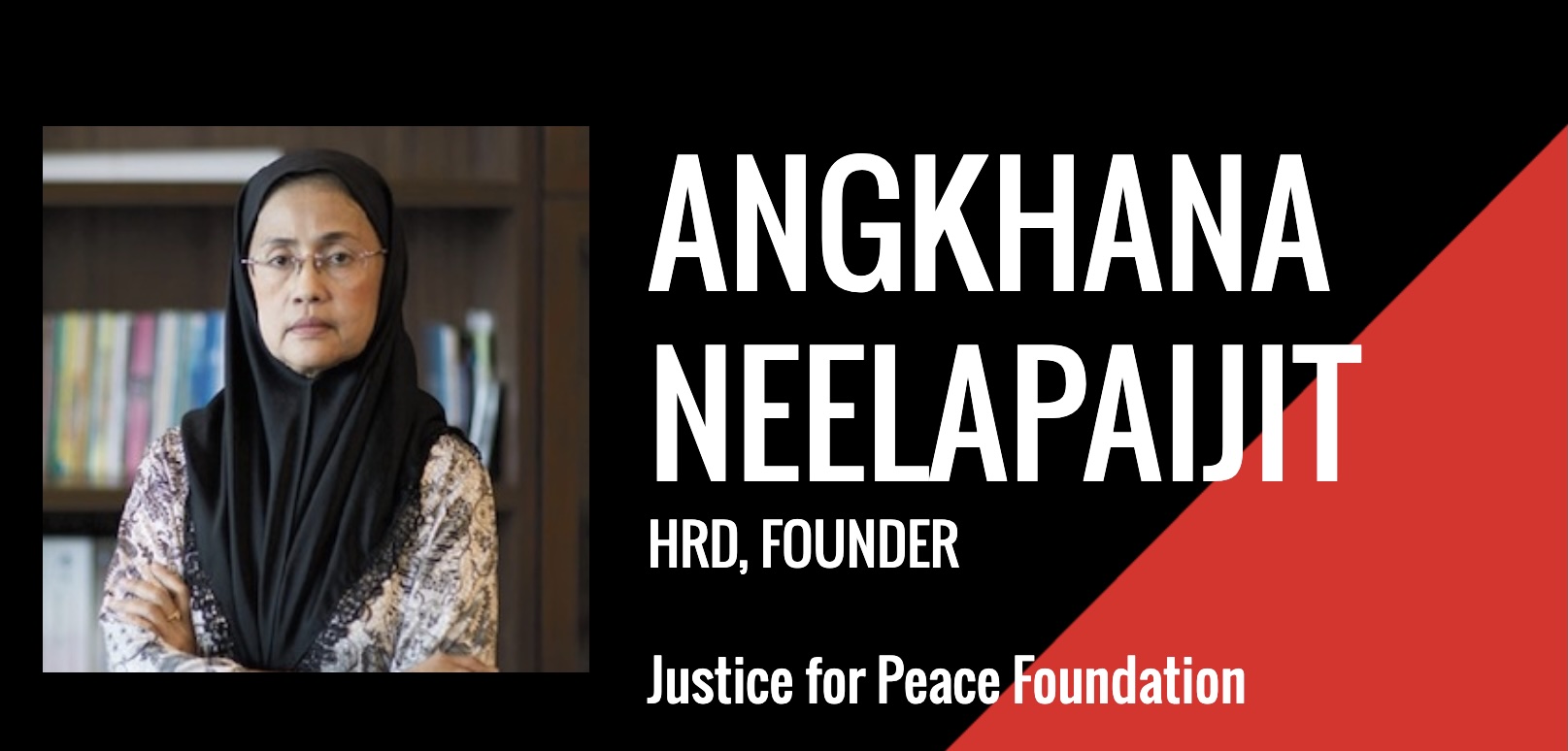
Human Rights Watch on July 31 called on authorities in Thailand to take urgent measures to address a wave of online death threats and harassment against members of parliament Angkhana Neelaphaijit and Romadon Panjor, as well as human rights activist Anchana Heemmina, after they voiced their disapproval of actions of the Thai military and expressed their support for the Muslim community in the country’s Deep South.
Elaine Pearson, Asia director at Human Rights Watch, stated: “The Thai authorities should urgently and impartially investigate online attacks, including death threats, against Angkhana, Anchana, and Romadon, who have been widely recognized for their work defending human rights in Thailand’s deep south… Those responsible for serious threats should be brought to justice, regardless of their affiliation, to demonstrate Thailand’s commitment to protecting human rights defenders.”
The HRW statement came as Angkhana filed a police complaint under the Computer-Related Crime Act after an online disinformation campaign called for her extrajudicial killing, portraying her a sympathizer of the insurgent group Barisan Revolusi Nasional (BRN), and falsely claiming that she was a supporter of the deadly militant ambush in Narathiwat province on July 22. Similar claims were shared about Anchana and Romadon. HRW stated that the abusive social media posts were part of a broader state-orchestrated initiative, with accounts being traced back to the Thai government’s information operations.
Angkhana, a senator and former commissioner of the National Human Rights Commission of Thailand, has long been the target of a state-sponsored campaign of intimidation for her frontline work in advocating for the rights of Thailand’s Muslim community. The Muslim community in Thailand—which is concentrated in the Deep South, specifically the provinces of Pattani, Yala, Narathiwat and Satun—is extremely vulnerable to arbitrarily detention under local emergency decrees, torture while in custody, and systematic discrimination aimed at forced assimilation.
Thailand’s military has a documented history of human rights abuses, including during the 2010 Red Shirt Protests, which saw the army deployed under a strict state of emergency, leading to over 80 fatalities. However, military repression in the Deep South rarely receives the same level of publicity compared to other provinces in the country, due to severe political neglect, the framing of abuses as counter-terrorism measures, and geographic marginalization. This has resulted in the scale of abuses in the Deep South being effectively invisible, with minimal investigations conducted into such cases.
Angkhana’s husband, Somchai Neelaphaijit, a prominent human rights lawyer, was last seen being pushed into a car by a group of men against his will in early 2004. He has been missing ever since, leaving behind his wife and five young children.
From JURIST, Aug. 2. Used with permission. Internal links added.
Photo: Front Line Defenders

