


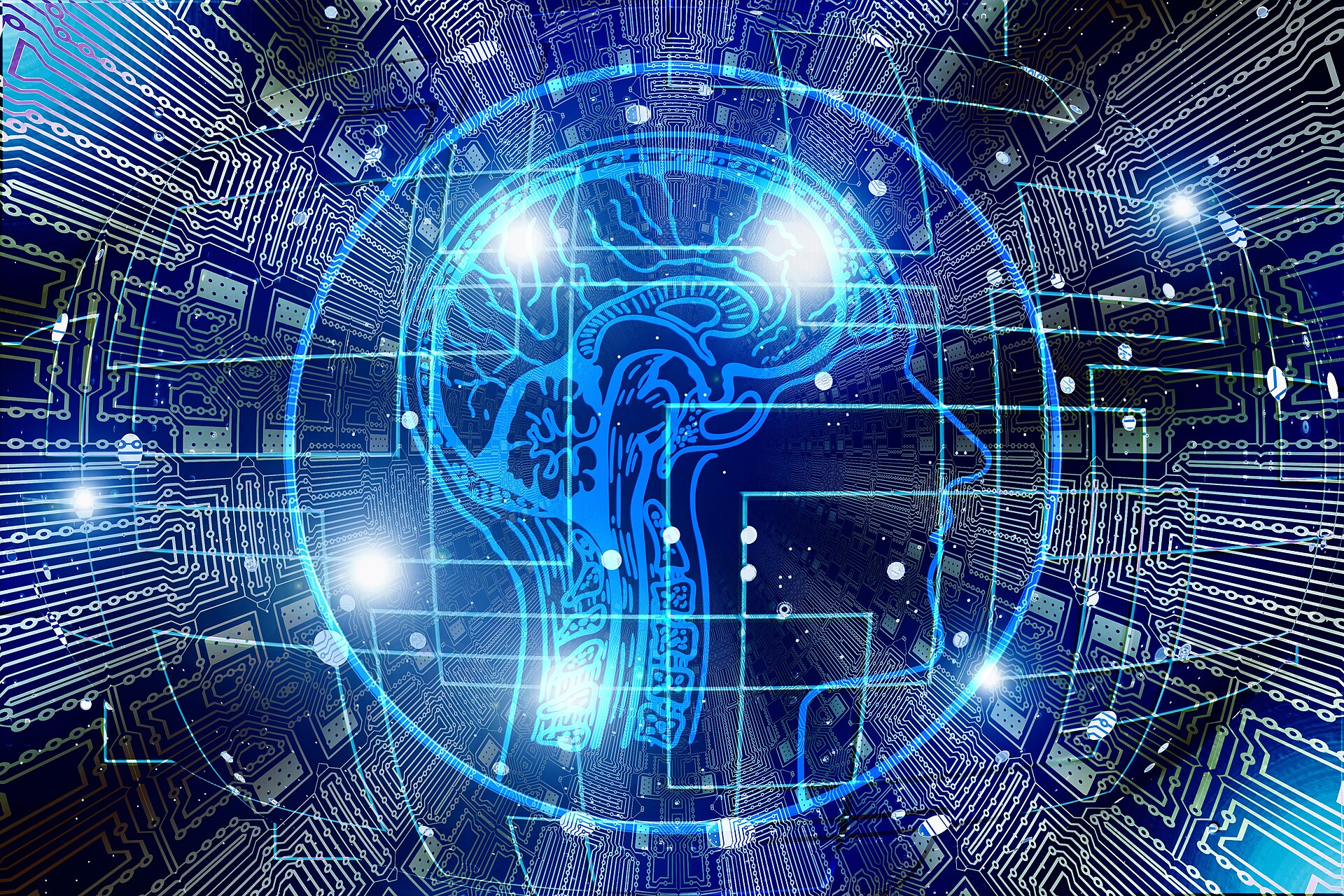
by Bill Weinberg, Freedom News
Evidence of the existential threat posed to humanity by artificial intelligence accrues day by day.
The United Nations on June 4 issued a call for a “responsible AI ecosystem,” warning that daily use of AI is having a vast and insufficiently appreciated environmental impact. The appeal came after a United Nations University study predicting AI’s global water use will match the needs of all 1.3 billion people in Africa south of the Sahara by 2030. The report also warned of a growing challenge from electronic waste, with AI infrastructure projected to generate up to 2.5 million metric tons of e-waste annually by 2030.
The critical minerals needed for AI raise concerns about environmental degradation and social iniquities in the extraction zones—most notably war-torn Central Africa.
But the study especially noted the massive energy demands of AI. Media reports have largely focused on the energy required to train AI models, but the study found that daily consumer use once a model is deployed accounts for more than 80% of the industry’s energy demand. By 2030, data centers powering AI worldwide are projected to consume 945 terawatt-hours of electricity. This is nearly triple the combined annual use of Pakistan, Bangladesh and Nigeria—countries collectively home to more than 650 million people.
This is unfolding as the minimum goals for reducing emissions to avoid devastating global climate collapse set by the 2015 Paris Agreement are being openly abandoned. So, we are going straight over the edge into climate catastrophe—while a large proportion of that “consumer use” is mindless slop spread on social media.
Nonetheless, the report ended with a roadmap for a “responsible” industry, with proposals including a mechanism for “standardized environmental footprint reporting.”
Given the magnitude of the impacts at a time when reducing industrial civilization’s “footprint” is an urgent imperative, this call can be seen as a dangerous legitimization of the technology. Even in critical commentary, its “advance” is taken as fait accompli—as if that, and not passing a habitable planet to posterity, were the urgent imperative.
Ironically, the forthright call for an outright moratorium or “pause” on AI development has been put forth by one of the industry’s corporate leaders, Anthropic. The company’s June 4 statement warned that AI systems appear to be approaching “recursive self-improvement”—the ability to expand their own capabilities by writing their own code, completely outside human control.
Which brings us what this ubiquitous “slop” means for human culture and consciousness.
This was the focus of Pope Leo XIV’s May 15 encyclical “Magnifica Humanitas: On Safeguarding the Human Person in the Time of Artificial Intelligence.” The encyclical warns of the impacts of this technology on labor—the threat of mass unemployment as workers are replaced by AI, as well as slavery being enabled by the industry (such as in the coltan mines of Central Africa). But it properly views this in itself, dire a threat as it represents, as symptomatic of a deeper and more thoroughgoing threat.
Writing on the threat posed to the consumer of chat-bots, designed as a simulacrum of humanity (as implied by the very name “Anthropic”), the Pope states: “Here, the danger is not so much that a person may believe they are communicating with another person, but rather that they may gradually lose the very desire to form genuine human connections.”
Next, he turns to the assault on truth represented by AI—not merely on truth itself, but the very idea of truth. Here he actually quotes from Hannah Arendt and her classic work The Origins of Totalitarianism:
When questions about what is true lose their appeal, and a pragmatism takes hold that is content with what appears useful or effective, then democratic life is weakened. After all, democracy does not consist of rules and procedures alone, but above all of a solid concordance with the facts… Indifference to the truth leads, slowly but surely, to a descent into totalitarianism. As the philosopher Hannah Arendt wrote, the ideal subjects of such regimes are not so much those who are ideologically convinced, but rather “people for whom the distinction between fact and fiction (i.e., the reality of experience) and the distinction between true and false (i.e., the standards of thought) no longer exist.”
Which speaks to the sinister nature of what is dismissively called “AI slop.” The reference to a “slow” descent into totalitarianism seems unwarrantedly optimistic as Trump seeks to establish a dictatorship in the United States—a process enabled by the unprecedented environment of true saturation propaganda, bombarding us every moment of our waking lives, with the volume and sophistication now in hypertrophy due to the proliferation of AI.
Social media propaganda has already been implicated in inflaming genocide—particularly that of the Rohingya of Burma and Tigray of Ethiopia. Yet every day, we continue to share unvetted slop—because this abuse is inherent to the technological model.
The encyclical next moves from the epistemological threat—that concerning the nature of truth—to the eschatological: that concerning the ultimate fate of humanity. Noting the “underlying narratives” of “transhumanism and posthumanism,” the Pope warns against the futuristic vision of an “enhanced human being” or “human-machine hybrid.”
Unfortunately, in this most important point in the entire screed, Leo retreats to obfuscation, writing that post-humanism is “difficult to define them in a single, unambiguous way.”
Alas, there is nothing ill-defined about it; it is very concrete and imminently upon us. The advent of Elon Musk’s Neuralink brain implant technology, now approved for human testing by the US Food & Drug Administration, will give corporate power the ability to directly control our thoughts and emotions. This not only means the extinction of human freedom, even as an idea, but it actually portends the ultimate abolition of humanity itself, and its replacement by a conditioned post-humanity stripped of all autonomy, dignity and reason.
The Pope concludes with a call for “disarming” AI so that it does not serve the aims of “domination, exclusion, and war.” This is the encyclical’s most serious failure—also seen in its frequent nods to AI’s “genuinely helpful” uses.
AI cannot be “disarmed,” because it is by its very nature a weapon.
This technology cannot do other than dominate humanity—or, at the very least, the risk it holds of total domination and ultimate abolition of humanity makes it far too great a threat to allow it to advance. Regardless of what seeming social good it may be made to serve. Like nuclear weaponry, it is sui generis. This is the Latin phrase used by CS Lewis for this kind of technology in his amazingly prescient 1943 essay, The Abolition of Man—meaning of its own class, completely distinct and a break with all precedent.
Nuclear weapons must be rejected in toto, and the only possible legitimate demand concerning them is their total elimination from the Earth. Similarly, we must reject the notion that there is any legitimate use for a technology that bends reality and ultimately the human organism to the will of those who wield it. AI must be rejected in toto. The only possible legitimate demand concerning it is its total elimination.
But another problem with the encyclical is precisely that it is a papal encyclical. It is disturbing that much of the critique of this technology is coming from organized religion and cultural conservatives. Some on the “left” are even so deluded as to view it as a tool for liberation—what’s been called “cyborg socialism.”
Groups such as the Luddite Club in New York and Pull the Plug in London have recently held protests outside the offices of the AI giants, warning of impending “techno-fascism.” This is indeed an apt name for the system now consolidating nearly worldwide, but we must have a critique of the techno as well as the fascism, and avoid the fallacy that the problem is merely what the tech is being used for. The techno and the fascism are inseparable.
Labor unions striking for guarantees against worker replacement by AI are a significant glimmer of hope. So too are the spreading grassroots movements against the proliferation of data centers. But these movements must go beyond mere NIMBY sentiment (Not In My Backyard) to an unflinching critique of the technology.
Of course, it is predictable that the techno-fascist state is criminalizing dissent to techno-fascism, with Trump’s counter-terrorism czar Sebastian Gorka explicitly targeting “anti-tech extremists” for repression. And Trump’s June 2 executive order purporting to establish a regulation regime for artificial intelligence (something he has heretofore rejected) actually serves the aim of a government partnership with the AI industry to advance the police state. Companies are not restrained under the order, but encouraged to share the “cyber capabilities of AI models” with the state.
There is precedent for an abolitionist position on AI. The International Campaign to Abolish Nuclear Weapons (ICAN) is urging support for the Treaty on the Prohibition of Nuclear Weapons—which has now taken force at the UN, although none of the nine nuclear weapons states have signed it.
We must take a similar abolitionist position on AI, in light of unacceptable threats it poses to humanity on ecological, epistemological and eschatological grounds.
It must be abolished before it abolishes us.
———
A shorter version of this piece first appeared June 11 in Freedom News.
Image: Pixabay via Wikimedia Commons

Audio version:
AI: the case for abolition
CounterVortex podcast, June 7, 2026
See also:
ORBITAL DATA CENTERS IN LEGAL VACUUM
by Vishal Sharma, JURIST
CounterVortex, March 2026
—————————-
Reprinted by CounterVortex, June 12, 2026
Used with permission.

