


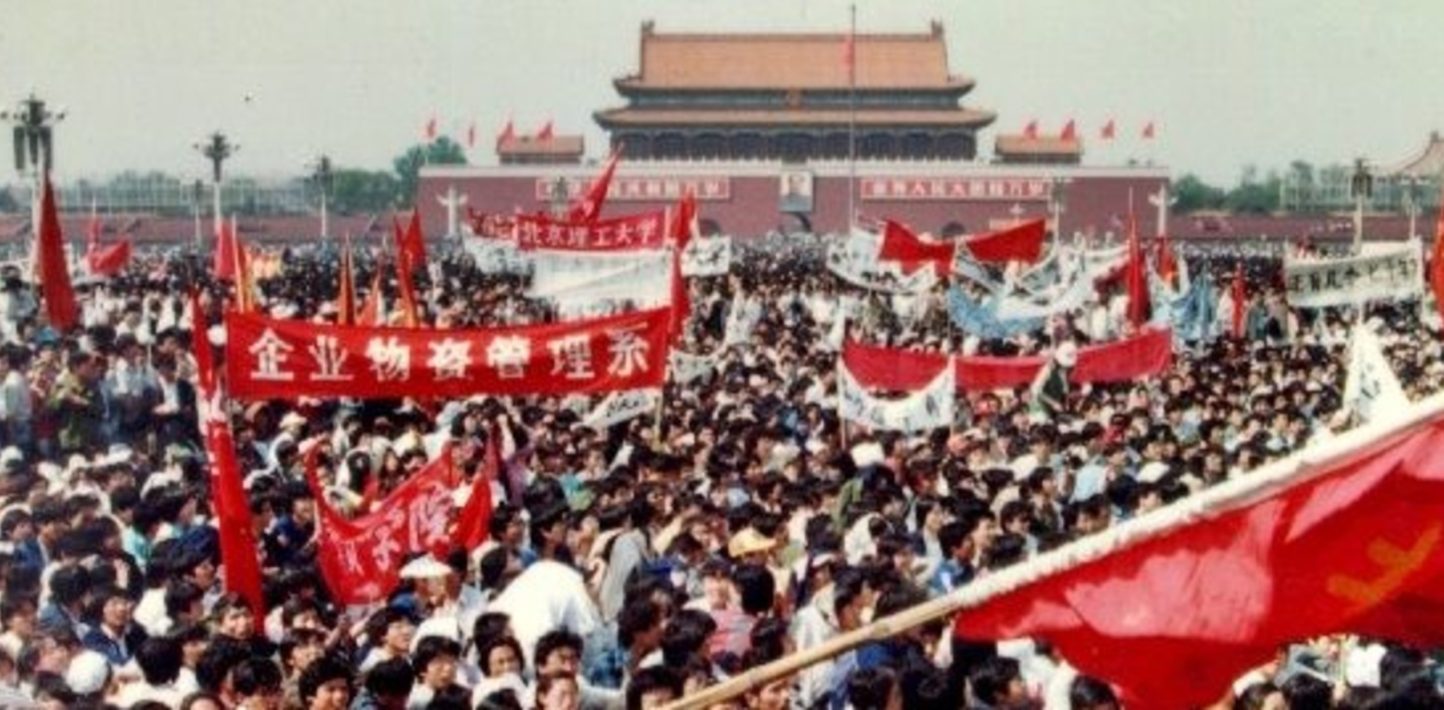
Amnesty International on June 3 condemned China for banning family members from visiting the resting places of people who perished in the 1989 Tiananmen Square repression. This is the first time in 37 years that the Chinese authorities have banned the visit.
According to the Tiananmen Mothers group, the authorities notified family members of people who lost their lives in the 1989 crackdown that they cannot travel to Beijing’s Wan’an Cemetery or conduct any commemoration in the cemetery. Sarah Brooks, Amnesty International’s deputy regional director for Asia, described the ban as “heartless,” saying:
The Tiananmen Mothers were not previously blocked from cemetery visits on the 4 June anniversary, and it is deeply troubling that this year the suppression of Tiananmen commemoration appears to be escalating—reflecting the government’s deep-seated insecurity about people’s demands for accountability.
Ahead of the anniversary, US Secretary of State Marco Rubio issued a statement commemorating the Chinese civilians who lost their lives for exercising their right to peaceful assembly. He said in the statement: “No amount of censorship can erase the past.” Foreign embassies in China, including those of the UK, Canada and Australia, made similar social media posts to support survivors and families of those who lost their lives in the crackdown.
In a press conference on June 4, Mao Ning, spokesperson for China’s Ministry of Foreign Affairs, accused Rubio of distorting historical facts, smearing the Chinese political system, and interfering in China’s internal affairs.
In a June 1 press release, Human Rights Watch (HRW) also reported China’s intensifying efforts to quell commemorative activities. This includes preventing a gathering of the Tiananmen Mothers in December 2025, which has never happened since the group started meeting in 2009. HRW urged the Chinese authorities to permit an independent public inquiry into the killings, and respect the right to free speech and peaceful assembly.
The Tiananmen Mothers is an activist group made up of family members of people who lost their lives in the 1989 massacre and its aftermath. In May, the group urged the Chinese authorities to disclose the full truth of the crackdown, provide compensation for the victims and their families, and hold all responsible parties accountable.
On June 4, 1989, troops and tanks forcefully entered and cleared Tiananmen Square, where thousands of unarmed protesters, mostly students, had established an encampment. The occupation of the square began in April, when students gathered to commemorate the death of liberal Communist Party official Hu Yaobang, and call for political and economic reforms. The Chinese Communist Party called the movement a “political turmoil” that “Western hostile forces” instigated to counter socialism and the party. Hundreds and perhaps thousands were killed in the clearing of the square, with tens of thousands arrested in the subsequent repression across China.
Detained Hong Kong activist Chow Hang-tung has launched a 37-hour hunger strike in jail to commemorate the massacre. She has been in custody since September 2021, facing a charge of “incitement to subvert the state power,” with judgment expected in July. The prosecution has included footage of the annual candlelight vigils commemorating the massacre as evidence in the trial. The annual June 4 vigil in Hong Kong has been prohibited by authorities since 2020.
From JURIST, June 4. Used with permission. Internal links added.
See our last reports on the legacy of Tiananmen Square.
Photo: Hong Kong Alliance via Amnesty International


Tiananmen Square in the Great Game
It is hopefully superfluous to point out the perverse irony of Marco Rubio, whose government is guilty of equal and greater crimes, exploiting the Tiananmen Square massacre to score points against imperial rival China. It’s rather like China’s own propaganda organs exploiting racist police terror in the United States for similar purposes. A point we have made before.
Not to mention the fact that Trump himself has in the past extolled the massacre as a demonstration of the “power of strength.”