


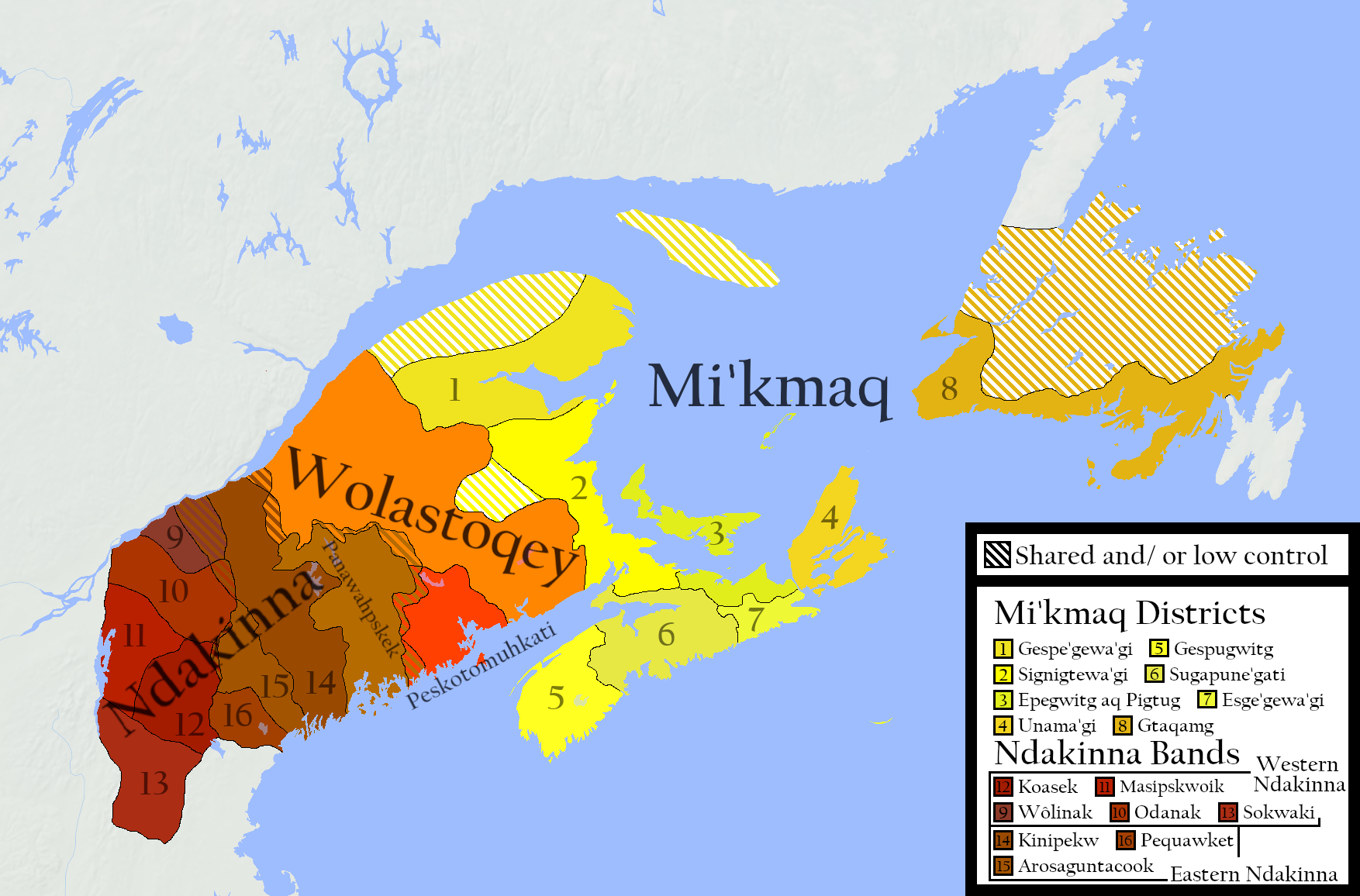
The Supreme Court of Canada on May 28 refused to hear an appeal by the six Wolastoqey communities of New Brunswick seeking to assert Aboriginal title over private lands.
The issue before the court was whether First Nations can assert Aboriginal title when private parties hold a fee simple interest in land. The top court’s refusal to hear the appeal makes final a lower court’s decision, holding that the Wolastoqey Nation cannot seek declarations of Aboriginal title over privately-owned lands but may seek damages against the government for unjustified infringement of Aboriginal title.
In response to the refusal, the Wolastoqey Nation maintained that it does not remove the government’s duty to First Nations. Chief Patricia Bernard of Madawaska said: “Our ancestors never surrendered our lands and waters. The Peace and Friendship Treaties signed with the British Crown in the 1700s were treaties of peace and alliance—not land surrender or cession. Our title has not been extinguished… The fight for our homeland will continue.”
In 2021, the six Wolastoqey Nation communities commenced an action against the Canadian and New Brunswick governments, and several private companies. They sought to assert Aboriginal title over government and private lands owned by the defendants. In 2024, Justice Kathryn A. Gregory removed the private defendants from the case, saying they had no direct legal relationships with the Wolastoqey. The ruling still allowed the plaintiffs to pursue claims against the government even over the private lands, finding that it has a reposnibility adjudicate or order resolutions in such cases.
In December 2025, however, a three-judge panel at the Court of Appeals of New Brunswick unanimously limited the claim only to government lands. Even when the Wolastoqey Nation can prove Aboriginal title existed before the government assigned the land to private owners, they may only seek compensation from the government in relation to the lands owned by private individuals—not actual restitution of the lands.
In August 2025, the Supreme Court of British Columbia adopted a different approach to the overlapping Aboriginal title and private ownership in Cowichan Tribes v. Canada. Justice Barbara M. Young held that Aboriginal title and fee simple interest can coexist on the same land, urging the government to negotiate with the First Nations communities. She issued a declaration rendering the fee simple interests defective and invalid for 18 months, allowing time for negotiation. The federal and provincial governments are appealing the decision.
At the House of Commons, Conservative lawmaker Jamie Schmale introduced a motion on May 25, calling on the government to take all necessary actions to prioritize private property in the Cowichan Tribes case over all other titles. It was defeated, with all parties except the Conservatives voting against the motion.
From JURIST, May 29. Used with permission.
See our last report on the Indigenous struggle in Canada.
Map of traditional Wabanaki Confederacy lands: Wikimedia Commons


International tribunal finds continuing genocide in Canada
The Permanent People’s Tribunal on Missing & Disappeared Indigenous Children & Unmarked Graves in Canada released its preliminary statement at a meeting in Montreal on May 31, finding that acts committed by Canada constitute genocide, and that Canada has failed to comply with its international legal obligations to investigate and punish these crimes. (Jurist)