U.S. STILL SUPPORTS HONDURAN DEATH SQUADS

by Lauren Carasik, Jurist

Honduras is plagued by the world’s highest homicide rate. This has been widely reported for the past two years, yet the number of deaths has continued to climb. The UN put the number of homicides in 2011 at 91 per 100,000. The rate has spiked since the illegal coup d’état that ousted the country’s democratically elected president in 2009 and the subsequent breakdown of Honduras’ institutions; in 2008 the homicide rate was 61 per 100,000.

A climate of impunity solidified as the generals and others who carried out the coup were rewarded with appointments in the post-coup government rather than prosecuted for their role in the overthrow.

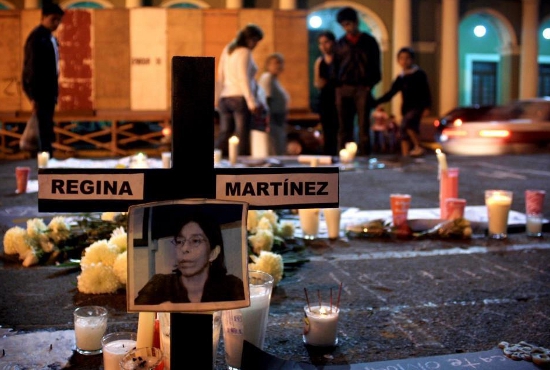
Contrary to what is often suggested in the press, the violence is not just random or drug- or gang-related; some of the most vulnerable sectors in society are frequent targets — those whose rights the US Department of State tells us it considers to be a high priority—women, the LGBT community, journalists, opposition party politicians and Hondurans who opposed the coup. Twenty-five journalists have been murdered in Honduras since the 2009 coup; all but one of them since the current post-coup president, Pepe Lobo, took office in January 2010. At least 53 lawyers were killed between 2010 and 2012.

Continue ReadingU.S. STILL SUPPORTS HONDURAN DEATH SQUADS 
lakota

Lakota elders march on UN

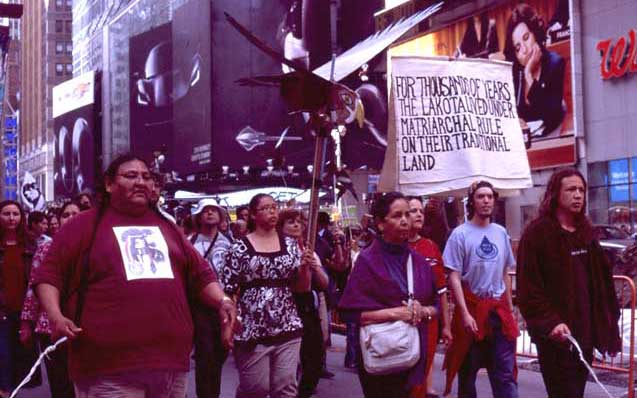
On April 9, Lakota elders, activists and non-indigenous supporters marched through the streets of Manhattan to the United Nations, where they attempted to present a petition to UN Secretary General Ban Ki-Moon. Entitled the “Official Lakota Oyate Complaint of Genocide… Read moreLakota elders march on UN

‘GOING EXTINCT IS GENOCIDE’

Lakota Elders Tour to Raise Awareness About Struggle

by Victoria Law, Truthout

NEW YORK — On April 9, Lakota elders, activists and nonindigenous supporters marched through the streets of Manhattan to the United Nations, where they attempted to present a petition to UN Secretary General Ban Ki-Moon. Entitled the Official Lakota Oyate Complaint of Genocide Based on the 1948 Convention on the Prevention and Punishment of the Crime of Genocide, the petition listed the numerous injustices faced by the Lakota people. (Oyate is a Sioux word for “people” or “nation.”)

At the UN, security officers informed them that they would not be able to enter the building and present the complaint to the Secretary General. Instead, the security officers offered to take it to Ban’s office, but refused to give the Lakota documentation verifying that their complaint had been received.

Outside the UN, Charmaine White Face, a Lakota grandmother and great-grandmother, addressed the 60 people who had marched with her. “We come here as a nation. If they won’t let us take our message to them, how disrespectful is that to a nation?”

Continue Reading‘GOING EXTINCT IS GENOCIDE’ 
Greater Middle East

Israeli air-strikes near Damascus

Israeli missiles struck a research center near Damascus, as massacres of Sunni families by pro-government militias are reported from Syria’s coastal Alawite stronghold.

Watching the Shadows

Harrowing Gitmo memoir published

Mohamedou Ould Slahi, a Mauritanian detained at Guantánamo since August 2002, has had portions of his handwritten prison-camp memoir published in Slate magazine.