Planet Watch
Rakhine

Deadly strikes on hospitals: the new norm?

On World Humanitarian Day in August, World Health Organization director-general Tedros Adhanom Ghebreyesus released a statement calling attention to intensifying attacks on healthcare workers and facilities, which constitute war crimes under international humanitarian law. “We must stop this becoming the norm,” he wrote. The events of the past weeks suggest such attacks are now already the norm. In Sudan, the WHO reported that over 100 people, including 63 children, were killed when drone strikes attributed to the Rapid Support Forces hit a kindergarten and nearby hospital in South Kordofan. In Burma’s Rakhine state, a military airstrike destroyed the Mrauk-U general hospital, killing at least 31 people and wounding dozens more. It was the 67th attack on a healthcare facility in Burma this year, according to the WHO. Attacks on healthcare facilities killed a record 3,600 people in 2024, mainly in Gaza, Ukraine, Lebanon, Burma and Sudan. This year is on course to surpass that toll. In Gaza alone, at least 917 people were killed by Israeli attacks on healthcare facilities between Oct. 7. 2023 and June of this year. (Photo: Myanmar Now)

Watching the Shadows
NSS

Trump Corollary: spheres of influence, white supremacy

Donald Trump’s new National Security Strategy instates a “Trump Corollary” to the Monroe Doctrine. Like the Roosevelt Corollary of 1904, which was used to justify the “gunboat diplomacy” of that era, this new corollary openly calls for dividing the world into spheres of influence—with the Western Hemisphere assigned to the US. Russia is obviously pleased as punch over this, as it implicitly gives Moscow a free hand in Ukraine—and Putin will likely consider this an acceptable pay-off for his betrayal of Venezuela. However, China is less likely to surrender its massive investments and mega-projects in Latin America in exchange for a free hand to take over Taiwan. The document’s text on Europe is even more sinister, revealing a white supremacist agenda that looks not to Washington’s traditional allies to counter Russia, but to the continent’s Russian-backed far-right movements to counter Washington’s traditional allies. In Episode 308 of the CounterVortex podcast, Bill Weinberg exposes the NSS as a further step toward consolidation of a Fascist World Order. (Image: White House)

Watching the Shadows
USS Gerald Ford

US instates ‘Trump Corollary’ to Monroe Doctrine

President Donald Trump’s new National Security Strategy puts the Western Hemisphere at the center of US foreign policy and revives the Monroe Doctrine of 1823, appending it with a “Trump Corollary.” The document presents the Americas as the main line of defense for the US homeland and links that doctrine directly to ongoing military operations against suspected drug traffickers in Caribbean and Pacific waters. It places the Hemisphere as the top regional priority, above Europe, the Middle East and Indo-Pacific, with an imperative of controlling migration, drug flows, and foreign influence before they can reach US territory. It also states that the US will block “non-Hemispheric competitors” from owning or controlling “strategically vital assets” in the Americas, including ports, energy facilities, and telecommunications networks. (Photo: USS Gerald R. Ford. Credit: US Navy via Wikimedia Commons)

Watching the Shadows
Orwell

Podcast: Trump for War-is-Peace Prize II

Trump continues to pursue his perverse ambition to win the Nobel Peace Prize—now proffering “peace” plans for Ukraine and Gaza that would actually reward war crimes, and therefore portend wider war. In both cases these new “peace” plans are merely sanitized recapitulations of earlier proposals—for the surrender of the Donbas and Crimea to Russia, and for Israeli annexation of the Occupied Palestinian Territories and “transfer” of their indigenous inhabitants. Meanwhile, the actual winner of this year’s Peace Prize, Venezuelan opposition leader MarĂ­a Corina Machado, is obsequiously pandering to Trump, and playing along with his bellicose designs on her country. In Episode 306 of the CounterVortex podcast, Bill Weinberg cuts through the Orwellian war-is-peace propaganda. (Image via Twitter)

Europe
EuroParliament

Ex-MEP imprisoned in pro-Russia influence-buying

The former Wales leader of right-wing populist political party Reform UK, Nathan Gill, was imprisoned after pleading guilty to accepting bribes from Kremlin-linked figures. The Central Criminal Court sentenced Gill to 10 years and six months under the Bribery Act of 2010. Gill served as a member of the European Parliament from 2014 up to the UK’s withdrawal from the European Union in 2020. During the course of his membership, it was found that Gill accepted bribes in exchange for including pro-Russian rhetoric in his statements to EuroParliament. The man who arranged the bribes was identified as Oleg Voloshyn, a former pro-Russian Ukrainian MP who is a friend of Russian President Putin. Victor Medvedchuk, chairman of the pro-Russian Ukrainian political party Opposition Platform–For Life, was named as the source of the payments to Gill and initiator of the bribery scheme. (Photo: Steven Lek via Wikimedia Commons)

Europe
Russian tank

Russia calls up more reserves as Ukraine war stalls

Russian authorities are preparing to call up thousands of reservists for active military service—while insisting they will not be sent to Ukraine to fight. The Main Mobilization Directorate of the General Staff announced orders that men who have been drafted and served in the military will be subject to mandatory “mobilization” for the purpose of “safeguarding strategically important facilities.” With the lines in Ukraine largely frozen in a war of attrition, the move would free up President Vladimir Putin to expand the Russian force for the “special military operation,” which is numbered at some 700,000 troops—mostly reservists who have signed contracts with the Defense Ministry. General conscripts are not sent to Ukraine, and the last call-up of reserves for the war, in September 2022, sparked a flight of young men from Russia to neighboring countries, and even scattered protests. The denial that the new mobilization is for the Ukraine war seems aimed at appeasing popular discontent, even while freeing up other soldiers to expand the invasion force. (Photo: Wikimedia Commons)

Europe
Swan Lake

‘Swan Lake’ anti-Putin protest in St Petersburg

Hundreds of young Russians gathered in a square in the center of St. Petersburg to defy censorship by performing a banned song that calls (in barely veiled terms) for the overthrow of Vladimir Putin. The crowd converged on the city’s iconic Palace Square to sing “Swan Lake Cooperative” by exiled rapper Noize MC, which was outlawed in May when judicial authorities labeled it “extremist.” The song title refers to the practice in Soviet times of suspending all regular TV and radio broadcasts to play Tchaikovsky’s ballet “Swan Lake” continuously whenever the old leader died or was deposed and the transition to a new one was underway. The lyrics go: “The old man still clings to his throne… When the czar dies, we’ll dance again, ‘Swan Lake’ on every screen… I want to watch the ballet… Let the old man shake in fear…” (Photo: Kanal13)

Europe
Armata

Belarusian political prisoners as pawns in power game

NATO launched a new exercise dubbed Eastern Sentry in response to the ongoing joint Russia-Belarus military exercise dubbed Zapad (West), which involves thousands of troops, naval maneuvers in the Baltic Sea, and simulated nuclear strikes. Yet two US military observers were invited to Belarus to observe the Zapad exercise, standing on a viewing platform to review forces from the same Russian army that is fighting in Ukraine. This appears to be part of a US rapprochement with Belarus, coming days after 52 Belarusian political prisoners were released in a US-brokered deal. However, the dissidents protest that they were expelled to Lithuania and not given the choice of remaining in their own country. One, former Belarusian presidential candidate Mikola Statkevich, has already been returned to a penal colony after refusing to accept exile. (Photo of Russian T-14 Armata tank via National Security Journal)

Watching the Shadows
Orwell

Podcast: Trump for War-is-Peace Prize

In Donald Trump’s perverse ambition to win the Nobel Peace Prize, he is citing his supposed diplomatic victories in ending six conflicts: Armenia-Azerbaijan, Congo-Rwanda, Israel-Iran, India-Pakistan, Thailand-Cambodia and Egypt-Ethiopia. In Episode 292 of the CounterVortex podcast, Bill Weinberg examines each of these examples, and breaks down how claims to have won “peace” are either extremely overstated or (more often) total Orwellian jive. The implication that Russia-Ukraine will be next, as Putin escalates his aggression, puts a hideous crown on the irony. (Image via Twitter)

Europe
russian alaska

Podcast: Alaska 2025 = Munich 1938?

Russia’s irredentist claims on its former holding Alaska have provided fodder for comedians, but the stakes at the Trump-Putin meeting in the Last Frontier are no laughing matter. Despite the escalating mutual nuclear threats between Washington and Moscow, Trump’s call for a Russia-Ukraine “land-swap” obviously means Kyiv being forced to accept Moscow’s annexation of much of its territory in exchange for the return of other pieces its own territory illegally occupied by Russia. Meanwhile, Moscow sends drones to threaten NATO member Lithuania, which sits on the critical corridor to the Russian exclave (and tactical missile outpost) of Kaliningrad. Germany has responded by sending troops to the Baltic country—its first post-war foreign deployment. Appeasement of aggression failed to win peace at Munich in 1938, and there’s no reason to hope it will in Alaska today. But the difference is that the contending powers today have nuclear weapons. In Episode 291 of the CounterVortex podcast, Bill Weinberg takes an unflinching look. (Map via Wikipedia)

Europe
Russian tank

ECHR: a decade of Russian war crimes in Ukraine

The European Court of Human Rights (ECHR) found that Russia has committed grave violations of international humanitarian law (IHL) in Ukraine—not just since the massive invasion of 2022, but since the conflict began in 2014. Judges at the ECHR rendered a series of decisions related to consolidated complaints brought by Ukraine and the Netherlands. Among the named violations of IHL are the downing of Malaysia Airlines Flight 17, multiple violations of the Geneva Conventions and other human rights treaties, application of “extremism laws” against religious communities, and interference with freedom of speech and the press. (Photo: Wikimedia Commons)

Europe
Zaporizhzhya

UN condemns Russian attacks on Ukraine nuclear plant

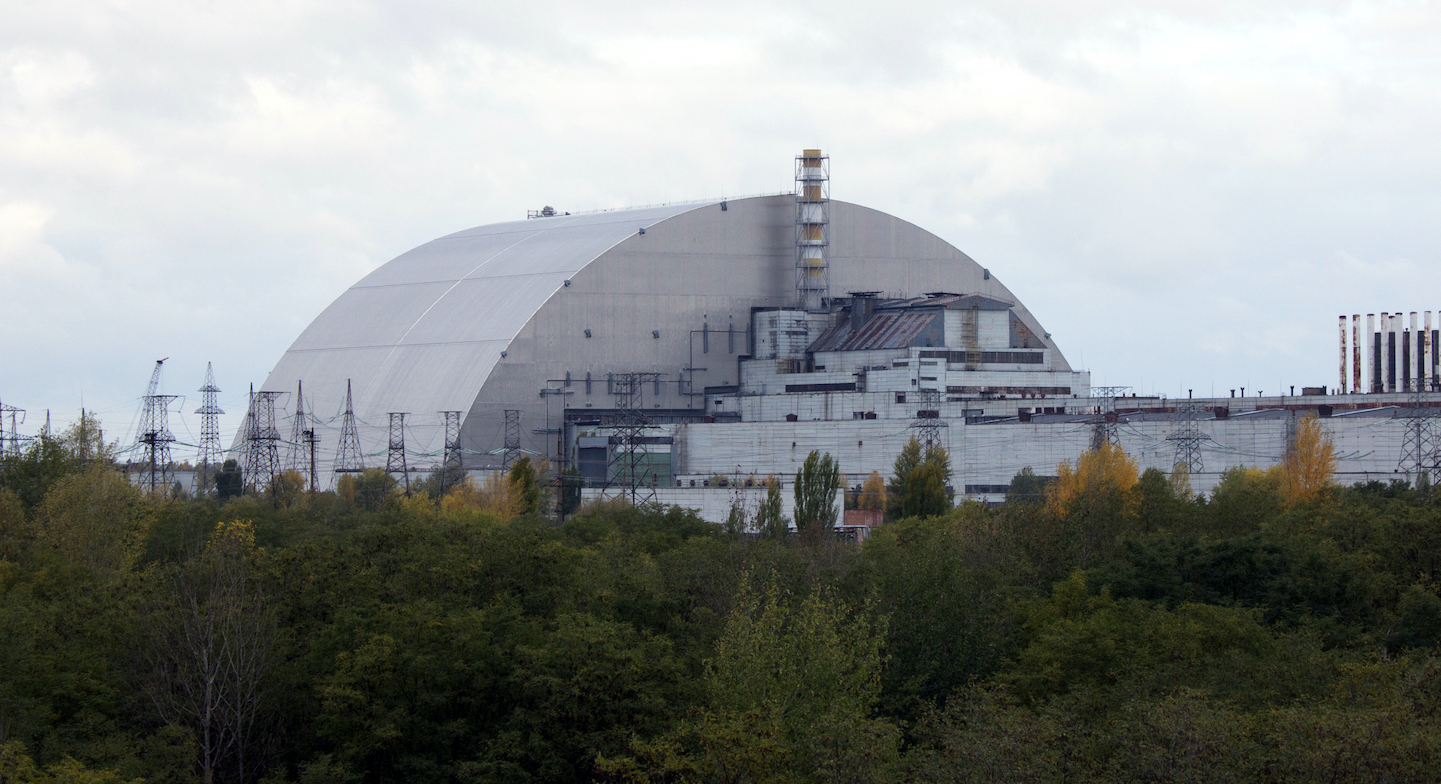
UN Secretary-General AntĂłnio Guterres strongly condemned Russia’s largest yet wave of drone and missile attacks in Ukraine, especially noting strikes that disrupted the power supply to the Zaporizhzhia Nuclear Power Plant (ZNPP), endangering nuclear safety. Rafael Grossi, director of the International Atomic Energy Agency (IAEA), also warned of the persisting “extremely fragile” situation at Europe’s largest nuclear facility. Russia’s latest air-strike against the ZNPP marked the ninth time power was broken off to the plant since the war began in February 2022. Although external power has been restored, Grossi cautioned that the situation remains unsafe. (Photo: Wikipedia)