

Iran
Tehran

‘Black rain’ falls on Tehran amid US-Israeli strikes

United Nations officials said that US and Israeli airstrikes on fuel depots in Tehran have released large amounts of toxic pollutants, producing acidic “black rain” across parts of the capital. Officials from the World Health Organization warned that the burning of depots has released hydrocarbons, sulphur oxides, and nitrogen compounds into the atmosphere. The released pollutants have caused darkened skies in Tehran, prompting authorities to adviseresidents to remain indoors due to respiratory risks and potential water contamination. (Photo: Mehr via Wikimedia Commons)

Africa
Sudan

Ethiopia accused of backing Sudan’s RSF

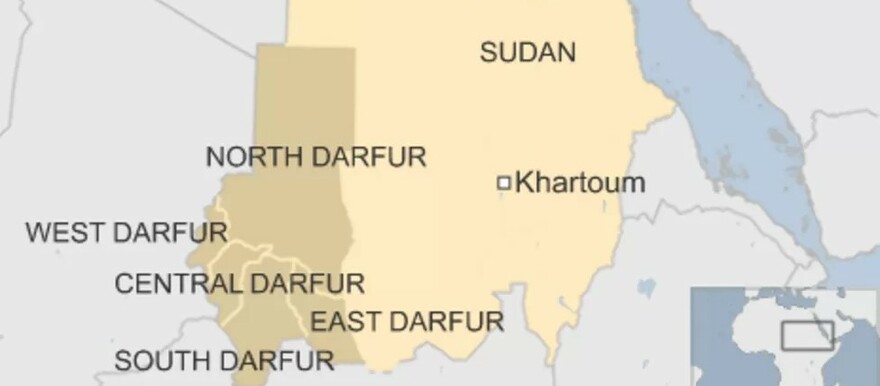
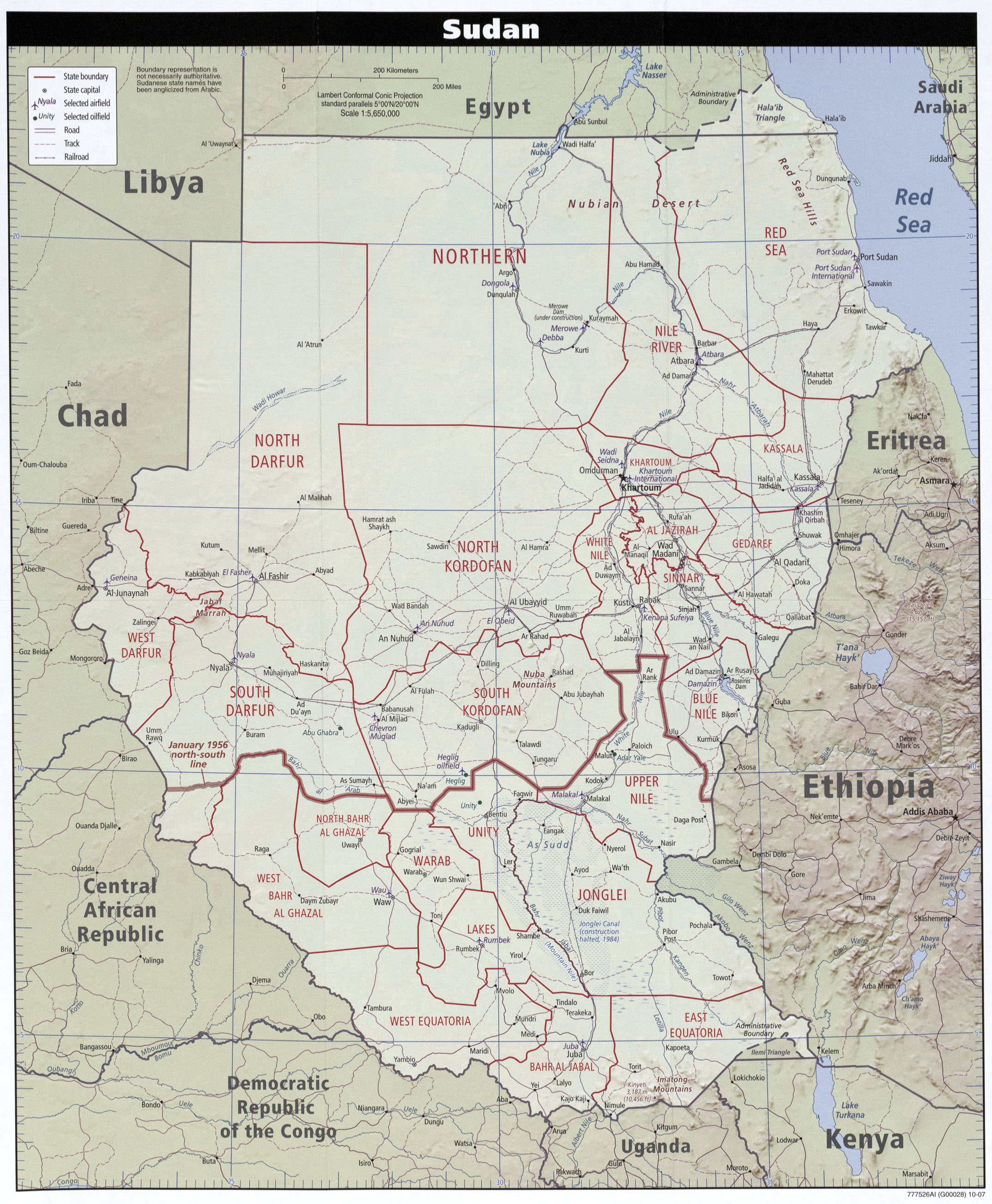
Sudan has accused Ethiopia of allowing drones to be launched from its territory to carry out attacks against Sudanese government forces. This marks the first time Sudan has directly accused its neighbor of involvement in the three-year civil war against the paramilitary Rapid Support Forces (RSF). In a statement, Sudan’s Foreign Ministry warned of unspecified consequences. The drone accusation follows reports of the construction of an RSF training base in northwest Ethiopia, paid for by the United Arab Emirates. (Map: PCL)
Greater Middle East
Minab

UN demands civilian protection amid Middle East escalation

The United Nations urgently called for civilian protection amid growing violence and instability in the Middle East—and particularly in regard to the ongoing US and Israeli military operations against Iran. The UN urged a thorough investigation into a deadly strike on a girls’ school in Iran, and requested the disclosure of all relevant information. The attack in the southern coastal city of Minab reportedly killed 168 people. According to Iran’s Ministry of Education, the overwhelming majority of the slain were schoolgirls aged seven to 12. The strike came on the first day of coordinated US and Israeli airstrikes officially targeting Iranian infrastructure and military facilities. (Photo: Mehr via Wikimedia Commons)

Iran
Iran

Did US-Israel attack on Iran abort nuclear deal?

The coordinated US-Israel military strikes on Iran began 48 hours after the conclusion of a third round of US-Iran indirect nuclear negotiations in Geneva, mediated by Oman, that had produced what multiple parties described as an unprecedented breakthrough. Omani Foreign Minister Badr Albusaidi told CBS News the day before the strikes began that Iran had agreed to zero stockpiling of enriched uranium, with existing stockpiles to be down-blended to the lowest possible level and converted into reactor fuel under full International Atomic Energy Agency (IAEA) verification. “The single most important achievement, I believe, is the agreement that Iran will never, ever have a nuclear material that will create a bomb,” Albusaidi said, describing the understanding as stronger than the 2015 Joint Comprehensive Plan of Action (JCPOA) negotiated under Obama. (Image: Grunge Love via Flickr)

Africa
Somaliland

World leaders reject Israeli recognition of Somaliland

A group of 21 Arab, African and Islamic nations issued a joint statement formally rejecting Israel’s recognition of Somaliland as an independent state. The statement asserted that recognizing Somaliland as a nation independent of Somalia constitutes a grave violation of international law, emphasizing the “serious repercussions of such [an] unprecedented measure on peace and security in the Horn of Africa, the Red Sea, and its serious effects on international peace and security as a whole.” This statement followed a declaration signed by Israeli President Benjamin Netanyahu and Somaliland President Abdirahman Mohamed Abdullahi, making Israel the first country on earth to recognize Somaliland. As part of the deal, Somaliland is expected to recognize Israel under the Abraham Accords. President Donald Trump brokered the Abraham Accords in his first term, seeking to establish diplomatic ties between Israel and Arab nations. However, despite the Trump administration’s failed proposition earlier this year for Somaliland to take in Palestinians from Gaza, the US State Department announced that Washington will continue to recognize the territorial integrity of Somalia, “which includes the territory of Somaliland.” (Map: Somalia Country Profile)

Africa
Fasher

Sudan: evidence of mass killings in El Fasher

Satellite imagery analysis reveals widespread evidence of systematic mass killings and body disposal by the Rapid Support Forces (RSF) in El Fasher, Sudan, following the paramilitary group’s capture of the North Darfur state capital in late October, according to a report released by Yale University researchers. The Yale School of Public Health’s Humanitarian Research Lab (HRL) identified at least 150 “clusters of objects consistent with human remains” in and around El-Fasher between Oct. 26, when the RSF claimed to have taken full control of El-Fasher, and Nov. 28. They identified the clusters as likely human remains, based on their size, the timing of their appearance, and proximity to reddish ground discoloration that later turned brown, consistent with blood oxidation. In some cases, the RSF’s own social media posts corroborated the presence of human remains at the locations. By late November, 38% of the identified body clusters were no longer visible in satellite imagery, suggesting systematic disposal operations, the researchers said. (Photo: Google/Airbus via JURIST)

Greater Middle East
Yemen

Yemen: UAE-backed southern separatist forces advance

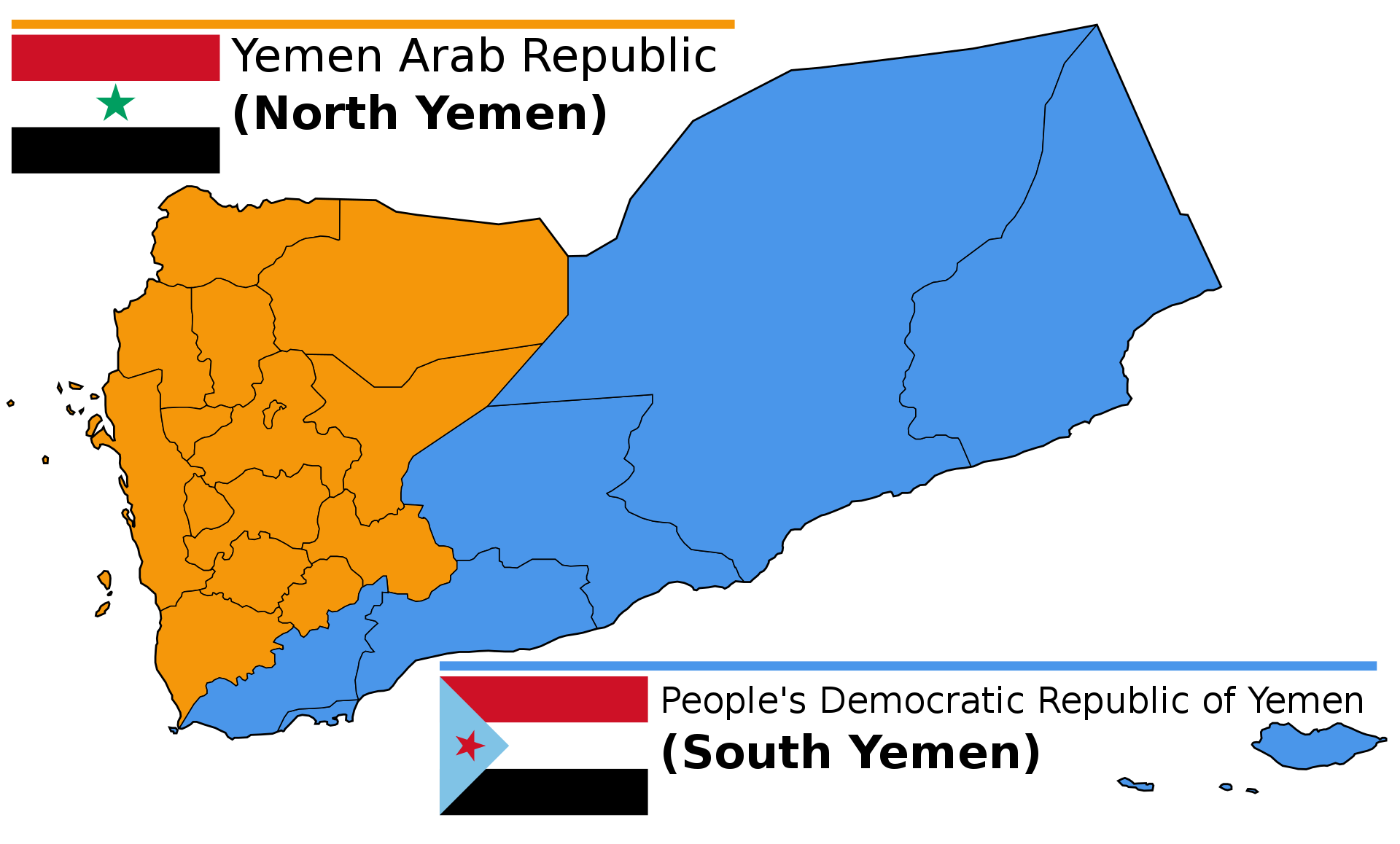
Yemen’s separatist Southern Transitional Council, which is said to be backed by the United Arab Emirates, has been rapidly advancing through large parts of the country’s south and east, in Hadramawt, al-Mahra and Shabwa provinces. They are taking over control from groups backed by Saudi Arabia, including the Hadramawt Tribal Alliance. While all forces involved are supposed to be on the same side in a broader anti-Houthi alliance, the move is yet another reminder that Yemen’s war is not over, and that it involves a variety of actors and local grievances. (Map of Yemen before 1990 unification via Wikipedia)

Africa
Sudan

Sudan: hollow truces, blood theft

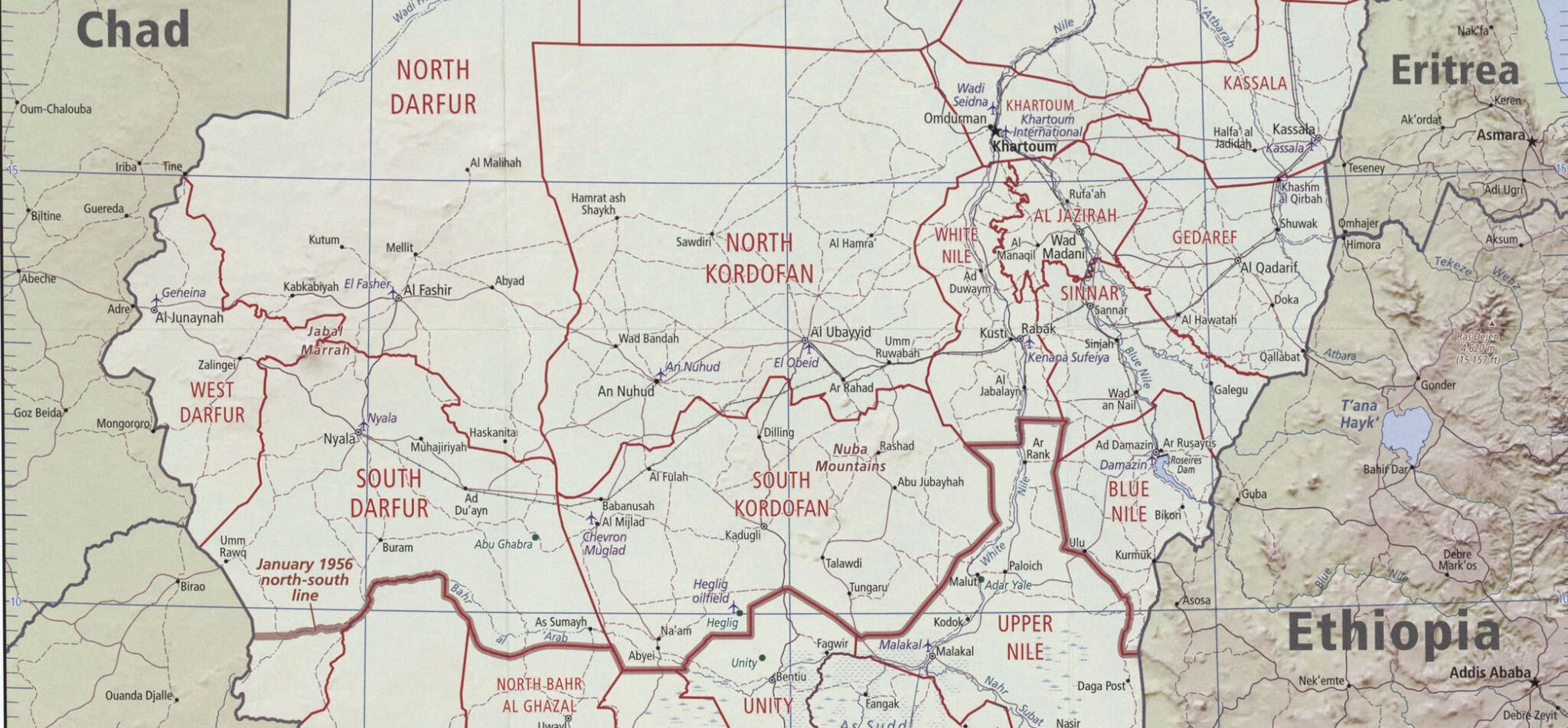
In a move that will shock absolutely nobody following the war in Sudan, the Rapid Support Forces (RSF) declared a three-month unilateral humanitarian truce—and then promptly broke it with an attack on an army position in the West Kordofan town of Babanusa. RSF leader Hemedti billed the pause as a first step towards a political solution, but it looks like just another attempt to con mediators and journalists. As ever, those attempts have been drowned out by a stream of grim revelations, including reports that RSF fighters forcibly took blood from civilians fleeing El Fasher—prompting one commentator to label them “literal vampires.” A Doctors Without Borders update found that many of the 260,000 civilians still alive in El Fasher before the RSF takeover in October are now dead, detained, trapped, or unable to access lifesaving aid. (Map: PCL)

Planet Watch
emissions

COP30 deal sidesteps fossil fuel transition

The world’s governments approved a new climate deal at the COP30 summit in BelĂ©m, Brazil, adopting the so‑called BelĂ©m Package, a bundle of decisions that calls for tripling outlays to help vulnerable countries adapt to intensifying climate impacts. The package references the Global Goal on Adaptation in the 2015 Paris Agreement, and an expanded “action agenda” to scale finance for locally led projects such as resilient agriculture and “nature‑based solutions.” However, efforts to secure a negotiated roadmap away from fossil fuels collapsed after days of deadlock. The final compromise text omits any explicit commitment to “transition away from” or “phase out” coal, oil and gas—despite sustained pressure from a large coalition of states and civil society groups to include such language. The major oil-producing countries resisted binding language on hydrocarbon reduction, while many developing countries tied their support for any resolution to assurances on finance and equity. (Photo: cwizner/Pixabay)

Africa
El Fasher

Podcast: Darfur again —a genocide foretold

Throughout the 18-month siege of El Fasher, capital of Sudan’s North Darfur state, international human rights observers had been warning that the city’s residents faced a general massacre when it eventually fell to the Rapid Support Forces (RSF). Yet nothing was done, apart from ineffectual Great Power diplomacy that had zero impact on the ground. Now that the foretold massacre is underway—with hundreds killed, thousands missing, and no end in sight—calls are at last emerging for boycott, divestment and sanctions against the United Arab Emirates, the apparent underwriter of the genocidal RSF. In Episode 302 of the CounterVortex podcast, Bill Weinberg notes the contrast with the situation 20 years ago, when #SaveDarfur was a cause cĂ©lèbre—and asks what has changed. (Photo: Roman Deckert via Wikimedia Commons)

Africa
Darfur

Sudan: ‘roadmap’ to peace —amid escalation to genocide

After months of US-led negotiations, the United States, Saudi Arabia, Egypt and the United Arab Emirates (the “Quad“) issued a “roadmap to peace” in Sudan, starting with a push for a three-month “humanitarian truce.” However, despite the agreement with the main regional backers of the two sides in the war, fighting continues between the Sudanese armed forces and paramilitary Rapid Support Forces (RSF). Since the “roadmap” was announced, the RSF has continued to close its ring around El Fasher, the besieged capital of North Darfur state. UN officials have condemned the assault and warned of catastrophic consequences for civilians under siege, facing severe shortages of food, clean water, and medical services. When the RSF offensive was launched earlier this year, a coalition of aid organizations and human rights groups issued a statement finding: “Genocide and atrocity crimes are being committed now in North Darfur. The RSF is engaged in the mass killing of civilians and will likely continue this if/when they reach El Fasher.” (Map via Radio Tamazuj)

Africa
Sudan

Sudan: RSF announce rival government

A coalition led by the paramilitary Rapid Support Forces (RSF) has announced formation of a parallel government in Sudan, further cementing the country’s territorial split between army-held and RSF-held regions. Paramilitary leader Mohamed Hamdan Dagalo (“Hemedti“) will head a 15-person council with Abdel Aziz al-Hilu, head of the SPLM-N rebel group, as deputy. The African Union urged member states to not recognize the new regime, which wants to rival the Port Sudan-based army-led transitional government. This effectively leaves the RSF-led regime in control of much of the south, the army in control of the north, and the center of the country contested. (Map: PCL)